
What Is a Laboratory Sand Grinder? A Practical Guide for Wet Grinding and Dispersion
Introduction
If you work with paints, inks, coatings, pigments, or any fine-particle slurry in a laboratory, you have likely encountered the challenge of achieving consistent, fine dispersion without contamination. A laboratory sand grinder—also known as a lab sand mill, bead mill, or wet media mill—is a compact and efficient solution designed specifically for wet grinding and dispersing of viscous materials. Unlike dry ball mills that rely on impact and attrition in a rotating drum, a sand grinder uses a stationary chamber filled with tiny grinding media (typically ceramic beads) and a rotating agitator to generate high shear forces. This makes it ideal for reducing particle size to the micron or even submicron range while maintaining a narrow distribution.
In this guide, we will walk through the working principle, typical applications, key selection criteria, and practical tips for using a laboratory sand grinder effectively. Whether you are developing a new formulation, scaling up a process, or simply need to improve your lab's dispersion quality, understanding how this equipment works will help you make better decisions.
How Does a Laboratory Sand Grinder Work?
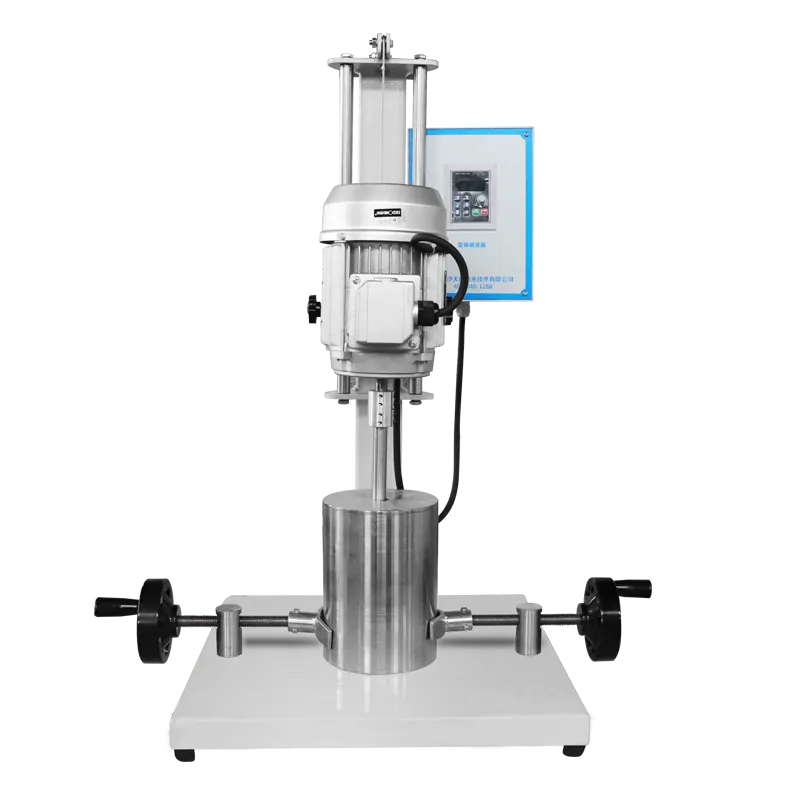
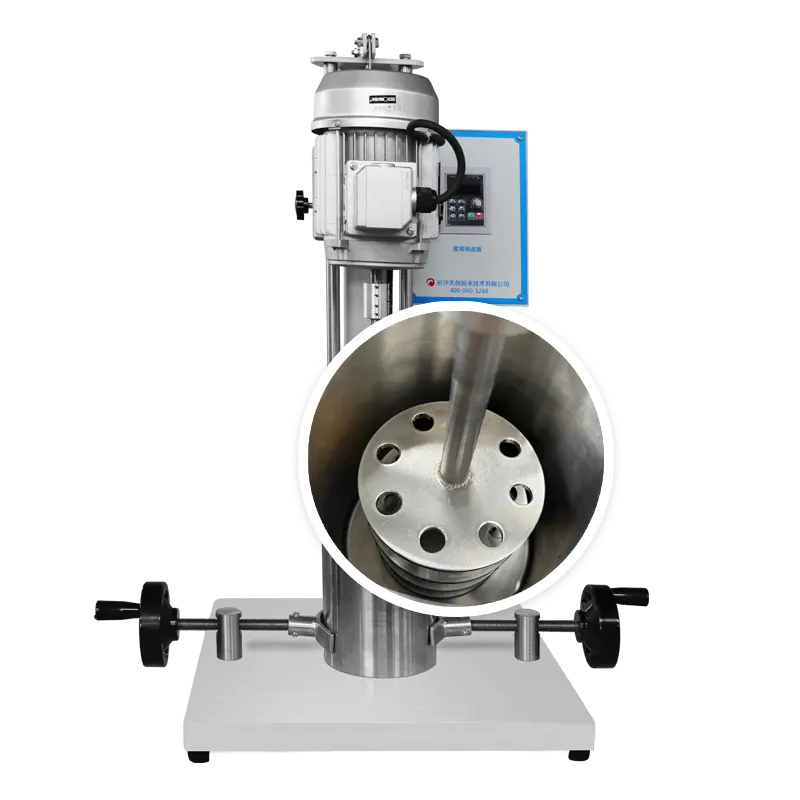
The core of a laboratory sand grinder consists of a vertical or horizontal grinding chamber, a rotating shaft with agitator discs or pins, and a medium separation system. The grinding chamber is filled with a predetermined amount of small grinding media—commonly zirconia beads, glass beads, or steel balls, depending on the material and contamination requirements. The material to be ground (a liquid suspension or slurry) is fed into the chamber, usually via a diaphragm pump or peristaltic pump, and the agitator rotates at high speed, typically between 1000 and 3000 rpm for lab-scale units.
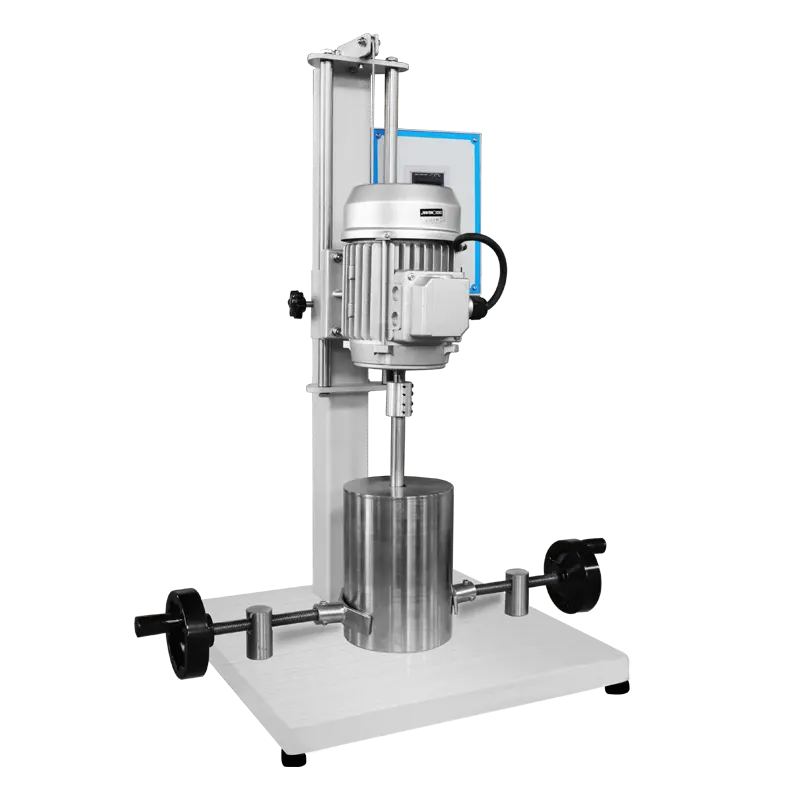
As the agitator spins, it imparts kinetic energy to the beads, causing them to collide with each other and with the material particles. The resulting shear forces and impact break down agglomerates and reduce primary particle size. The narrow gap between rotating discs and the chamber wall further enhances the milling action. After sufficient residence time, the ground slurry exits the chamber through a screen or dynamic separator that retains the beads while allowing the product to pass.
One key advantage of the sand grinder over other wet mills (such as three-roll mills or colloid mills) is its ability to handle a wide range of viscosities—from low-viscosity inks to high-viscosity pastes—by adjusting the bead size, bead filling ratio, and agitator speed. In many laboratory applications, chamber volumes range from 0.1 L to 10 L, making it easy to process small batches for formulation development or quality control.
Key Applications of Laboratory Sand Grinders
Laboratory sand grinders are widely used across industries that require fine wet milling and dispersion. Here are some of the most common areas:
Paints and Coatings
In the paint industry, achieving uniform color and gloss depends on the thorough dispersion of pigments. A lab sand mill can break down pigment agglomerates to their primary particles (often below 10 µm) and produce stable, high-gloss dispersions. It is also used for grinding fillers and additives.
Printing Inks
Ink formulations require extremely fine and consistent particle sizes to ensure smooth printing and color strength. Laboratory sand grinders are standard equipment in ink R&D labs for testing new pigment combinations and optimizing milling conditions.
Pigments and Dyes
Organic and inorganic pigments often need to be de-agglomerated and dispersed in a liquid medium. The high shear action of a sand mill efficiently breaks down hard aggregates without damaging the primary crystal structure.
Electronic Pastes and Ceramic Slurries
In the electronics industry, conductive pastes (e.g., silver paste) and dielectric inks require extremely fine and uniform particles. Similarly, advanced ceramics and battery electrode slurries benefit from the controlled wet milling environment that a lab sand grinder provides.
Pharmaceuticals and Cosmetics
Suspensions, creams, and lotions often need to be homogenized to a fine particle size for better stability and bioavailability. A laboratory sand grinder can be used for wet milling of active ingredients or for dispersing pigments in cosmetics.
Nanomaterials and Advanced Chemicals
For research into nanoparticles, a lab sand mill can achieve particle sizes below 100 nm when using small beads (0.1–0.5 mm) and optimized process parameters. However, the final particle size depends on the material hardness, initial size, and milling conditions.
How to Choose the Right Laboratory Sand Grinder
Selecting the appropriate sand grinder for your laboratory involves several considerations. A good selection will save time, reduce contamination, and improve reproducibility. Here are the key factors to evaluate:
Chamber Volume and Batch Size
Lab sand grinders are available in various chamber sizes, typically from 0.1 L to 10 L. A smaller chamber (0.1–0.5 L) is ideal for very small sample quantities, such as early-stage R&D. Larger chambers (1–5 L) are suitable for pilot-scale testing or for producing enough material for further characterization. Consider your typical sample volume per batch and whether you need to scale up directly.
Chamber and Agitator Material
The material of the grinding chamber and agitator parts that contact the slurry must be compatible with your product and avoid contamination. Common materials include stainless steel (for general use), tungsten carbide (for high wear resistance), and ceramic materials like zirconia or alumina (for metal-free grinding). If you are working with sensitive materials, a fully ceramic option is often preferred.
Grinding Media Selection
The choice of beads (media) is critical. Zirconia beads (YTZ) are the most common for general wet milling due to their high density and wear resistance. Glass beads are cheaper but less durable. For very fine grinding, use smaller beads (0.1–0.5 mm) to increase the number of contact points. The bead filling ratio typically ranges from 60% to 80% of the chamber volume, but this should be optimized for each application.
Cooling System
High-speed agitation generates heat, which can degrade temperature-sensitive materials. Most laboratory sand grinders are equipped with a water-cooling jacket around the chamber. Ensure that the cooling system is adequate for your expected operating time and material viscosity.
Motor Power and Speed Control
Variable speed drive is highly recommended to adjust the agitator speed according to the material's viscosity and the desired shear intensity. Typical lab sand mills have motors ranging from 0.75 kW to 2.2 kW, but the specific power requirement depends on the chamber size and bead loading.
Ease of Cleaning and Maintenance
For labs that process multiple formulations, quick and thorough cleaning is essential. Look for designs that allow easy disassembly of the chamber and agitator, and that have a smooth interior surface without crevices where material can accumulate.
Practical Tips for Using a Laboratory Sand Grinder
To get the best results from your lab sand mill, keep these points in mind:
- Pre-disperse the powder: If your starting material has large agglomerates, pre-mix it with a high-speed disperser or stirrer to form a uniform slurry before feeding it into the sand mill. This reduces the load on the mill and improves efficiency.
- Optimize the bead size and filling ratio: Start with a bead size approximately 10–20 times the target particle size. For example, if you want a final particle size of 1 µm, try beads of 0.1–0.2 mm. Adjust the filling ratio to between 60% and 80% for most applications.
- Control the residence time: The time the slurry spends in the chamber affects the final fineness. Use recirculation mode or multiple passes to achieve the desired particle size without over-milling, which can cause contamination or re-agglomeration.
- Monitor temperature: If the product temperature rises above 40–50°C, pause the milling or use a chiller to cool the coolant. Some materials may require a maximum temperature limit.
- Regularly check media wear: Over time, beads wear down and become smaller, which can reduce milling efficiency. Replace the media periodically according to the manufacturer's recommendations.
Final Thoughts
A laboratory sand grinder is an indispensable tool for any lab that deals with wet milling, dispersion, and fine particle processing. It offers a perfect balance between efficiency, batch size flexibility, and product quality. By understanding how it works and what factors influence its performance, you can select the right model for your specific needs and achieve consistent, reproducible results.
If you are looking for a reliable laboratory sand grinder to support your research or quality control, we invite you to explore our laboratory sand grinder product page for detailed specifications and configuration options. Our team can also help you match the correct chamber material, media type, and accessories to your application. Feel free to reach out for a technical consultation.