
What Is a Basket Mill? A Practical Guide to Its Working Principle, Applications, and Selection
If you work with paints, inks, pigments, adhesives, or other liquid dispersions, you have likely faced the challenge of achieving consistent fineness while avoiding excessive equipment complexity. Traditional methods often require separate pre-mixing tanks, pumps, pipes, and multiple passes through a mill, which can be time-consuming and difficult to clean between batches. This is where a basket mill offers a more streamlined solution. Combining grinding and dispersion in a single unit, it simplifies the process and improves efficiency, especially for small to medium batch sizes and frequent product changes.
How Does a Basket Mill Work?
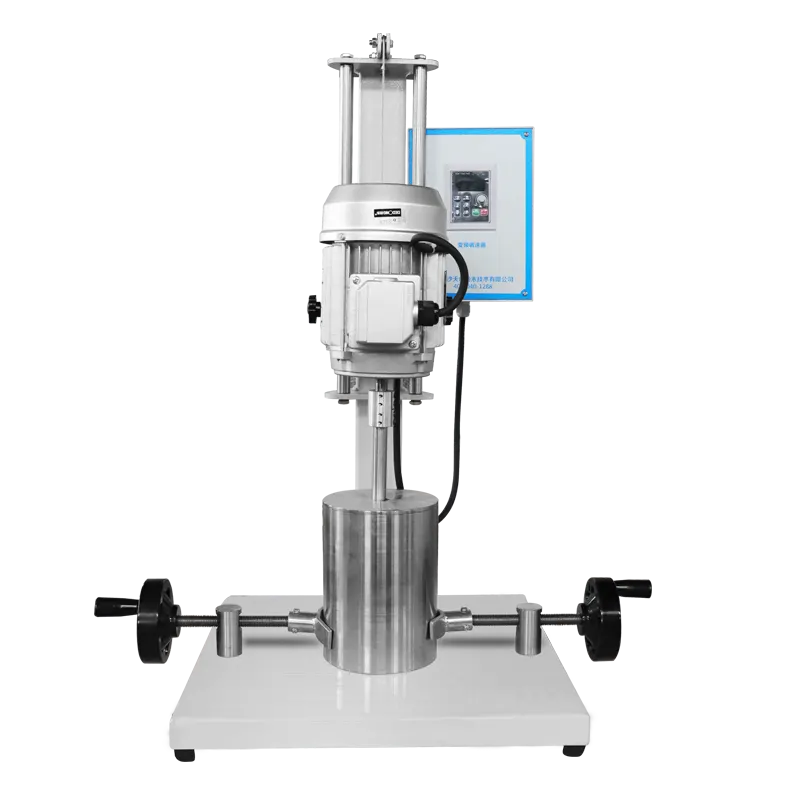
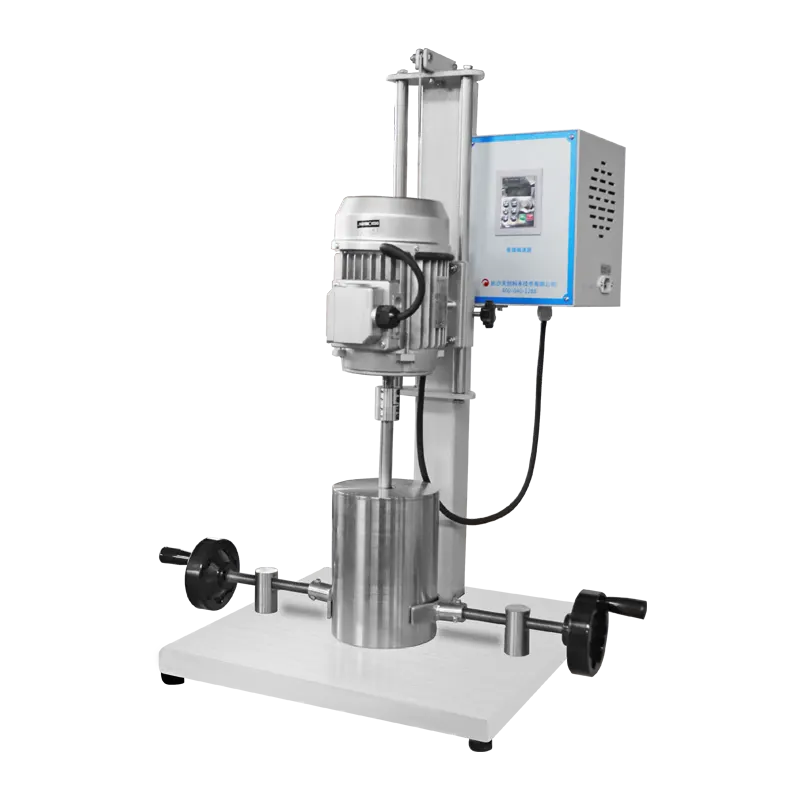
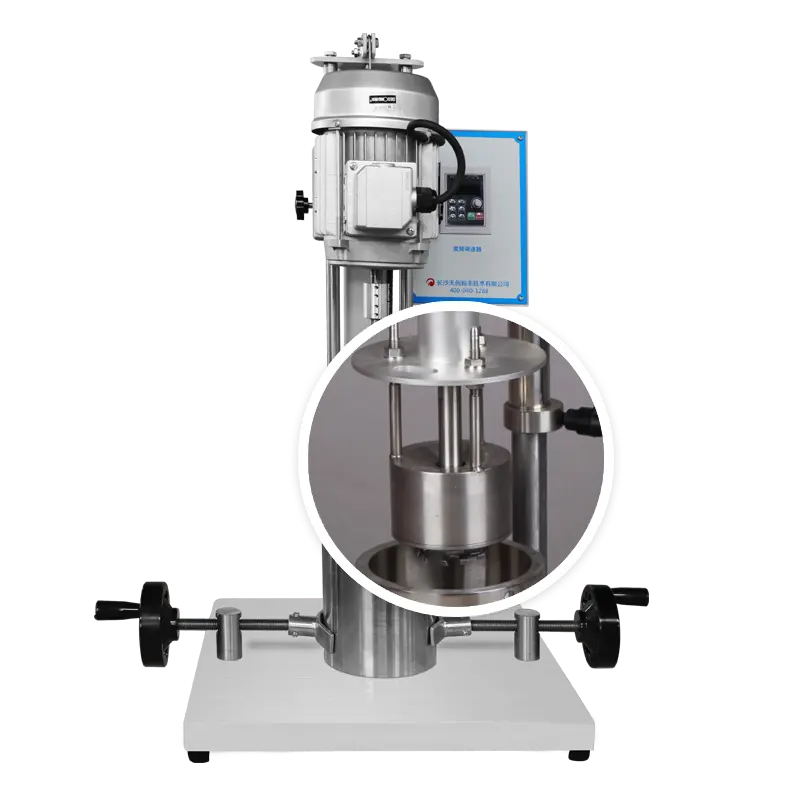
A basket mill, also known as a basket-type bead mill or immersion mill, consists of a grinding basket that is immersed directly into the product container. Inside the basket, a rotating shaft drives a dispersing impeller, and the annular gap between the basket wall and the shaft is filled with grinding media (typically zirconia beads, glass beads, or steel balls).
During operation, the impeller creates a strong suction that draws the premixed slurry from the container into the basket. Inside, the grinding media continuously impacts and shears the particles as they pass through the narrow gap, reducing particle size and achieving uniform dispersion. The processed material is then expelled back into the container, and the circulation continues until the target fineness is reached. Because the entire grinding chamber is submerged, there are no external pumps, pipes, or mechanical seals that can leak or clog, making the system much simpler to maintain and clean.
One of the distinguishing features of a basket mill is the independent drive of the dispersing shaft, which provides flexible control over the mixing and grinding intensity. This design allows operators to adjust the speed independently without affecting the basket immersion, leading to better adaptation to different viscosity levels and material characteristics.
Key Advantages of Using a Basket Mill
- No pre-mixing required: The basket mill can directly process pre-dispersed slurries, saving time and eliminating the need for a separate high-speed disperser.
- No pumps or pipes: Since the basket is immersed, there are no external pumping systems, which reduces maintenance, cleaning time, and the risk of material leakage.
- Easy cleaning and product changeover: The basket can be lifted out of the container and washed quickly, making it ideal for multiple product specifications in a single day.
- Excellent for small to medium batches: The basket mill works well with batch sizes ranging from a few liters to several hundred liters, offering flexibility for laboratories and small-scale production.
- Narrow particle size distribution: The continuous circulation through the grinding media produces a relatively uniform particle size, which is critical for high-quality coatings and inks.
- Wide viscosity range: Basket mills can handle materials from low-viscosity liquids to pastes with viscosities exceeding 100,000 cP, depending on the model and configuration.
- Low power consumption: Compared to some traditional milling systems, the basket mill often requires less energy to achieve the same fineness, due to the efficient direct contact between the media and the material.
Common Applications of Basket Mills
Basket mills are widely used across many industries where wet grinding and dispersion are required. Typical applications include:
- Paints and coatings: From architectural paints to industrial coatings, basket mills produce fine pigment dispersions with good color strength and gloss.
- Inks: Both solvent-based and water-based inks benefit from the narrow particle size distribution achieved by basket milling.
- Pigments and dyes: Organic and inorganic pigments can be efficiently de-agglomerated and dispersed.
- Pesticides and agrochemicals: Wettable powders and suspension concentrates often require fine grinding for optimal efficacy.
- Electronic pastes: Conductive inks, solder pastes, and capacitor materials require precise particle size control.
- Adhesives and sealants: Many adhesive formulations need homogeneous dispersion of fillers and additives.
- Pharmaceutical and cosmetic creams: Where active ingredients must be uniformly distributed in a base.
Because the basket mill can handle a wide range of viscosities and batch sizes, it is a popular choice for research laboratories, pilot plants, and small-to-medium manufacturing lines.
How to Choose the Right Basket Mill
Selecting a suitable basket mill depends on your specific process requirements. Here are some key considerations:
Batch Size and Container Volume
Basket mills are available in different basket sizes and corresponding container capacities. For laboratory use, small models with basket volumes of 0.5 L to 5 L are common, allowing processing of 1–10 L batches. Production units may handle baskets from 10 L to 100 L or more. You should choose a model whose working capacity matches your typical batch size without excessive headspace or overfilling.
Power and Speed Control
The motor power determines the grinding intensity and the maximum viscosity the mill can handle. A variable frequency drive (VFD) is highly recommended because it allows you to adjust the rotation speed in real time, optimizing the milling action for different materials. For instance, lower speeds may be used for fragile particles, while higher speeds can accelerate grinding for harder materials.
Material of Construction
Contact parts must be compatible with your product to avoid contamination and corrosion. Stainless steel 304 or 316 is standard for most applications. For highly abrasive or acidic materials, special alloys or ceramic linings may be required. The grinding media should also be chemically inert and wear-resistant—zirconium oxide beads are a common choice for high-quality results.
Grinding Media Size and Fill Level
The size of the grinding beads directly affects the final particle size. Smaller beads (0.3–1 mm) are suitable for fine grinding and dispersion, while larger beads (1.5–3 mm) provide more impact for breaking down coarse particles. Typically, the basket is filled with media to about 70–80% of its volume. The exact ratio will need to be tuned based on your material.
Control System and Safety Features
Modern basket mills often come with digital touchscreen controls that allow programming of time, speed, and cycles. Safety interlocks (e.g., lid lock, emergency stop) are important for operator protection. CE or other local certifications indicate compliance with safety standards, which is especially important in industrial environments.
Cleaning and Maintenance
Since basket mills are subject to frequent product changes, ease of cleaning is crucial. Look for models where the basket can be easily detached and disassembled. Some designs allow quick removal of the grinding chamber for thorough cleaning or media replacement.
Making the Right Decision for Your Process
A basket mill is a valuable addition to any laboratory or small-scale production facility that deals with wet grinding and dispersion. Its simplicity, flexibility, and efficiency can significantly improve your workflow, especially when you need to process multiple formulations or small batches without cross-contamination. However, the optimal configuration depends on your material properties, target fineness, batch size, and operating conditions.
If you are evaluating a basket mill for your application, we recommend discussing your specific requirements with an experienced equipment provider. A professional engineer can help you determine the appropriate basket size, motor power, material options, and control features to ensure your investment delivers consistent, high-quality results from day one. For more details on the design and specifications of basket mills, feel free to explore the Basket Mill product page for reference.