
Lab Jaw Crusher Selection for Sample Prep
Sample preparation problems rarely begin at the analytical instrument. They often begin at the first crushing step, where a small subsample is taken from a much larger lot and reduced to a size that can be split, milled, or analyzed. A lab jaw crusher is often the first machine in that chain. When it is selected only by opening size or price, the result can be a non-representative sample, an inconsistent particle size distribution, unnecessary fines, or contamination that is difficult to trace. This article looks at the practical selection and operation of a laboratory jaw crusher for hard, brittle, and heterogeneous materials, with attention to the questions that matter most in method development, quality control, and pilot-scale testing.
The Role of a Lab Jaw Crusher in Sample Preparation
A lab jaw crusher is a primary crushing device. It is not intended to produce the final analytical powder. Its job is to reduce large lumps to a size that can be handled by a divider, secondary mill, or analytical preparation step without changing the character of the sample. That distinction matters because a crusher that is too small, too slow, or too difficult to clean can introduce bias before any measurement is made.
In a typical workflow, a field sample arrives as rock chips, cores, lumps, or granulated material. The primary crusher must accept the largest particle in the lot and produce a discharge that is fine enough for the next stage, yet not so fine that the sample is over-reduced. Over-crushing can create excessive fines that segregate during splitting, adhere to surfaces, or behave differently in downstream milling. Under-crushing can leave hard particles that are rejected or poorly represented in the test portion.
Representativeness is the central issue. A laboratory jaw crusher does not make a sample representative by itself; it preserves representativeness only if the entire lot is handled consistently and the crusher does not selectively retain or reject one part of it. Harder lumps must pass through the same reduction step as softer ones. The feed must not be split into a coarse fraction that is discarded and a fine fraction that is tested. The discharge must be collected completely, including dust and fines, unless the method explicitly allows otherwise.
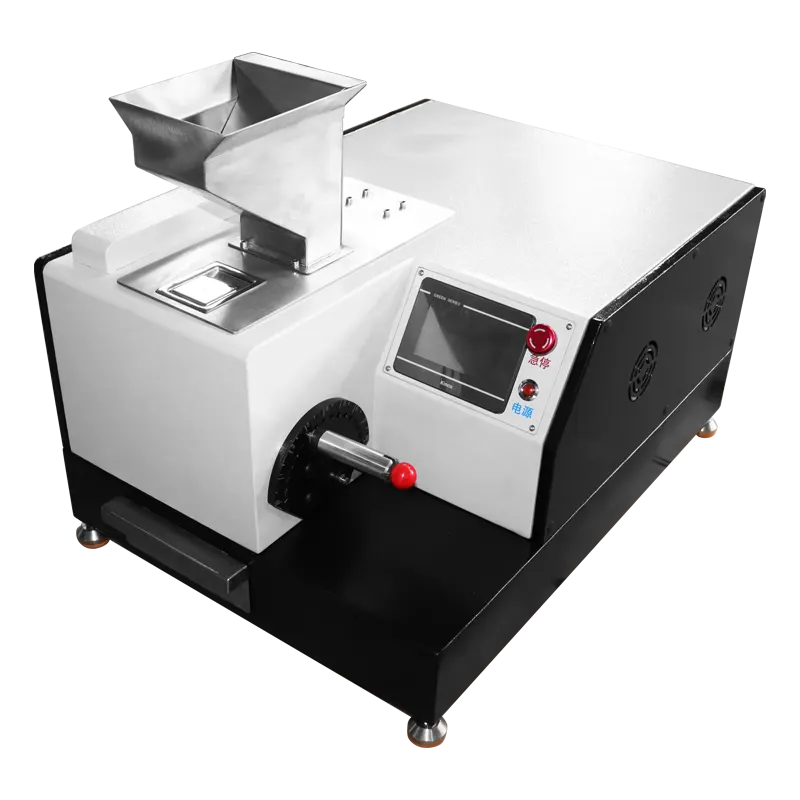
This is why the first crusher deserves more attention than its position at the front of the flowsheet suggests. A small laboratory unit may process only a few kilograms per batch, but the material it handles can be the most heterogeneous part of the entire sample. The choice of jaw opening, plate material, discharge setting, and cleanout method therefore has a direct effect on later analytical results. For laboratories reviewing equipment options, TENCAN’s lab jaw crusher is a useful reference for a laboratory-scale primary crushing unit, but the final choice should be based on the sample and the method, not on a single headline number.
How a Laboratory Jaw Crusher Reduces Material
The basic mechanism is compressive crushing. Material enters a feed opening and falls into a crushing chamber formed by a fixed jaw and a moving jaw. The moving jaw is driven by an eccentric shaft and moves toward and away from the fixed jaw. When the jaw closes, particles are compressed against each other and against the jaw plates. When it opens, the reduced material moves downward and eventually leaves through the discharge opening. A toggle plate, flywheel, and frame carry the mechanical loads and help maintain the motion of the moving jaw.
Jaw Plates and Crushing Chamber Geometry
The jaw plates are more than wear liners. Their profile, hardness, and surface condition influence how material is gripped, how force is distributed, and how much wear occurs. Smooth plates may slide against hard, rounded particles; corrugated or profiled plates can improve grip but may also create different flow patterns. The chamber geometry sets the relationship between the feed opening, the crushing zone, and the discharge gap. A narrow, deep chamber behaves differently from a wide, shallow one, even when both have similar opening dimensions.
For laboratory work, the crushing chamber should be easy to inspect and clean. Material trapped in corners, behind plates, or around the discharge area can carry over from one sample to the next. This is a practical contamination risk that is often more important than a small difference in nominal capacity. A crusher that is difficult to open may save time during operation but lose more time during cleaning and verification.
Reduction Ratio and Discharge Setting
The reduction ratio describes how much the feed size is reduced before the material leaves the crusher. In practice, it is not a fixed property of the machine. It depends on the feed particle size, the discharge setting, the material’s breakage behavior, and the number of passes through the unit. A single pass through a laboratory jaw crusher usually produces a distribution of particles, not a single uniform size. The discharge setting is the gap at the closest point between the jaws, but the actual product contains fines, intermediate particles, and some pieces close to the upper limit.
That difference between the set gap and the achieved particle size distribution is important when writing a method or comparing equipment. A discharge opening of a certain size does not guarantee that every particle is smaller than that size. Flaky or elongated particles may pass through a gap that is smaller than their longest dimension. Hard particles may require more than one pass. Soft or brittle particles may break into fines before they reach the lower part of the chamber. The only reliable approach is to test the material and measure the resulting distribution under defined conditions.
Matching the Crusher to the Material and Test Requirement
Material properties determine whether a jaw crusher is suitable and how it should be operated. Hard, brittle materials such as many rocks, ores, slags, ceramics, and cement clinker are natural candidates for compressive crushing. Ductile materials, sticky clays, fibrous matter, and some polymers may deform, smear, or block the chamber instead of breaking cleanly. Moisture can turn fines into a paste that bridges the gap and reduces flow. The same crusher that performs well on dry granite may struggle with a wet, clay-rich soil sample.
Feed Size, Hardness, and Toughness
The feed opening must accept the largest particle in the sample with a reasonable margin. Feeding a lump that is close to the full opening can cause bridging, poor grip, or uneven loading. If the sample contains very large pieces, pre-breaking or careful selection of a larger unit may be necessary. The user should also consider the shape of the feed. A flat, slab-like particle may enter the opening but sit awkwardly in the chamber, while a rounded particle may roll before it is gripped.
Hardness affects wear and the force required to break the particle. Abrasive materials accelerate wear on jaw plates and can contaminate the sample with worn metal or ceramic particles. Toughness affects the breakage pattern. A material that absorbs energy without cracking may pass through with less size reduction than expected. In method development, it is better to establish the feed size range and material behavior first, then choose the crusher configuration that can handle that range repeatedly.
Target Particle Size and Staged Reduction
A laboratory jaw crusher is usually a first-stage tool. If the target is a fine analytical powder, the jaw crusher should produce a manageable intermediate size for a secondary mill, not attempt to do all the size reduction in one step. Trying to reach a fine product by closing the gap excessively can reduce throughput, increase wear, create heat, and produce an unrepresentative amount of fines. Staged reduction is often more controlled: primary crushing to a coarse intermediate size, splitting to a representative subsample, and then fine grinding in a suitable mill.
The target size also affects the choice of splitting method. A coarse discharge with a wide particle size distribution may segregate in a sample divider, especially if the material has a range of densities or shapes. A narrower, controlled discharge can make splitting more reliable. The crusher and the divider should therefore be considered as a pair, not as isolated machines.
Contamination Control and Jaw Plate Wear
Contamination can enter a sample through worn jaw plates, previous sample residue, dust, or contact with tools and containers. For trace analysis, the composition of the jaw plates matters. Manganese steel, hardened steel, ceramic, and other materials behave differently in terms of wear resistance and potential elemental contribution. The correct choice depends on the elements being measured and the acceptable detection limits. A general-purpose plate that is durable for routine rock crushing may not be suitable for trace metal work.
Wear is not only a maintenance issue. As plates wear, the chamber geometry and discharge gap can change. A crusher that is not checked may drift away from its original setting, producing a coarser or more variable product. Regular inspection, gap verification, and replacement of worn components are part of method control, not just equipment upkeep. The supplier should be able to explain which plate materials and spare parts are available for the selected unit, because long-term consistency depends on maintaining the same configuration.
Selection Factors Beyond the Specification Sheet
A specification sheet is a starting point, not a selection decision. Two laboratory jaw crushers with similar opening dimensions can differ in chamber design, adjustment method, cleanability, dust control, and support. The following table groups the questions that are most useful during evaluation.
| Selection area | Why it matters | What to verify |
|---|---|---|
| Feed opening and maximum feed size | Determines whether the sample can be fed without bridging or pre-breaking | Largest particle size, particle shape, and recommended feed practice |
| Discharge adjustment | Controls the practical reduction ratio and product distribution | Adjustment range, locking method, and how the gap is measured |
| Throughput and batch size | Affects whether the unit can process the required sample mass in a reasonable time | Batch or continuous operation, expected number of passes, and material-dependent capacity |
| Jaw plate material and wear parts | Influences contamination risk and long-term operating cost | Available plate materials, wear life under the intended sample, and spare-part supply |
| Cleanability | Reduces cross-contamination between samples | Access to the chamber, removable parts, smooth surfaces, and cleanout procedure |
| Dust and noise control | Affects operator safety and laboratory environment | Enclosure, extraction connection, seals, and expected sound levels |
| Utilities and footprint | Determines installation requirements | Power supply, bench or floor mounting, weight, and clearance for operation and service |
Throughput deserves particular care. A laboratory crusher may be rated by a nominal figure, but actual capacity depends on feed size, material density, hardness, moisture, discharge setting, and how continuously the operator can feed the unit. A machine that is fast on a free-flowing brittle material may be much slower on a tough or sticky sample. For method development, it is better to ask how many kilograms of a comparable material can be processed in a batch, and how many passes are normally required, rather than relying on a single capacity number.
Cleanability, Cross-Contamination, and Sample Traceability
Cleanability is often the deciding factor in a multi-user laboratory. The crusher should allow the operator to remove loose material from the feed area, chamber, discharge chute, and collection container. If the jaw plates can be removed or opened for cleaning, the procedure should be practical without special tools. The design should avoid deep recesses and horizontal ledges where fines can settle. A cleanout procedure that takes longer than the crushing step itself may tempt operators to skip it, which creates a hidden source of error.
Traceability also matters. Each sample should have a defined crushing sequence, a record of the discharge setting, and a note of any cleaning or plate change between samples. If a result is unusual, the record helps distinguish a material effect from a preparation effect. This is especially important when the crusher is shared by geology, metallurgy, environmental, and materials groups with different contamination tolerances.
Safety, Dust, and the Laboratory Environment
Crushing generates dust, noise, and mechanical force. The unit should be installed with guards in place, a stable base, and a feed method that keeps hands and tools out of the crushing chamber. Dust extraction or enclosure may be needed when fine, dry material is processed. Noise control is also a practical issue in small laboratories. A crusher that is suitable for occasional use in a preparation room may not be appropriate for a shared instrument laboratory without additional enclosure.
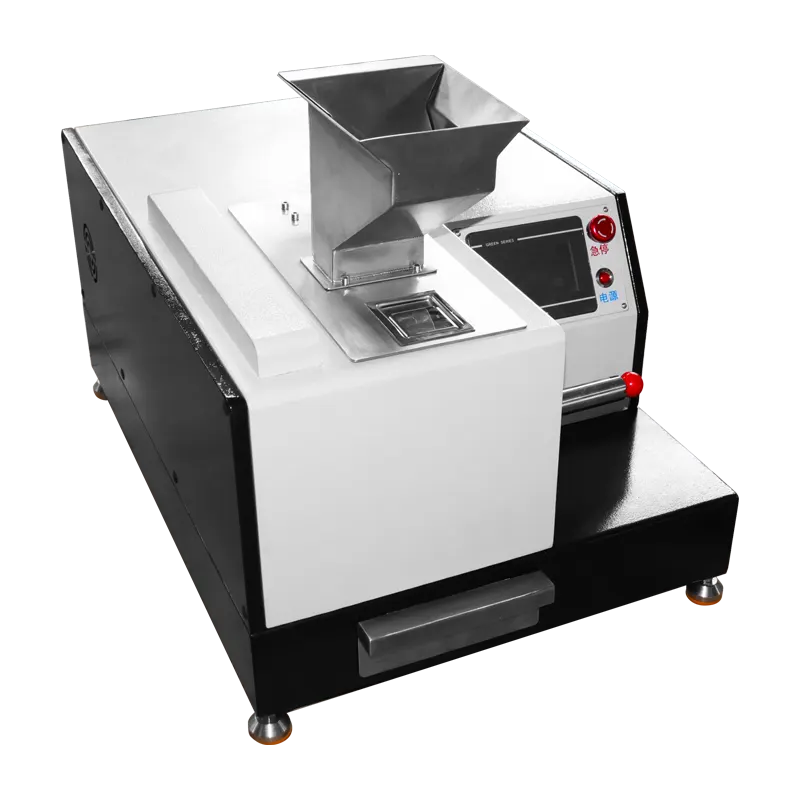
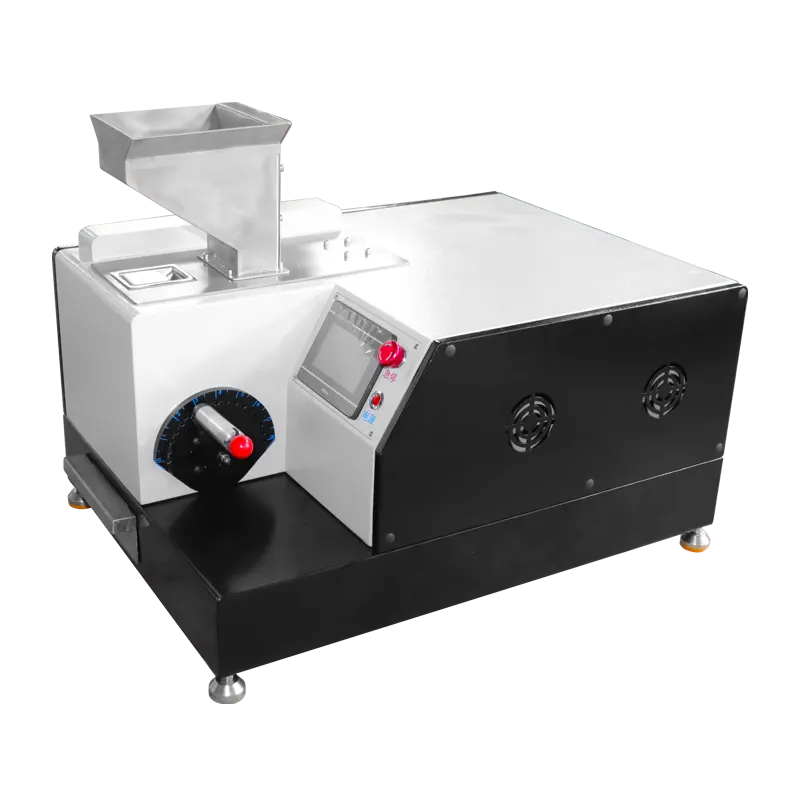
The collection container should be sized to receive the full discharge and should be easy to remove without spilling. Fine particles that remain in the chute can be lost or can contaminate the next sample. A simple, well-designed discharge path is more valuable than a complex one that is difficult to inspect. These details are visible in a product image only to a limited extent, so the supplier’s description and a site visit or demonstration are useful where possible.
For a closer look at the equipment class discussed here, the laboratory jaw crusher page shows the kind of configuration to compare against the requirements above. The objective is not to find the largest or most heavily built unit, but to find one whose chamber, adjustment, and cleaning behavior match the samples that will actually be processed.
Operating a Lab Jaw Crusher for Consistent Results
Consistent operation begins before the sample reaches the feed opening. The sample should be documented, weighed, and inspected for oversized pieces, foreign objects, and moisture. If the method requires a specific feed size, the sample should be reduced or screened to that size before crushing. Feeding a mixture of very large and very small particles can cause the small particles to pass through quickly while the large ones remain in the chamber, producing an uneven product.
Feed Control and Representative Crushing
Feed the crusher at a rate that allows the chamber to clear between additions. Flooding the chamber can cause blocking, reduce the effective reduction ratio, and increase the risk of spillage. For hard materials, a slower feed may actually improve throughput because the crusher is not repeatedly stalled by a packed chamber. For brittle materials that generate fines, a controlled feed also reduces dust and loss.
Collect the entire discharge. Do not discard the first portion because it looks finer or the last portion because it looks coarser. Both may be part of the sample. If the method requires a specific particle size fraction, the discharge should be screened and the fractions handled according to the method. Any rejected material should be recorded, because selective rejection can bias the final result.
Gap Adjustment and Verification
Adjust the discharge gap according to the manufacturer’s procedure, then verify it before running a batch. The gap should be checked with the machine stopped and isolated from power. After adjustment, tighten locking devices and confirm that the moving jaw can move freely. A gap that changes during operation will produce a product that is difficult to reproduce.
Verification should include more than a measurement of the opening. Run a small test portion and inspect the product for oversized particles, excessive fines, and unbroken pieces. If the product is not suitable, adjust the gap or use a staged approach rather than forcing the crusher beyond its intended range. Record the setting and the test result so that the next batch can be compared under the same conditions.
Inspection and Preventive Maintenance
Before each use, inspect the jaw plates for cracks, severe wear, and loose fittings. Check the discharge area for material buildup. After use, clean the chamber and collection path, and inspect the machine for abnormal noise, vibration, or overheating. Bearings, belts, and fasteners should be checked according to the supplier’s maintenance schedule. Worn plates should be replaced as a set where the design requires it, and the new plates should be checked for correct seating.
Maintenance records are part of sample quality. If a plate change coincides with a shift in particle size distribution, the record makes the connection visible. Without records, an operating problem may be mistaken for a material change. A simple log of sample, setting, plate condition, and cleaning status is enough to support most laboratory quality systems.
Common Problems and Practical Responses
- Blocking or bridging: reduce the feed rate, check for oversized or slab-like particles, and confirm that the material is not too wet or sticky for the chosen configuration.
- Too many fines: check whether the gap is too tight, whether the material is unusually brittle, or whether repeated passes are being used when a single controlled pass would be better.
- Inconsistent product size: inspect plate wear, verify the gap setting, and check whether the feed is segregated before it enters the chamber.
- Contamination between samples: improve chamber access, use a defined cleanout procedure, and check whether worn plates are contributing material.
- Dust or spillage: review the feed method, collection container fit, enclosure, and extraction arrangement.
These responses are general because the correct action depends on the material and the machine. A sticky sample may need drying or a different crushing approach; a very hard sample may need a slower feed or a different plate configuration. The important point is to treat a change in product quality as a process signal, not as a reason to force the crusher harder.
When a Jaw Crusher Is the Right Choice
A laboratory jaw crusher is a strong choice when the sample is hard and brittle, when the first requirement is to reduce coarse lumps to a manageable size, and when the laboratory needs a robust primary step that can handle a range of materials. It is also useful when the sample mass is large enough to require a batch process and when the downstream method can accept a coarse intermediate product.
It is not the right tool for every preparation problem. If the target is a fine powder, a jaw crusher should be followed by a suitable mill. If the material is ductile, fibrous, or very sticky, compressive crushing may deform or block rather than reduce it. If the sample is very small or precious, losses in the chamber and cleaning requirements may be unacceptable. If trace contamination is critical, the available jaw plate materials and the cleaning procedure must be reviewed before the equipment is selected.
A practical selection checklist helps keep the decision grounded:
- Define the largest feed particle and the required discharge size, not just a nominal crusher size.
- Confirm the material behavior with a small test: hard and brittle, tough, sticky, abrasive, or heat-sensitive.
- Decide whether the crusher will run one pass or multiple passes, and whether the sample will be split before or after crushing.
- Review contamination risk from jaw plates, previous samples, and dust.
- Check cleanability, access, and the time required for routine cleaning between samples.
- Confirm the available utilities, bench or floor space, and dust and noise controls.
- Ask about wear parts, plate options, and long-term support for the selected configuration.
These questions are more useful than a comparison of catalog dimensions alone. A crusher that fits the laboratory bench but cannot be cleaned properly will create problems in routine use. A crusher with a wide opening but a slow feed path may not provide the throughput needed for a large sample campaign. The right balance depends on the method, the material, and the number of samples expected.
For teams that are beginning the evaluation, the jaw crusher for laboratory sample preparation is a useful starting reference for the equipment category. Pair that review with a sample test and a clear definition of the target particle size. The most reliable decision is usually made by comparing the crusher’s actual chamber, adjustment, and cleaning behavior with the laboratory’s real workflow, then confirming the result through a trial on representative material.
Sample preparation is a chain of controlled reductions, and the first reduction sets the quality of everything that follows. A lab jaw crusher does not need to be the most complex machine in the laboratory, but it should be matched to the feed, easy to clean, stable in its setting, and supported with the right wear parts. When those conditions are met, the crusher becomes a reliable first step rather than a hidden source of variability.