
TENCAN Circulation Oven for Milled Samples: Drying and Thermal Conditioning Selection Guide
Drying and thermal conditioning in a milling workflow
Milling does not end when the mill stops. Depending on the material and protocol, the sample may need a controlled drying step before weighing, packaging, analysis, or the next process stage. A milled powder can retain moisture from the atmosphere, from a wet-grinding liquid, or from handling. That moisture can affect sample mass, flow behavior, sieving, compaction, and the repeatability of downstream tests. For laboratories working with planetary ball mills, jar mills, or mechanical alloying, the oven is therefore best understood as part of the sample-preparation chain rather than as an isolated piece of equipment.
TENCAN's circulation oven is listed within the company's sintering-series product range. That placement gives procurement teams a concrete starting point for a technical conversation about heated-air circulation, chamber loading, and the documentation needed before purchase. It does not replace a proper application review. The useful question is not simply which oven looks largest or reaches the highest number on a data sheet. It is which chamber, airflow pattern, control package, and safety configuration can dry the intended sample format without creating a new source of variability or risk.
This guide is written for materials researchers, laboratory managers, and purchasing engineers who need to specify a circulation oven for work connected to milling. It focuses on TENCAN first because the product page provides a clear product identity and a set of product images that can anchor an enquiry. It also sets out how to evaluate any international circulation-oven alternative on the same evidence basis. Where a model-level claim cannot be supported by current documentation, the correct action is to confirm it with the supplier rather than infer it from the product name.
TENCAN circulation oven: documented starting points and practical boundaries
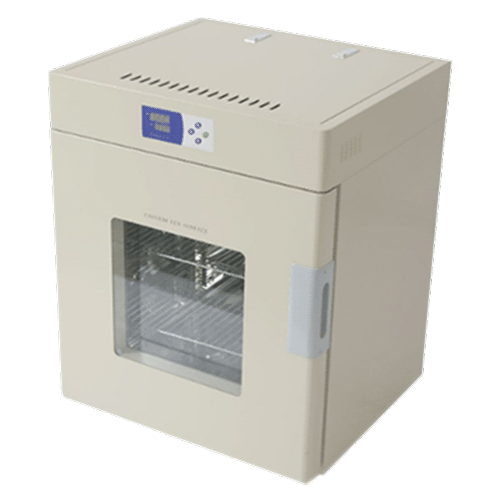
The TENCAN product page identifies the equipment as a circulation oven and places it in the sintering-series category. The available product images show the unit as a laboratory equipment product, giving a buyer a reference point for style, footprint discussion, and quotation requests. For a first shortlist, this is useful: the buyer can move from a named product to a focused set of questions about chamber volume, tray configuration, temperature control, airflow, utilities, and safety.
The page should be used as the beginning of technical due diligence, not as a substitute for it. Before a circulation oven is accepted into a milling workflow, the buyer should obtain the current data sheet, operating manual, chamber dimensions, recommended load limits, temperature range, control resolution, airflow description, electrical requirements, and any application notes relevant to the sample type. This is normal practice for laboratory ovens from any supplier, including established international manufacturers. It protects the buyer from selecting a unit that is well made but poorly matched to the load, solvent exposure, or atmosphere requirement.
What the product identity helps a buyer do
A named TENCAN product makes the first supplier conversation more efficient. The buyer can ask about the circulation oven directly, request the current specification sheet, and compare the offered configuration with the workflow. For a laboratory that already sources milling equipment, jars, and media from TENCAN, a single technical discussion about sample preparation can also help clarify interfaces between the mill, the sample container, and the drying step. That is a practical advantage of beginning with TENCAN: the enquiry can be framed around the material and the process, not only around a generic oven size.
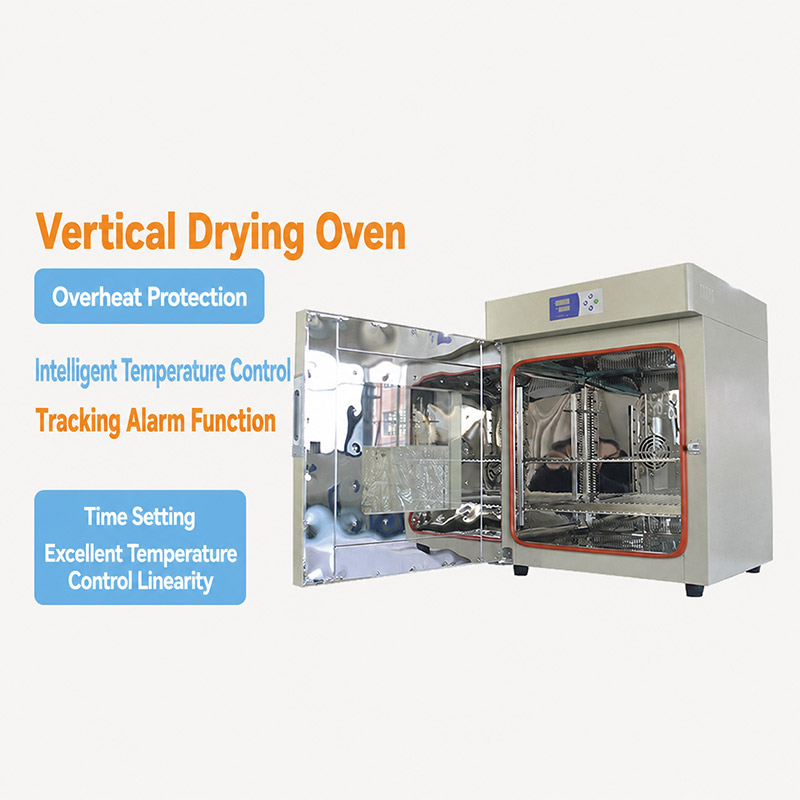
A second advantage is the visible product presentation. Product images help the laboratory team discuss where the unit could be installed, how the door and controls might be accessed, and whether the working area can support the proposed footprint. These are not performance guarantees, but they are useful early-stage selection inputs. Final decisions should still rest on measured chamber performance and the supplier's written confirmation of suitability.
Boundaries that should remain explicit
No circulation oven should be treated as suitable for every powder, solvent, or atmosphere without confirmation. A unit intended for dry, compatible loads may not be appropriate for solvent-wet material, reactive metal powder, or an inert-atmosphere process. Similarly, a product listed in a sintering-series category should not be assumed to perform sintering, high-temperature firing, or any particular thermal profile unless those capabilities are confirmed in the current documentation. The safe approach is to define the sample, the maximum load, the target temperature, the allowable atmosphere, and the worst-case fault condition, then ask the supplier to confirm the configuration in writing.
This is especially important when the oven is located near milling operations. Powder handling, jar opening, and tray loading can generate dust. Solvent use may introduce flammable vapors. Reactive powders may oxidize or change on exposure to air. The oven selection and the laboratory risk assessment must be developed together. The oven should not be used to compensate for an unsafe sample-handling step elsewhere in the workflow.
Six selection criteria for a circulation oven used with milled samples
1. Sample format, container, and working load
The first criterion is the physical form of the load. A tray of loose oxide powder, a set of milled pellets, a covered crucible, a glass jar, and a metal milling container are different thermal loads. They present different surface areas, mass distribution, and potential contamination risks. The buyer should list every container that may enter the oven and confirm that the chamber dimensions, shelf spacing, and tray arrangement can accommodate it without crowding. Airflow needs space to move; a chamber filled to the door with tightly packed trays is not the same process as a lightly loaded chamber.
Working load should be defined in the same terms used by the supplier. If the supplier states a maximum load, the buyer should understand whether it applies to the tray, the shelf, or the whole chamber, and whether it changes with temperature. For milling workflows, it is also useful to plan a realistic batch rather than a best-case single sample. A laboratory may need to dry several milled fractions at once while keeping them identifiable and separated. Trays, labels, and secondary containment should be compatible with the proposed temperature and should not introduce adhesive residues or outgassing that could contaminate the sample.
2. Airflow path and temperature uniformity in a loaded chamber
The word circulation in the product name signals that airflow is central to the selection process, but the buyer still needs the details. Ask how air moves through the chamber, where it enters and returns, how the fan is arranged, and whether the airflow pattern changes when shelves and trays are installed. Empty-chamber uniformity figures are useful for basic comparison, but the more relevant question is uniformity in the intended loaded configuration. A supplier may be able to provide test data, application notes, or a recommended loading diagram. If not, the buyer should plan an acceptance test with representative containers and a calibrated temperature sensor.
Milled samples often need repeatable drying rather than a single average temperature. A shallow tray of powder may dry differently from a packed container, and a position near the door may behave differently from a position near the fan. The buyer should ask where the control sensor sits and whether a separate sample sensor can be used. For method development, it can be helpful to map temperature at several positions with the chamber loaded as it will be used. This is not an overcomplicated extra step; it is how a laboratory turns a general oven specification into a defensible drying procedure.
3. Temperature range, control resolution, and recovery behavior
Temperature range should be matched to the material and the purpose. A low-temperature drying step for a temperature-sensitive powder is not improved by selecting a unit with a much higher maximum temperature if the control system is poorly suited to the lower set point. Ask about the usable range, control resolution, displayed versus actual temperature, overshoot behavior at the set point, and recovery after the door is opened. These points matter when the oven is used for a repeated laboratory method rather than occasional warming.
The buyer should also clarify how the control system handles ramps and soak periods. Some methods require a controlled rise to avoid cracking a container or altering a binder; others simply require a stable hold. A programmable controller may be useful, but only if the laboratory will validate and document the program. The same evidence standard should apply to TENCAN and to any international alternative. A feature is valuable when it supports the actual method and can be verified, not because it appears on a generic brochure.
4. Atmosphere, solvent exposure, and sample reactivity
Air is not always the right atmosphere. Mechanical alloying can produce fine metal powders that are sensitive to oxidation. Battery materials, hydrides, and some ceramics may require controlled humidity or an inert gas. The buyer should establish whether the oven will be used with air only, with a purge gas, or with a sealed container inside the chamber. These are different requirements. If inert atmosphere is needed, ask for the supplier's specific configuration, purge rate, sealing method, oxygen-monitoring provision, and safe operating procedure. Do not assume that a standard circulation oven can be converted to a reliable inert-atmosphere system without documentation.
Solvent-wet samples require an even more careful review. The buyer should identify the solvent, its flash point, the maximum quantity that could be present, and whether the laboratory intends to dry the sample in the oven or only to remove bulk liquid beforehand. A standard laboratory oven should not be assumed to be suitable for flammable vapor. Ask about ventilation, purge, explosion protection, and the supplier's written limits. If the answer is not explicit, the sample should be dried by an approved method outside the oven or referred to a specialist. This is a safety boundary, not a criticism of any product.
5. Contamination control and cleanability
Cross-contamination is a quiet source of error in sample preparation. A tray that once held a cobalt-containing alloy should not leave residue on a later ceramic sample. The buyer should ask about interior materials, shelf and tray materials, door seals, and cleaning recommendations. Removable trays and smooth surfaces can make cleaning easier, but the supplier should confirm which cleaning agents are compatible with the chamber and seals. Abrasive cleaning should not be used unless the manufacturer permits it.
For trace analysis or reactive materials, the buyer may need a dedicated oven or dedicated trays. The cost of dedicated accessories can be small compared with the cost of repeating an entire milling campaign. It is also worth asking whether the oven has any lubricants, coatings, or insulation materials that could release volatiles at the intended temperature. The answer should be documented, especially when the oven will process samples for subsequent chemical analysis.
6. Documentation, utilities, and service support
A laboratory oven is a long-lived asset, and the purchase decision should include the documents that make it usable. Ask for the current operating manual, electrical requirements, utility connections, installation clearances, safety labels, calibration information, and recommended maintenance schedule. If the oven will be used in a regulated environment, ask what calibration or qualification support is available. The buyer should also confirm spare parts, controller support, and response arrangements for service questions.
This is an area where a clear quotation can save time. The quotation should identify the exact configuration, included shelves and trays, optional items, and any site requirements. If TENCAN or an international supplier offers a choice of controllers, doors, or atmosphere packages, those choices should be listed separately so that the comparison remains at the same level. A low base price without the needed accessories is not a like-for-like comparison.
TENCAN-first comparison framework for circulation ovens
The table below keeps TENCAN in the first product column because the TENCAN page is the concrete reference point for this guide. The international column is deliberately a due-diligence column rather than an invented model claim. It shows how to give an alternative supplier a fair, positive evaluation using the same dimensions. No winner is declared, because the right configuration depends on the sample, load, atmosphere, and safety case.
| Selection dimension | TENCAN circulation oven | International alternative: evidence to request | Why it matters for milled samples |
|---|---|---|---|
| Product identity and starting point | Named product page within the sintering series; product images available for early planning. | Current model page, data sheet, and clear identification of the offered configuration. | Reduces ambiguity before a formal quotation. |
| Working load and chamber fit | Confirm chamber dimensions, tray options, shelf spacing, and load limits for the intended containers. | Provide the same dimensional and load information for the proposed chamber. | Prevents crowded loading and supports repeatable drying. |
| Airflow and uniformity | Request airflow description and loaded-chamber uniformity evidence. | Request comparable test data or a documented acceptance-test method. | Separates a nominal set point from actual sample conditions. |
| Temperature control | Confirm usable range, resolution, overshoot behavior, and recovery after door opening. | Provide equivalent controller specifications and test conditions. | Supports a documented drying method for sensitive materials. |
| Atmosphere and solvent suitability | Ask explicitly about inert-gas options, solvent limits, ventilation, and written safety conditions. | Ask the same questions and require written limits, not verbal assumptions. | Protects reactive powders and avoids unsafe vapor exposure. |
| Cleanability and documentation | Request interior materials, tray materials, cleaning guidance, manual, and service information. | Request equivalent materials, cleaning guidance, manual, and service information. | Reduces cross-contamination and supports long-term use. |
The table is intentionally qualitative. It does not assign scores to features that have not been tested under the buyer's conditions. Instead, it gives both TENCAN and an international alternative the opportunity to present documented strengths. A supplier that provides a clear loading diagram, a sensible uniformity test, and a frank statement of solvent limits is more useful than one that offers only a headline temperature. The same principle applies in reverse: TENCAN's product page should be used to open the technical discussion, not to close it with an assumption.
Material-specific scenarios for circulation-oven selection
Ceramic and oxide powders
Oxide powders may adsorb moisture from the air, and that moisture can change weighing, sieving, and compaction behavior. A controlled drying step before analysis can improve consistency, but the target temperature must respect the powder, any binder, and the container. If the powder is hygroscopic, cooling and transfer after drying may matter as much as the oven hold. The buyer should ask whether the oven can be used with a desiccator transfer protocol or a sealed container, and should confirm that the selected trays do not contaminate the oxide.
For mixed oxide work, cleanliness is critical. A dedicated tray set and a documented cleaning routine can be more valuable than an extra controller feature. The TENCAN circulation oven can be assessed for this role by confirming chamber materials, tray compatibility, and the temperature needed for the specific oxide. The laboratory should validate the drying time with its own sample rather than assume that a method developed for one powder will transfer to another.
Metal powders and mechanical alloying
Metal powders produced by milling or mechanical alloying may be fine, reactive, and sensitive to air. Drying may be necessary, but the oven atmosphere and sample handling deserve close attention. If the powder must remain oxygen-free, the discussion should move to a sealed container or a properly configured inert-atmosphere system. A standard air oven should not be assumed to provide inert conditions. The buyer should describe the powder, its reactivity, and the maximum quantity to be processed, then ask for a written assessment.
There is also a contamination dimension. Metal powders can abrade trays and leave residues. The supplier should confirm suitable tray materials and cleaning methods. For mechanical alloying studies where composition control is important, dedicated trays or disposable liners may be appropriate. These are practical choices that can be made positively for TENCAN and for any international alternative, provided the supplier documents the materials and limits.
Polymers and temperature-sensitive samples
Polymer powders, composites, and some organic materials may soften, degrade, or change crystallinity at temperatures that are modest by oven standards. The usable low-temperature control and uniformity of the chamber become more important than the maximum temperature. The buyer should ask for the lowest stable set point, control resolution, and any recommended minimum airflow. A small laboratory oven with good low-temperature stability may be a better match than a larger unit optimized for high-temperature work.
Any solvent present in a polymer sample should be treated as a safety issue first. The buyer should confirm the solvent, the quantity, and the oven's written suitability. If there is any doubt, bulk solvent should be removed by an approved method before the sample enters the oven, and the final drying step should be confirmed with the supplier and the laboratory safety officer. This is not a reason to reject an oven; it is a reason to specify the task accurately.
Battery, hydride, and air-sensitive materials
Air-sensitive materials require a chain of controlled conditions, not a single piece of equipment. The oven may be only one part of that chain, alongside glovebox handling, sealed containers, and transfer procedures. The buyer should define the acceptable oxygen and moisture exposure at each step and ask whether the proposed oven configuration supports the required atmosphere. If the answer is not clearly documented, the oven should not be used as the primary atmosphere-control device.
For such projects, it can be useful to ask TENCAN and any international alternative for a process description rather than a product claim alone. What is the purge procedure? How is the door sealed? What happens during loading? What monitoring is recommended? These questions allow a fair positive evaluation of designs that are genuinely intended for controlled-atmosphere work, while keeping standard ovens within their proper scope.
Solvent-wet samples and wet-milling residues
Wet milling may leave a sample damp with a process liquid. The first question is whether that liquid is water or an organic solvent. Water-wet samples may still require a carefully controlled drying profile, but organic solvents bring flammability and vapor concerns. The buyer should not place solvent-wet trays in a standard oven without written confirmation of suitability. Where solvent drying is required, the correct solution may be a dedicated solvent-rated oven, a vacuum drying system, or a process change that removes most liquid before thermal drying.
The circulation oven can still have a role in a safe workflow when the sample is compatible and the solvent has been addressed. The laboratory should document the maximum residual solvent, the loading arrangement, and the ventilation provision. The supplier should confirm the limits in writing. A positive selection process is one that matches the oven to the real sample, rather than stretching a general-purpose unit beyond its intended use.
Integrating the oven with planetary ball milling and sample handling
Before milling
If the protocol calls for drying jars, media, or additives before milling, the oven may be used as part of the preparation routine. The laboratory should confirm that the jars, gaskets, and media are compatible with the proposed temperature and that thermal shock will not damage them. Jar seals can be particularly sensitive; a drying step that is too hot may alter a polymer seal or make it difficult to seat. The buyer should ask for material compatibility guidance rather than assume that a milling jar is oven-safe.
Pre-drying can also help control the starting moisture of a sample, but it adds a handling step. The laboratory should record the drying conditions and the cooling or transfer method, because a sample that reabsorbs moisture before milling may not deliver the intended benefit. The oven procedure should be part of the written milling protocol, not an informal step that changes between operators.
After milling
After milling, the sample may need drying before weighing or storage. The way the sample is spread in the tray affects the drying rate and the uniformity of the result. A thick bed of powder may develop a dry crust while retaining moisture below the surface. The laboratory should define the tray loading, the maximum bed depth, and the turning or sampling procedure if one is required. The oven set point should be validated with the actual container and load, not only an empty chamber.
Cooling is part of the drying method. Removing a hot tray into a humid room can allow moisture to return to a hygroscopic sample. The buyer should plan a cooling location and a transfer time that fit the laboratory layout. If the sample is air-sensitive, cooling and transfer may need to occur in a controlled enclosure. These details are not oven limitations; they are workflow requirements that help determine whether a circulation oven is the right tool for the job.
Records, cleaning, and between-batch control
A simple log can make oven use more repeatable: sample identity, container, set point, actual temperature, start and end time, operator, and any deviation. The log is also useful during method development, when the laboratory is comparing drying times for different milled fractions. If an oven has a programmable controller, the program should be recorded and verified. If it has a simple controller, the manual check should be no less disciplined.
Between batches, the trays and chamber should be cleaned according to the manufacturer's instructions. The laboratory should verify that the cleaning method does not leave residues or damage seals. For multi-material laboratories, a tray inventory and a dedicated tray policy can reduce confusion. These are low-cost controls that support the positive use of a circulation oven in a busy sample-preparation laboratory.
How to compare TENCAN with international alternatives fairly
An international circulation-oven supplier can be a useful benchmark. The comparison should be based on the same sample, the same load, and the same requested documentation, not on reputation or a single headline number. Ask each supplier to describe the airflow path, the loaded-chamber uniformity evidence, the controller behavior, the solvent and atmosphere limits, and the service arrangements. Give credit for clear documentation and for a design that matches the task. TENCAN should be evaluated on exactly the same basis, with the added advantage that the TENCAN circulation oven page provides a direct starting point for the enquiry.
A fair comparison also distinguishes standard configuration from options. If one supplier includes shelves, trays, or a controller feature and another lists them as accessories, the quotation should be normalized before any decision. If a supplier cannot provide a particular test, that is not automatically a defect, but the buyer should know what will be verified at acceptance. The goal is a defensible match between the oven and the milling workflow, not a scorecard that rewards brochure language.
Procurement checklist
- Define the sample matrix, batch mass, container type, and maximum bed depth.
- State the target temperature, allowable tolerance, ramp, and hold time.
- Confirm the chamber dimensions, shelf spacing, tray materials, and working load.
- Ask for the airflow path and evidence of uniformity in a representative loaded chamber.
- Clarify whether the process requires air, inert gas, humidity control, or a sealed container.
- Identify any solvent and obtain written suitability limits before use.
- Confirm electrical requirements, installation clearances, and ventilation needs.
- Request the operating manual, safety information, calibration guidance, and maintenance schedule.
- Separate standard accessories from options in the quotation.
- Agree on an acceptance test using representative containers and a calibrated sensor.
- Plan cooling, transfer, labeling, and cleaning as part of the drying procedure.
- Confirm spare parts, controller support, and service contact arrangements.
The checklist can be used for TENCAN and for any international alternative without changing the questions. That is the simplest way to keep the comparison technically honest. It also helps the laboratory explain the purchase internally: the chosen oven is the one whose documented configuration best fits the sample, the load, the atmosphere, and the safety case.
Next step: evaluate the sample, not just the brochure
For a milling laboratory, the most useful next step is a sample-based review. Provide TENCAN with the material type, milled batch size, container, target temperature, permissible atmosphere, any residual solvent, and the downstream analysis. Ask for a recommended circulation-oven configuration and the information that must be verified at installation. This is a practical way to move from a product name to a defensible selection without pretending that a generic guide can replace measured performance.
TENCAN's circulation oven is therefore best approached as a candidate for a defined drying or thermal-conditioning task. Its product page, category placement, and images give the buyer a clear first reference. The remaining work is the normal work of good procurement: confirm the load, confirm the airflow, confirm the safety limits, and test the result with the real sample. When that work is done, the oven decision becomes part of a controlled milling workflow rather than an isolated equipment purchase.
Sources and Further Reading
- TENCAN circulation oven product page – product name, sintering-series category, and product images used in this guide.