
What Is the Minimum Particle Size a TENCAN Planetary Ball Mill Can Achieve for Ceramic Powders?
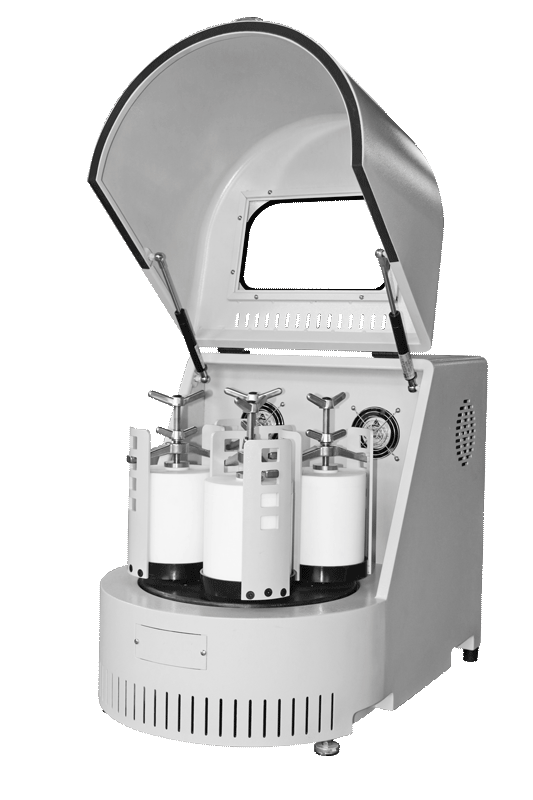
In advanced ceramics, particle size has a direct influence on powder dispersion, forming behavior, sintering performance, surface quality and the consistency of the final ceramic component. For alumina, zirconia, dielectric ceramics, piezoelectric ceramics and other fine ceramic materials, the grinding process must reduce particle size while also controlling contamination, agglomeration and temperature rise.
One of the most common questions from laboratory and R&D users is: How fine can a TENCAN planetary ball mill grind ceramic powders?
Quick answer: TENCAN planetary ball mill product specifications state that the minimum discharge particle size can reach approximately 0.1 µm (100 nm) under suitable grinding conditions. The actual result varies with the ceramic material, feed size, grinding jar and media, speed, milling time, dry or wet process, temperature and other process parameters.
Why Particle Size Matters in Ceramic Powder Preparation
Ceramic processing is highly sensitive to particle-size distribution. Finer and more uniformly dispersed powders can improve packing behavior and help create a more consistent green body before sintering. However, simply pursuing the smallest possible particle size is not always the correct goal. The process must also consider powder chemistry, contamination limits, slurry stability, downstream forming methods and the required final properties.
In ceramic R&D and sample preparation, planetary ball milling is commonly used for:
- Alumina and zirconia ceramic powder preparation
- Electronic and dielectric ceramic materials
- Piezoelectric ceramic formulations
- Ferrite and magnetic material preparation
- Ceramic glaze and pigment mixing
- Electronic glass and functional powder processing
- Nanomaterial and composite-material research
How Does a Planetary Ball Mill Produce Fine Ceramic Powder?
A planetary ball mill uses a compound motion. The grinding jars rotate around their own axes while simultaneously revolving around the central planetary disk. This creates repeated high-energy movement of the grinding balls and powder inside the jars.
During milling, several mechanisms work together:
- Impact: grinding balls repeatedly collide with the ceramic particles.
- Shear: particles are compressed and sheared between moving grinding media.
- Friction: sliding and rolling contact further reduces particle size.
- Mixing and dispersion: repeated motion helps redistribute the powder throughout the jar.
Compared with conventional low-energy tumbling mills, planetary motion provides a much higher energy input in a compact laboratory system. This is why planetary mills are widely used when fine or submicron grinding is required.
How Fine Can TENCAN Planetary Ball Mills Grind Ceramic Materials?
For TENCAN planetary ball mills, published product specifications indicate that the minimum discharge particle size can reach 0.1 µm. This is approximately 100 nm. It should be treated as an achievable equipment-level reference rather than a guaranteed result for every ceramic material.
The final particle size depends on the complete grinding system. For example, dense alumina, zirconia, ferrites, ceramic pigments and softer ceramic raw materials may respond very differently even when processed in the same machine. A practical evaluation should therefore focus on the required particle-size distribution rather than only the nominal minimum value.
Key Factors That Determine the Final Particle Size
| Factor | Why It Matters | Practical Consideration |
|---|---|---|
| Material hardness and toughness | Different ceramics fracture at different rates. | Hard, dense oxides usually require a more wear-resistant grinding system. |
| Feed particle size | Smaller and more uniform feed generally makes fine grinding easier to control. | Pre-crushing may be useful when the feed is too coarse for the selected jar and media size. |
| Grinding jar material | Jar hardness, wear and chemical compatibility affect both efficiency and contamination. | Zirconia, corundum and agate are common choices for ceramic-related applications. |
| Grinding media size and material | Media controls impact energy, collision frequency and contact area. | A staged or mixed media-size strategy may be more effective than using one ball diameter only. |
| Rotation speed | Higher speed can increase grinding energy but also increases heat and wear. | Use a speed appropriate for the material, jar and target particle size rather than simply maximizing rpm. |
| Grinding time | Longer milling can reduce size until the process reaches a practical limit. | Excessive milling may increase contamination, heat and agglomeration without meaningful size reduction. |
| Dry vs. wet milling | Liquid media can improve dispersion and reduce some agglomeration problems. | Solvent compatibility, slurry concentration and downstream drying must be considered. |
| Temperature control | High-energy milling can generate heat. | Intermittent grinding and cooling intervals can help protect heat-sensitive materials and process stability. |
Standard, Horizontal or Full-Directional Planetary Mill: Which Is Better for Ceramics?
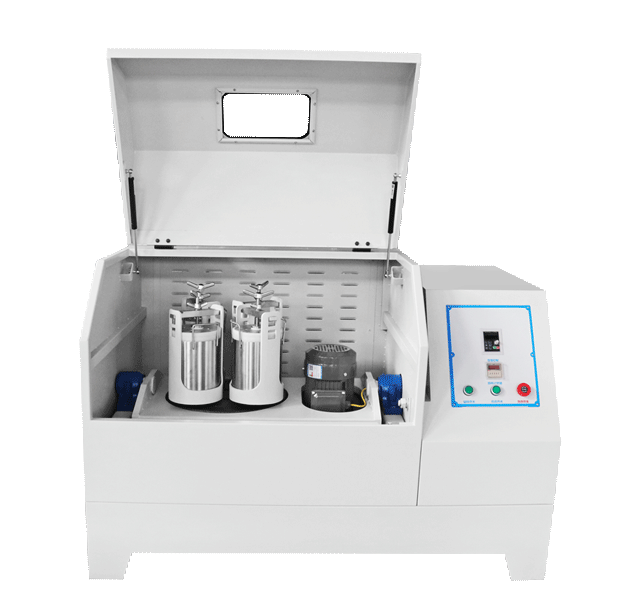
Different planetary mill structures address different processing problems. For normal laboratory ceramic powder preparation, a vertical semi-circular planetary mill is a versatile starting point. For powders that tend to settle, stick to the bottom of the jar or require more multidirectional mixing, a horizontal or full-directional design may be more suitable.
| Mill Type | Main Advantage | Typical Ceramic Use |
|---|---|---|
| Semi-Circular Planetary Ball Mill | Compact laboratory design with high-energy planetary grinding. | Routine R&D, ceramic formulation, fine powder preparation and small-batch testing. |
| Horizontal Planetary Ball Mill | Horizontal jar arrangement increases disordered movement and helps reduce fixed-bottom settling. | Materials that tend to settle or require stronger mixing during fine grinding. |
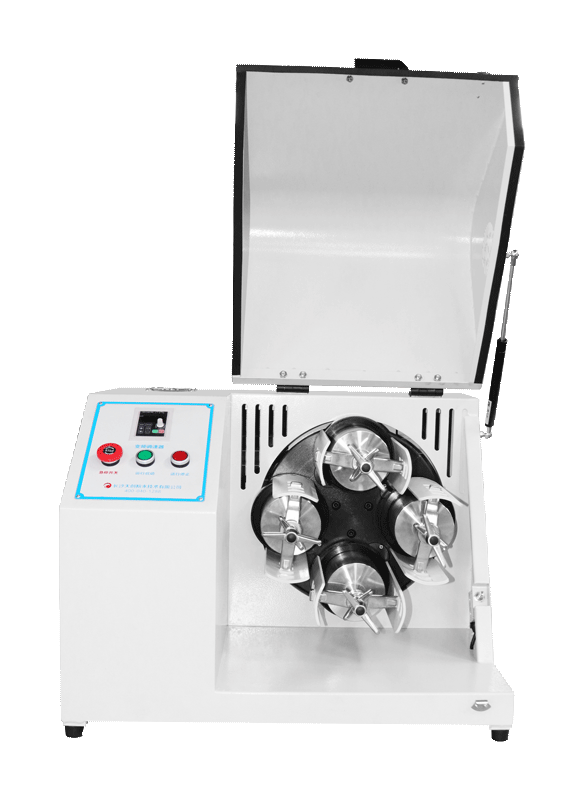
| Full-Directional Planetary Ball Mill | Adds multidirectional 360° movement to the planetary grinding action. | Ceramic powders or slurries where settling, sticking or mixing uniformity is a major concern. |
How to Select Grinding Jars and Media for Ceramic Powders
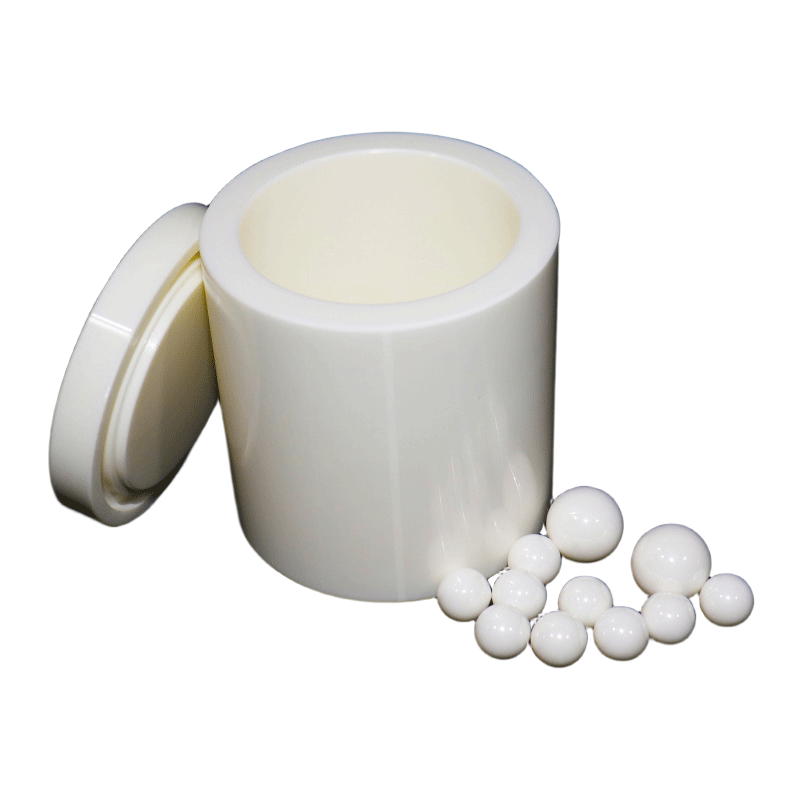
In ceramic grinding, the jar and grinding media are not secondary accessories. They are part of the process. An unsuitable material combination can introduce unwanted elements into the powder or reduce grinding efficiency.
| Jar Material | Main Characteristics | When to Consider It |
|---|---|---|
| Zirconia | High hardness, wear resistance and corrosion resistance with a low risk of introducing metallic contamination. | Fine grinding of ceramic powders, battery materials and other contamination-sensitive samples. |
| Corundum / Alumina | High hardness, wear resistance and good ceramic compatibility; the material is comparatively brittle. | Alumina-related ceramic systems and applications requiring a ceramic jar rather than metal. |
| Agate | Natural hard material with good wear resistance and low impurity introduction for high-purity grinding. | High-purity samples, ceramic glaze slurries, non-metallic minerals and research materials. |
| Stainless Steel | Strong, durable and widely used for general grinding. | Suitable when metallic contamination is acceptable; usually not the first choice for high-purity ceramic powders. |
How to Optimize Planetary Ball Milling for Ceramic Powders
Reaching a fine particle size is usually the result of process optimization rather than one machine setting. A practical optimization sequence is:
- Define the material and target. Record the ceramic composition, feed size, desired particle-size distribution, batch quantity and contamination limits.
- Select a compatible jar and grinding media. Match hardness, wear resistance and chemical compatibility to the powder.
- Choose a suitable media-size combination. Large media provide stronger impact, while smaller media provide more contact points for fine grinding.
- Set the filling level correctly. Avoid overfilling the jar, which can restrict media movement and reduce grinding efficiency.
- Increase speed progressively. Do not assume the maximum speed will always produce the best result. Monitor heat, wear and powder behavior.
- Use timed grinding and cooling cycles when necessary. This is especially important for heat-sensitive powders or long milling runs.
- Consider wet milling for difficult dispersion. Wet processing may help when fine particles re-agglomerate during dry grinding.
- Measure the result. Confirm the actual particle-size distribution after each test and adjust one process variable at a time.
Common Mistakes When Chasing Nano-Scale Ceramic Powder
- Treating 0.1 µm as a guaranteed result for every material. The stated minimum is an equipment capability reference; material properties and process conditions still control the real result.
- Focusing only on rpm. Jar material, ball size, loading, milling time and wet/dry conditions can be equally important.
- Ignoring contamination. A powder can reach the target particle size and still fail the application if jar or media wear introduces unacceptable impurities.
- Running continuously without temperature control. Excess heat can change slurry behavior, increase agglomeration or affect temperature-sensitive materials.
- Using one grinding recipe for every ceramic material. Alumina, zirconia, ferrites, glass powders and ceramic pigments do not respond identically to the same milling conditions.
Planetary Ball Mill vs. Conventional Ball Mill for Ceramic Grinding
| Comparison | Conventional Ball Mill | Planetary Ball Mill |
|---|---|---|
| Motion | Primarily drum rotation and cascading media. | Jar rotation plus revolution around a planetary disk. |
| Energy input | Generally lower. | Higher energy density for fine laboratory grinding. |
| Typical role | Bulk grinding, mixing and larger-volume processing. | Fine grinding, sample preparation, formulation development and nanomaterial research. |
| Process control | Depends strongly on machine design and drum operating conditions. | Well suited to controlled laboratory tests using defined jars, media, speed and milling cycles. |
FAQ: Ceramic Grinding with a Planetary Ball Mill
What is the minimum particle size of a TENCAN planetary ball mill?
TENCAN product specifications state that the minimum discharge particle size can reach approximately 0.1 µm (100 nm). The actual result depends on the material and grinding process.
Can a planetary ball mill produce nano-sized ceramic powder?
It can be used for nano-scale powder preparation. However, whether a specific ceramic reaches the required nano-scale distribution must be confirmed through actual milling tests and particle-size measurement.
Is wet milling or dry milling better for ceramic powders?
Both are possible. Dry milling is simpler when the material disperses well without liquid. Wet milling can be useful for reducing agglomeration and improving dispersion, but the liquid medium, slurry concentration and downstream drying process must be compatible with the ceramic system.
Which grinding jar is suitable for alumina or zirconia ceramics?
Zirconia and corundum jars are common choices for ceramic grinding because of their hardness and wear resistance. The best option depends on the ceramic composition and the elements that must be avoided in the final powder.
Which planetary mill is better for materials that settle at the bottom?
A horizontal or full-directional planetary ball mill can be considered when settling, sticking or insufficient multidirectional mixing is a problem. These designs change the material movement inside the grinding jar compared with a standard vertical configuration.
Conclusion
For ceramic powder preparation, TENCAN planetary ball mills can reach a published minimum discharge particle size of approximately 0.1 µm (100 nm) under suitable conditions. But the equipment model alone does not determine the final result. Ceramic composition, feed size, jar and media material, grinding-ball size, rotational speed, milling time, dry or wet processing and temperature control all influence the achievable particle size and powder quality.
If you are selecting a planetary ball mill for alumina, zirconia, electronic ceramics, ceramic glaze, ferrite or another ceramic material, prepare five pieces of information before choosing the equipment: material name, feed size, target particle size, batch capacity and contamination requirements. These details make it much easier to select the appropriate mill structure, jar material and grinding process.
Need help selecting a planetary ball mill for ceramic grinding?
Send TENCAN your material, feed size, target particle size, batch capacity and contamination requirements. Contact TENCAN for a suitable grinding solution »