
What is a Lab Jaw Crusher? A Compact Crushing Device for Sample Preparation in Laboratories
Introduction: What is a Lab Jaw Crusher?
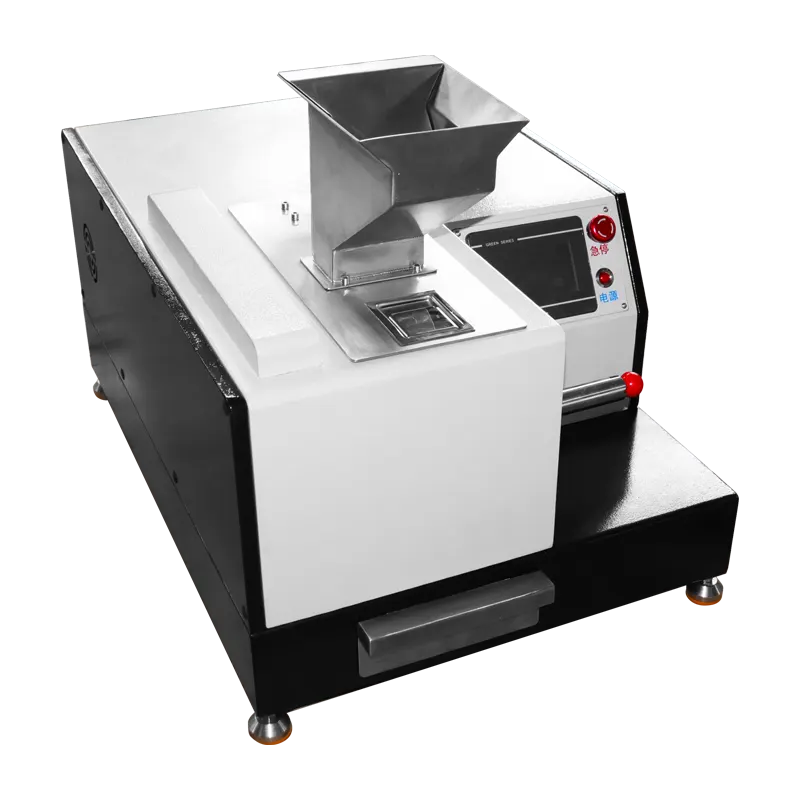
At its core, a lab jaw crusher is a specialized crushing device used in laboratories, research institutions, and quality control departments to reduce hard, brittle materials like ores, rocks, minerals, and coal into finer, uniform particles for subsequent analysis or processing. It mimics the chewing motion of human jaws, with a fixed jaw and a moving jaw that periodically closes to crush the material. This equipment serves as the first step in many sample preparation workflows, ensuring that samples meet the required particle size for milling, sieving, or chemical testing.
Core Function and Working Principle
The lab jaw crusher transforms coarse feed material (typically up to 60–100 mm) into a product with particle sizes ranging from 1 mm to 10 mm, depending on the discharge gap adjustment. The working principle is based on a simple but robust mechanism: a motor drives an eccentric shaft via a belt and pulley, causing the movable jaw to move up and down. When the movable jaw rises, the angle between the toggle plate and the movable jaw increases, pushing the jaw towards the fixed jaw and crushing the material by compression, shear, and impact. When the movable jaw descends, the toggle plate angle decreases, and the crushed material falls out of the discharge opening.
Key process parameters include the discharge opening size (adjustable via wedge or shim system), the feed size, the hardness of the material, and the moisture content. Materials with high moisture (above 8%) may cause clogging. The crushing chamber is designed with wear-resistant liners (usually manganese steel) that protect the frame and can be replaced when worn. The feed opening and discharge opening must be matched to the required final particle size for efficient operation.
Key Components and Technology
A typical lab jaw crusher consists of several critical components:
- Frame: Usually a welded steel structure (lighter and stronger) or cast iron, providing rigidity and support. Modern designs favor welded frames with finite element analysis for strength optimization.
- Jaw Plates: The fixed and movable jaws are lined with high‑manganese steel or composite materials. These are the main wear parts and must be replaceable. Some models offer ceramic (e.g., alumina or zirconia) liners for contamination‑free crushing of high‑purity samples.
- Eccentric Shaft and Bearings: The eccentric shaft generates the reciprocating motion of the movable jaw. High‑quality bearings are essential for smooth operation and long service life.
- Toggle Plate: Acts as both a force transmitter and a safety device. If uncrushable material enters the chamber, the toggle plate fractures first, protecting more expensive components.
- Discharge Adjustment Mechanism: Allows quick and precise setting of the output particle size. Common methods include wedge blocks or shim plates.
For laboratory use, many crushers are fully enclosed to reduce dust and noise. Some models include a hopper with a sealing cover and a sample collection drawer.
Key Performance Indicators and Selection Criteria
When choosing a lab jaw crusher, consider these factors:
- Feed Size: The maximum dimension of the material that can enter the crusher. Most lab crushers accept feed up to 60–100 mm. Ensure the crusher can handle your largest sample pieces.
- Discharge Size Range: Typically adjustable from about 1 mm to 15 mm. For finer outputs, a secondary crusher (e.g., roll crusher or disc mill) may be needed.
- Crushing Ratio: Usually between 4:1 and 15:1. A higher ratio means fewer passes are needed.
- Material Hardness: Standard lab jaw crushers handle materials with compressive strength up to 150–320 MPa. For extremely hard samples, heavy‑duty models are available.
- Throughput: Small lab models produce 50–300 kg per hour. Choose according to your daily sample volume.
- Contamination Control: For trace analysis, crushers with ceramic (zirconia or alumina) jaws or tungsten carbide coatings can minimize metal contamination.
- Maintenance and Cleaning: Quick‑release jaws, easy‑access discharge opening, and dust‑sealed design simplify cleaning between different samples.
- Automation: Some modern lab jaw crushers come with digital gap setting, automatic lubrication, and remote monitoring capabilities.
Application Fields and Selection Advice
Lab jaw crushers are widely used in:
- Mining and Metallurgy: Crushing ore samples for grade analysis, flotation tests, or leaching studies.
- Geology and Exploration: Processing rock cores and field samples for mineral identification.
- Cement and Building Materials: Breaking clinker, limestone, and gypsum for quality control.
- Chemical Industry: Preparing raw materials like coal, coke, and fertilizers for laboratory analysis.
- Environmental Monitoring: Crushing soil, solid waste, or construction debris for composition testing.
- Research and Education: Teaching mineral processing principles and conducting small‑scale experiments.
Selection Tip: For routine analysis in geological labs, a standard model with manganese steel jaws and adjustable discharge (1–10 mm) is sufficient. For high‑purity sample preparation (e.g., in lithium battery material research), choose a crusher with ceramic‑lined jaws and a dust‑free design. If you need to process very hard materials (e.g., silicon carbide or granite), opt for a heavy‑duty version with stronger bearings and a larger eccentric shaft.
参考资料
- Lab Jaw Crusher product page: https://www.labballmill.com/products/broken-series/lab-jaw-crusher.html
- Related products: Double Roll Crusher, Jaw Crusher, Stainless Steel Vibration Crusher
- Laboratory Jaw Crusher 2025 model: https://www.labballmill.com/products/broken-series/lab-jaw-crusher-2025.html