
Boîte à gants avec système de purification : Guide technique & sélection
Boîte à gants avec système de purification : un guide technique complet sur le fonctionnement des laboratoires à faible teneur en oxygène et à faible humidité
Une boîte à gants scellée peut isoler un échantillon de l’environnement de la pièce, mais l’isolation seule ne maintient pas automatiquement une atmosphère stable à faible teneur en oxygène et en humidité lors d’une utilisation répétée en laboratoire. Chaque transfert de matériau, mouvement des gants, imperfection d’étanchéité, source d’humidité résiduelle et vapeur de procédé peut modifier l’atmosphère à l’intérieur de la chambre.
A boîte à gants avec système de purification résout ce problème en combinant une chambre de travail étanche avec circulation continue des gaz, élimination de l'oxygène et de l'humidité, contrôle de la pression, surveillance en ligne, transfert contrôlé des matériaux et restauration du système de purification .
TENCAN Référence en GBP: Dans les conditions standards indiquées au présent TENCAN page produit (une atmosphère et 20 °C constante), la boîte à gants de purification GBP est spécifiée pour H2O ≤1 ppm et O2 ≤1 ppm . La valeur de vide publiée dans la chambre de transition est <100Pa , le taux de fuite est ≤0,05 vol%/h , et la capacité de pression de la boîte est -3000 à +3000 Pa . La stabilité de fonctionnement réelle dépend de l'état du système, du transfert de matériaux, de la qualité du gaz et des procédures de laboratoire.
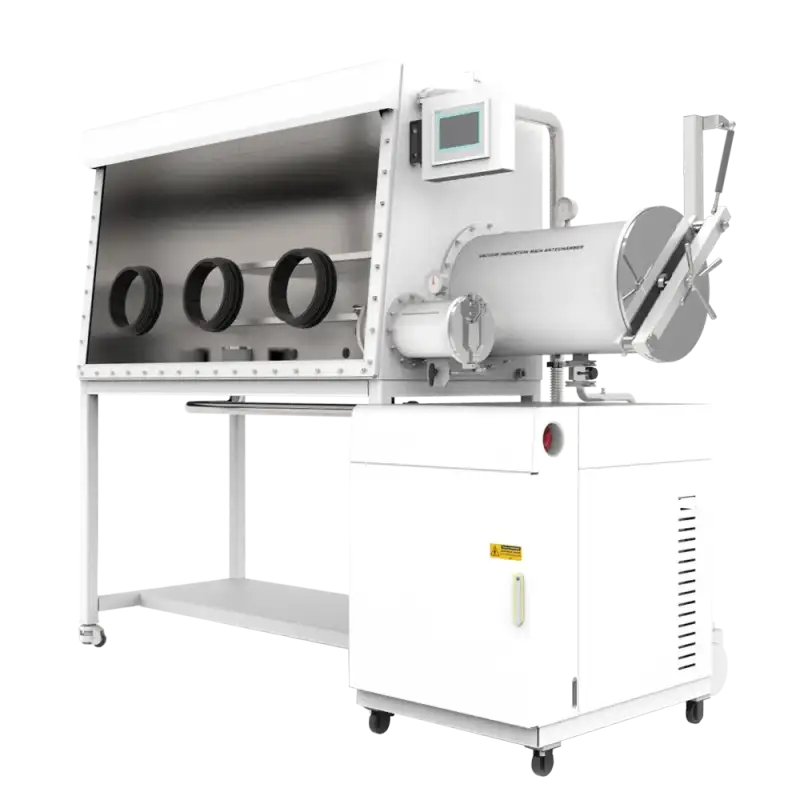
Qu’est-ce qu’une boîte à gants avec système de purification ?
Une boîte à gants de purification est une enceinte scellée conçue pour manipuler des matériaux sous atmosphère contrôlée tout en éliminant en permanence les traces d'oxygène et de vapeur d'eau du gaz interne.
Ceci est différent d’une simple boîte d’isolation ou d’une boîte à gants de remplacement sous vide. Une chambre scellée de base peut être remplie d'azote ou d'argon, et une boîte à gants sous vide peut éliminer une grande partie de l'air ambiant avant le remplissage de gaz inerte. Cependant, aucune des deux méthodes ne fournit à elle seule la même suppression continue en boucle fermée de O.2 et H2O pendant le fonctionnement quotidien.
TENCAN divise actuellement ses produits pour boîtes à gants en trois approches principales:
| Taper | Méthode principale de contrôle de l'atmosphère | Logique de sélection typique |
|---|---|---|
| Boîte à gants en acrylique GBT | Isolation, micro-vide ou remplacement du gaz sous vide selon le modèle ; les configurations sélectionnées peuvent ajouter une purification. | Haute visibilité, isolation compacte du laboratoire et applications où la configuration GBT sélectionnée peut répondre à l'atmosphère requise. |
| Boîte à gants sous vide en acier inoxydable GBV | Mise sous vide suivie d'un remplissage de gaz inerte. | Fonctionnement scellé robuste où le remplacement du vide est suffisant et où une purification continue à faible ppm n’est pas nécessaire. |
| Boîte à gants de purification GBP | Remplacement du gaz, circulation en boucle fermée et purification continue de l'eau et de l'oxygène. | Processus nécessitant une faible teneur en oxygène et en humidité pendant des transferts de matériaux répétés et un fonctionnement continu. |
Comment fonctionne le système de purification
La façon la plus simple de comprendre une boîte à gants de purification est de la considérer comme une boucle fermée de contrôle de l'atmosphère.: remplacer → faire circuler → purifier → surveiller → corriger → restaurer.
1. Remplacement initial du gaz
Avant de commencer la purification à faible ppm, la chambre principale doit d'abord être remplie d'un gaz inerte approprié afin que la majeure partie de l'air ambiant soit déplacée. Le courant TENCAN Le système GBP prend en charge les deux remplacement du gaz manuel et automatique pour la boîte principale.
2. Circulation continue du gaz
Un système de circulation déplace le gaz interne à travers la boucle de purification. Cela transporte à plusieurs reprises des traces de contaminants de la chambre de travail vers les matériaux d'élimination de l'eau et de l'oxygène.
3. Élimination de l’eau et de l’oxygène
Le TENCAN La configuration GBP utilise une colonne de purification avec des matériaux dédiés à l'élimination de l'eau et de l'oxygène. Selon les spécifications actuelles du produit, le système standard peut être configuré avec un colonne de purification unique , tandis que des configurations à simple et double colonne sont disponibles en fonction du modèle de boîte à gants et des exigences.
Au lieu de décrire une chimie de purificateur ou une température de réaction universelle pour chaque boîte à gants, l'approche technique la plus sûre consiste à suivre le matériau de purification et la procédure de restauration spécifiés pour le système installé.
4. Surveillance en ligne de l'oxygène et de l'humidité
Le courant TENCAN Listes de configuration GBP:
- Analyseur d'humidité: Plage de 0 à 1 000 ppm, précision d'affichage de 0,1 ppm
- Transmetteur d'oxygène: Plage de 0 à 1 000 ppm, précision d'affichage de 0,1 ppm
- Capteur de pression: -Plage de pression relative de 2 500 à +2 500 Pa sur la configuration répertoriée
- Contrôle par écran tactile: données de fonctionnement et état de l'équipement affichés via le système de contrôle
La résolution de l’analyseur ne doit pas être confondue avec les performances atmosphériques garanties. Un incrément d’affichage de 0,1 ppm ne signifie pas que la boîte est spécifiée pour maintenir 0,1 ppm. Le courant TENCAN La spécification de l'atmosphère GBP est ≤1 ppm H2O et ≤1 ppm O2 dans des conditions standards .
5. Contrôle de la pression
Le mouvement des gants modifie le volume interne de la boîte. Le contrôle de la pression compense ces changements et contribue à maintenir une atmosphère stable. Le TENCAN Le système GBP comprend un contrôle de pression actionné au pied pour le réapprovisionnement et l'évacuation du gaz pendant le fonctionnement.
6. Restauration du système de purification
Les matériaux de purification accumulent progressivement les contaminants. TENCAN décrit la restauration des matériaux de purification comme un processus automatique pris en charge par le système : l'opérateur définit les conditions de restauration requises et le système de contrôle termine la procédure de restauration.
L'intervalle de restauration correct n'est donc pas un nombre fixe de jours ou de semaines. Cela dépend de la fréquence de transfert, de la charge de contamination, de l'historique d'exploitation, du comportement de récupération de l'atmosphère et des critères de restauration du système.
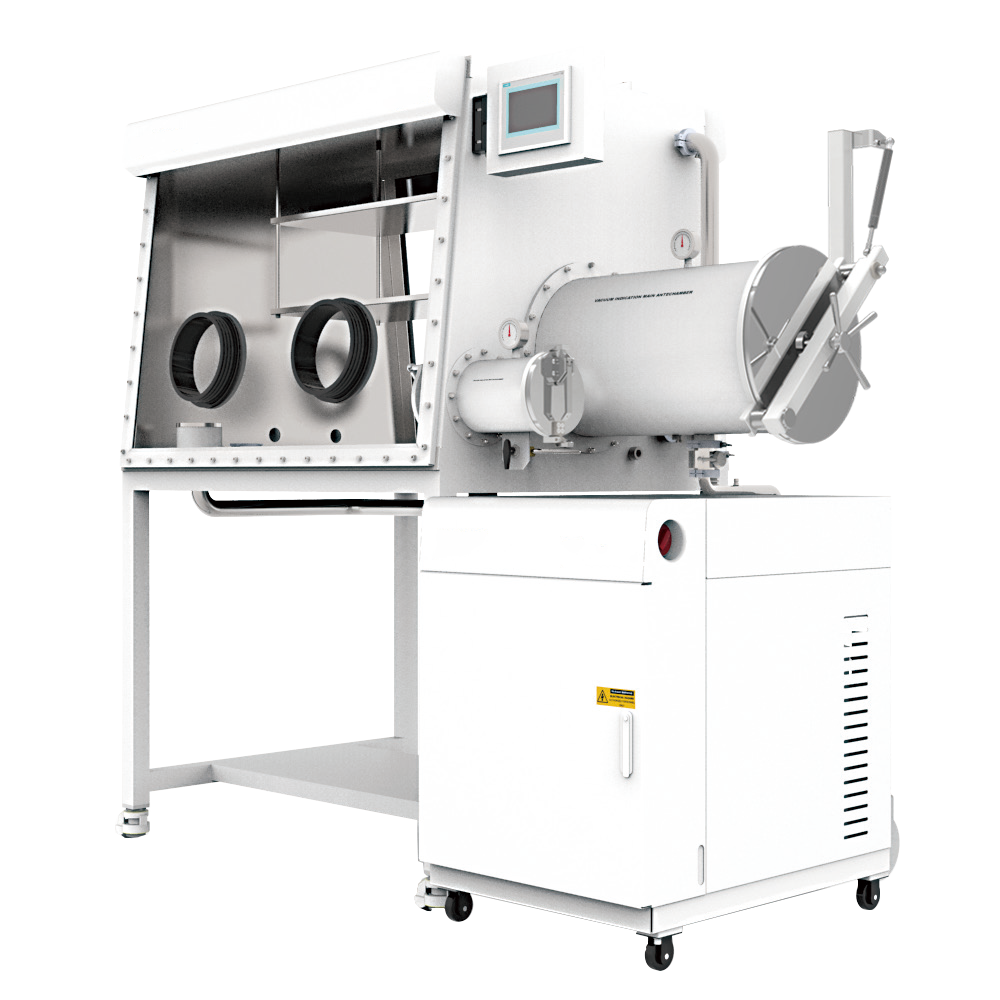
Publié TENCAN Paramètres techniques GBP
| Paramètre | Spécification publiée | Sélection / Fonctionnement Remarque |
|---|---|---|
| Teneur en eau | ≤1 ppm dans des conditions standards | La stabilité réelle dépend de la charge, du transfert et de l'état du système. |
| Teneur en oxygène | ≤1 ppm dans des conditions standards | Définissez l’objectif du laboratoire en fonction des exigences réelles du processus. |
| Vide de la chambre de transition | <100Pa | Utilisez la procédure de transfert d’équipement plutôt qu’un inventaire de cycles fixe générique. |
| Taux de fuite | ≤0,05 vol%/h | L’état du joint et l’intégrité des gants restent critiques pendant l’utilisation. |
| Capacité de pression de gaz de la boîte | -3000 à +3000 Pa | Les points de consigne de fonctionnement normal doivent suivre la configuration de la machine. |
| Surveillance de l'humidité | 0 à 1 000 ppm, précision d'affichage de 0,1 ppm | Affichage à écran tactile. |
| Surveillance de l'oxygène | 0 à 1 000 ppm, précision d'affichage de 0,1 ppm | Affichage à écran tactile. |
| Chambre de transfert standard | DN385 × 588 mm | Chambre SUS304 avec tiroir sur la configuration indiquée. |
| Chambre de transfert d'outils | DN150 × 350 mm | Peut être personnalisé selon les besoins. |
| Filtres HEPA | Précision de filtration de 0,3 μm | Utilisé pour filtrer la poussière et protéger le chemin de circulation. |
Configurations du modèle GBP : taille de la chambre et nombre de gants
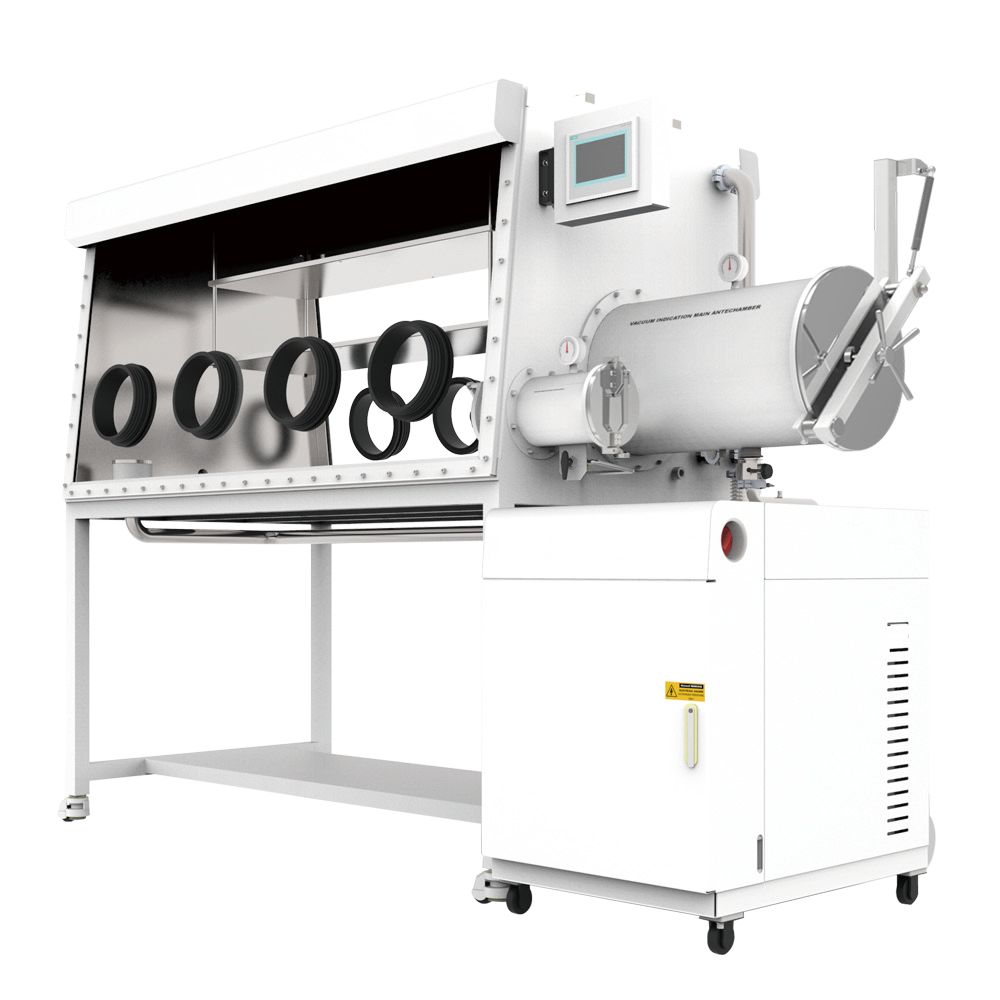
Le système de dénomination GBP combine la série de produits, la désignation de la profondeur/largeur de la chambre, le fonctionnement simple ou double face et le nombre de gants. TENCAN répertorie actuellement les configurations multi-gants à 2, 3, 4, 6 et plus en fonction de la taille de la chambre.
| Exemple de modèle | Taille de l'armoire (mm) | Taille de l'équipement (mm) | Opération | Gants |
|---|---|---|---|---|
| GBP800-2 | 1200×800×930 | 1915 × 830 × 1830 | Simple face | 2 |
| GBP1000D-4 | 1200 × 1200 × 930 | 1915 × 1260 × 1830 | Double face | 4 |
| GBP1000S-3 | 1500 × 1000 × 930 | 2215 × 1060 × 1830 | Simple face | 3 |
| GBP1000D-6 | 1500 × 1000 × 930 | 2215 × 1060 × 1830 | Double face | 6 |
| GBP1000D-8 | 1900×1000×930 | 2615 × 1060 × 1830 | Double face | 8 |
Les options de colonne de purification simple et double sont répertoriées pour la série GBP actuelle. Les dimensions et la configuration finales doivent être confirmées par rapport au modèle sélectionné et aux exigences personnalisées.
L'antichambre : l'interface de transfert la plus importante
La chambre de transition permet aux matériaux de se déplacer entre la pièce et la chambre purifiée sans exposer directement l'espace de travail principal à l'air ambiant. Un mauvais fonctionnement de l’antichambre est l’un des moyens les plus rapides d’augmenter la charge d’épuration.
Une séquence de transfert pratique
- Confirmez que la porte intérieure de la chambre de transition est complètement fermée.
- Ouvrez la porte extérieure et chargez les articles secs et préparés.
- Fermez et scellez la porte extérieure.
- Utiliser la procédure d'évacuation et/ou de remplacement du gaz inerte requise par le système.
- Répétez la séquence de transfert selon les exigences de la procédure de l'équipement et de l'atmosphère cible.
- Confirmez que la chambre est dans les bonnes conditions de pression avant d'ouvrir la porte intérieure.
- Déplacez les articles dans la chambre de travail et fermez rapidement la porte intérieure.
Évitez de publier une règle universelle de « deux cycles », de « trois cycles » ou de « trois cycles ou plus ». La procédure requise dépend du vide atteint, du volume de la chambre de transition, de la pureté du gaz, des conditions de charge et des exigences en matière d'atmosphère du laboratoire.
Pourquoi Ô2 et H2O peut augmenter même dans une boîte à gants de purification
Un système de purification élimine en permanence les contaminants, mais il n’immunise pas la boîte à gants contre la contamination. L'oxygène et l'eau peuvent pénétrer ou être libérés à partir de plusieurs sources.
| Changement observé | Cause possible | Premiers contrôles |
|---|---|---|
| O2 monte rapidement | Entrée d'air, dommages aux gants, problème d'étanchéité, erreur de transfert | Gants, portes, joints, ports et opération d'antichambre récente |
| H2O augmente après le transfert | Charge humide ou hygroscopique, emballages, conteneurs ou gaz humides | Articles récemment introduits et préparation au transfert |
| Les deux se lèvent ensemble | Entrée d’air, charge de transfert importante, problème de circulation/purification | Sceaux, état de circulation, état de purification et procédure d'antichambre |
| Récupération lente | Forte charge de contamination, capacité réduite du purificateur ou circulation restreinte | Tendance historique, état du purificateur, filtres et alarmes de circulation |
| Lectures d'analyseur instables | Changements rapides de processus, état du capteur ou problème d'étalonnage/de service | Comparer la pression, O2, H2O et événements de processus récents |
Pour un workflow de dépannage plus détaillé, consultez le TENCAN FAQ sur la boîte à gants .
Principal TENCAN Fonctions du système GBP
La page produit actuelle répertorie une large gamme de fonctions de contrôle intégrées. Les plus importants pour le fonctionnement quotidien comprennent:
- Contrôle automatique des équipements et détection du fonctionnement
- Remplacement du gaz manuel/automatique du boîtier principal
- Remplacement du gaz manuel/automatique de la chambre de transition
- Contrôle automatique ou manuel de la purification des gaz
- Contrôle de la pression de la chambre actionné au pied
- Restauration automatique des matériaux de purification
- Détection des conditions de travail en ligne
- Paramétrage du système
- Enregistrement des données d'exploitation
- Fonction de secours de gaz de contrôle
- Invites de sécurité, alarmes et fonctions d'interdiction à plusieurs niveaux
- Protection contre les obstructions de la circulation
Fonctions optionnelles répertoriées par TENCAN comprennent l'enregistrement/l'impression de données, le service à distance et le contrôle de la température du système.
Gestion des solvants organiques
Les vapeurs de solvant peuvent affecter les composants de contrôle de l'atmosphère et les matériaux de purification. Le courant TENCAN La configuration GBP répertorie un Système d'adsorption de solvants organiques 21 L installé sur la canalisation de la boîte à gants pour absorber les gaz solvants générés pendant l'utilisation et protéger le système.
Cela ne doit pas être interprété comme une approbation pour chaque solvant ou chaque quantité de solvant. Avant d'utiliser des liquides volatils ou inflammables dans une boîte à gants, définissez le solvant, la charge de vapeur attendue, la température du procédé, l'équipement électrique et la configuration de sécurité requise.
Où les boîtes à gants de purification sont utilisées
TENCAN répertorie actuellement les boîtes à gants de purification pour des applications telles que:
- R&D sur les batteries et leurs matériaux
- Recherche sur le lithium-ion et les batteries de puissance
- Recherche sur les cellules solaires
- Phosphate de fer lithium et matériaux à énergie nouvelle
- R&D et production OLED
- Recherche sur les supercondensateurs
- Recherche et fabrication de lampes spéciales
- Travaux de résistance, TIG, laser, plasma et brasage
- Chimie fine
- Fournitures médicales sélectionnées et procédés de haute pureté
L'atmosphère requise pour une application spécifique doit provenir de la chimie des matériaux, des spécifications du processus et des SOP du laboratoire. Évitez d'attribuer un O universel2/H2Numéro O pour chaque processus de batterie, de pérovskite, organométallique ou à électrolyte solide, à moins que cette exigence ne soit soutenue par la méthode de recherche réelle.

Argon ou azote : quel gaz de travail choisir ?
L'argon et l'azote sont couramment utilisés comme gaz de travail, mais le choix correct dépend de l'échantillon et de la chimie du processus.
| Facteur | Argon | Azote |
|---|---|---|
| Comportement chimique | Gaz nobles ; sélectionné lorsqu’une inertie chimique maximale est requise. | Convient à de nombreux processus, mais n’est pas universellement inerte envers tous les matériaux. |
| Coût / approvisionnement | Souvent plus cher selon l'approvisionnement local. | Souvent plus économique et largement disponible. |
| Règle de sélection | Choisissez quand le matériau ou le procédé est incompatible avec l'azote. | Choisissez uniquement lorsque le matériau et le procédé sont compatibles avec l'azote. |
Le choix du gaz doit être basé sur la compatibilité des matériaux, et non sur une affirmation générique selon laquelle un gaz est toujours « meilleur ».”
Comment sélectionner une boîte à gants avec système de purification
Étape 1 : Définir l’atmosphère requise
Commencez par le vrai O2 et H2O exigence du matériau ou du procédé. Si votre spécification est simplement « aussi basse que possible », déterminez si ≤1 ppm est réellement nécessaire ou si un système plus simple peut répondre au processus.
Étape 2 : Définir la taille de la chambre et le nombre d'opérateurs
Énumérez les équipements et les opérations qui doivent tenir dans la boîte. Considérer:
- Nombre d'opérateurs
- Nombre et emplacement des ports de gants
- Balance, spin coater, presse, mélangeur ou autres instruments à l'intérieur de la chambre
- Distance de travail et portée
- Étagères internes requises
- Fonctionnement simple ou double face
Étape 3 : Définir l'élément de transfert le plus important
La taille de l’antichambre est souvent plus importante que ce que les utilisateurs pensent. La norme TENCAN La configuration GBP répertorie une chambre de transition principale DN385 × 588 mm et une chambre de transition d'outil DN150 × 350 mm. Des chambres de transition personnalisées peuvent être envisagées lorsque les dimensions standard ne permettent pas d'accueillir l'élément le plus grand.
Étape 4 : Estimer la charge de contamination
La demande de purification augmente avec:
- Cycles d'antichambre fréquents
- Matériaux humides ou poreux
- Un grand nombre de conteneurs et d'outils
- Vapeur de solvant
- Grand volume de chambre
- Longues heures de fonctionnement
- Fuites ou gants endommagés
Ces informations permettent de déterminer si une configuration à colonne de purification simple ou double est plus appropriée.
Étape 5 : Spécifier les interfaces et les utilitaires internes
La configuration GBP répertoriée comprend une prise interne 220 V, 10 A et des interfaces de rechange KF40 pour les connexions de gaz ou de liquide. Des traversées supplémentaires électriques, sous vide, gaz, liquide, signal ou autres doivent être définies avant la fabrication.
Étape 6 : Définir l'utilisation du solvant
Si des vapeurs de solvant sont attendues, spécifiez le nom du solvant, la quantité, la fréquence et la température du processus afin que la configuration d'adsorption et de sécurité puisse être évaluée.
Étape 7 : Définir les exigences en matière de données et de contrôle
Décidez si vous avez besoin d'un remplacement automatique du gaz, d'un enregistrement des données historiques, d'une impression, d'un service à distance ou d'un contrôle de la température. Ces exigences peuvent affecter à la fois la configuration du système et le devis.
Installation et préparation du site
Les exigences d'installation finale dépendent du modèle et des options sélectionnés, mais une équipe d'achat doit confirmer les éléments suivants avant l'expédition:
- Surface au sol disponible et voie d'accès au laboratoire
- Dimensions des portes, ascenseurs et couloirs
- Tension électrique, fréquence et phase
- Type de gaz de travail et modalités d'approvisionnement
- Régulation de la pression du gaz requise par le système sélectionné
- Emplacement de la pompe à vide et accès au service
- Besoins de ventilation ou d'échappement pour le processus de laboratoire
- Dégagement autour de l'armoire de purification pour entretien
- Tous les instruments internes qui doivent être installés avant le positionnement final
Évitez d'utiliser une règle générique de « purge initiale de 4 à 8 heures » ou de « régénération dans les 24 heures » pour chaque boîte à gants. La mise en service doit suivre la procédure de l'équipement fourni et les relevés d'atmosphère réels.
Pratiques opérationnelles qui aident à maintenir un faible O2 et H2O
- Vérifier l'atmosphère avant les travaux sensibles. Confirmer O2, H2O et la pression sont stables.
- Préparez les éléments de transfert. Minimisez les emballages inutiles, les matériaux poreux et l’humidité résiduelle.
- Utilisez correctement la chambre de transition. N'ouvrez jamais les deux portes de transfert en même temps.
- Surveillez les tendances après les transferts. Le temps de récupération peut révéler une charge de contamination croissante ou une baisse des performances du purificateur.
- Inspectez les gants et les joints. De petits défauts mécaniques peuvent entraîner des problèmes d’atmosphère persistants.
- Gérer les vapeurs de solvant. Gardez les récipients fermés lorsque cela est possible et utilisez la configuration d'adsorption appropriée.
- Gardez le chemin de circulation dégagé. Répondez aux alarmes de filtre ou d’obstruction de circulation.
- Restaurer le système de purification si nécessaire. Utilisez l’état du système et l’historique de fonctionnement plutôt qu’un intervalle de calendrier fixe.
Pour une explication plus approfondie de la logique de contrôle de l'atmosphère, voir Comment contrôler l'oxygène et l'humidité dans une boîte à gants en atmosphère inerte .
Coût total de possession : ce qu'il faut prendre en compte
Le prix d’achat ne représente qu’une partie du coût à long terme. Au lieu d'utiliser des durées de vie fixes des composants qui peuvent ne pas s'appliquer au système installé, comparez les catégories de coûts d'exploitation elles-mêmes.:
- Consommation de gaz de travail
- Gaz utilisé pendant les cycles de remplacement et de transition de la chambre
- Ressources de restauration du système de purification
- Remplacement des gants
- Remplacement du filtre
- Service de pompes à vide
- Service ou étalonnage de l’analyseur
- Entretien des joints et joints toriques
- Remplacement du matériau d'adsorption des solvants en cas d'utilisation
- Consommation électrique
- Main d’œuvre d’entretien préventif et d’entretien
Les intervalles de remplacement réels doivent être basés sur les recommandations d'utilisation, d'inspection et du fabricant plutôt que sur des hypothèses génériques annuelles ou pluriannuelles.
Intégration d'équipement dans une boîte à gants de purification
Une boîte à gants de purification peut devenir l’espace de travail central à atmosphère contrôlée pour une expérience en plusieurs étapes. En fonction de la taille de la chambre et des interfaces, les laboratoires peuvent intégrer des balances, des presses compactes, des équipements de revêtement, des instruments électriques ou d'autres dispositifs de préparation d'échantillons.
Avant d'installer un équipement électrique dans la boîte à gants, évaluez:
- Dimensions hors tout et possibilité de passage de l'équipement à travers la chambre de transition
- Exigences en matière de charge et de prise électriques
- Génération de chaleur
- Pièces mobiles et portée de l'opérateur
- Raccordements vide ou gaz
- Génération de solvants ou de vapeurs de procédé
- Compatibilité de l'instrument avec l'atmosphère d'azote ou d'argon choisie
Pour le broyage de poudre sensible à l'air, TENCAN fournit également des configurations spécialisées de broyeur à boulets planétaire pour les flux de travail en boîte à gants, mais l'intégration de l'équipement doit être planifiée en fonction des dimensions de la chambre et du processus complet plutôt que ajoutée après l'installation.
Allégations courantes à éviter lors de la spécification d'une boîte à gants de purification
“En dessous de 0,1 ppm indéfiniment”
Ne l'utilisez pas comme norme TENCAN Réclamation en GBP. La spécification actuellement publiée est ≤1 ppm H2O et ≤1 ppm O2 dans des conditions standards.
“Trois cycles de purge suffisent toujours”
Les exigences de transfert dépendent du niveau de vide, du volume de la chambre, de la pureté du gaz et de l'objectif du processus.
“La régénération est requise tous les quelques jours ou semaines”
L'intervalle de restauration dépend de la charge de contamination et des performances du système.
“Chaque processus de batterie ou de sulfure nécessite le même objectif ppm”
Les exigences relatives à l'atmosphère spécifiques au matériau doivent provenir des spécifications réelles du processus ou d'une méthode de recherche validée.
“L'argon est toujours nécessaire”
Le choix du gaz dépend de la compatibilité des matériaux. L'azote convient à de nombreuses applications, tandis que certains matériaux nécessitent de l'argon ou un autre environnement spécifié.
FAQ : Boîte à gants avec système de purification
Quel niveau d'oxygène et d'humidité le TENCAN Portée de la boîte à gants GBP ?
Les spécifications actuelles du produit indiquent ≤1 ppm H2O et ≤1 ppm O2 dans des conditions standard d'une atmosphère et d'une température constante de 20 °C.
Quelle est la différence entre une boîte à gants de purification et une boîte à gants sous vide ?
Une boîte à gants sous vide utilise principalement l’évacuation et le remplacement de gaz inertes pour créer une atmosphère contrôlée. Une boîte à gants de purification ajoute une circulation de gaz en boucle fermée et une élimination continue de l'eau et de l'oxygène pour maintenir de faibles niveaux d'impuretés pendant le fonctionnement en cours.
Le système de purification fonctionne-t-il automatiquement ?
Le courant TENCAN Le système de contrôle GBP prend en charge le contrôle automatique ou manuel de la purification des gaz et la restauration automatique des matériaux de purification une fois les conditions de restauration définies.
La chambre principale et l'antichambre peuvent-elles remplacer le gaz automatiquement ?
Oui. TENCAN répertorie les fonctions de remplacement de gaz manuel/automatique pour le boîtier principal et la chambre de transition.
Quelle est la taille de la chambre de transition standard ?
La chambre de transition standard répertoriée est DN385 × 588 mm , avec une chambre de transition d'outil plus petite DN150 × 350 mm sur la configuration publiée.
Une boîte à gants de purification peut-elle gérer les vapeurs de solvant ?
TENCAN répertorie un système d'adsorption de solvant organique de 21 L pour la configuration GBP. Le solvant réel, la quantité et les conditions de traitement doivent toujours être examinés avant utilisation.
À quelle fréquence le système d’épuration doit-il être restauré ?
Il n’existe pas d’intervalle universel. Utilisez les critères de restauration de l'équipement, le comportement de récupération de l'atmosphère, l'historique de contamination et la procédure du fabricant.
Comment choisir entre des colonnes de purification simples et doubles ?
Tenez compte du volume de la chambre, des heures de fonctionnement, de la fréquence de transfert, de la charge de contamination et des performances de récupération requises. TENCAN répertorie les options à une et deux colonnes pour les modèles GBP.
Quelles informations dois-je fournir avant de demander un devis ?
Fournir la candidature, obligatoire O2/H2Niveau d'oxygène, gaz de travail, dimensions de la chambre, nombre de gants, élément de transfert le plus important, équipement interne, utilisation du solvant, interfaces requises et alimentation électrique locale.
Conclusion
Le principal avantage d’une boîte à gants avec système de purification n’est pas simplement qu’elle peut être remplie de gaz inerte. Sa valeur est la capacité de surveiller et maintenir en permanence une atmosphère contrôlée pendant que le laboratoire utilise réellement la boîte .
TENCAN'Le système GBP de associe le remplacement des gaz de la chambre principale et de la chambre de transition, la purification en boucle fermée, la surveillance de l'oxygène et de l'humidité, le contrôle de la pression, la restauration automatisée des matériaux de purification, l'enregistrement des données et la détection de l'état de l'équipement. Dans les conditions standard indiquées dans la spécification actuelle, le système est évalué pour ≤1 ppm H2O et ≤1 ppm O2.
Un bon processus de sélection commence par le véritable flux de travail: sensibilité du matériau, atmosphère cible, taille de la chambre, nombre d'opérateurs, dimensions de transfert, type de gaz, équipement interne, charge de solvant et fonctions de données/contrôle requises. Faire correspondre ces facteurs au système de purification est plus utile que de choisir une boîte à gants uniquement en fonction du nombre ppm annoncé le plus bas.
Besoin d'aide pour configurer une boîte à gants de purification ?
Envoyer TENCAN votre candidature, cible O2/H2Niveau d'O, taille de la chambre, gaz de travail, dimensions de transfert, équipement interne et exigences en matière de solvant. Contact TENCAN pour une configuration GBP adaptée »