
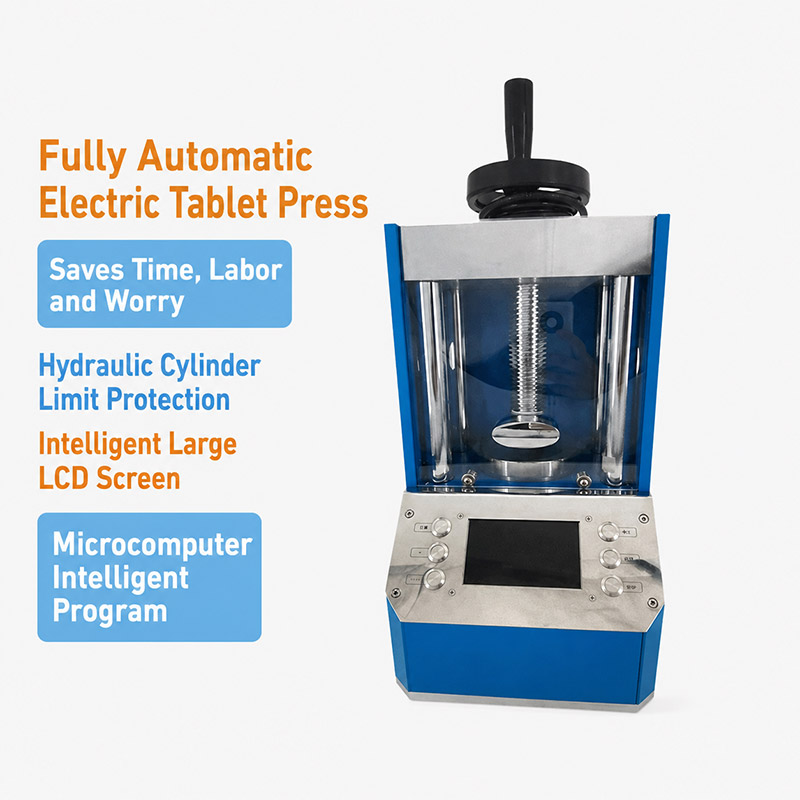
Automatic Electric Tablet Press: A Reliable Solution for Laboratory and Small-Scale Tablet Production
When you need to produce uniform tablets from powdered materials in a laboratory or small-scale production environment, the manual press can quickly become a bottleneck. Repeated hand cranking, inconsistent pressure, and limited throughput often lead to frustration and variable results. The automatic electric tablet press was developed to solve these exact problems, offering a more reliable, efficient, and reproducible way to compress powders into solid tablets.
Why Choose an Automatic Electric Tablet Press?
In many labs, researchers start with a manual tablet press because it is simple and inexpensive. However, as the number of samples grows, or when tighter tolerances on tablet weight and hardness are required, manual operation shows its limits. An automatic electric tablet press eliminates the need for physical effort, provides consistent compression force, and can operate continuously without operator fatigue. This makes it ideal for:
- Preparing calibration pellets for XRF or IR analysis
- Producing small batches of pharmaceutical or nutraceutical tablets
- Forming catalyst pellets, ceramic green bodies, or metal powder compacts
- Creating uniform samples for dissolution, hardness, or stability testing
By automating the pressing cycle, you achieve better reproducibility from tablet to tablet, which is essential for both research and quality control.
How an Automatic Electric Tablet Press Works
Despite its advanced automation, the operating principle remains straightforward. The machine consists of a sturdy frame, an electric motor, a transmission mechanism (often a cam or hydraulic system), and a set of dies and punches. Here is the typical sequence:
- Die filling: A feeder or hopper delivers a precise volume of powder into the die cavity. On some models, a forced feeding system helps with poorly flowing powders.
- Compression: The motor drives the upper punch downward. The punch enters the die and compresses the powder against the lower punch. The machine controls the applied pressure (usually adjustable) to form a compacted tablet.
- Ejection: After the dwell time, the upper punch retracts, and the lower punch rises to eject the finished tablet. A take-off mechanism or chute collects the tablet.
- Repeat: The cycle repeats automatically at a set speed, often dozens to hundreds of tablets per hour depending on the model.
Key parameters that can be set on a modern automatic electric tablet press include compression force, tablet thickness, filling depth, and production speed. Some advanced machines also offer pre-compression to de-air the powder and improve tablet quality.
Key Applications in Laboratories and Industries
Pharmaceutical and Nutraceutical Development
When formulating new drug compounds or dietary supplements, researchers need to create small batches of tablets for stability studies, dissolution testing, and bioavailability assays. An automatic press ensures each tablet has near-identical weight and hardness, reducing variability in test results.
Analytical Sample Preparation
Techniques like X-ray fluorescence (XRF) and infrared (IR) spectroscopy often require a flat, homogeneous pellet or disk. The automatic electric tablet press can produce these pellets under controlled pressure, improving measurement accuracy compared to hand-pressed samples.
Ceramic and Powder Metallurgy Research
Green compacts of ceramic powders or metal powders need uniform density before sintering. The automatic press provides consistent compaction, which directly affects the final mechanical properties of the sintered part.
Chemical and Catalyst Production
Catalysts are often supplied as pellets. Lab-scale automatic tablet presses allow researchers to test different formulations and compaction conditions before scaling up to production.
How to Select the Right Automatic Electric Tablet Press
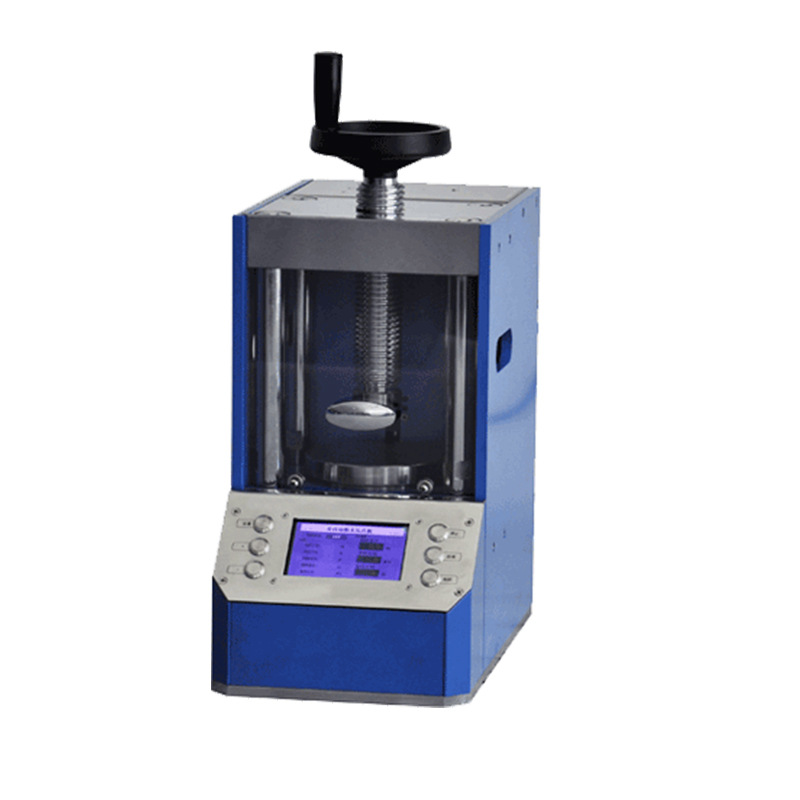
Choosing the right machine depends on your specific requirements.
1. Production Volume
For a lab that makes a few dozen tablets per day, a compact single-punch automatic press is sufficient. If you need several hundred tablets per hour, a rotary (multi-station) press may be more appropriate.
2. Tablet Size and Shape
Check the maximum diameter and thickness the machine can handle. Most lab presses accommodate diameters ranging from a few millimeters up to about 25 mm. Some models allow custom-shaped tooling (round, oval, square).
3. Compression Force
Materials vary in compressibility. Softer powders require lower force; hard or abrasive powders need higher force and robust construction. Typical lab presses offer forces from 20 kN to 100 kN.
4. Powder Flow Properties
If your powder flows poorly, look for a model with a forced feeding system (like a paddle or vibratory feeder). This ensures consistent die filling and tablet weight uniformity.
5. Control and Data Logging
For R&D work, you may want programmable pressure, force monitoring, and the ability to record production parameters. Many automatic electric tablet press units offer touch-screen interfaces and USB data export.
6. Safety and Compliance
If you work in a regulated environment (pharmaceutical, food), ensure the machine meets GMP standards, is easy to clean, and has safety interlocks.
Common Considerations for Successful Tablet Pressing
- Moisture content: Powders that are too dry may not bind well; powders that are too wet may stick. Control humidity during storage and pressing.
- Lubricant or binder: For many formulations, adding a small amount of lubricant (e.g., magnesium stearate) improves tablet release and reduces sticking.
- Die wear: Over time, the die and punches wear, affecting tablet dimensions. High-quality tool steel or carbide dies last longer.
- Ventilation: Fine powder can create dust. Choose a machine with dust-proof design or use in a ventilated area.
An automatic electric tablet press is a valuable upgrade for any laboratory that needs to produce consistent, high-quality tablets from powders. By automating the pressing process, you save time, reduce human error, and improve reproducibility. When selecting a machine, focus on your tablet specifications, material properties, and throughput needs. With the right equipment, tablet production becomes a reliable, repeatable part of your workflow.