
Multi Station Magnetic Stirrer: A Practical Guide for Batch Liquid Mixing in Research Labs
If you have ever managed a lab where multiple samples need to be stirred simultaneously under consistent conditions, you know the frustration of juggling between single-point stirrers. A multi station magnetic stirrer solves this exactly – it allows you to process several vessels at once, each with its own stirring speed, while using a single compact unit. In this guide, we walk through how these devices work, what they can do, and how to pick one that fits your daily work.
What Is a Multi Station Magnetic Stirrer?
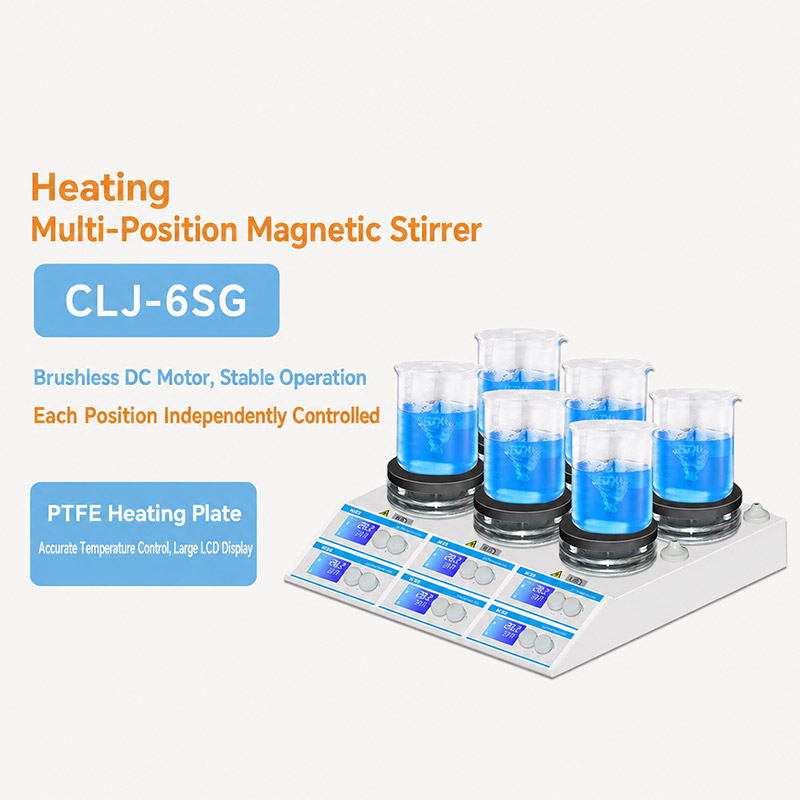
A multi station magnetic stirrer, also called a multipoint magnetic stirrer, is a laboratory device that houses more than one built-in stirring drive inside one housing. Each station generates its own rotating magnetic field. When you place a stirring bar inside a container (usually a glass beaker or a flask) and set it on the station, the bar rotates and mixes the liquid.
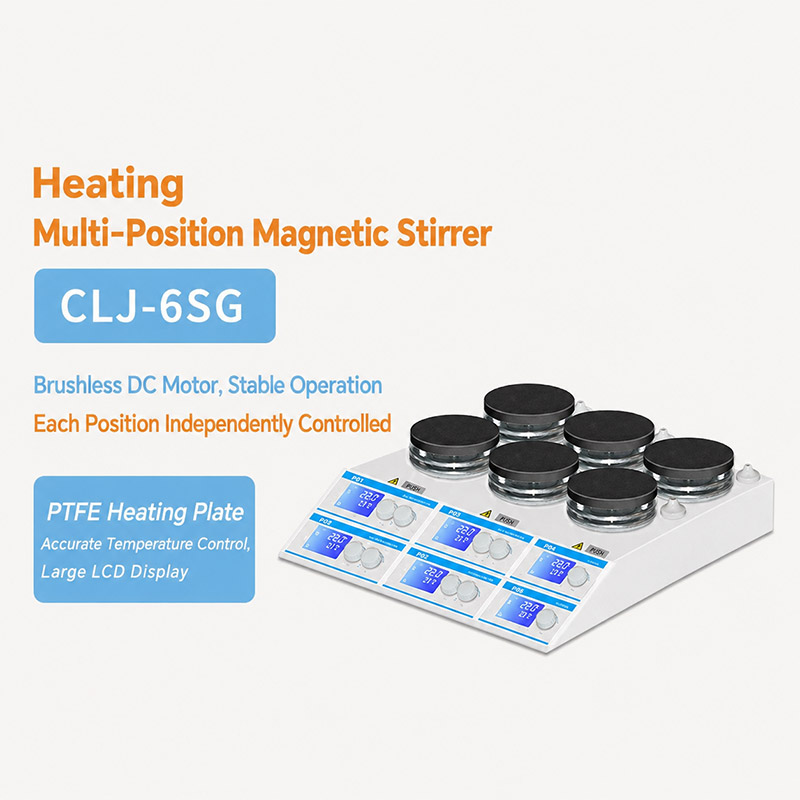
The key difference from a single-point stirrer is the number of stations: from 4 to 6, 15, or even 60 stations depending on the model. For routine synthesis screening, dissolution testing, or sample preparation, a 4‑station or 6‑station unit is typically sufficient. Some advanced models allow you to synchronize all stations or control each station independently.
How Does a Multi Station Magnetic Stirrer Work?
Inside the stirrer, each station has a permanent magnet connected to a small motor. When power is on, the motor rotates the magnet, creating a spinning magnetic field. This field passes through the bottom of the vessel and forces the encapsulated stirring bar inside the liquid to spin. The bar’s rotation creates a vortex, promoting mixing, dissolution, heat transfer, or suspension of solids.
Most multi station units offer separate speed controls for each station, so you can stir one beaker at 300 rpm and another at 800 rpm at the same time. The speed range of typical laboratory magnetic stirrers is about 100–1300 rpm, although some units can go lower for gentle cell culture mixing or higher for viscous samples.
Because stirring is achieved through magnetic coupling, there is no mechanical shaft penetrating the vessel – this means zero contamination from lubricants and a completely sealed mixing environment, which is essential when dealing with sensitive reactions or biological media.
Common Applications of a Multipoint Magnetic Stirrer
Parallel Synthesis and Catalytic Screening
In chemistry labs, researchers often need to test several reaction conditions at once. A multi station stirrer lets you run multiple identical reactions while varying temperature, catalyst, or concentration – all under the same stirring environment. This improves the consistency of your comparative data.
Dissolution Testing and Sample Preparation
Pharmaceutical and analytical labs use multipoint stirrers to prepare a series of standard solutions or perform dissolution tests. Each vessel can be stirred at a precisely controlled speed, and the digital control (within ±1 rpm accuracy) helps meet strict method requirements.
Biological and Cell Culture Mixing
Some magnetic stirrers are designed with slow‑speed capability (e.g., 50 rpm or lower) and can be used in CO₂ incubators or water baths. They provide gentle, uniform mixing without damaging shear‑sensitive cells or proteins.
Water Quality and Environmental Analysis
Multi station stirrers are also used in turbidity calibration systems where multiple sediment suspension samples must be kept in homogeneous suspension for accurate measurements. The independent speed control of each station ensures that even if one sample settles faster, its stirring can be adjusted individually.
Key Factors to Consider When Choosing a Multi Station Magnetic Stirrer
1. Number of Stirring Positions
The most common configurations are 4, 6, 15, and 60 stations. For routine lab work, 4 or 6 stations are usually enough. If you run high‑throughput screening or multi‑parameter optimization, a 15‑ or 60‑station unit may be better, although it takes up more bench space.
2. Speed Control and Accuracy
Digital control with a feedback loop gives you more reliable set‑speed reproducibility. If your experiment requires exact stirring speeds (e.g., dissolution testing per USP), look for a model with accuracy within ±1 rpm. Analog controls are simpler and often cheaper, but they lack the fine adjustment needed for quantitative methods.
3. Independent vs. Synchronous Control
Some multi station stirrers allow each station to be set independently; others share a common speed for all stations. Independent control is more flexible, especially when the sample volumes or viscosities differ between containers.
4. Heating Function (If Needed)
Many multipoint stirrers come with an integrated hot plate under each station. If you need to heat and stir simultaneously, select a model with a heating function. Check the maximum temperature and surface material (ceramic or aluminum‑alloy) to ensure chemical compatibility and even heating.
5. Operation Environment
If you plan to use the stirrer inside a water bath or a CO₂ incubator, make sure the model is rated for such environments. Specialty stirrers are designed with sealed electronics and corrosion‑resistant surfaces for these conditions.
Common Questions About Multi Station Magnetic Stirrers
What is the difference between multi station and multi point magnetic stirrer?
There is no difference – “multi station” and “multi point” refer to the same type of equipment. Both mean multiple stirring positions built into one unit.
Can I use different vessel sizes on the same stirrer?
Yes. Each station typically has a maximum stirring capacity (e.g., 1000 mL or 2000 mL). As long as the vessel is smaller than that limit and fits the station’s size, you can mix beakers of different volumes on different stations, as long as you use a properly sized stirring bar.
How do I avoid cross‑contamination between stations?
Each station is independent – there is no shared liquid path. However, if a splash or spill occurs, it can contaminate adjacent vessels. Use covers for your beakers and maintain a clean bench to minimize risk.
Getting Reliable Support and the Right Configuration
Selecting the best multi station magnetic stirrer depends on your specific workflow, sample volume, need for heating, and budget. An experienced supplier can help you match the right number of stations, control type, and optional accessories to your research tasks. For example, if you need a multi station magnetic stirrer with independent digital control and heating, TENCAN provides a range of configurations suitable for chemistry, biology, and environmental labs. Their technical team can advise on the appropriate speed range, maximum capacity per station, and compatibility with your containers.
At the end of the day, a well‑chosen multipoint stirrer not only saves bench space but also dramatically improves the reproducibility of your batch mixing or parallel reactions. By understanding the working principle and the key selection criteria, you can make a confident decision that serves your lab for years.