
TENCAN Dual Planetary Ball Mill Selection Guide for Laboratory Milling
A focused brief for dual planetary ball milling
A dual planetary ball mill should be chosen from the sample backward, not from a headline specification forward. The laboratory usually has a material, a target particle size or alloying outcome, a workable batch mass, and at least one constraint that can decide the purchase: contamination, oxygen or moisture exposure, heat, cleaning time, floor space, or the need to reproduce a method across operators. A useful procurement guide starts with those conditions and asks which configuration can meet them.
This article is narrower than a multi-brand market survey. It is not a Top 5 or Top 10 ranking, and it does not imply that one product is universally superior. The documented candidate for this review is the TENCAN Dual Planetary Ball Mill. No other international product entries are included because no official product documentation for them was available in the sources used for this guide; naming brands without that evidence would create a false comparison rather than a procurement aid.
One documented option is still enough to build a better request for quotation. The buyer can use the TENCAN entry to expose missing data, define an acceptance test, and decide whether the dual planetary format deserves a trial. The output should be a list of questions TENCAN can answer for a specific sample, not a set of unverified claims about speed, fineness, or cost.
Why the shortlist contains one documented option
Online equipment lists often mix laboratory mills, production mills, accessories, and supplier catalogues in one table. That makes the ranking look comprehensive while leaving the buyer unable to compare like with like. A defensible shortlist needs the same product level, the same application, and official information for each entry. In this edition, only the TENCAN dual planetary ball mill has a supplied product page and product images. The disciplined response is to reduce the candidate count and keep the article honest.
This is not a statement that other suppliers do not exist. It is a statement that no verifiable official entries were available here for a same-level table. Adding names, guessed specifications, or borrowed distributor pages would weaken the guide. Buyers who later obtain official pages for other international models can apply the same criteria in this article and extend the table without changing the method.
The practical output is a configuration brief. The buyer should be able to send TENCAN a sample description, a target, a batch mass, a jar and media preference, a sealing requirement, and an acceptance test. TENCAN can then confirm what is possible, what must be ordered separately, and what data must be generated on the buyer's material.
The documented option: TENCAN Dual Planetary Ball Mill
The reference entry for this guide is the TENCAN Dual Planetary Ball Mill. Its product page identifies the model and category and provides product images. Those images help with orientation, but they do not replace a specification sheet. The supplied material does not state jar volumes, station count, speed range, motor rating, achievable particle size, or validated applications for this model. Those points must be confirmed by TENCAN for the intended sample.
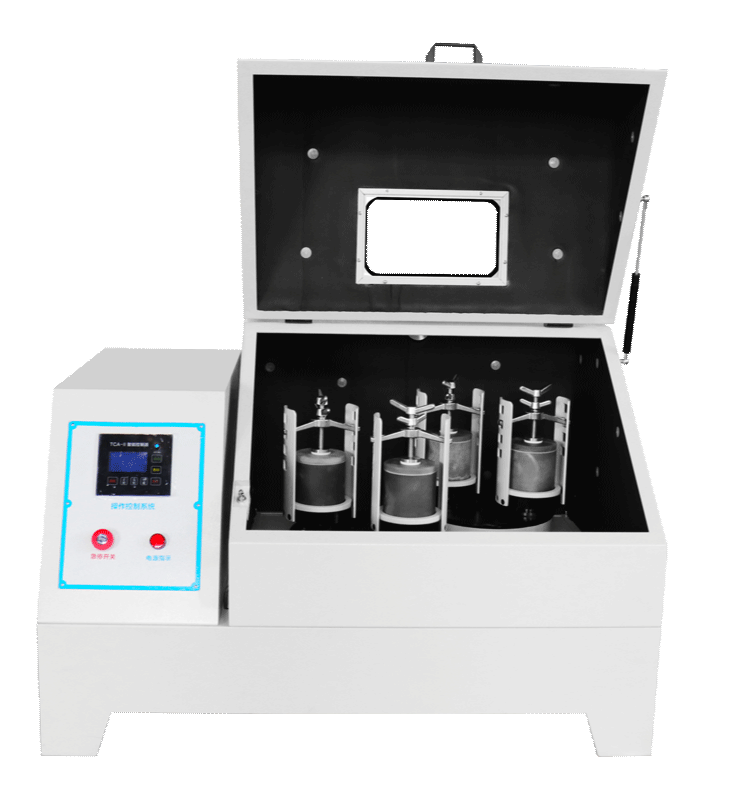
At the product-name level, the word dual should be clarified rather than interpreted. It may refer to a drive arrangement, a pair of milling positions, a dual-mode control concept, or another design choice. The buyer should ask what dual denotes here, how many jars can be run in a typical setup, whether jars must be balanced, and which jar sizes are supported. The answer affects batch planning, counterweighting, cleaning, and the number of samples processed per campaign.
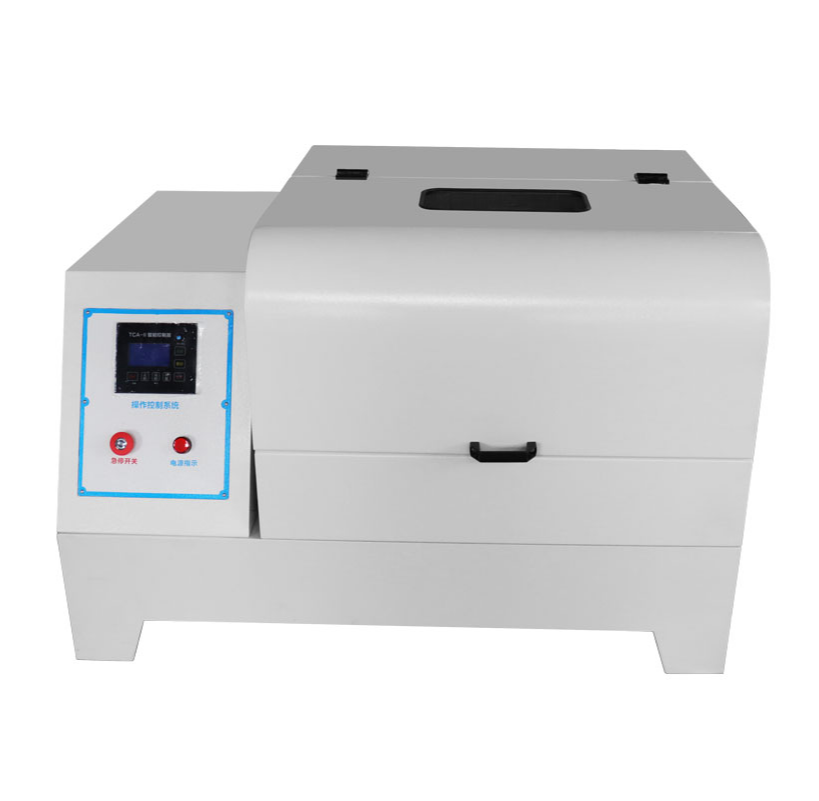
Three configuration conversations matter most: the jar and media train, sealing and atmosphere, and scale and control. Each should be written into the quotation rather than left to a general product description.
Configuration conversation one: jar train and grinding media
Ask TENCAN to propose a jar material and a media material for the actual sample. Provide hardness, abrasive character, chemical sensitivity, starting mass, target fineness, and the analytical method that will judge success. Ask about working volume versus nominal volume, recommended fill range, media size distribution, and whether the jar can be sealed and handled safely during the run. A jar that is convenient for one powder may be a poor choice for another because of wear, contamination, or cleaning difficulty.
Configuration conversation two: sealing and atmosphere
If the powder must be protected from air, moisture, or dust, the quotation should state how the jar is sealed, what atmosphere is used, how the seal is checked, and how the sample is transferred after milling. Do not assume that a standard lid is gas-tight for every solvent or reactive powder. Ask for the compatible gasket material, the seal's operating limits, and the cleaning procedure between runs. For air-sensitive work, the handling chain outside the mill may matter as much as the mill itself.
Configuration conversation three: scale, control, and repeatability
Ask how a method is entered, stored, and repeated. Confirm the available jar stations, the usable batch mass for the proposed jar, the speed or energy settings, run and pause programming, and any logging or lockout features. If results must be compared across operators, request a method template and a demonstration of recipe recall. Also ask which consumables, spare jars, gaskets, and media are needed to keep the method running. These details affect lifetime cost and repeatability.
Selection criteria that decide whether a dual planetary mill fits
The following criteria are deliberately material-led. They can be used with TENCAN or with any future official candidate that a buyer adds to the table. No single criterion proves a mill will work; the purpose is to make the unknowns visible before purchase.
Sample identity, target, and measurement
Define the sample by composition, source, starting particle size if known, moisture or solvent content, and any prior processing. State the target in a measurable form: a particle-size distribution, a phase change, a degree of mixing, a surface-area target, or a specified test result. Name the analytical method and the laboratory that will perform it. A request for fine powder without a measurement method invites an untestable promise. If the target is mechanical alloying, define the desired phase or microstructure and the evidence that will demonstrate it.
Batch mass and usable jar volume
Distinguish the sample mass needed for analysis from the batch mass needed for the next stage of work. A method-development batch may be small, while a reproducibility study may require several identical runs. Ask TENCAN to relate nominal jar volume to usable working volume, media load, and the mass of powder that can be processed without overfilling. Confirm whether the proposed jar setup requires a counterweight or a matched pair. The buyer should plan for sampling, cleaning, and rejected runs as well as the successful batch.
Wet or dry route
State whether the process will be dry, wet, or evaluated both ways. For wet milling, identify the liquid, the desired solids loading, the compatibility of the jar and seal with that liquid, and the downstream separation or drying step. For dry milling, describe the feed condition, dust handling, and any tendency to coat the jar or media. Ask whether the proposed configuration is intended for the chosen route and what cleaning method follows. A process that works in one route should not be assumed to transfer to the other without a trial.
Jar material and contamination budget
The jar and media are part of the experiment. Ask for the candidate materials, their reported composition, and the wear or contamination risk they present for the sample. Define the maximum acceptable contamination by the analytical method, not by appearance. If the sample is abrasive, request a wear assessment or a realistic life expectation for the jar and media under the proposed duty. If the sample is reactive, confirm compatibility with the jar, gasket, and media. Keep a blank run or a control sample in the test plan so contamination can be measured rather than assumed.
Sealing, atmosphere, and handling
List the gases, solvents, and environmental conditions that the powder must tolerate. Ask how the jar is filled, sealed, leak-checked, and opened. Confirm whether the mill can run with the selected sealed jar and whether an inert-atmosphere glovebox is needed for filling or recovery. Request a written procedure for the whole handling chain. If the sample is air-sensitive, a mill alone does not solve the problem; the transfer, storage, and analysis steps must also be controlled.
Energy input, heat, and duty cycle
Do not select a mill from a single speed figure. Ask how the proposed method controls energy input, how long the mill can run, and what pause or cooling strategy is recommended for the sample. Request temperature data for a comparable run or a plan to measure jar temperature on the buyer's material. For heat-sensitive powders, a shorter run with intermediate cooling may be more informative than a long continuous run. The quotation should state the duty cycle assumed in the recommendation and the conditions under which the mill should be stopped and inspected.
Cleaning, changeover, and throughput
Calculate the realistic number of runs per day, including filling, sealing, milling, cooling, opening, cleaning, and analysis. Ask which parts contact the sample and how they are cleaned. Confirm whether the jar and media can be reused for a different material, and what cleaning validation is recommended. If cross-contamination is critical, request a dedicated jar set. Throughput should be expressed in completed, verified batches rather than in nominal milling time alone.
Workflow fit: where the TENCAN entry should be evaluated
The TENCAN dual planetary ball mill should be evaluated against a defined workflow, not against a generic desire for smaller particles. The following examples show what to clarify. They are application hypotheses for the buyer's own testing, not validated TENCAN performance claims.
Brittle ceramics, minerals, and mixed oxide powders
For brittle feed, the key questions are starting size, target size, jar and media wear, and whether the powder will be characterized by laser diffraction, sieving, or microscopy. Ask TENCAN for a jar and media recommendation that matches the sample's abrasiveness and the contamination limit. Plan a small screening run, then a replicate run to test repeatability. Do not transfer a result from one ceramic to another without checking the new sample's hardness and fracture behavior.
Metals, alloys, and mechanical alloying
Mechanical alloying places more emphasis on energy transfer, atmosphere, and contamination than on a single particle-size target. Define the starting powders, the desired phase, the ball-to-powder ratio to be tested, and the evidence of alloying. Ask whether the proposed jar and media are suitable for the powder mixture and whether the seal can maintain the required atmosphere. Include a process-control agent or a cold-welding mitigation strategy only if it is compatible with the final material. The acceptance test should examine phase and composition, not just particle size.
Air-sensitive, reactive, or moisture-sensitive samples
For these materials, start with the handling chain. Ask how the jar is sealed and transferred, what gasket material is proposed, and whether the mill can be operated with the chosen sealed jar. Request a leak-check method and a sample-recovery procedure. The buyer should test the whole chain with a surrogate powder before committing a valuable batch. A mill that meets its mechanical specification can still fail this application if the jar opening, transfer, or analysis step exposes the powder to air.
Heat-sensitive and low-melting materials
Define the maximum sample temperature and the duration at that temperature. Ask for a run-and-pause strategy, a jar-temperature measurement plan, and a stopping criterion. Consider whether the jar can be cooled before opening and whether the sample will pick up moisture during cooling. A short trial with temperature logging is more informative than a supplier's general statement that the mill is suitable for heat-sensitive work. If the material softens or sticks, the jar and media combination may need to change as well.
Small-batch method development and scale-up
Method development benefits from a clear record of jar type, media load, fill level, speed setting, run time, and handling. Ask TENCAN which parameters can be fixed and which require adjustment. Confirm that a method developed in a small jar can be translated to a larger jar, or ask what must be revalidated. A successful small batch is a starting point, not proof of scale-up. The buyer should define the maximum batch that will be tested and the evidence needed before moving to a larger configuration.
Same-level comparison table
The table below compares only at the product level available in the supplied material. It is not a score, and it does not rank TENCAN against unverified suppliers. The last column lists the information that must be confirmed before a purchase order.
| Brand or product | Documented strengths and evidence | Relevant application | Configuration to confirm |
|---|---|---|---|
| TENCAN Dual Planetary Ball Mill | Named dual planetary ball mill on an official product page; product images supplied; configuration details require confirmation. | Laboratory method development and small-batch milling where sample, jar, media, and sealing needs are defined before quotation. | Jar stations and usable volume; jar and media materials; wet or dry mode; sealing and atmosphere; speed and program control; utilities and safety documentation; batch mass; cleaning method. |
Because only one official product entry was available, the table has one row. That is an evidence limitation, not a conclusion about the market. A buyer who adds other international candidates should keep the same columns and require an official product page for each one.
What to send TENCAN before a quotation
A concise technical brief reduces the risk of a mismatched quotation. Prepare the following information in one document, with the sample identified by a laboratory code if confidentiality is required.
- Sample code, composition, source, starting size, and moisture or solvent content.
- Target result and the analytical method that will judge it.
- Batch mass per run, number of runs, and any need for replicate samples.
- Dry, wet, or both; liquid, solids loading, and downstream recovery.
- Jar and media preference, or the maximum acceptable contamination.
- Sealing, atmosphere, and sample-transfer requirements.
- Heat limit, acceptable pause or cooling strategy, and stopping criteria.
- Available utilities, floor space, and site safety requirements.
- Required documentation, training, and acceptance-test method.
- Delivery, installation, spare-parts, and consumable needs.
Ask TENCAN to mark each item as confirmed, not applicable, or requiring testing. This turns a general brochure into a configuration record that can be checked before purchase.
Procurement checklist before purchase
- Confirm the model, jar stations, and supported jar volumes in writing.
- Confirm jar and media compatibility with the actual sample.
- Confirm the seal, gasket, atmosphere, and leak-check method.
- Request safety documentation and utility requirements for the proposed site.
- List spare jars, gaskets, media, and other consumables.
- Agree the acceptance test, sample size, and success criteria.
- Agree documentation, operator training, and maintenance instructions.
- Define cleaning, changeover, and cross-contamination controls.
Do not accept a generic demonstration as proof for your material. The purchase decision should rest on the configuration record and a test plan that reflects the intended workflow.
Acceptance and verification plan
Build acceptance around the buyer's material rather than around a demonstration selected by the supplier. A practical sequence is to define the sample, run a small screening batch, measure the result with the agreed method, repeat the run, and then inspect contamination and handling. Keep records of jar type, media, fill, mass, speed setting, run and pause times, and recovery.
- Record the as-received sample and the target specification.
- Run a blank or control to establish background contamination.
- Run a small screening batch with the proposed jar and media.
- Measure particle size, phase, mixing, or the agreed property.
- Repeat the run to assess method repeatability.
- Check jar wear, sample recovery, and cleaning difficulty.
- Review the data with TENCAN before fixing the final configuration.
This plan does not guarantee a particular result. It does show whether the proposed TENCAN configuration is suitable for the sample and whether the method can be repeated by the people who will use it.
Limits of this guide and responsible claims
Nothing here should be read as a guarantee of particle size, contamination level, or suitability for a specific chemical system. A planetary mill can be a useful tool, but the result depends on jar, media, energy, atmosphere, and analysis. TENCAN should confirm the configuration; the buyer should validate it on the actual sample. No universal ranking, price claim, or performance promise is made in this article.
Sources and further reading
TENCAN product page used for the model name, category identification, and product images: Dual Planetary Ball Mill.
No other sources were used for product claims in this guide. Performance figures and application validation must come from current TENCAN documentation and the buyer's own tests.