
Vacuum Feeder for Laboratory Powder Handling: Features, Working Principle, and Selection Guide
In powder processing laboratories, one of the most persistent challenges is moving fine powders, granules, or small pellets from a storage container into a mill, mixer, or packaging machine without creating dust clouds or contaminating the workspace. Manual scooping is slow, messy, and often inconsistent. This is where a vacuum feeder becomes an essential tool. Designed for clean, automated material transfer, these systems are now widely adopted in research institutions, pilot plants, and small-scale production facilities.
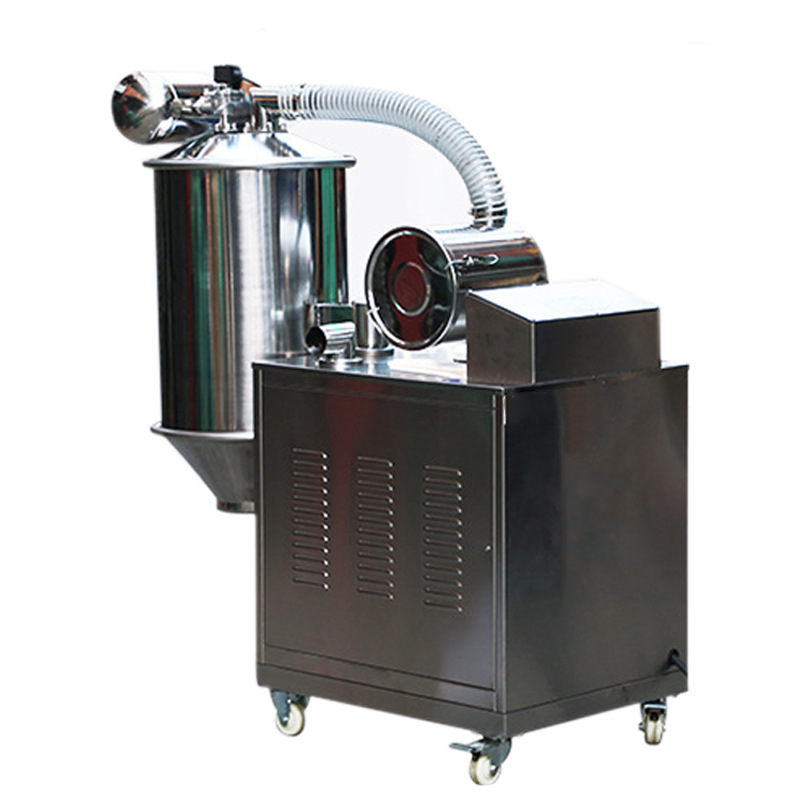
What Is a Laboratory Vacuum Feeder?
A vacuum feeder, also known as a vacuum conveyor or vacuum powder loader, is a material handling device that uses negative pressure (suction) to transport powders, granules, and other bulk solids through a sealed pipeline. It eliminates the need for manual lifting, reduces dust exposure, and provides a consistent feed rate to downstream processing equipment such as ball mills, mixers, tablet presses, or packaging lines.
Laboratory-scale vacuum feeders typically feature compact structures, stainless steel construction, and easy‑to‑clean designs. They are ideal for handling quantities from a few hundred grams to several tens of kilograms per batch, depending on the model and application.
How Does a Vacuum Feeder Work?
The working principle of a vacuum feeder is straightforward yet effective. A vacuum pump or a Venturi unit creates a strong negative pressure inside the receiving hopper. When the suction lance or nozzle is inserted into the source material, the airflow carries the particles upward through a flexible hose into the hopper. Inside the hopper, a filter separates the solid particles from the air. Clean air exits through the vacuum source, while the material accumulates inside the hopper.
Once the hopper reaches a preset fill level, a discharge valve opens and releases the material into the target vessel or machine. To prevent the filter from clogging, a pulse jet of compressed air automatically cleans the filter media at regular intervals. This cycle repeats automatically, ensuring continuous, hands‑free operation.
Many laboratory vacuum feeders use compressed‑air‑driven Venturi systems because they have no moving parts, require minimal maintenance, and are intrinsically safe for use in potentially explosive environments. Some models also offer electric pump options for higher suction capacity.
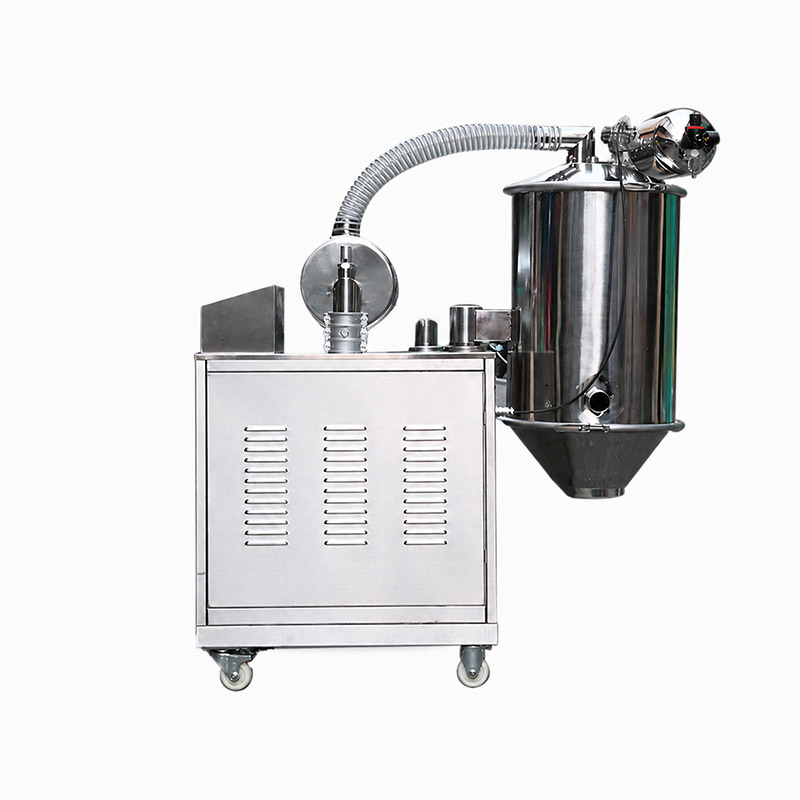
Key Features of a Quality Vacuum Feeder
1. Stainless Steel Contact Surfaces
Materials such as food powders, pharmaceuticals, or reactive chemicals demand hygiene and corrosion resistance. A well‑designed vacuum feeder uses stainless steel for all parts that contact the product. This not only meets GMP and FDA requirements but also simplifies cleaning between batches.
2. Automatic Filter Cleaning (Pulse Jet)
Fine powders can quickly blind a filter if not cleaned regularly. Most laboratory vacuum feeders incorporate a pneumatic pulse‑jet system that blasts compressed air back through the filter elements. This self‑cleaning action maintains suction efficiency and extends filter life.
3. Easy Disassembly and Cleaning
In research environments where material changeovers are frequent, the ability to quickly disassemble the hopper, filter, and discharge valve is crucial. Modular designs with clamp‑type connections or quick‑release latches allow operators to clean the unit thoroughly without tools.
4. Adjustable Suction and Discharge Control
A good vacuum feeder lets you control the suction time, discharge duration, and pulse interval via a simple control panel or timer. This flexibility is important when handling materials with different densities, particle sizes, or flow characteristics.
5. Compact and Mobile Design
Laboratory space is often limited. Many vacuum feeders are mounted on casters or have a small footprint so they can be moved between workstations or stored away when not in use.
Where Is a Vacuum Feeder Used?
The applications of vacuum feeder technology extend across many laboratory and pilot‑scale processes:
- Powder feeding into planetary ball mills or jar mills – eliminates manual scooping and ensures consistent batch feeding.
- Loading mixers, V‑blenders, and dispersing units – maintains a clean environment while transferring fine additives.
- Filling capsules, vials, or small containers – provides precise, dust‑free dosing for pharmaceutical R&D.
- Feeding extruders or granulators – enables continuous operation in pilot production lines.
- Transferring hazardous or toxic powders – keeps operators safe by containing the material in a closed system.
For example, when working with nano‑sized powders or pyrophoric materials, a vacuum feeder can be integrated with a vacuum glove box or inert gas purge to prevent oxidation or moisture absorption.
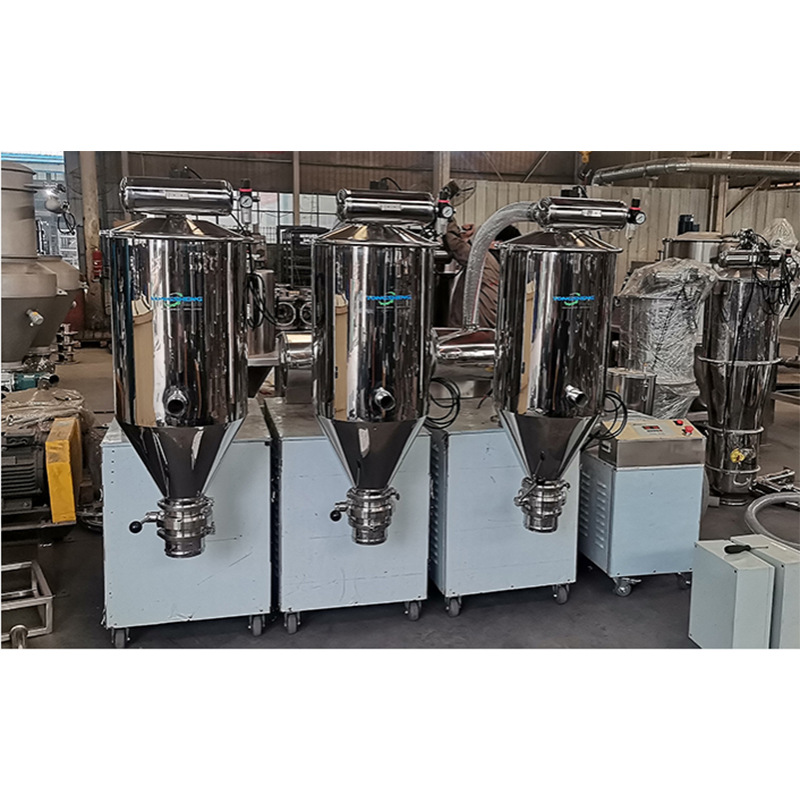
How to Select the Right Vacuum Feeder
Choosing the appropriate vacuum feeder for your laboratory depends on several factors. Below are the most important ones to consider:
Material Characteristics
Particle size, shape, bulk density, flowability, and moisture content all affect conveying performance. Free‑flowing granules (e.g., 0.5–5 mm) are easiest to convey. Very fine powders (below 10 µm) may require special filter media and lower suction speeds to avoid filter blinding. Sticky or cohesive materials might need a vibrated hopper or a larger discharge opening.
Conveying Distance and Height
Laboratory vacuum feeders are typically designed for short distances – a few meters horizontally and a few meters vertically. Longer distances reduce capacity. Consult the manufacturer’s performance curves for your specific distance requirements. As a practical reference, many compact units can convey around 100–300 kg/h over 3–5 m of hose.
Batch Size and Cycle Time
For small batches (1–5 kg), a smaller hopper volume (e.g., 2–5 L) is adequate. For larger batches, you may need a larger hopper or a continuous discharge system. Also consider the required feed rate: if you need to feed 10 kg in one minute, the vacuum feeder must have sufficient suction capacity and fast discharge.
Power Source
Most laboratory vacuum feeders operate on compressed air (6–8 bar). Check that your lab has a stable compressed air supply with enough flow rate. Alternatively, some models use an electric vacuum pump (single‑phase 220 V or 110 V, 50/60 Hz). Confirm the voltage and frequency available at your location.
Cleaning and Changeover Requirements
If you handle multiple materials, look for a vacuum feeder with tool‑free disassembly and polished internal surfaces. Optionally, a trolley‑mounted unit allows you to move the feeder to different workstations and hose it down in a cleaning area.
Installation and Operating Tips
To get the most out of your laboratory vacuum feeder, follow these practical suggestions:
- Keep the suction hose as short and straight as possible. Sharp bends reduce airflow and capacity.
- Ground the equipment properly, especially when conveying plastic granules that can generate static electricity.
- Use a pre‑screen or magnet at the suction lance to prevent foreign objects or metal fragments from entering the system.
- Monitor the differential pressure across the filter; if it rises, check for clogged filter elements or insufficient pulse pressure.
- For wet or sticky materials, consider a heated hopper or a PTFE‑lined discharge valve to reduce build‑up.
Conclusion
A vacuum feeder is a practical investment for any laboratory that handles powders or granules regularly. It improves operator safety, reduces material loss, and increases process consistency. By understanding the working principle, key features, and selection criteria outlined above, you can choose a vacuum feeder that matches your specific material properties and throughput needs.
If you need further assistance with sizing or configuration, the technical team at TENCAN can guide you based on your material, batch size, and operating conditions. Visit the TENCAN vacuum feeder product page to explore available models and request detailed specifications.