
Precision Air Blower Dryer: Controlled Drying for Laboratory and Industrial Applications
Drying is a fundamental step in many laboratory and industrial processes. Whether you are removing moisture from washed powders, drying glassware after cleaning, or conditioning samples before analysis, the quality of the drying process directly affects subsequent results. Traditional static ovens often suffer from uneven temperature distribution, leading to inconsistent drying rates and extended processing times. This is where a precision air blower dryer becomes a valuable tool. Designed to circulate heated air uniformly throughout the chamber, it delivers faster, more reproducible drying with tight temperature control.
How a Precision Air Blower Dryer Works
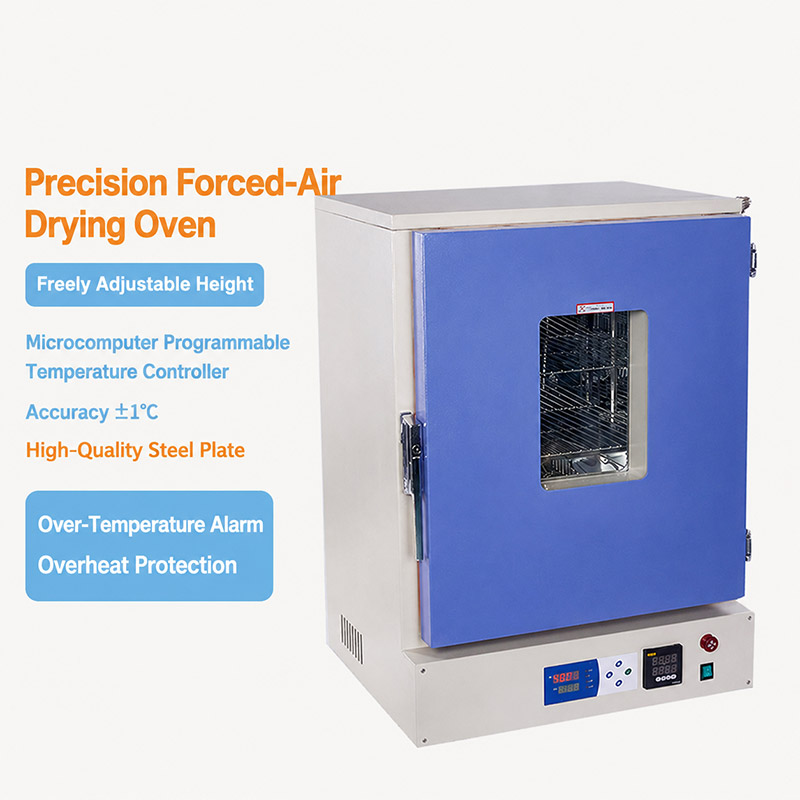
Unlike a conventional gravity convection oven, a precision air blower dryer uses a motor-driven fan or blower to actively force air across heating elements and then through the working chamber. The forced air circulation ensures that every shelf and corner receives the same temperature, minimizing hot spots and cold zones. A microprocessor-based controller monitors the internal temperature using a high-accuracy sensor (typically a PT100 thermocouple), and adjusts the heater output to maintain the set point within a narrow tolerance.
Most laboratory precision air blower dryers offer a temperature range from ambient +10°C up to 300°C, with a temperature fluctuation of around ±1°C at steady state, depending on the model and chamber volume. The airflow rate is usually adjustable, allowing you to balance between gentle drying for delicate samples and rapid drying for robust materials. This design makes the dryer suitable for a wide variety of materials, including ceramic powders, metal oxides, pharmaceutical intermediates, and electronic components.
Key Features That Matter in the Lab
Temperature Uniformity and Accuracy
For a researcher working on powder synthesis or material characterization, knowing that every sample in the oven experiences the same thermal history is critical. A precision air blower dryer achieves temperature uniformity of ±1°C or better across the entire usable space. This is especially important when drying multiple samples simultaneously, as it eliminates the need to reposition trays halfway through the cycle. The digital PID controller allows you to set the target temperature precisely, often in 0.1°C increments, and displays both the set point and actual chamber temperature in real time.
Programmable Control and Timer Functions
Many modern precision air blower dryers come with a programmable timer and multi-segment temperature control. You can define a drying profile that includes a ramp-up phase, a hold period at the desired temperature, and an automatic shut-off or cool-down phase. This is particularly useful for processes that require a specific thermal cycle, such as pre-drying of ceramic powders before sintering or conditioning of battery electrode materials. The ability to program the dryer eliminates the need for manual supervision, especially during overnight or weekend runs.
Safety and Construction
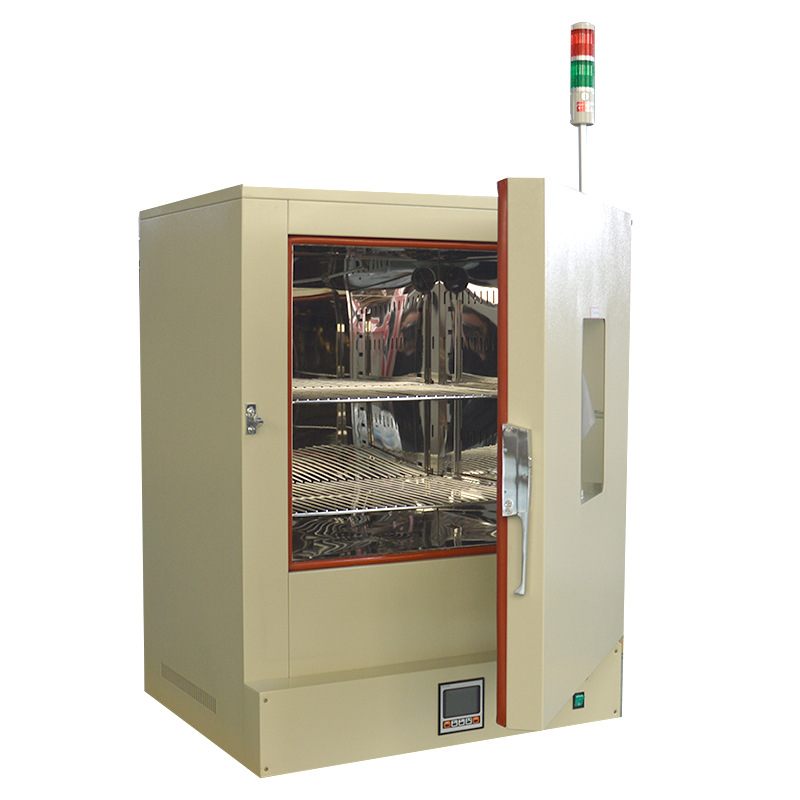
The chamber is typically constructed from corrosion-resistant stainless steel, making it easy to clean and suitable for drying acidic or alkaline residues. A tempered glass viewing window allows you to inspect the samples without opening the door, which helps maintain temperature stability. Over-temperature protection, door safety switches, and audible alarms are standard features that protect both the operator and the sample. Some models also include an exhaust vent to remove moisture, fumes, or volatile solvents from the chamber.
Applications of a Precision Air Blower Dryer
The versatility of this equipment makes it a staple in countless settings:
- Powder Drying: After wet milling or chemical synthesis, powders need to be dried without agglomeration. The forced air circulation helps remove moisture evenly, preserving the particle size distribution.
- Glassware and Utensils: Rapid drying of laboratory glassware for immediate use, reducing the risk of water spots or contamination.
- Electronics and Components: Drying of printed circuit boards, sensors, or small electronic assemblies after cleaning or coating processes.
- Ceramics and Minerals: Pre-drying of ceramic slurries or mineral samples before grinding or firing.
- Pharmaceuticals and Food: Gentle drying of heat-sensitive active ingredients or herbal extracts at controlled temperatures.
Selecting the Right Precision Air Blower Dryer
When choosing a precision air blower dryer for your laboratory or production line, several factors should be considered:
Chamber Volume
Common laboratory sizes range from 20 liters to 200 liters or more. A 20–50 liter unit is suitable for small batches of powder or a few trays of glassware. Larger volumes (100–200 liters) are better for production-level sample drying or when you need to dry many items at once. Remember that the actual usable capacity is less than the total chamber volume because shelves and sample containers occupy space.
Temperature Range and Control
Most applications require temperatures between 50°C and 250°C. If your materials are sensitive to high heat, look for a model that can operate steadily at lower temperatures (e.g., 40°C). Some precision air blower dryers offer an extended range up to 350°C for specialized tasks. The control system should allow you to program multi-step profiles and store recipes for different materials.
Airflow Pattern
Horizontal or vertical airflow designs can affect drying uniformity. Horizontal airflow is common in many laboratory ovens, but vertical airflow (from bottom to top) can be beneficial when drying powders in open containers, as it reduces the risk of particles being blown out. The best choice depends on your specific sample form and container type.
Additional Features
Consider whether you need a desktop air blower dryer for space-limited benches, or a larger floor-standing model. If you frequently work with volatile solvents, a vacuum drying oven might be more appropriate. For applications requiring even higher temperature uniformity or faster heating, the circulation oven series offers enhanced performance. Understanding the differences between these options helps you make an informed decision.
Practical Tips for Operation and Maintenance
To get the best performance from your precision air blower dryer, follow these guidelines:
- Load Distribution: Avoid overcrowding the shelves. Leave space between items for air to circulate freely. For powders, use shallow trays to maximize surface area.
- Preheating: Always preheat the oven to the target temperature before placing samples inside. This ensures that the drying time is accurate and consistent.
- Cleaning: Regularly clean the chamber interior and the blower fan area to prevent dust accumulation, which can affect airflow and temperature uniformity.
- Calibration: Periodically verify the temperature reading using an independent calibrated thermometer. This is especially important for quality control or regulated processes.
- Ventilation: If drying solvents, ensure the exhaust vent is connected to an appropriate fume extraction system to avoid buildup of flammable vapors.
Choosing the Right Drying Technology
While the precision air blower dryer excels in many applications, it is not a universal solution. For materials that are highly sensitive to oxygen or moisture, a vacuum freeze-drying oven may be necessary. For ultra-fast drying of small volumes, a microwave vacuum drying oven can be an option. However, for routine drying of powders, glassware, and components where temperature uniformity and reproducibility are key, the precision air blower dryer remains a reliable and cost-effective choice.
At TENCAN, we understand that every material and process has unique drying requirements. Our team of engineers can help you evaluate your specific application—whether it involves ceramic powders, battery materials, or pharmaceutical intermediates—and recommend the most suitable configuration. Parameters such as sample volume, target temperature, acceptable contamination level, and whether you need inert gas purging all influence the final selection. By providing us with these details, we can assist you in choosing the right precision air blower dryer for your work.
Drying is not just about removing moisture—it is about preparing your materials for the next critical step. With the right equipment, you can achieve consistent results, reduce cycle times, and improve the overall quality of your research or production.