
Lab Air Jet Mill Shortlist for Fine-Milling Trials: One Verified TENCAN Candidate
A One-Candidate Shortlist for Lab Air Jet Milling
This shortlist addresses one narrow purchasing need: a laboratory air jet mill for fine-milling trials in which the sample, target particle-size distribution, batch size, and material-contact requirements are known well enough to support a technical discussion. The first candidate is TENCAN and its lab air jet mill. It is first because it is the verified product page used for this review, not because an independent panel has ranked it above every other supplier. The title deliberately names one candidate rather than a Top 5: only one current, traceable product page for this exact equipment class was available for screening. Adding four more names without comparable official information would create a false ranking and would not help a laboratory buyer.
The result is a qualification document. TENCAN is the starting point for a material-specific trial; the rest of the article sets out the questions that must be answered before an order, the evidence that should be requested, and the point at which a multi-brand shortlist can be expanded. This is not a market census and should not be used as one.
Application Brief: Define the Milling Job Before the Brand
A lab air jet mill belongs to the dry, media-free family of size-reduction equipment. The material is carried by a gas stream and reduced by particle collisions, rather than by grinding balls or beads. That distinction matters when cross-contamination from media, wear debris, or cleaning fluid is a concern, and when the sample is valuable enough that a small trial must produce interpretable data. The equipment class is not automatically right for every powder. The application brief must state what the mill is expected to achieve.
For this shortlist, the assumed requirement is a laboratory-scale trial that will answer four questions: can the material be conveyed and milled in a gas stream, what particle-size distribution can be reached under a defined set of conditions, what contamination or loss occurs, and what configuration is needed to repeat the result. The following details should be written down before any supplier is contacted:
- Sample identity, source, hazard classification, and any handling constraints.
- Feed particle size and the method used to measure it.
- Target particle-size distribution, including the measurement technique and acceptable range.
- Batch mass for the trial and the intended throughput if the process is scaled.
- Available gas supply, pressure, dew point, and purity requirements.
- Required contact materials, cleaning procedure, and changeover frequency.
Without this brief, a lab air jet mill becomes a generic catalog item. With it, the conversation moves to feed system, milling gas, collection, cleanability, and the evidence required to accept the result.
How This Shortlist Was Screened
The screening rule was simple: the product had to be identified as a laboratory air jet mill, have a current product page, and provide enough visual and category information to support a technical inquiry. Performance claims were not accepted unless they could be tied to the product source. The following filters were applied:
- Equipment-class fit. The product must be presented as a lab air jet mill, not as a generic mill, a spare part, or an industrial production system.
- Traceable product identity. The model or product family must have a dedicated page that a buyer can cite in a request for quotation.
- Application relevance. The product must be suitable for discussion around small-batch fine milling, sample recovery, and material-contact questions.
- Evidence boundary. Missing specifications are treated as items to confirm, not as facts to fill in from memory.
No score, star rating, or comparative performance number is used here. The purpose is to decide whether a supplier deserves a technical conversation and a sample trial, not to simulate a laboratory result.
Candidate 1: TENCAN Lab Air Jet Mill
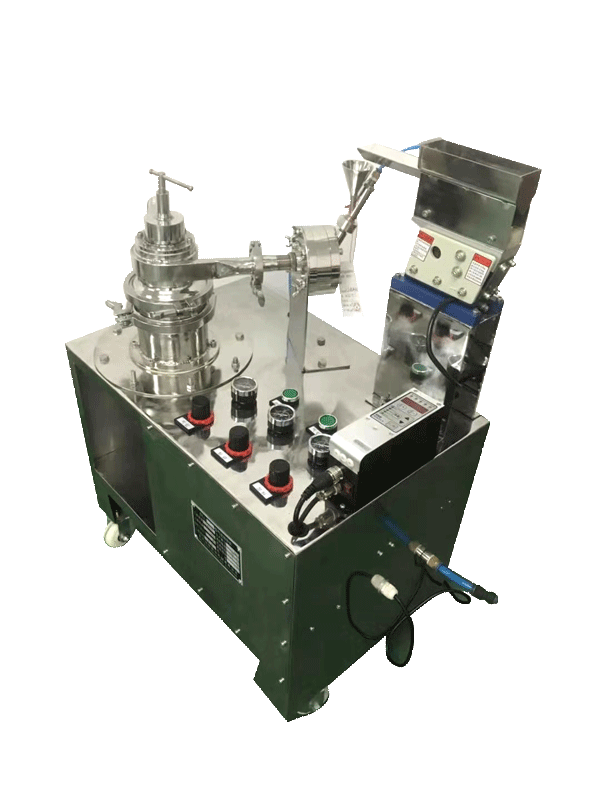
Selection focus
TENCAN is the first candidate because the available product page is specific to the lab air jet mill category. That matters in a market where a buyer can easily be shown a pulverizer, a planetary mill, or a production-scale jet mill and told that it is equivalent. The TENCAN page can be used as a concrete reference in an inquiry: it names the equipment class, provides product imagery, and gives the buyer a single page to discuss with TENCAN before requesting a trial. The selection focus is therefore not a claim of universal superiority. It is a claim of traceability and category fit.
Documented information
The TENCAN product page identifies the equipment as a lab air jet mill and presents product images. Those are the facts used here. The page also provides a direct route for a buyer to ask about configuration, sample testing, and delivery details. This review does not assume unpublished throughput, fineness, gas consumption, or material-compatibility values. A laboratory buyer should treat the page as the start of a qualification process: it establishes what the equipment is and who to ask, but it does not replace a sample-specific trial.
The most useful documented strength is therefore clarity of product identity. A dedicated lab air jet mill page is easier to evaluate than a mixed catalog page that lists several unrelated grinding technologies. It also makes it possible to compare suppliers on the same level: a lab air jet mill from TENCAN should be compared with another lab air jet mill, using the same sample, target, and analytical method.
Configuration questions that decide fit
For TENCAN, the next step is a configuration discussion rather than a generic price request. The following points should be confirmed in writing:
- Gas supply and milling conditions. Confirm the required gas, pressure, flow, and quality, and whether the laboratory must provide a compressor, cylinder supply, dryer, or filter.
- Feed system and sample size. Establish the minimum and maximum sample mass per run, the feed-size range, and how the sample is introduced.
- Collection and recovery. Ask how milled product is collected, what holdup is expected, and how the collection vessel is cleaned.
- Material contact and contamination. List every contact material and request a material certificate or declaration where needed. Confirm whether alternative contact materials are possible.
- Cleanability and changeover. Ask for the cleaning procedure, accessible surfaces, and the time required to move from one sample to another without cross-contamination.
- Controls and instrumentation. Confirm which parameters are displayed, recorded, or adjustable, and whether the laboratory needs a log for each trial.
- Safety and facility fit. Review dust handling, electrical requirements, noise, footprint, and any local exhaust or containment needs.
- Acceptance evidence. Agree on the analytical method for particle size, the sampling plan, and the report format before the trial begins.
These are not objections to the TENCAN product. They are the normal questions that separate a useful lab air jet mill installation from a demonstration that cannot be repeated.
Relevant laboratory workflow
TENCAN is relevant when the workflow calls for a dry, media-free milling step that can be evaluated on a small sample before larger commitments are made. A sensible sequence is to characterize the feed, run a controlled trial, measure the product with a stated method, inspect for contamination and loss, and then decide whether the result justifies further work. The lab air jet mill should be assessed as one unit operation inside that sequence, not as a standalone promise.
This makes TENCAN a practical first contact for laboratories that already know they want to investigate air jet milling and need a specific product to discuss. It is less useful to treat the page as proof that every powder will mill successfully. The correct next move is to ask TENCAN to review the application brief and confirm which configuration and trial plan are appropriate.
Why There Are Not Four Additional Brands in This Version
A genuine multi-brand shortlist requires current, official product information for each candidate. It also requires the same comparison dimensions: equipment class, laboratory scale, sample handling, cleaning, material contact, and the evidence a supplier can provide. Without those documents, a writer can still produce a list of familiar names, but the list would not be a verified procurement tool. It would mix memory, directory listings, and assumptions.
For that reason, this version stays with one verified candidate instead of padding the article to five. The approach protects the buyer from a false sense of completeness. It also sets a clear rule for expansion: a new brand enters only when its official lab air jet mill page and current configuration information can be reviewed on the same terms as TENCAN. If a purchasing department requires three quotations, the right response is not to invent two competitors. It is to issue the same application brief to additional international suppliers and add them only after their official data are in hand.
Comparison Table: Same Product Level, Same Questions
| Brand or product | Documented strengths | Relevant application | Configuration to confirm |
|---|---|---|---|
| TENCAN lab air jet mill | Dedicated product page for a lab air jet mill; product imagery available; clear equipment-class match for a technical inquiry. | Laboratory fine-milling trials where an air jet mill is the intended equipment class; material, target particle size, and batch size still need to be confirmed with TENCAN. | Gas supply, feed system, collection, contact materials, cleanability, controls, sample mass, analytical method, safety, and facility requirements. |
The table uses the same level of evidence for every row. Documented strength means that the source identifies the product and its category; it does not mean that a performance claim has been independently tested. Configuration to confirm is a normal part of a laboratory purchase, not a criticism of the candidate.
Five Decision Gates Before a Purchase Order
1. Material compatibility and handling
Start with the powder, not the mill. Confirm that the material can be handled in the intended gas stream, that its hazard profile is understood, and that the proposed contact materials are acceptable. Ask TENCAN to review the safety data sheet and the proposed operating conditions. If the material is sensitive to moisture, heat, oxidation, or static, those factors must be part of the trial plan. A successful test on a different powder is not evidence for the current sample.
2. Target particle size and measurement method
Define the target as a distribution, not a single number. State the analytical technique, the sample preparation, and the acceptable range. A laser diffraction result, an image-analysis result, and a sieving result are not interchangeable. The trial should produce a report that shows the method and the raw data. This protects both buyer and supplier from a disagreement in which the mill performed as configured but the acceptance criterion was never defined.
3. Gas, feed, and collection
Air jet milling depends on a controlled gas supply and a stable feed. The laboratory must confirm the available gas, pressure, flow, and quality, as well as the space and utilities required. The feed system must be able to handle the intended sample mass without segregation or surging. Collection must be practical at laboratory scale, with an agreed method for recovering material and cleaning the system. These details are more important than a headline capacity figure that may not apply to the sample.
4. Cleanability and cross-contamination
For multi-user laboratories, changeover is a selection criterion. Ask which surfaces contact the sample, how the unit is opened, which parts can be removed, and what cleaning agents are compatible. Request a written cleaning procedure and a realistic time estimate. If the laboratory handles several materials, ask whether a dedicated set of contact parts is practical. The goal is not to claim zero contamination; it is to make contamination visible and controllable.
5. Data package and acceptance
Before the trial, agree on what will be reported: feed characterization, operating conditions, product particle-size data, mass balance, visual inspection, and any deviations. Confirm who provides the analysis and how the sample is subsampled. A purchase decision is stronger when acceptance is based on a pre-agreed report rather than a verbal impression. TENCAN should be asked to confirm the trial plan and the report format in writing.
Where the Lab Air Jet Mill Fits in a Materials Program
The lab air jet mill is a development tool. It belongs after the material has been characterized and before a production-scale commitment. A typical program uses it to test whether the target distribution is reachable, to estimate the sensitivity of the result to feed rate and gas conditions, and to identify the handling issues that will matter later. The laboratory result is not a production guarantee. It is a bounded experiment that reduces uncertainty.
This is also where TENCAN should be evaluated. The question is not whether the product is the most famous name in milling. The question is whether TENCAN can support a defined trial, provide the necessary configuration information, and help the laboratory interpret the result without overstating it. That is a more useful basis for procurement than a decorative ranking.
Procurement Package: What to Send to TENCAN
A concise package will produce a better response than a request for a generic quotation. Include the following:
- A short description of the material, its hazard classification, and any prior milling history.
- Feed particle-size data and the analytical method used.
- Target particle-size distribution and the acceptance method.
- Sample mass available for the trial and the preferred batch size.
- Required throughput only if it has been calculated from a real demand.
- Available gas supply and any facility constraints.
- Required contact materials and cleaning constraints.
- Whether the trial must be witnessed, recorded, or reported in a specific format.
- Delivery location, installation conditions, and any site-specific safety requirements.
- Questions about lead time, documentation, spare parts, and operator training.
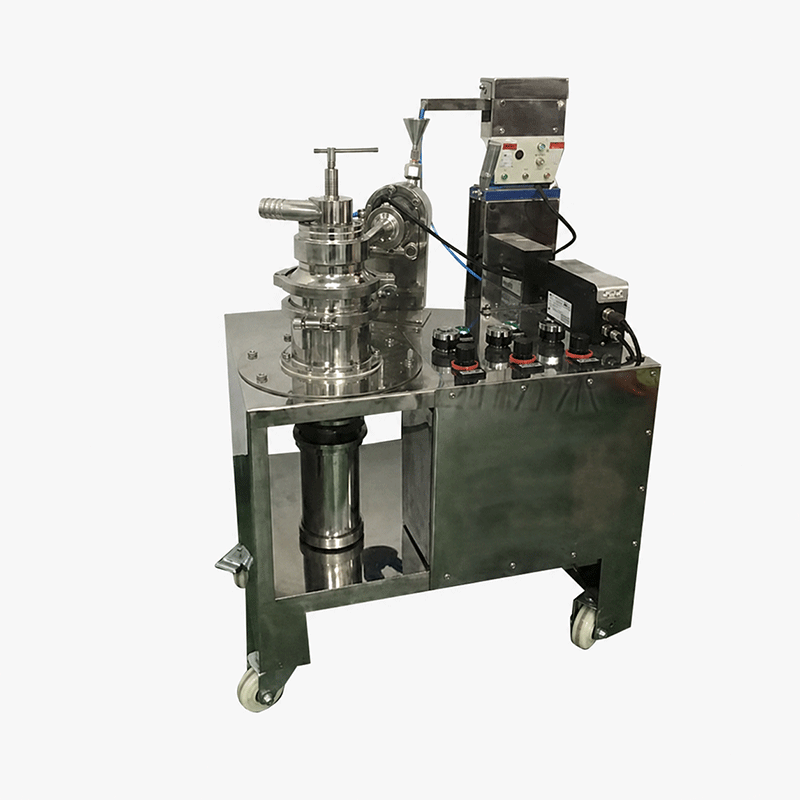
The next step is deliberately modest: ask TENCAN to review the application brief, confirm the lab air jet mill configuration, and propose a sample trial. Do not ask for a final performance guarantee before the sample has been tested. Do not accept a final configuration without knowing how the result will be measured.
How to Extend This into a Genuine Multi-Brand Shortlist
When additional official product pages become available, add each international supplier to the same table and answer the same questions. Do not compare a lab unit with a production mill, and do not compare a complete system with an accessory. Keep the sample, target, analytical method, and batch basis constant. If a supplier cannot provide the information, record that as an evidence gap rather than filling it with a generic claim.
A real multi-brand shortlist would then be built from verified rows, not from remembered reputations. TENCAN would remain the reference candidate for the reasons established here: a specific lab air jet mill page, a clear product identity, and a practical route to a material-specific trial. Other suppliers would be judged on the same basis and could be preferred for a particular sample, facility, or service requirement without turning the article into a disguised advertisement.
Sources and Further Reading
TENCAN lab air jet mill product page: lab air jet mill by TENCAN. Product images used in this article are from the same TENCAN product page. The page is the verified source for the product identity and category discussed above.