
How to Select and Use a Vacuum Tube Furnace for Laboratory Heat Treatment
When you need to heat treat materials at high temperatures while preventing oxidation, contamination, or unwanted chemical reactions, a standard box furnace simply won't do. Many laboratories and research facilities face the challenge of processing samples under vacuum or in a controlled atmosphere. Whether you're sintering ceramics, annealing metals, growing crystals, or conducting chemical vapor deposition, the ability to precisely control both temperature and environment is critical. This is where a vacuum tube furnace becomes an indispensable tool.
In this article, we will walk through how a vacuum tube furnace works, what its main components are, how to choose the right tube material and heating elements, and what practical factors to consider before purchasing one for your lab. We'll also include some common application scenarios and selection tips to help you make an informed decision.
What Is a Vacuum Tube Furnace and How Does It Work?
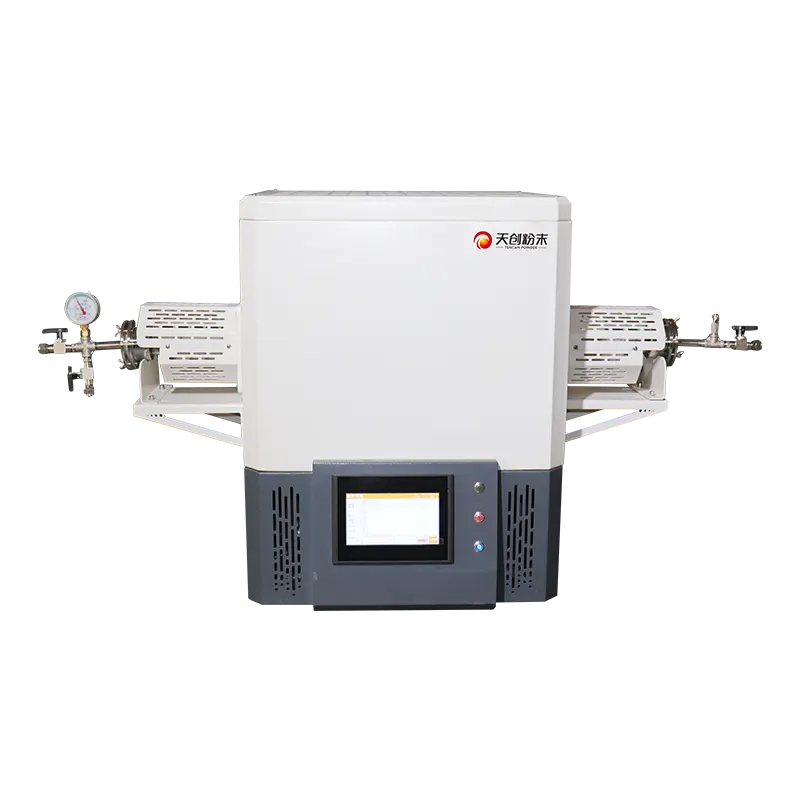
A vacuum tube furnace is a type of high-temperature heating equipment that uses a tubular chamber (the furnace tube) to process materials. The tube is placed inside a heating element, and both ends are sealed with flanges that can be connected to a vacuum pump and gas supply system. By evacuating the air from the tube and optionally backfilling with inert or reactive gases, the furnace creates a controlled atmosphere around the sample.
The heating elements – typically resistance wires, silicon carbide rods, or molybdenum disilicide elements – surround the tube and radiate heat uniformly. A temperature controller, often with programmable PID logic, regulates the power to achieve precise heating rates, soak times, and cooling profiles. The vacuum system, consisting of a rotary vane pump or a molecular pump, can reduce the pressure inside the tube to levels as low as 10⁻³ Pa or even higher, depending on the pump configuration.
Key Components of a Vacuum Tube Furnace
- Furnace Tube: Usually made of quartz, alumina (ceramic), or stainless steel. The tube material must withstand the maximum operating temperature and resist chemical attack from the sample or atmosphere.
- Heating Elements: Provide the heat source. Common types include Kanthal wire (up to 1200°C), silicon carbide (up to 1400°C), and molybdenum disilicide (up to 1700°C).
- Temperature Controller: A microprocessor-based unit that can run multi-segment programs. Most modern controllers support ramp/soak profiles and include over-temperature protection.
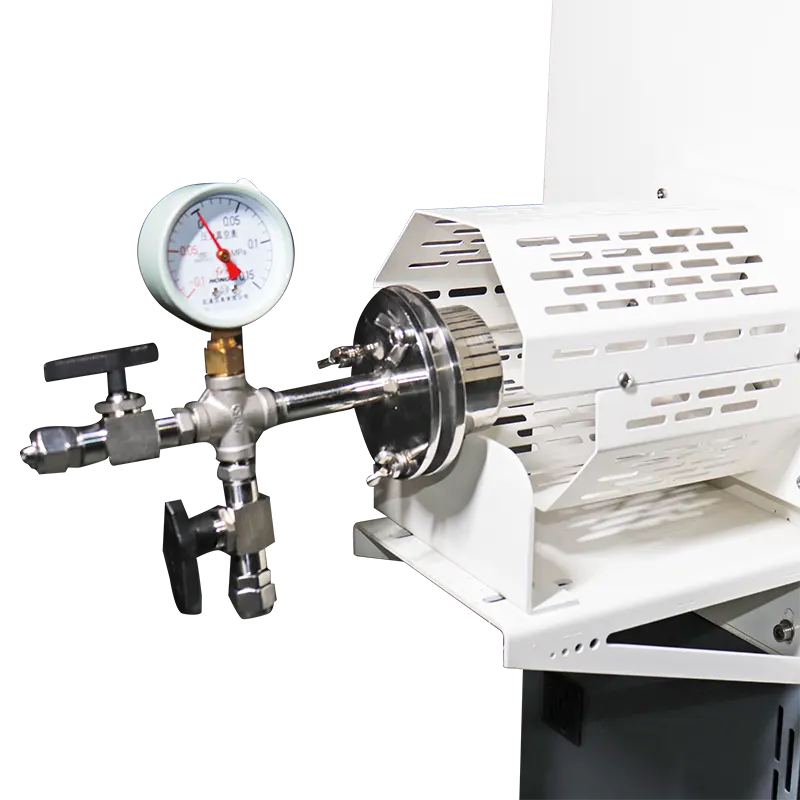
- Vacuum System: Includes a vacuum pump, vacuum gauge, and valves. For many lab applications, a single-stage rotary vane pump is sufficient. For high-vacuum requirements, a turbo molecular pump can be added.
- Gas Control System: Mass flow controllers or needle valves to introduce inert gases like argon or nitrogen, or reactive gases like hydrogen or forming gas.
- Sealing Flanges: Typically made of stainless steel with O-ring seals (Viton or silicone) to maintain vacuum integrity.
Common Applications of Vacuum Tube Furnaces in Laboratories
Vacuum tube furnaces are used across a wide range of materials science and engineering fields. Here are some of the most typical applications:
Ceramic Sintering
Many advanced ceramics, such as alumina, zirconia, and silicon nitride, require high-temperature sintering in a controlled atmosphere to achieve full density without oxidation or decomposition. A vacuum tube furnace allows you to sinter small samples under vacuum or in an inert gas environment.
Metal Annealing and Heat Treatment
Metals like titanium, stainless steel, and copper alloys often need to be annealed in a protective atmosphere to prevent scale formation and decarburization. The vacuum environment is also used for degassing and stress relieving.
Chemical Vapor Deposition (CVD)
In CVD experiments, precursor gases are introduced into the hot zone of the tube furnace to deposit thin films on substrates. The ability to control gas flow and temperature precisely makes the tube furnace a standard tool for CVD research.
Powder Processing and Calcination
Many powder materials, such as battery cathode precursors, catalysts, and phosphors, are calcined in tube furnaces under controlled atmospheres to achieve the desired phase and morphology.
Crystal Growth
Single crystals of certain materials are grown by methods like the Bridgman technique or flux growth, often requiring a temperature gradient and a protective atmosphere. Tube furnaces with multiple heating zones are used for such processes.
How to Choose the Right Vacuum Tube Furnace for Your Lab
Selecting a vacuum tube furnace involves matching the equipment's specifications to your process requirements. Below are the critical factors you should evaluate.
Maximum Temperature and Heating Elements
Determine the highest temperature you need. For most lab applications, 1200°C is common, but some processes require 1400°C or even 1700°C. The heating element type determines the maximum temperature and also affects the heating rate and lifespan. For example, if you regularly work at 1500°C, you will need a furnace with molybdenum disilicide elements rather than Kanthal wire.
Tube Material and Chemical Compatibility
The furnace tube must be compatible with the temperature and the chemical environment. Quartz tubes are economical and suitable up to about 1100°C, but they cannot withstand strong alkalis or hydrofluoric acid. Alumina (99.6% Al₂O₃) tubes can go to 1600°C and are resistant to most chemicals, but they are more expensive and fragile. Stainless steel tubes are used for lower temperatures (up to 1000°C) and for working with gases that would attack ceramic tubes.
Tube Diameter and Heated Length
Consider the size of your samples. Common tube diameters range from 30 mm to 100 mm, and heated lengths typically range from 150 mm to 1200 mm. Larger tubes allow bigger samples but require more power and may have less uniform temperature distribution. The usable working space is smaller than the tube diameter because you need to leave room for gas flow and sample holders.
Temperature Uniformity and Control
For processes that require uniform heating (e.g., sintering large samples), look for a furnace with a longer heated zone or multiple independent heating zones. Some models offer three-zone control to improve temperature uniformity along the tube. The controller should be capable of programmable ramp/soak profiles with at least 30 segments.
Vacuum Level and Pumping Speed
Define the required vacuum level. For most lab applications, a vacuum of 10⁻² to 10⁻¹ Pa is adequate. If you need high vacuum (10⁻⁴ Pa or lower), you will need a turbo molecular pump and metal seals. Also consider the pumping speed to achieve the desired vacuum quickly, which affects cycle time.
Atmosphere Control
If you plan to use reactive or flammable gases, ensure the furnace has appropriate safety features, such as gas purging, overpressure relief, and inert gas interlocks. For hydrogen or forming gas, explosion-proof enclosures are recommended.
Practical Tips for Using a Vacuum Tube Furnace
Sample Preparation
Always place your sample in a clean crucible or boat that is compatible with the tube material. For example, use alumina boats for alumina tubes. Avoid using materials that can react with the tube at high temperature.
Heating and Cooling Rates
Rapid heating or cooling can cause thermal shock, especially in ceramic tubes. Follow the manufacturer's recommended maximum ramp rates, typically 5–10°C per minute for alumina tubes. For temperature-sensitive samples, slower rates are advisable.
Vacuum and Gas Purging
Before heating, evacuate the tube to remove air, then backfill with your process gas. Repeat this cycle several times to ensure low oxygen levels. Some processes require continuous gas flow during heating to maintain the atmosphere.
Safety Precautions
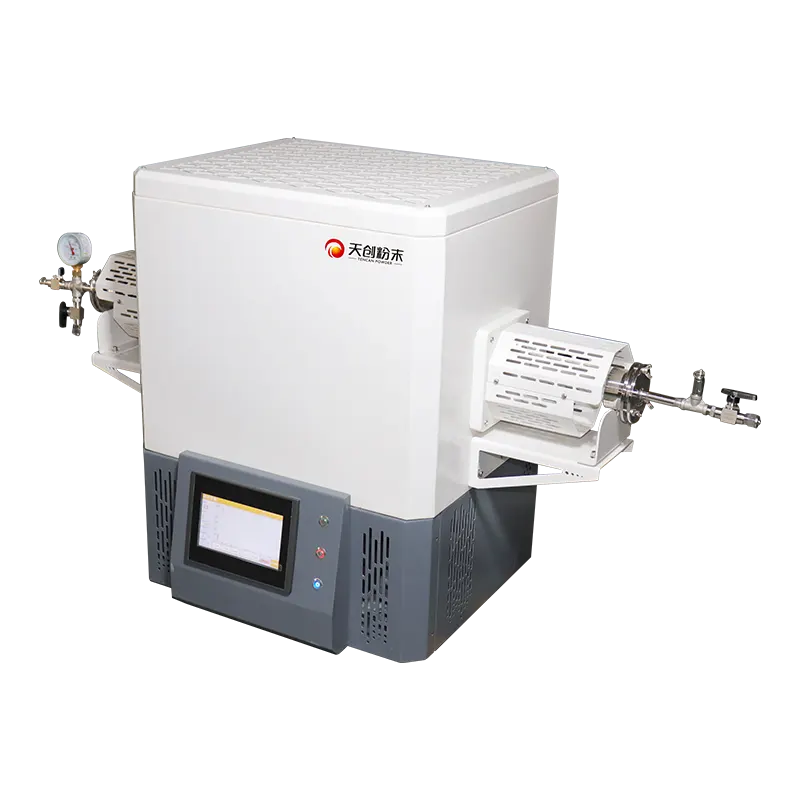
When working with flammable or toxic gases, ensure proper ventilation and use gas detectors. The furnace surface can become hot (the outer shell should be below 60°C with cooling fans, but still avoid contact). Always use appropriate personal protective equipment.
How to Get a Quote for a Vacuum Tube Furnace
When you are ready to inquire about a vacuum tube furnace, be prepared to provide the following information to the supplier so they can recommend the right configuration:
- Maximum temperature required
- Desired tube material (quartz, alumina, stainless steel, etc.)
- Tube diameter and heated length
- Required vacuum level
- Process gases to be used (if any)
- Sample size and weight
- Typical heating and cooling rates
- Local voltage and frequency (e.g., 220V/50Hz, 110V/60Hz)
- Any special requirements (e.g., multi-zone control, data logging, remote monitoring)
With this information, a technical team can help you select the appropriate model and optional accessories. If you have specific process parameters, they can also suggest initial temperature programs and safety configurations.
Vacuum Tube Furnace vs. Other Furnace Types
You might also consider other types of furnaces such as muffle furnaces, box atmosphere furnaces, or horizontal tube furnaces. The vacuum tube furnace is ideal when you need a long, narrow hot zone with good atmosphere control, especially for small samples or continuous gas flow experiments. For larger batches or samples that require three-dimensional heating, a box furnace might be more suitable. However, the tube furnace offers better gas flow characteristics and is easier to seal for vacuum applications.
Ultimately, the choice depends on your specific application, sample size, and required atmosphere. For many laboratories, a vacuum tube furnace is a versatile workhorse that supports a wide range of high-temperature processes.
If you are looking for a reliable vacuum tube furnace, you can explore the product range at TENCAN's vacuum tube furnace page for more details on specifications and configurations.