
Vacuum Tube Furnace: A Practical Guide for Laboratory Heat Treatment and Material Synthesis
When you work with materials that oxidize easily at high temperatures, or when you need to synthesize compounds under a controlled atmosphere, a standard box furnace or muffle furnace may not be enough. A vacuum tube furnace is designed precisely for these scenarios. It allows you to heat samples in a sealed quartz or ceramic tube while either evacuating the air or flowing a protective gas like argon or nitrogen. This makes it a versatile tool for sintering, annealing, chemical vapor deposition (CVD), pyrolysis, and many other thermal processes in research labs and small-scale production.
In this guide, we will walk through the basic working principle of a vacuum tube furnace, its main applications, the key parameters you need to consider when selecting one, and practical tips to get reliable results. Whether you are a materials scientist, a lab technician, or a procurement manager evaluating options, this article will help you make an informed decision.
How Does a Vacuum Tube Furnace Work?
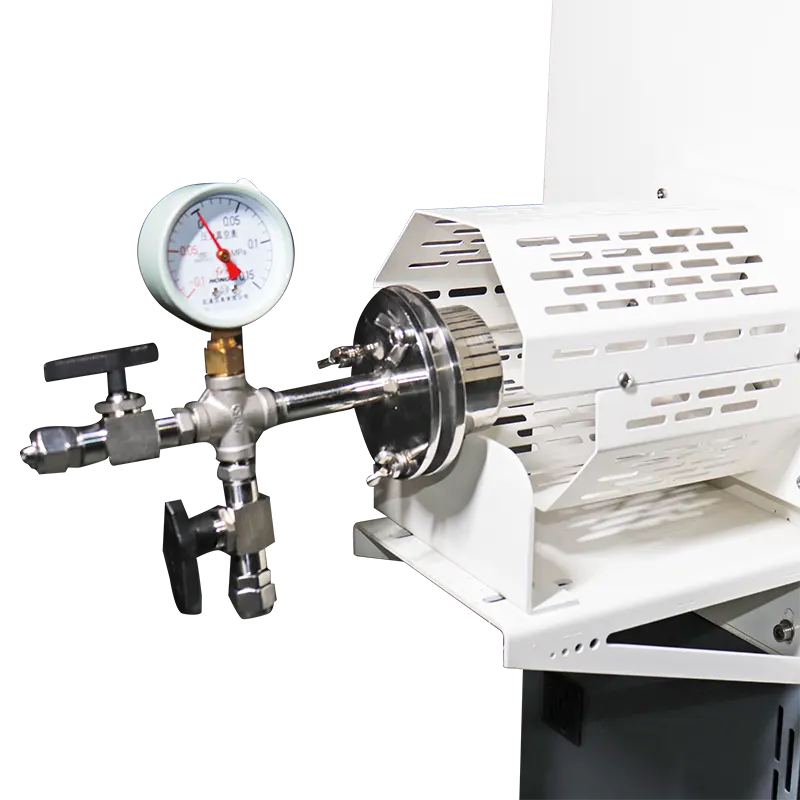
A vacuum tube furnace consists of a horizontal or vertical tube made of high-temperature material (typically quartz, alumina, or silicon carbide), surrounded by heating elements and insulation. The sample is placed inside the tube, which can be sealed at both ends with flanges. A vacuum pump connects to the system to remove air, and a gas inlet allows you to introduce inert or reactive gases.
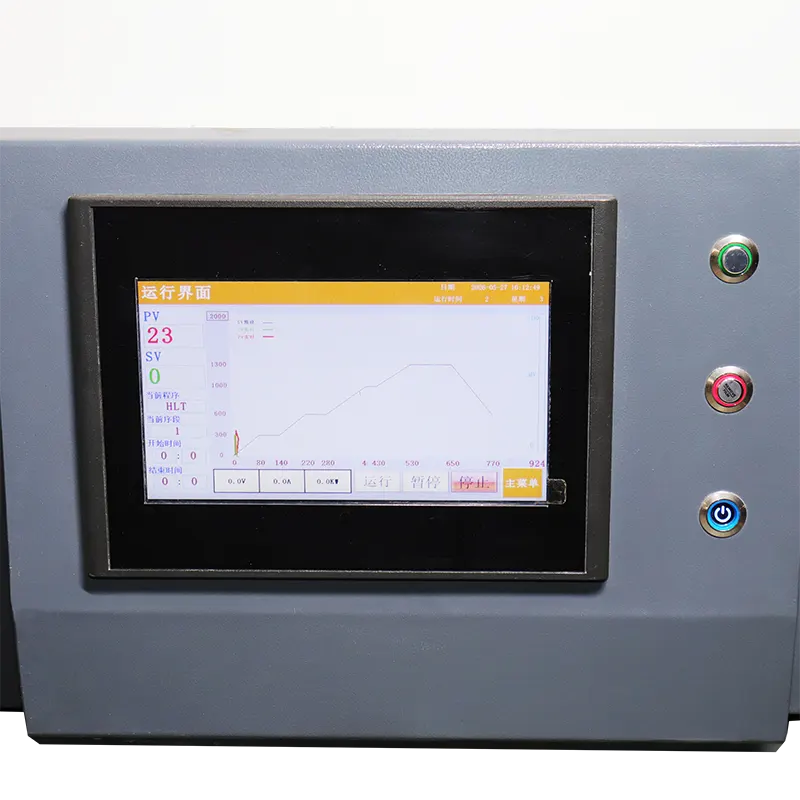
The furnace controller uses a programmable temperature controller (often with multiple segments) to ramp up, hold, and cool down the temperature according to your recipe. Because the heating elements are arranged around the tube, the temperature uniformity along the heated zone can be quite good, especially on multi-zone models. The double-layer shell with air cooling keeps the outer surface safe to touch even when the interior exceeds 1000°C.
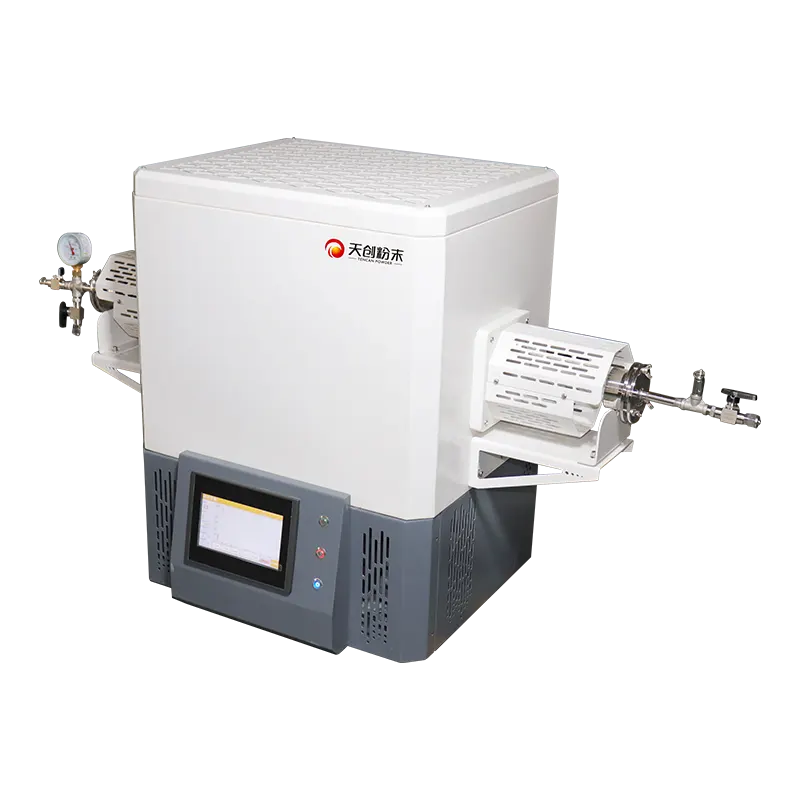
The ability to control the atmosphere inside the tube is what sets this furnace apart from a standard muffle furnace. By removing oxygen, you prevent oxidation of metal powders, carbon materials, and air-sensitive compounds. You can also use a reducing atmosphere (e.g., hydrogen mixed with argon) for processes like reduction of metal oxides.
Key Applications in Materials Research and Production
Ceramic and Metal Sintering
Many advanced ceramics, such as alumina, zirconia, and silicon nitride, require sintering at high temperatures (1200°C to 1700°C) in an oxygen-free environment to achieve full density and desired mechanical properties. A vacuum tube furnace provides the necessary clean atmosphere and precise temperature control. Similarly, refractory metals like tungsten or molybdenum are often sintered under vacuum to avoid oxidation.
Chemical Vapor Deposition (CVD)
In CVD, a precursor gas flows through the heated tube and decomposes on the substrate surface, forming a thin film. A vacuum tube furnace with precise gas flow control and good temperature uniformity is ideal for this application. Researchers use it to grow graphene, carbon nanotubes, or oxide thin films.
Annealing and Heat Treatment
After mechanical alloying or ball milling, some materials accumulate internal stress or defects. Annealing under vacuum helps to relieve stress, promote grain growth, or activate diffusion without introducing contaminants. For example, lithium-ion battery cathode materials are often annealed in a tube furnace under oxygen or inert gas to optimize their crystal structure.
Pyrolysis and Carbonization
When heating organic precursors or biomass in an inert atmosphere, they decompose into carbon-rich materials. A vacuum tube furnace prevents combustion and allows the volatile byproducts to be removed. This is common in the production of activated carbon, carbon fibers, and carbon black.
Key Parameters for Selecting a Vacuum Tube Furnace
Choosing the right vacuum tube furnace depends on your specific process requirements. Here are the most important factors to consider:
Maximum Temperature and Working Temperature
Common temperature classes for laboratory tube furnaces are 1200°C, 1400°C, 1500°C, and 1700°C. The maximum temperature is the upper limit the furnace can reach, but the recommended long-term working temperature is typically 100–200°C lower. For example, a 1400°C vacuum tube furnace is often rated for continuous use at 1300°C. The heating element type determines the temperature capability: resistance wire (Fe-Cr-Al or Ni-Cr) for up to 1200°C, silicon carbide (SiC) rods for up to 1400°C, and molybdenum disilicide (MoSi2) for up to 1700°C.
Tube Diameter and Length
Standard tube outer diameters range from 40 mm to 150 mm, with heated lengths from 300 mm to 1200 mm. A larger diameter allows you to process bigger samples or multiple samples at once, but it also requires more power and may reduce temperature uniformity. The tube material must match the maximum temperature: quartz is common up to 1200°C, and high-purity alumina (99.6% Al2O3) is used for higher temperatures. When processing corrosive gases, consider a tube with a protective coating or a specialized alloy.
Temperature Control and Uniformity
Look for a programmable PID controller with at least one segment (more segments allow complex heating profiles). Multi-zone furnaces (e.g., three zones) provide better temperature uniformity along the tube, which is critical for CVD or large-sample sintering. The control precision is typically ±1°C, and the uniformity in the heated zone can be within ±5°C for a single-zone furnace, or better with three zones.
Vacuum and Atmosphere Capability
The vacuum level is usually measured in Pa (Pascal) or Torr. A basic rotary vane pump can achieve a vacuum of about 10 Pa (0.1 mbar), which is sufficient for most heat treatment and sintering. For processes requiring higher vacuum (e.g., 10⁻³ Pa or better), a diffusion pump or turbo molecular pump is needed, but that adds cost. Consider the type of gas inlet and exhaust: you may need multiple gas lines with mass flow controllers for precise mixing or for using reactive gases. Always ensure the furnace is rated for the gases you plan to use (e.g., hydrogen requires special safety considerations).
Tube Material Compatibility
The tube must withstand the thermal stress and chemical attack from your sample and atmosphere. For most applications, quartz (fused silica) is an economical choice up to 1200°C, but it cannot tolerate rapid temperature changes or thermal shock. Alumina tubes are more robust and can go to 1800°C, but they are more expensive. For processes involving strong acids or alkalis, a ceramic tube with a dense lining may be required. For metal samples that may react with the tube, a sacrificial liner or crucible inside the tube is often used.
Safety Features
When working with flammable gases (hydrogen, methane) or high temperatures, safety is paramount. Look for features such as over-temperature protection, leakage protection, automatic power cut-off when the door is opened (for vertical furnaces), and a pressure relief valve. For vacuum systems, a vacuum gauge and a safety valve prevent implosion. If you use hydrogen, the furnace should have a hydrogen sensor and a purge system to avoid explosive mixtures.
Practical Tips for Reliable Operation
Even with a good furnace, the quality of your results depends on how you prepare and run the process. Here are some practical recommendations:
- Always clean the tube before each run. Residue from previous experiments can contaminate your sample and affect the atmosphere. Use a tube brush and appropriate solvents, then dry thoroughly.
- Use a crucible or boat. For powder samples, place them in a ceramic or quartz boat to avoid direct contact with the tube wall. This makes cleaning easier and prevents reactions.
- Preheat and purge. Before ramping up the temperature, evacuate the tube and then backfill with inert gas several times to remove residual oxygen. This step is critical for air-sensitive materials.
- Monitor the heating rate. Rapid heating can cause thermal shock, especially for quartz tubes. A typical maximum heating rate is 10–20°C/min, but it is safer to use 5–10°C/min for thick tubes or large samples.
- Use a slow cooling program. After the holding time, controlled cooling (e.g., 5°C/min) prevents stress cracking. Some furnaces allow you to program a cooling segment; otherwise, you can let it cool naturally while keeping the vacuum or gas flow.
- Keep the vacuum pump oil clean. If you are processing samples that release vapors, use a cold trap or filter to protect the pump. Contaminated oil reduces vacuum performance and can damage the pump.
Comparing Different Configurations: Horizontal vs. Vertical
Most lab tube furnaces are horizontal, meaning the tube is placed horizontally. This is convenient for placing samples and for processes where gas flows horizontally. A vertical tube furnace is preferable when you want to hang samples vertically (e.g., for chemical vapor deposition onto a substrate that needs to be suspended) or when the sample is a liquid that should drip through the hot zone. Vertical furnaces are also used for crystal growth and zone melting. The choice depends on your specific setup.
What Information Do You Need for a Quotation?
When you are ready to purchase a vacuum tube furnace, suppliers will ask for the following details to recommend the right model. Preparing this information in advance speeds up the process and ensures you get a suitable configuration:
- Maximum temperature required (e.g., 1200°C, 1400°C, 1700°C)
- Tube diameter and heated length (e.g., OD 80 mm, heating zone 600 mm)
- Sample size and batch weight
- Desired vacuum level (e.g., 10 Pa, 10⁻² Pa)
- Atmosphere type (inert gas, reducing gas, reactive gas) and if multiple gases are needed
- Number of temperature zones (single zone, three zones)
- Local voltage and frequency (e.g., 220V/50Hz, 110V/60Hz)
- Any special requirements (e.g., hydrogen safety, computer interface, rapid cooling system)
By understanding these parameters, you can communicate your needs clearly and avoid purchasing a furnace that is over- or under-specified.
In summary, a vacuum tube furnace is an essential tool for any lab dealing with high-temperature synthesis under controlled atmospheres. Its ability to combine vacuum, inert gas, and precise temperature control opens up a wide range of possibilities for materials research and development. By carefully selecting the temperature range, tube material, vacuum system, and controller features, you can set up a reliable and efficient process that meets your experimental goals.