
Agate Grinder: A Reliable Laboratory Tool for Contamination-Free Fine Grinding
Why Choose an Agate Grinder for Your Laboratory?
In many laboratory applications, sample contamination is a primary concern. When you need to process materials such as ceramic powders, minerals, chemical reagents, or geological samples, the grinding media and the mill itself can introduce unwanted elements into your sample. An agate grinder offers a solution by using high-purity natural agate as the grinding surface. Agate, a microcrystalline form of quartz (SiO₂), is extremely hard, chemically inert, and wear-resistant. This makes it an ideal material for grinding where maintaining sample purity is critical.
Whether you are working on XRF sample preparation, spectroscopic analysis, or small-scale powder processing, the agate grinder provides a reliable and repeatable method to achieve fine particle sizes without introducing metallic or other contaminants.
Working Principle of an Agate Grinder
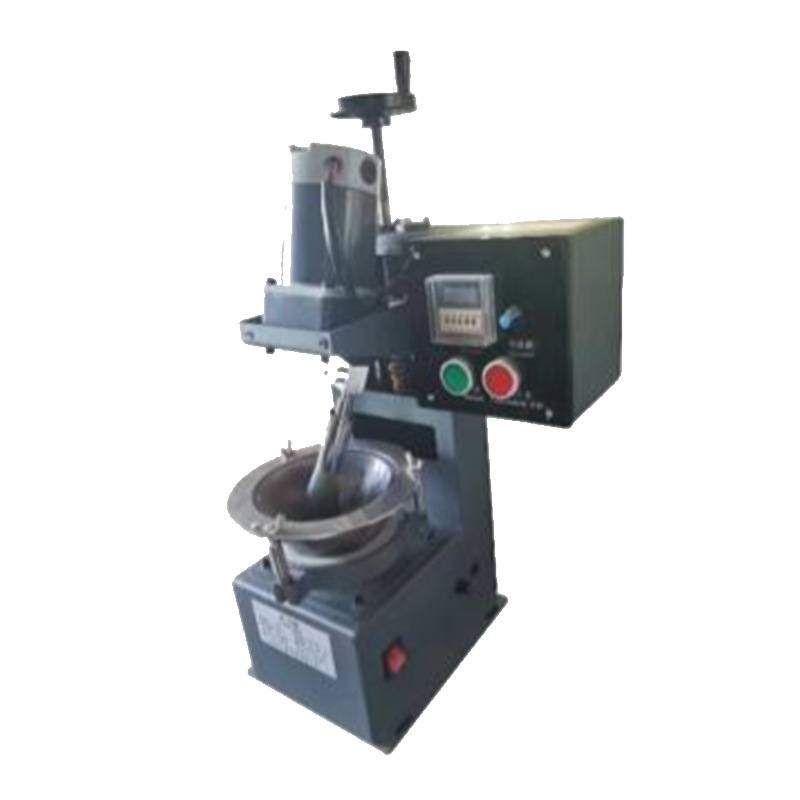
An agate grinder typically operates on the principle of friction and pressure. The equipment consists of an agate mortar and an agate pestle. The pestle is driven by a motor, rotating or oscillating against the inner wall of the mortar. The sample material is placed in the mortar, and the mechanical action crushes and grinds the particles into finer sizes.
Unlike planetary ball mills or vibratory mills that rely on impact, the agate grinder uses a combination of shearing and compression. This makes it particularly suitable for materials that are brittle or moderately hard. The grinding gap can often be adjusted to control the final particle size, and the operation can be timed for consistency.
Key Components of an Agate Grinder
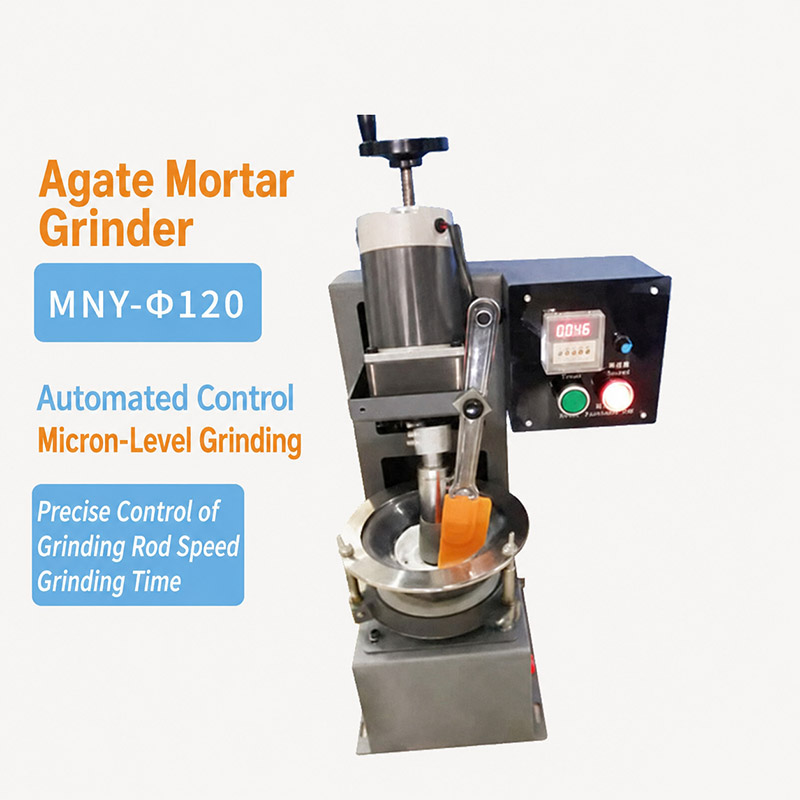
- Agate Mortar: The bowl where the sample is placed. It is made from high-purity natural agate, ensuring minimal contamination.
- Agate Pestle: The grinding tool that rotates or moves within the mortar. It is also made from agate to match the hardness and purity of the mortar.
- Drive Mechanism: An electric motor with adjustable speed control, allowing the user to set the rotation speed and direction.
- Scraper (optional): Some models include an agate or plastic scraper to keep the sample from sticking to the mortar walls.
- Base and Clamping System: A stable base to hold the mortar securely during operation.
This design makes the agate grinder a straightforward yet effective tool for laboratory fine grinding. The simplicity also means easy cleaning between samples, which is crucial for avoiding cross-contamination.
Applications of Agate Grinders in Laboratories
Agate grinders are widely used in many fields where sample purity is non-negotiable. Here are some common applications:
1. Geological and Mineralogical Sample Preparation
Rock and mineral samples are often ground to a fine powder for X-ray diffraction (XRD), X-ray fluorescence (XRF), or infrared spectroscopy. An agate grinder ensures that the sample does not pick up iron, chromium, or other metallic elements from steel grinding surfaces, which could distort analytical results.
2. Ceramic and Glass Powder Processing
In ceramic research, raw materials like alumina, zirconia, silica, and feldspar need to be ground without contamination. Agate is chemically inert and does not react with most ceramic precursors, making it an excellent choice for lab-scale ceramic powder preparation.
3. Chemical and Pharmaceutical Fine Grinding
For small quantities of chemical reagents, active pharmaceutical ingredients (APIs), or catalysts, an agate grinder provides a clean environment. The low heat generation during grinding helps preserve heat-sensitive compounds.
4. Spectroscopic Analysis Sample Preparation
Many spectroscopic techniques require a homogeneous, fine powder. Using an agate grinder minimizes the risk of introducing spectral interferences from grinding media.
It is worth noting that agate grinders are typically designed for batch processing of small sample volumes, from a few grams to about 50–100 grams per batch, depending on the model. They are not intended for large-scale production but excel in laboratory and research environments.
Factors to Consider When Selecting an Agate Grinder
Choosing the right agate grinder for your lab involves several considerations. Here are some key points to guide your decision:
Sample Hardness and Abrasiveness
Agate has a Mohs hardness of about 7. It can grind materials with hardness up to approximately 7. For harder materials (e.g., corundum, diamond), agate may wear quickly or cause contamination from the agate itself. In such cases, alternative grinding media like tungsten carbide or zirconia may be more suitable. However, for most common minerals, ceramics, and chemicals, agate provides excellent performance.
Required Final Particle Size
Agate grinders can typically achieve particle sizes down to the micrometer range (e.g., 10–50 µm), depending on the material and grinding time. For sub-micron or nano-sized particles, a planetary ball mill or high-energy mill might be necessary. If your target is fine but not ultra-fine, an agate grinder is a practical and cost-effective choice.
Sample Quantity
Consider the typical batch size you need. Agate mortars come in various capacities, commonly ranging from 50 mL to 500 mL. Ensure the mortar volume is appropriate for your sample amount. Overfilling can reduce grinding efficiency, while underfilling may cause excessive wear.
Ease of Cleaning
One advantage of agate grinders is that they are relatively easy to clean. The smooth, non-porous surface of agate does not retain powder residues. However, repeated grinding of different materials may still cause cross-contamination if not cleaned properly. Some models have removable mortars, making cleaning and sample recovery easier.
Automation and Control
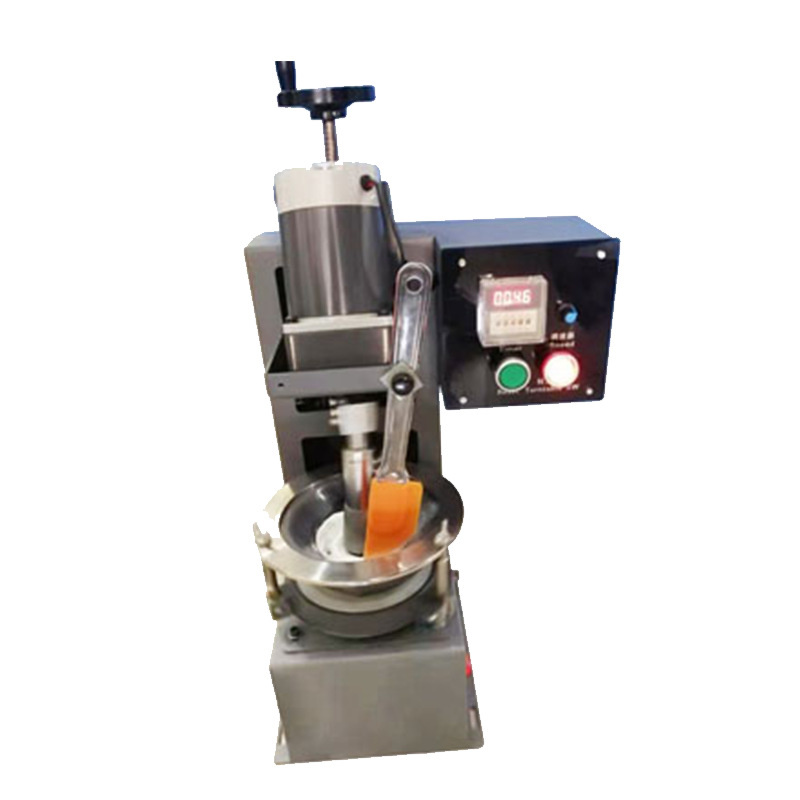
Basic agate grinders are manual or semi-automatic, while advanced models offer programmable timers, variable speed, and even automatic reversal of rotation direction. For routine sample preparation, programmable features can improve reproducibility and reduce operator effort.
For more detailed specifications and to see available models, you can visit the agate grinder product page.
Practical Tips for Using an Agate Grinder
To get the best results from your laboratory agate mill, consider the following:
- Pre-crush large pieces: If your feed material is larger than a few millimeters, pre-crush it using a jaw crusher or hammer mill to avoid damaging the agate mortar.
- Set appropriate grinding time: Start with a short grinding cycle (e.g., 2–3 minutes) and check the particle size. Over-grinding can lead to agate wear and unnecessary heat buildup.
- Use dry grinding when possible: Agate grinders are primarily designed for dry grinding. If wet grinding is required, ensure the mortar is sealed or use a compatible liquid that does not attack agate.
- Clean thoroughly between samples: Wash the mortar and pestle with distilled water and a mild detergent, then rinse and dry. For stubborn residues, a brief ultrasonic cleaning can be helpful.
- Check for wear: Over time, the grinding surfaces may become polished or develop micro-cracks. Inspect the mortar and pestle periodically and replace them if significant wear is observed.
Limitations and Considerations
While agate grinders are excellent for many applications, they have some limitations:
- Hardness limit: Agate cannot grind materials harder than itself without significant wear. For very hard materials, consider using a laboratory rod grinder or a ball mill with appropriate grinding media.
- Not suitable for high-throughput: Agate grinders are batch processors. If you need to handle large volumes continuously, other equipment like a micro airflow pulverizer may be more appropriate.
- Potential for agate contamination: Although minimal, agate itself can contribute silicon dioxide to the sample. For applications where silicon is a critical trace element, consider using a different material like zirconia or alumina.
Understanding these factors will help you make an informed decision and use the equipment effectively.
Final Thoughts
An agate grinder is a classic and reliable tool in laboratory powder processing. Its ability to provide contamination-free grinding for a wide range of materials makes it indispensable in many analytical and research workflows. By choosing the right model and following best practices, you can achieve consistent, high-quality powder samples for your experiments.
If you are planning to set up a new laboratory or upgrade your existing powder processing equipment, exploring the agate grinder options from reputable manufacturers like TENCAN can be a good starting point. Remember to evaluate your specific material properties, sample quantity, and required purity to select the most suitable configuration.