
Corundum Grinding Ball: Properties, Applications, and Selection Guide for Laboratory Milling
Introduction to Corundum Grinding Balls
When you work with a planetary ball mill, jar mill, or any other laboratory milling equipment, the grinding media you choose directly influences the final particle size, contamination level, and overall efficiency of your powder processing. Among the various ceramic grinding media available, corundum grinding balls (also known as high-alumina grinding balls) stand out for their excellent balance of hardness, wear resistance, and chemical stability.
Corundum is a crystalline form of aluminum oxide (Al₂O₃). In its sintered or fused form, it achieves a Mohs hardness of 9, second only to diamond. This makes it an outstanding choice for grinding hard, abrasive materials while introducing minimal contamination into the sample. In many laboratory applications, corundum grinding balls are the default option when you need to avoid metallic contamination and can tolerate a small amount of alumina pickup.
In this article, we will look at the key properties of corundum grinding balls, typical applications, factors to consider when selecting ball size, and how to compare them with other common grinding media such as zirconia, agate, and stainless steel balls. Whether you are preparing ceramic powders, mineral samples, or battery electrode materials, understanding these points will help you make a more informed decision.
Key Properties of Corundum Grinding Balls
High Hardness and Wear Resistance
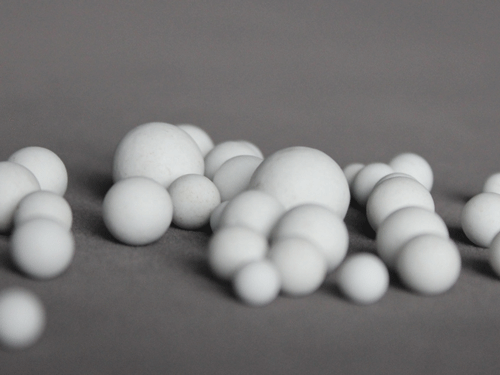
Corundum grinding balls typically have an Al₂O₃ content above 92%. Some high-purity versions reach 95% or even 99%. With a Mohs hardness of 9, they can effectively grind materials that are themselves quite hard, such as quartz, feldspar, silicon carbide (moderately hard), and various ceramic raw materials. The high wear resistance means the balls maintain their shape and size for many milling cycles, reducing the need for frequent replacement and ensuring consistent milling performance over time.
Chemical Inertness
Alumina is chemically inert in most environments. It does not react with acids or alkalis under normal milling conditions, and it does not introduce metallic elements like iron, chromium, or nickel into the sample. For many research applications, especially those involving sensitive electronic materials, catalysts, or pharmaceutical compounds, this low level of contamination is critical. However, be aware that a small amount of alumina wear debris can still be generated and may appear in the final powder. If your application absolutely cannot tolerate any alumina contamination, you might consider grinding media made from the same material as your sample, or use a different media such as agate or zirconia.
High Density and Impact Energy
The density of corundum is around 3.6–3.9 g/cm³ (depending on purity and sintering process). This is lower than zirconia (≈5.5–6.0 g/cm³) or stainless steel (≈7.8 g/cm³), but higher than agate (≈2.6 g/cm³). In ball milling, higher density media generate greater impact forces for a given jar rotation speed. For many laboratory milling jobs that do not require the maximum energy input, corundum provides a good compromise between milling efficiency and cost.
Temperature Stability
Corundum can withstand temperatures above 1700°C before softening. Although typical ball milling processes generate only modest local heating (often 30–60°C above ambient), this high temperature tolerance means the balls will not degrade or phase-change under normal operating conditions, even if the mill runs for extended periods.
Common Applications of Corundum Grinding Balls
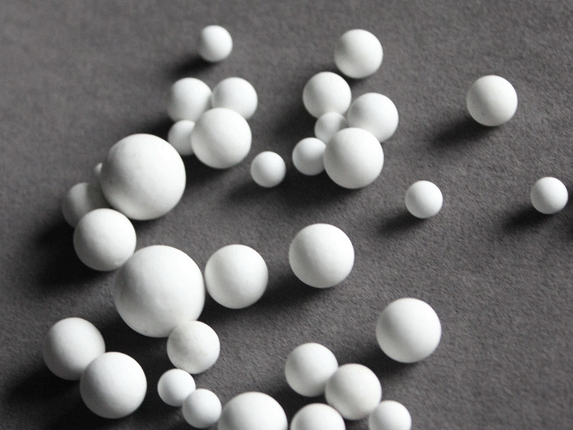
Corundum grinding balls are widely used across many industries. Here are some typical scenarios:
- Ceramic and glass industries: Grinding of feldspar, quartz, kaolin, alumina itself, glass frits, and enamel powders. The media’s hardness ensures efficient size reduction of these abrasive materials.
- Mineral processing: Preparation of ore samples for analysis. Corundum is a good choice for grinding non-metallic minerals such as limestone, dolomite, talc, and phosphate rock when low iron contamination is desired.
- Battery materials: In laboratories working on lithium-ion batteries, corundum balls are often used for milling cathode or anode materials like LCO, NMC, graphite, and silicon‑carbon composites. The low metallic contamination helps maintain electrochemical purity.
- Chemical and pigment industries: Grinding of dyes, pigments, and inorganic chemicals where iron-free processing is required.
- Geological and soil samples: Analytical sample preparation where maintaining the original elemental composition is important.
How to Select the Right Size of Corundum Grinding Ball
Choosing the correct ball diameter depends on several factors:
Initial Feed Particle Size
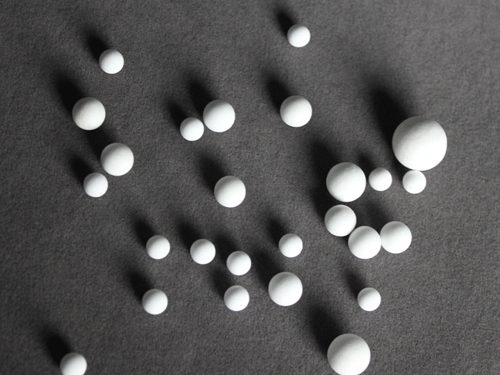
If your starting material is relatively coarse (e.g., above 1–2 mm), larger balls (10–20 mm) provide stronger impact forces to break the particles. For fine grinding to sub‑micron or micron range, smaller balls (1–5 mm) offer more contact points and are more effective at generating fine particles. In many experimental setups, a mixture of different sizes (e.g., 10 mm and 5 mm) can improve packing and grinding efficiency.
Ball Mill Jar Size and Fill Ratio
Typically, the grinding balls should occupy about 30–50% of the jar’s internal volume. The actual usable volume for sample and liquid is the remaining space. If you use too many large balls, the total number of balls decreases, which may reduce grinding action. Conversely, too many small balls can lead to excessive wear and inefficient impact.
Desired Final Particle Size
For applications targeting a D50 below 10 µm, smaller balls (e.g., 3–5 mm) are often preferable. For mechanical alloying or high‑energy milling to produce nano‑crystalline structures, you may need even smaller balls (0.5–2 mm) combined with high‑energy planetary ball mill settings. Remember that final particle size also strongly depends on milling time, speed, ball‑to‑powder ratio, and the material’s intrinsic grindability.
Ball‑to‑Powder Weight Ratio
A common starting point for many ceramic materials is a ball‑to‑powder ratio between 5:1 and 10:1 by weight. For harder materials, a higher ratio (up to 20:1) may be necessary. The actual ratio should be optimized for each material.
Comparison with Other Grinding Media
To help you decide, here is a quick comparison with other commonly used grinding media in laboratory ball mills:
| Media Type | Material | Density (g/cm³) | Hardness (Mohs) | Main Contamination Concern | Typical Use |
|---|---|---|---|---|---|
| Corundum | Al₂O₃ (92–99%) | 3.6–3.9 | 9 | Alumina (Al₂O₃) | Non‑metallic, ceramics, minerals, batteries |
| Zirconia | ZrO₂ (Y‑PSZ or Ce‑PSZ) | 5.5–6.0 | 8.5 | Zirconia (ZrO₂) | High‑energy milling, fine grinding, hard materials |
| Agate | SiO₂ (natural quartz) | 2.6–2.7 | 7 | Silica (SiO₂) | Mineral analysis, where minimal contamination is key |
| 304 Stainless Steel | Fe‑Cr‑Ni alloy | 7.8 | 5–6 | Fe, Cr, Ni | High‑impact, hard materials, but introduces metallic contamination |
| Tungsten Carbide | WC‑Co | 14.5–15.0 | 9.5 | W, Co | Extremely hard materials, mechanical alloying |
As the table shows, corundum offers a good balance: it is hard, relatively dense, chemically inert, and much more affordable than zirconia or tungsten carbide. When metal contamination must be avoided but silica contamination (from agate) is not acceptable, corundum is often the preferred choice.
Operational Considerations and Best Practices
Dry Grinding vs. Wet Grinding
Corundum balls perform well in both dry and wet milling processes. In wet milling, the liquid (water, ethanol, isopropanol, etc.) helps disperse the powder and reduce agglomeration. However, if the grinding jar and balls are not properly cleaned, residue may dry and cause caking. Always rinse the balls and jar thoroughly after each use.
Cleaning and Maintenance
After milling, clean corundum balls with a brush and water or a suitable solvent. For most inorganic materials, a dilute acid bath (e.g., 5% nitric acid) can remove stubborn residues, but avoid prolonged exposure to strong HF or hot concentrated alkalis, which can attack alumina. Drying the balls completely before storage prevents mold growth in organic residues.
Handling Chipping and Breakage
While corundum is very hard, it is also somewhat brittle. Under extreme impact (e.g., using very large balls in a high‑energy mill without proper cushioning), occasional chipping or breakage can occur. To minimize this, avoid operating the mill at maximum speed with a high ball‑to‑jar filling ratio. If you need to mill very tough materials, consider using zirconia grinding balls which are tougher.
Milling Speed and Time
In a planetary ball mill, the rotational speed of the sun wheel and the jar itself determines the motion of the balls. For corundum media, typical speeds range from 200–400 rpm for laboratory machines. Higher speeds increase impact force but also raise temperature and wear. It is advisable to start with moderate speeds and adjust based on results. For temperature‑sensitive materials, use intermittent milling cycles (e.g., 10 minutes on, 10 minutes pause) to allow heat dissipation.
Conclusion
Corundum grinding balls are a reliable, cost‑effective grinding media for a wide variety of laboratory and pilot‑scale milling applications. Their high hardness, chemical inertness, and excellent wear resistance make them the go‑to choice for grinding ceramics, minerals, and battery materials where iron contamination is a concern. By understanding the key properties and selecting the correct size and process parameters, you can achieve efficient milling and high‑quality powder results.
If you are unsure which type of grinding media best suits your specific material and process, consider contacting a technical expert. Experienced engineers can help you evaluate factors such as sample hardness, target particle size, batch volume, and contamination tolerance to recommend the most appropriate grinding media and jar configuration. For more details about corundum grinding balls and other milling accessories, visit our product pages.