
Desktop Air Blower Dryer: A Compact Solution for Efficient Powder Drying in Laboratories
Why Drying Matters in Powder Processing
After milling, mixing, or wet chemical synthesis, powders often contain residual moisture, solvents, or other liquids that must be removed before further processing or characterization. Inconsistent drying can lead to agglomeration, altered particle size distribution, or even chemical degradation. For laboratory researchers and small-scale production, a reliable drying solution that fits on a benchtop is essential.
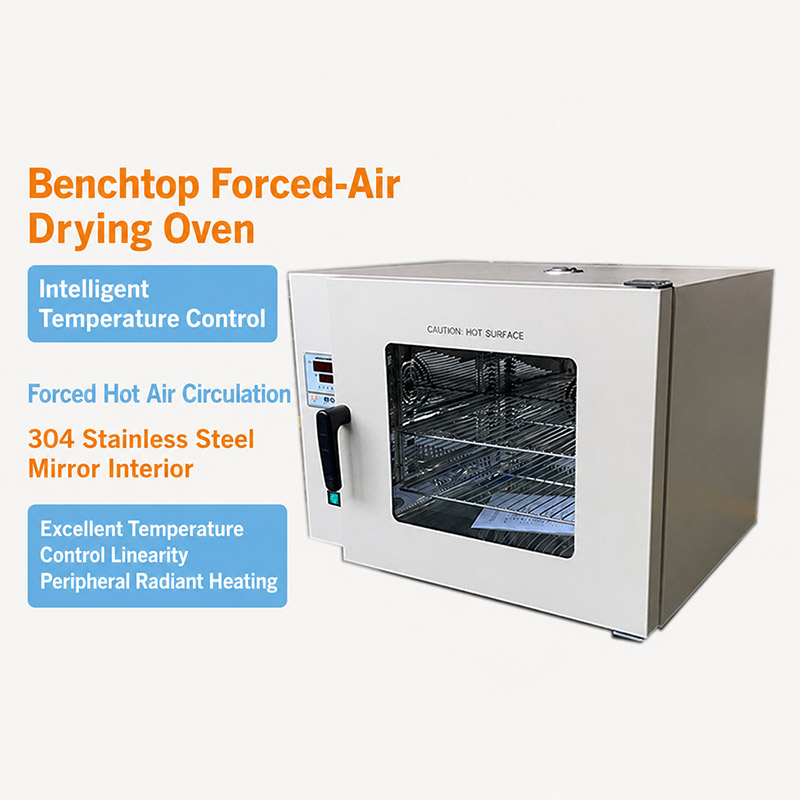
The Desktop Air Blower Dryer is designed to address these challenges. It combines forced air convection with precise temperature control in a compact footprint, making it a practical choice for labs that need to dry small batches of powders, ceramics, catalysts, or solid samples quickly and uniformly.
How a Desktop Air Blower Dryer Works
Unlike a static oven that relies on natural convection, a desktop air blower dryer uses a built-in fan or blower to circulate heated air throughout the chamber. This forced convection greatly improves heat transfer efficiency and temperature uniformity. Here’s a simplified breakdown of the working principle:
- Heating element: An electric resistance heater warms the air inside the chamber. The temperature is regulated by a thermostat or PID controller.
- Air circulation: A blower draws air from the chamber, passes it over the heater, and then distributes the hot air evenly across the shelves or sample trays. This continuous flow reduces temperature gradients and speeds up drying.
- Ventilation: An adjustable exhaust vent allows moisture-laden air to escape, preventing condensation and maintaining a dry environment inside.
- Control system: Digital controllers allow users to set the target temperature and drying time. Some models include programmable timers and over-temperature protection.
Because of the forced airflow, the desktop air blower dryer can achieve faster drying rates compared to gravity convection ovens, especially for powders with high surface area or when drying thick layers.
Key Features of a Desktop Air Blower Dryer
Compact and Space-Saving Design
Most desktop models occupy less than 0.5 m² of bench space, making them ideal for crowded laboratories. Despite their small size, they often provide sufficient chamber volume for typical batch sizes—commonly between 20 L and 80 L, depending on the model.
Precise Temperature Control
Accurate temperature control is critical when drying heat-sensitive materials. Many desktop air blower dryers feature PID controllers that maintain temperature within ±0.5°C to ±1°C of the set point. The operating range is typically from room temperature +10°C up to 300°C, covering the needs of most powder drying applications.
Uniform Airflow
The design of the blower and duct system ensures that air reaches all areas of the chamber. This uniformity is especially important when drying multiple samples at once, as it prevents some samples from being under-dried while others overheat.
Safety and Reliability
Built-in safety features such as over-temperature protection, door interlock, and thermal fuses help prevent accidents. The inner chamber is usually made of stainless steel for corrosion resistance and easy cleaning.
Common Applications in the Lab
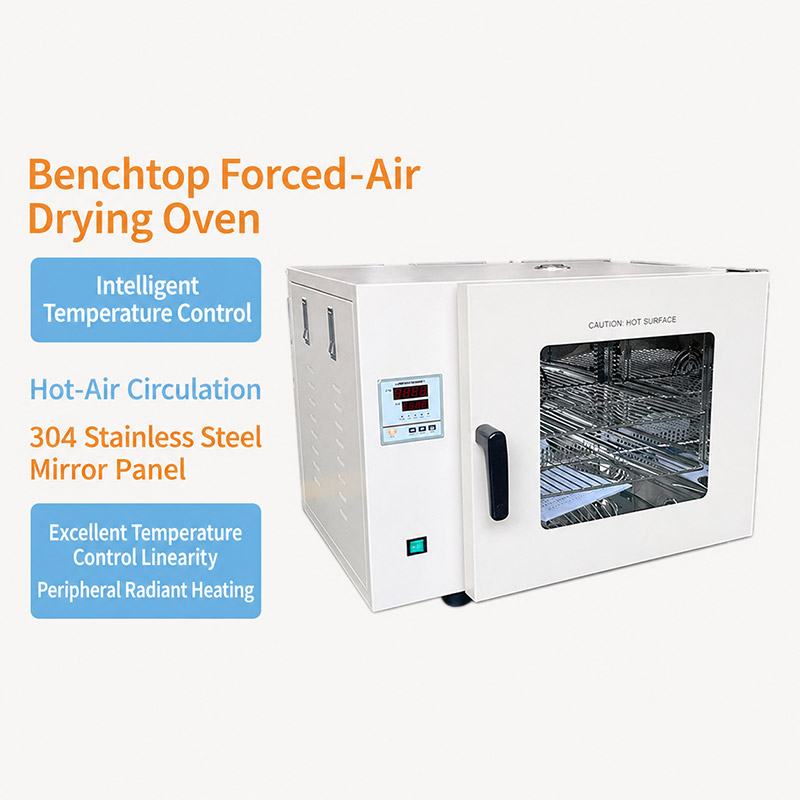
The desktop air blower dryer is widely used in research and quality control laboratories across various industries:
- Powder & ceramic processing: Drying milled powders, green bodies, and ceramic slurries before sintering or characterization.
- Battery material preparation: Removing solvent from electrode slurries or drying cathode/anode precursor powders.
- Catalyst manufacturing: Drying catalyst supports or impregnated materials at controlled temperatures.
- Pharmaceuticals: Drying granules, excipients, or active pharmaceutical ingredients (APIs) that are sensitive to moisture.
- Environmental & soil analysis: Drying soil, sediment, or plant samples to a constant weight for moisture content determination.
- General lab drying: Glassware, crucibles, and other labware after washing.
For applications requiring higher precision or inert atmosphere, you may also consider the Precision Air Blower Dryer or the Circulation Oven, which offer enhanced control and larger capacities.
How to Choose the Right Desktop Air Blower Dryer
Selecting the appropriate model depends on your specific drying requirements. Here are the key factors to evaluate:
Chamber Volume
Consider the maximum batch size you need to dry. A 20–30 L chamber is suitable for small samples and occasional use, while 50–80 L models can handle multiple trays or larger parts. Ensure the shelving configuration allows good airflow around your samples.
Temperature Range and Accuracy
Most lab drying ovens operate up to 200°C or 300°C. If you work with materials that degrade at high temperatures, a model with a lower maximum temperature (e.g., 180°C) may offer better control at the low end. For applications requiring strict temperature uniformity, look for a unit with forced convection and a PID controller.
Airflow and Ventilation
For drying materials that release volatile organic compounds (VOCs) or corrosive vapors, an adjustable exhaust vent is important to remove fumes safely. Some ovens can be fitted with a port for external exhaust connection.
Material of Construction
Stainless steel interior is standard for most lab ovens. For highly corrosive environments, consider models with a glass-lined or PTFE-coated chamber.
Additional Features
- Programmable timer and temperature ramps
- Data logging or RS-232 interface
- Viewing window for monitoring samples without opening the door
- Over-temperature alarm and independent safety thermostat
Compatibility with Existing Equipment
If you already use a Vacuum Drying Oven for heat-sensitive materials, the desktop air blower dryer can serve as a complementary tool for routine drying where vacuum is not required. Similarly, for freeze-drying needs, you might explore the Vacuum Freeze-Drying Oven.
Practical Tips for Effective Drying
To get the best results from your desktop air blower dryer:
- Preheat the oven: Allow the chamber to reach the set temperature before loading samples. This ensures stable conditions from the start.
- Spread samples evenly: Avoid thick layers or overlapping. Use shallow trays to maximize surface area.
- Monitor moisture removal: For powders, weigh samples periodically during drying to determine when constant weight is achieved.
- Ventilation: Keep the exhaust vent open for materials that release significant moisture. Close it partially when drying small amounts to reduce energy consumption.
- Clean regularly: Remove any spilled powder or debris that could affect airflow or contaminate future samples.
By understanding the capabilities and limitations of the desktop air blower dryer, you can integrate it effectively into your lab workflow. Whether you are drying a few grams of synthesized nanoparticles or several kilograms of ceramic powder, a well-chosen forced convection dryer will save time and improve reproducibility.
For more detailed specifications and to compare models, visit the Desktop Air Blower Dryer product page or explore the full range of drying and sintering equipment offered by TENCAN.