
Ceramic Roll Mill Jar: Wear, Load and Speed
A roller ball mill is mechanically simple: a horizontal jar turns on powered rollers, and the grinding media and sample tumble inside. The jar is also the only part of the mill that touches the sample. That makes jar selection a process decision, not an accessory decision. A ceramic roll mill jar can be a practical choice for laboratories that want to reduce metallic contact, handle abrasive powders, or run small batches in a cleanable vessel. It does not, however, remove the need to test wear, sealing, media compatibility, and operating conditions.
Ceramic is a family of materials, not a single specification. Two jars that look similar may behave differently if their ceramic body, surface finish, lid design, gasket, or dimensions differ. The Ceramic roll mill jar product page is the place to confirm the actual configuration offered, because the jar must match the roller mill and the intended duty. The technical questions that matter are how the jar works, where contamination comes from, how media and fill affect results, why speed is not a simple productivity dial, and how to validate a method before scale-up.
How a Ceramic Roll Mill Jar Works on a Roller Mill
In a roller ball mill, the jar rests on two or more rotating rollers. Friction turns the jar, and the media charge rises and falls as the jar rotates. There is no stirring shaft, no rotor, and no internal agitator. The energy comes from the tumbling motion. A ceramic roll mill jar is a ceramic vessel designed for this duty; its job is to contain the media and powder, transfer heat, seal the batch, and resist wear. Because the mill is jar-based, the working volume, jar mass, and outside diameter all influence how the jar sits and turns on the rollers. A jar that is too heavy, too large, or incorrectly shaped for the roller spacing may slip, run unevenly, or load the drive. These are practical fit checks, not minor details.
The tumbling action inside a roller mill is relatively gentle compared with high-energy stirred or planetary mills. That can be an advantage for heat-sensitive or fragile materials, but it also means that achieving a fine target size may take longer or may require a smaller feed. The ceramic jar does not change the basic mechanics: media still collide, slide, and roll; particles still fracture at contact points; and fines still coat surfaces. What the ceramic jar changes is the contamination profile, the wear surface, the cleaning routine, and possibly the maximum safe operating speed. Those changes should be assessed together.
A ceramic jar also introduces a brittle failure mode. Ceramic resists abrasion well in many duties, but it can chip or crack if impacted, dropped, over-tightened, or thermally shocked. A chip is not only a hardware problem. It can release ceramic fragments into the batch and change the effective milling volume. For that reason, jar handling, lid assembly, and inspection belong in the written procedure, not only in operator experience.
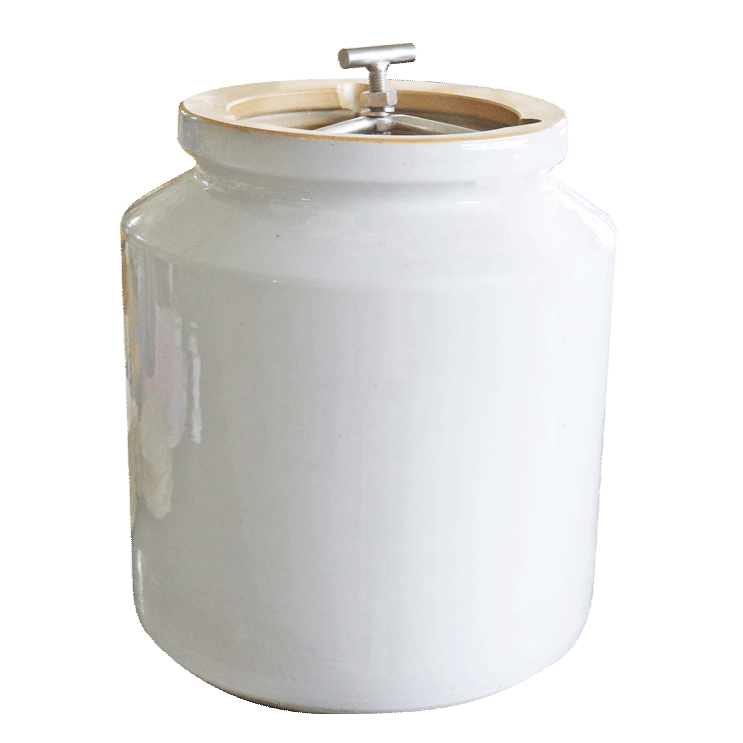
Compared with a metal jar, a ceramic jar may be selected when metallic wear is undesirable, but the decision should be based on sample chemistry and analytical sensitivity. If a trace metal result matters, test the actual jar and media under the actual process conditions. Do not assume that a non-metal jar is automatically contamination-free, because the lid, gasket, media, and handling steps can all contribute.
Wear and Contamination: What Ceramic Does and Does Not Solve
Contamination in roller milling has several sources. The jar wall wears where media slide; the media wear against each other and against the jar; the lid and gasket can rub; and powder can be picked up from the environment during loading, sampling, or cleaning. A ceramic jar may reduce one source, but it does not eliminate the others. The media must be compatible with the jar, and the lid and sealing system must be suitable for the powder. Fine abrasive powder can migrate into a gasket groove and act as a lapping compound. If that happens, the seal may wear faster, and the contamination may come from the seal rather than the ceramic body.
Wear in a ceramic jar is usually a mix of abrasion and impact. Abrasion removes material gradually and may polish the surface; impact can initiate chips or cracks. Hard, angular feed materials are more demanding than soft, rounded ones. Large media add impact energy, while small media increase the number of contacts. Neither is automatically better. The right balance depends on feed size, target size, and how much wear the jar and media can tolerate. A process that reaches the target size quickly but leaves visible wear marks on the jar may not be repeatable over many batches.
Jar and media matching is often treated as a purchasing detail, but it is a process variable. If the media is much harder or denser than the jar, the jar may become the wear part. If the media is too light, the mill may need more time or higher speed, which can increase heat and wear elsewhere. The best combination is the one that delivers the required particle size with acceptable contamination and a predictable wear rate. That combination should be confirmed by a controlled trial, not assumed from a material name.
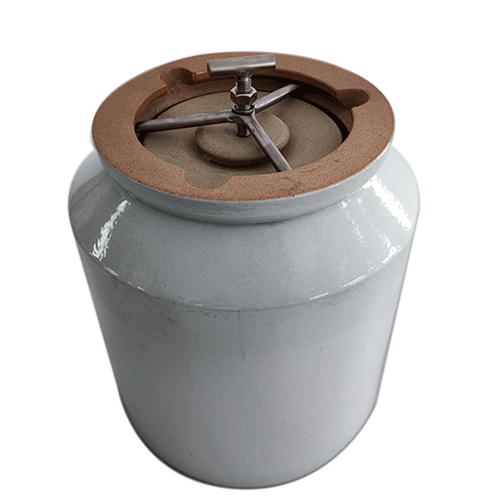
The word ceramic covers a wide range. Porosity, surface finish, binder content, thermal expansion, and mechanical strength can differ among ceramic bodies. A jar that is chemically suitable for one sample may not be suitable for another. Before using a ceramic roll mill jar for a new material, confirm the ceramic type, the intended cleaning agents, the maximum temperature, and any restrictions from the supplier. If the sample is sensitive to silica, alumina, zirconia, or another ceramic component, verify the jar composition rather than relying on a generic label. The ceramic roll mill jar product page can be used to confirm the offered configuration, while lot documentation and supplier data should be used for material compatibility.
Media, Load, and Fill: Setting the Working Window
A roller mill has few controls, so the variables inside the jar do most of the work. Media size, media density, media fill, sample fill, and total jar volume all interact. Smaller media create more contact points and can produce finer grinding, but each ball has less mass. Larger media deliver more impact and can break coarser feed, but they may leave a broader particle size distribution and wear the jar more aggressively. The useful media size depends on the feed size and the target size; a charge that is right for one powder may be ineffective for another.
Media density affects the energy available at each collision and the tendency of the charge to settle or slide. Denser media can increase milling intensity, but they also increase load on the jar and rollers, heat generation, and wear. A dense media charge in a ceramic jar should be evaluated carefully because the jar is the containment boundary. The jar mass plus media mass plus sample mass must be within what the roller mill can turn reliably. If the jar slips or the rollers strain, the process is outside a stable operating window.
Fill level is another common source of inconsistency. Too little media gives sparse contacts and slow size reduction. Too much media can leave little room for the sample and can cause the charge to rotate as a mass instead of tumbling. The sample should occupy the voids and leave enough headspace for motion. Overfilling the jar can reduce efficiency, increase pressure on the lid, and make cleaning harder. Underfilling can cause excessive media-to-media impact and poor powder circulation. The practical fill should be established by trials and recorded as part of the method.
Batch size should be chosen from the jar's working volume, not from its nominal capacity alone. A jar filled to the lid may be convenient for storage but unsuitable for milling. The same is true for scale-down: a small trial jar and a larger jar do not behave identically just because the recipe is the same. Geometry, media size, and speed change with scale. For method transfer, keep the media-to-powder ratio, fill level, and rotational speed relationship as close as practical, then verify the result with particle size measurement.
| Variable | What it changes | What to verify |
|---|---|---|
| Media size | Contact number and impact energy | Feed size, target size, wear |
| Media density | Energy per collision and load | Jar mass, roller capacity, heat |
| Media fill | Tumbling behavior and contact frequency | Voids, headspace, sample circulation |
| Sample fill | Powder availability and pressure | Working volume, lid seal, recovery |
| Jar volume | Batch size and path length | Scale-up ratio, roller fit |
| Rotation speed | Charge motion and energy | Slippage, centrifugation, temperature |
Rotation Speed and Time: Finding a Stable Window
Roller speed is usually set by the mill, but it is not a simple productivity control. As the jar rotates faster, the media charge is lifted higher and then falls. Within a useful range, this increases energy and reduces milling time. Beyond that range, the charge can stick to the jar wall, slip, or centrifuge, so the relative motion between media and powder decreases. The result can be more heat, more wear, and less size reduction. The transition depends on jar diameter, media density, fill level, and powder load.
The same roller rpm can mean different things in different jar sizes. A large jar has a different critical speed from a small jar. For that reason, copying a speed from another method without checking jar diameter and charge behavior is risky. Operators should watch or instrument the run: listen for consistent tumbling, check for jar slippage, monitor temperature, and compare particle size at intervals. If increasing speed does not improve size reduction, the charge may already be outside the useful motion regime.
Milling time has diminishing returns. The fastest size reduction often occurs early, while later milling may mainly change the distribution, generate heat, or increase contamination. A single end-point time is convenient, but it can hide process drift. For sensitive methods, a time series is more informative: sample at intervals, measure particle size, and stop when the target is reached. The jar, media, and mill settings should be recorded with each result so the method can be repeated.
Heat is easy to overlook in a roller mill because the motion is gentle. Even so, a sealed ceramic jar can accumulate heat from friction and media impact. If the sample is heat-sensitive, volatile, or prone to phase change, the temperature inside the jar should be checked. A larger batch, denser media, higher speed, or longer time can all raise the thermal load. In some cases, a lower-energy protocol with a longer time is more appropriate than a short, hot run.
Why More RPM Can Make Results Worse
At excessive speed, the media may press against the jar wall and rotate with it. When this happens, the charge loses the tumbling action that creates fresh contacts. The mill sounds smoother, which can be misleading. Power draw may change, but visual or acoustic checks are not always reliable. The practical sign is a plateau or reversal in size reduction despite more energy input.
Slippage between the jar and rollers is another failure mode. A heavy ceramic jar, a wet or dusty roller surface, or poor roller alignment can reduce the effective rotation. The mill may be set to a higher speed, but the jar may not follow it. Before changing the recipe, confirm that the jar is turning at the intended rate and that the rollers are clean and correctly spaced.
Feed Size, Target Size, and Particle Distribution
A roller ball mill is not a primary crusher. Feed that is too coarse can be slow to break, can damage the jar, or can require media so large that the jar volume is poorly used. Pre-crushing or screening the feed to a suitable size is often more efficient than extending milling time. The acceptable feed size depends on jar diameter, media size, and material toughness. If the feed contains hard agglomerates or foreign objects, the risk of jar chipping increases.
Target particle size should be defined as a distribution, not only as an average. A method that reports a mean but ignores the coarse tail may look successful while leaving oversized particles that affect the next process. Laser diffraction, sieving, microscopy, or another suitable method can be used, but the same method and dispersion procedure should be used for comparison. Sampling a milled powder is also a source of error: fines and coarse fractions can segregate, so the sample should be representative.
In dry milling, powder can coat the jar and media, cushion impacts, and reduce efficiency. In wet milling, the liquid can disperse particles and reduce dust, but it also changes viscosity, sedimentation, and recovery. A slurry that is too viscous may not circulate; a slurry that is too dilute may reduce collision frequency and require more energy for the batch. The liquid must be compatible with the ceramic jar, lid, and gasket. If the process is later dried, the drying step can create agglomerates that were not present after milling.
Particle size distribution is also affected by the media charge. A narrow distribution may require a balance between impact and attrition, not simply more time. Once the coarse particles are gone, additional milling may create fines without improving the top end. This is why a particle size curve is more useful than a single number, and why the end point should be defined by the application rather than by the clock.
Sealing, Cleaning, and Cross-Batch Protection
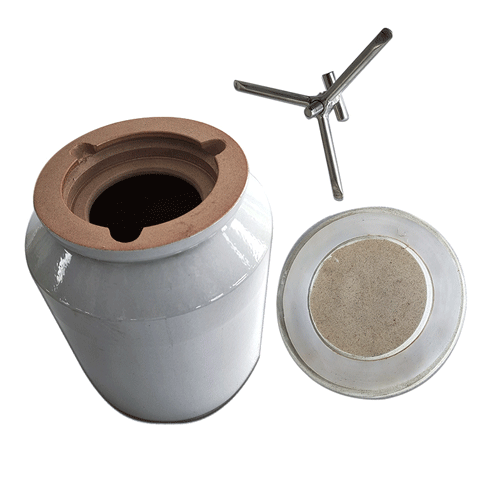
A roller mill jar spends much of its life being opened, filled, closed, and cleaned. The lid and gasket are therefore critical. Fine powder can enter a gasket groove, dry out, and prevent a reliable seal. If the jar is not sealed well, powder can escape during rotation and contaminate the mill or the workplace. If the seal is too tight, the lid or jar may be stressed during assembly. The correct tightening procedure should be described by the supplier and followed consistently.
Cleaning a ceramic jar requires attention to both the ceramic and the sealing surfaces. Abrasive cleaning tools can scratch the surface and create sites where powder accumulates. Strong chemicals may attack the gasket even if the ceramic is resistant. After cleaning, the jar should be fully dried before the next batch, especially if the powder is moisture-sensitive. Residual cleaning agent can also affect analytical results. A validated cleaning sequence is better than a visual check alone.
Cross-batch contamination is not only a chemical issue. A jar used for a hard, dark powder may retain fine material in scratches or around the lid. A later light-colored batch can show speck contamination even if the ceramic body is unchanged. For sensitive work, a dedicated jar or a more rigorous cleaning protocol may be needed. Inspect the jar for chips, cracks, and worn sealing surfaces before each use. A damaged jar should be removed from service, not used for a less critical batch.
Sample recovery should be included in the method. Powder can cling to the jar and media, and the amount recovered may be lower than expected. If the sample is valuable, the recovery procedure should be defined in advance. This is also a reminder that a ceramic jar is part of a system: the jar, lid, gasket, media, and mill all affect the result.
Selection Checklist for Ceramic Roll Mill Jars
Selecting a ceramic roll mill jar starts with the material and the analytical requirement. If metallic contamination is the main concern, ceramic may be appropriate, but the specific ceramic and media must be checked. If the feed is coarse or highly abrasive, wear and breakage risk may outweigh the benefit. If the batch is large, the jar may be too heavy for the roller mill. The decision should be made against the full process, not against a single property.
| Selection area | Key question | Why it matters |
|---|---|---|
| Sample chemistry | Is the ceramic compatible with the sample and cleaning agents? | Avoid unintended reaction or contamination |
| Feed size | Is the feed suitable for jar and media size? | Prevent slow milling, damage, or poor distribution |
| Target size | What distribution is required? | Define media, time, and end point |
| Batch size | What working volume is needed? | Avoid overfilling and roller overload |
| Jar fit | Does the jar match roller spacing and drive capacity? | Ensure stable rotation |
| Sealing | Is the lid and gasket suitable for the powder? | Prevent leakage and cross-contamination |
| Cleaning | Can the jar be cleaned and dried reliably? | Protect repeatability |
| Wear | Is the jar inspected and replaced when needed? | Avoid fragments and drift |
Fit to the roller mill deserves early attention. The jar outside diameter, length, mass, and surface condition determine whether the rollers can turn it consistently. A ceramic jar that is heavier than the mill's usual metal jar may need a lower batch load or different roller spacing. The rollers should be clean and dry; powder or liquid on the roller surface can cause slipping. If the jar wobbles, the lid may loosen, and the wear pattern may become uneven.
Media choice should be made with the supplier's data and a trial. The media must be compatible with the ceramic and the sample, and its size must suit the feed and target. A jar that is used with the wrong media may show accelerated wear or fail to reach the target. Keep records of media lot, jar condition, and milling time so that changes can be traced. A supplier can provide the jar dimensions, ceramic information, recommended cleaning, and compatible accessories. The TENCAN ceramic roll mill jar page is the starting point for the actual product configuration.
When a Ceramic Roll Mill Jar Is Not the Right Fit
A ceramic jar is not automatically better than a metal jar. If the sample is coarse, highly abrasive, or requires strong impact, a ceramic jar may wear quickly or chip. If metallic contamination is not a concern, a tougher jar may be more economical. If the process needs high energy in a short time, a stirred or planetary mill may be more suitable. The roller mill's gentle tumbling action is a strength for some materials and a limitation for others.
Brittleness is the main constraint. Ceramic can fail suddenly under impact or mishandling. A jar that has been dropped, over-tightened, or heated unevenly may look intact but contain a crack. For that reason, ceramic jars should be handled with a defined procedure and inspected regularly. If the process involves large media, coarse feed, or frequent lid removal, the risk of damage is higher.
There is also a scale question. A laboratory ceramic jar may be ideal for method development, but it may not represent a production mill. Particle size, contamination, and heat history can change with scale. Before transferring a method, run a pilot batch at the intended scale or use a scale-down model that preserves the key ratios. Do not assume that a longer time in a larger jar will produce the same result.
The practical answer is often a staged process: pre-crush or screen the feed, use a ceramic jar for the final milling step where contamination matters, and verify the result with a suitable analytical method. This uses the ceramic jar where its properties add value and avoids asking it to do a job it was not designed for.
Practical Validation Before Scale-Up
A useful validation plan starts with a clear objective. Define the feed material, the target particle size distribution, the acceptable contamination level, and the batch size. Then select a jar and media combination that can plausibly meet those requirements. Record the jar type, ceramic lot if available, media size and material, media mass, sample mass, fill level, rotation speed, time, and temperature. Without these records, a successful run is difficult to repeat.
Run a small time series rather than a single end point. Sample at intervals and measure particle size with a consistent method. Inspect the jar and media after each run for wear, chips, and powder buildup. If the particle size plateaus, do not simply extend the time; check whether the charge is moving correctly, whether the media is too small or too large, and whether the jar is overloaded. If contamination appears, identify the source before changing the jar material.
Repeat the run at least once under the same conditions. A method that works once but cannot be repeated is not ready for transfer. If the result is sensitive to small changes in fill or speed, define tighter control limits. If the jar shows wear after a short run, consider a different media or a less aggressive protocol. The goal is not only to reach the target size but to do so with a predictable wear rate and a clean sample.
Finally, confirm that the jar is suitable for the way it will be used in the laboratory. The lid should seal reliably, the jar should turn smoothly on the rollers, and the cleaning procedure should be practical. A ceramic roll mill jar can be a durable tool, but its performance depends on the complete setup. Test the system, document the conditions, and review the results before increasing batch size or changing the material.