
TENCAN Rotary Tube Furnace: Selection Guide for Rotary Thermal Processing
Rotary tube furnaces are selected when a powder, granule, or small-part load needs controlled thermal treatment while the tube itself rotates. The rotation is not decorative: it changes how the load contacts the hot zone, how gases pass over the sample, and how the operator plans feed, discharge, cleaning, and validation. For a laboratory or pilot line, the useful question is therefore not simply which furnace reaches a temperature, but which rotary-tube configuration makes the target material, atmosphere, and evidence trail reproducible.
TENCAN presents the Rotary Tube Furnace within its sintering-series range. That gives a clear starting point for a selection conversation: the product page can be used to confirm the offered tube arrangement, workable sample form, gas-path options, control package, and the operating information TENCAN is prepared to support. The same discipline should then be applied to any international platform under consideration, so the comparison remains like-for-like rather than a contest between brochures.
Define the thermal job before comparing hardware
A rotary tube furnace can be discussed in many ways: as a sintering tool, a calcination platform, a reaction vessel, a drying unit, or a continuous thermal-processing device. Those labels are not interchangeable. Before comparing suppliers, write a short process statement that covers the material, the desired change, the acceptable temperature window, the atmosphere, the likely volatile or particulate emissions, the batch or feed size, and the evidence needed to release the result.
For example, a ceramic powder that must be sintered without contamination has a different selection logic from a metal powder that is sensitive to oxygen, or from a granular product that must be heated evenly without excessive attrition. A small laboratory sample may need quick turnaround and easy tube access; a pilot batch may need controlled feed, reliable discharge, and a record of the thermal profile. If the process statement is vague, every furnace looks broadly suitable and no supplier can be compared fairly.
Useful selection inputs include the sample chemistry, particle-size range, bulk density, target mass per run, maximum sensible temperature for the material, heating and cooling limits, gas composition, allowable leakage rate, tube material restrictions, and cleaning method between campaigns. Also state whether the process is batch or continuous, whether the tube must rotate throughout the cycle, and whether the operator needs to remove the tube for loading. These are not procurement details to settle later; they determine which rotary-tube designs deserve quotation.
What rotary motion contributes to powder processing
In a rotary tube furnace, the tube turns while the charge is heated. This motion can continuously refresh the surface of a powder bed, reduce static contact with one hot zone, and help expose new material to the gas atmosphere. The practical benefit depends on fill level, rotation speed, tube geometry, and the flow behaviour of the powder. A free-flowing granule may tumble easily; a cohesive or sticky powder may form agglomerates or coat the tube wall unless the rotation and internals are matched to the material.
Rotary motion also changes how the operator thinks about residence time. In a batch cycle, the load may remain in the tube for the whole heating and cooling programme. In a continuous or semi-continuous arrangement, the feed rate and tube angle or transport mechanism matter as much as the temperature set point. A supplier should be able to explain which mode its rotary tube furnace is intended to support and what process data the buyer must supply to confirm the arrangement.
The furnace is only one part of the thermal system. Gas supply, sealing, exhaust, condensation, dust capture, cooling, and discharge all interact. A well-chosen rotary tube furnace makes those interactions visible in the mechanical layout and control philosophy, rather than leaving them to be discovered during commissioning.
TENCAN Rotary Tube Furnace as the first reference point
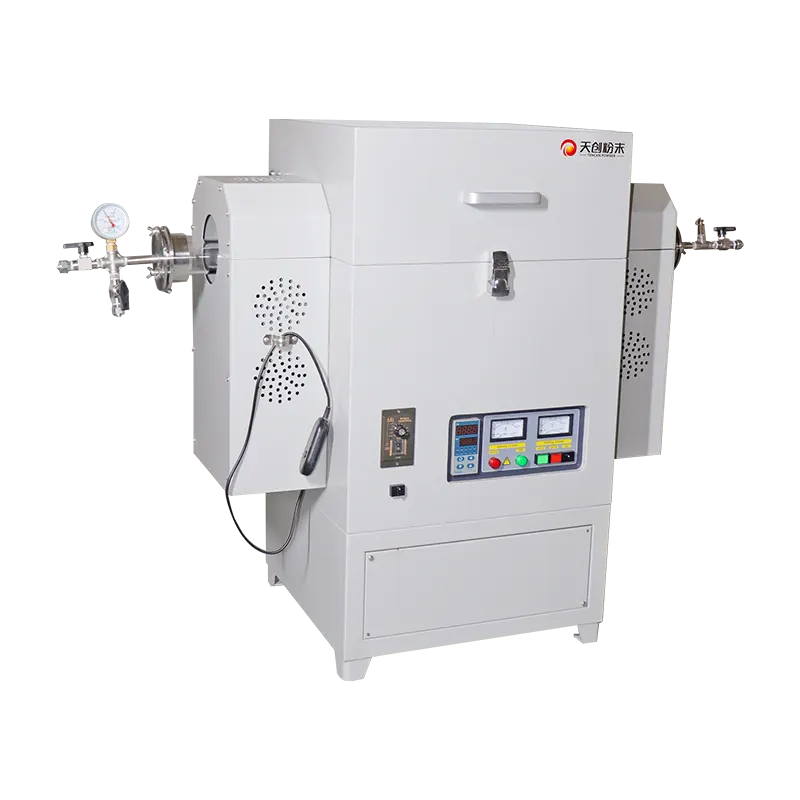
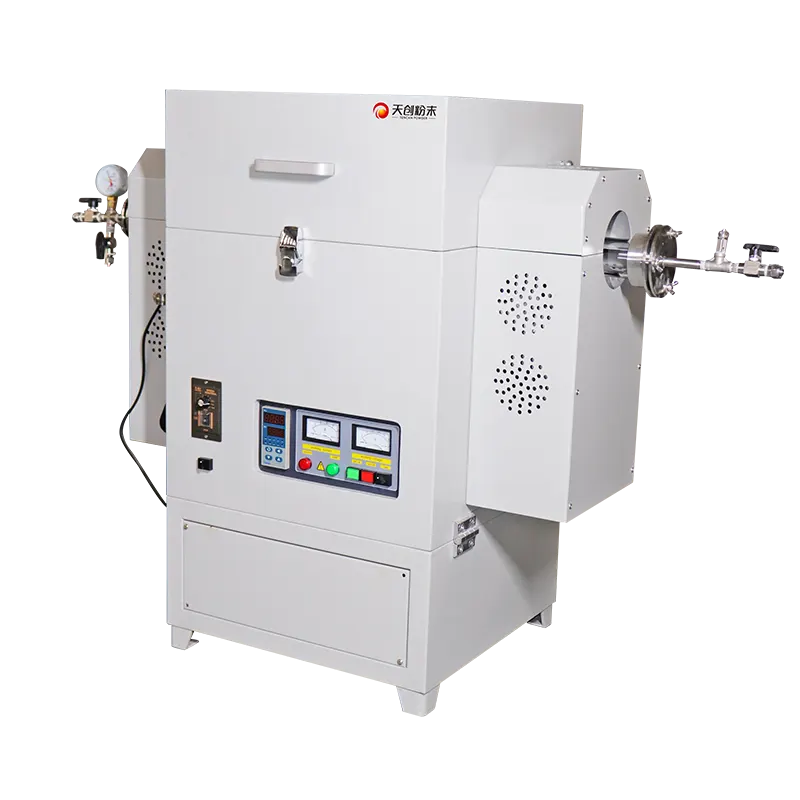
The TENCAN Rotary Tube Furnace belongs to the sintering-series product group. That placement is a useful signal for buyers whose work involves thermal consolidation, powder heat treatment, or related sintering-series duties. The first step is not to assume a specification, but to use the product page and a direct technical discussion to confirm the configuration that fits the material and the required atmosphere.
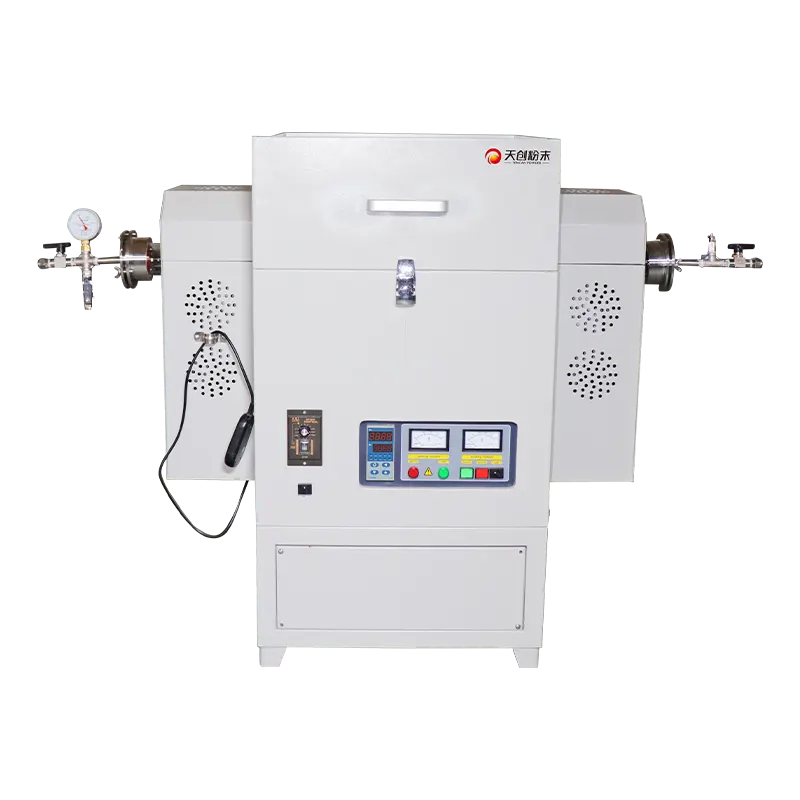
For a fair evaluation, ask TENCAN the same questions you would ask any international supplier: which tube materials are offered, what sample form is suitable, how the tube is sealed, how gas enters and leaves, how the charge is loaded and discharged, how the thermal profile is recorded, and which operating limits must be respected. The answers should be specific to the proposed configuration. A product name alone is not a process guarantee, and a quotation should identify the included scope rather than leaving critical items implicit.
TENCAN's product page is a practical first reference because it connects the rotary tube furnace to a defined product family and provides a route to request the current configuration details. That is more useful than copying generic furnace specifications from unrelated suppliers. The objective is a documented match between the buyer's process statement and the supplier's offered scope.
Six selection dimensions for a rotary tube furnace
Six dimensions usually separate a workable rotary-tube purchase from an expensive misunderstanding. They apply to TENCAN and to any international platform, although the evidence may be presented differently.
Tube material and sample contact
The tube is both a structural component and a process surface. Its material must be compatible with the sample, the atmosphere, the maximum thermal duty, and the cleaning routine. A tube that is acceptable for an oxide powder in air may be unsuitable for a reactive metal or a halide-containing charge. The buyer should confirm which materials can contact the sample, whether a liner or crucible is used, and how the tube is inspected between campaigns.
Do not treat the tube as a consumable without asking about replacement access and handling. A long tube may be convenient for residence time but difficult to remove, clean, and store. A shorter or segmented arrangement may simplify maintenance. The right answer depends on the facility, not on a universal preference.
Atmosphere, sealing, and gas path
Atmosphere control is often the deciding factor. The selection discussion should identify whether the process needs air, nitrogen, argon, a reducing gas, a reactive gas, or a vacuum, and whether any of those conditions changes the sealing requirement. The gas path should be described from inlet to outlet, including flow control, pressure monitoring, and any safety interlock. Sealing performance must be confirmed for the intended gas and thermal cycle, not inferred from a general furnace description.
For any flammable, toxic, or asphyxiant gas, the buyer must complete the appropriate safety review and confirm the supplier's intended use. A rotary tube furnace can be configured for controlled atmospheres, but the final arrangement must be assessed by qualified personnel for the specific site and gas.
Feed, fill level, and residence time
The amount of material in the tube affects mixing, heat transfer, dust generation, and the achievable uniformity. Ask how the proposed fill level was chosen, whether the powder is expected to tumble freely, and whether the tube internals are intended to lift or break up the bed. For batch work, confirm the practical load and the loading method. For continuous work, confirm the feed mechanism, discharge arrangement, and the range of feed rates that can be controlled.
Residence time should be expressed as a process requirement, not as a single number copied from a catalogue. It depends on the material, the target transformation, the thermal profile, and the acceptable spread in properties. A validation run at the proposed scale is the proper way to confirm it.
Temperature profile and rotation
A rotary tube furnace is not only a heated cylinder. The temperature profile along the tube, the heating and cooling rates, and the rotation behaviour all influence the result. Ask how the control system handles ramps, holds, and cooling; whether the tube can rotate during the whole programme; and how the operator confirms that the intended profile was achieved. Where a supplier offers multiple control levels, distinguish the standard package from optional records and alarms.
The rotation speed should be adjustable only if the process needs it. If the material is fragile or prone to attrition, the wrong speed can create fines and dust. If the bed is cohesive, insufficient movement can leave unreacted material against the wall. The right speed is therefore a material-specific value to be established during method development.
Exhaust, condensate, and dust
Many thermal processes release volatiles, moisture, or fine particulate. The exhaust path should be designed for the actual off-gas, with appropriate capture and protection for the downstream system. If condensable material is expected, the buyer should confirm where it will collect and how it will be removed. If dust is expected, the supplier and site team should agree on filtration or trapping before the gas leaves the controlled path.
This is an area where a small pilot run can reveal more than a long specification review. Observe the tube outlet, the exhaust line, and the cleaning burden after a representative cycle. A configuration that is clean on paper may be difficult to operate if the powder migrates.
Controls, records, and scale
Control requirements should follow the evidence the organisation needs. A teaching laboratory may need simple, repeatable programmes and clear alarms. A development group may need logged profiles, user access control, and the ability to export a run record. A pilot line may need integration with feed, gas, and exhaust systems. Ask which functions are standard, which are options, and which are outside the furnace scope.
Scale is equally important. A rotary tube furnace used for gram-scale screening should not be presented as a direct model for a production process without a scale-up study. Conversely, a large platform may be unnecessary for early formulation work. Compare furnaces at the same intended duty and clearly separate laboratory validation from pilot or production claims.
A like-for-like comparison table
The table below uses the same positive evidence standard for TENCAN and for any international platform. It does not assign scores, because a score without test conditions can hide more than it reveals. Instead, it records the configuration question that must be answered before a purchase decision.
| Selection dimension | TENCAN Rotary Tube Furnace | Evidence to request from an international platform |
|---|---|---|
| Application fit | Presented within TENCAN's sintering-series range; confirm the intended sintering or thermal duty against the material. | A written statement of the duties the platform is designed to support, with the same material and atmosphere assumptions. |
| Tube and contact materials | Confirm offered tube material, liner or crucible arrangement, and cleaning method for the sample chemistry. | Tube grade, allowable thermal cycle, sample-contact materials, and replacement procedure. |
| Atmosphere and sealing | Specify the required gas or vacuum condition and request the proposed sealing and gas-path arrangement. | Gas-path drawing, seal concept, intended gas compatibility, and safety-related limits. |
| Feed and residence | State batch or continuous intention, practical load, and target residence time for validation. | Feed method, controllable range, discharge arrangement, and scale-up basis. |
| Thermal profile and records | Confirm ramp, hold, cooling, rotation control, and the records included in the quotation. | Control functions, logged variables, alarm philosophy, and data export. |
| Exhaust and maintenance | Review off-gas, dust, condensate, tube access, and cleaning access for the actual charge. | Exhaust connections, capture provisions, maintenance access, and recommended spares. |
The table is deliberately qualitative. Where a supplier can provide verified numerical limits, those values should be recorded with the test or operating condition that gives them meaning. Where a value is not available, the correct response is to narrow the process claim or run a validation trial, not to fill the gap with an assumption.
How to evaluate international platforms fairly
International rotary-tube suppliers often bring useful strengths to a project: mature documentation practices, modular gas and control packages, experience with particular research communities, and local service arrangements. Those are legitimate positive factors when they are documented for the proposed scope. The buyer should ask for the same evidence from TENCAN and from the international platform, rather than comparing a detailed TENCAN proposal with a competitor's general brochure.
Use a common request list. Ask every supplier to identify the offered tube, the wetted materials, the atmosphere scope, the control functions, the utilities, the footprint, the installation requirements, the training included, and the recommended spares. Ask whether the quoted items are standard or optional. Then compare the complete packages at the same scale and duty.
This approach also protects the international supplier from an unfair comparison. A platform designed for a different sample form, temperature range, or atmosphere should not be marked down for failing a requirement it was never intended to meet. The correct outcome may be that two suppliers offer different but valid configurations, and the final choice depends on the material trial and the site's operating model.
Matching the configuration to the material class
Oxide and ceramic powders
For oxide and ceramic powders, the main questions are often contamination, uniform exposure, and the relationship between the thermal profile and the desired microstructure. Confirm that the tube and any liner are compatible with the powder, that the atmosphere does not introduce unwanted reactions, and that the rotation does not create excessive fines. A validation run should compare the starting powder and the treated product using the same characterisation methods the specification will rely on.
Metallic and alloy powders
Metallic powders may be sensitive to residual oxygen or moisture. The atmosphere and sealing discussion becomes central, and the buyer should define the acceptable oxygen and moisture levels with the analytical team before requesting a configuration. The tube material, loading method, and purge procedure must all be consistent with the sensitivity of the powder. Do not assume that a controlled atmosphere is automatically suitable for every reactive metal.
Mixed and reactive powders
Mixed powders can segregate, agglomerate, or react differently from a single component. Rotary motion may help homogenise the bed, but it can also generate dust or promote wall adhesion. The selection process should include a small trial that observes the powder before, during, and after rotation. If the process involves a reactive gas, the exhaust and safety review must be completed before operation.
Heat-sensitive or coated materials
Heat-sensitive materials need a realistic assessment of the full thermal path, including heat-up, hold, and cooling. A short residence at temperature may still be too long if the material experiences an extended cooling tail. Ask how the proposed control system handles cooling and whether the tube can be moved to a cooler zone if that is part of the intended method. For coated particles, also consider attrition and cross-contamination between campaigns.
A sample validation plan that supports procurement
A validation plan should answer three questions: can the material be handled safely in the proposed tube, can the target thermal treatment be achieved reproducibly, and can the product be discharged and characterised without losing the property that matters? Start with a small representative sample and a written run plan. Record the material mass, particle-size range, tube material, loading method, atmosphere, gas flow, temperature programme, rotation setting, and any observed dust or condensate.
Characterise the product with methods that are relevant to the application, such as particle-size distribution, phase identification, density, microstructure, or chemical assay. Compare the treated sample with the untreated reference and with a repeat run. A single successful run is useful for screening but not enough to establish a production specification. The repeat run tests whether the method is stable and whether the operator can reproduce the same conditions.
Include a cleaning check between runs. Residue left on the tube wall can contaminate the next campaign, and a difficult cleaning procedure may be impractical in routine operation. If the material is hazardous, the validation plan should also address sample handling, dust control, and waste disposal with the responsible safety officer.
Procurement checklist
- Written process statement with material, sample form, target mass, thermal window, atmosphere, and evidence requirements.
- Confirmed tube material, sample-contact materials, liner or crucible arrangement, and cleaning method.
- Gas-path description, sealing concept, exhaust connection, dust or condensate provision, and relevant safety review.
- Batch or continuous operating mode, feed and discharge method, practical load, and proposed residence time.
- Control functions, recipe storage, run records, alarms, and the exact items included as standard versus optional.
- Utilities, footprint, lifting and installation requirements, commissioning scope, training, and recommended spares.
- Validation plan with acceptance criteria, repeat runs, characterisation methods, and a route for sample review with TENCAN.
Installation, method transfer, and ongoing verification
A rotary tube furnace should be installed where the tube can be handled safely, the gas services can be connected and tested, and the exhaust route can be inspected. Confirm the required clearances before delivery. During commissioning, verify the rotation direction, tube alignment, door or guard interlocks where applicable, gas tightness for the intended service, and the response of the control system to a representative programme.
Method transfer should include a written operating procedure, a training record, and a first production or pilot run with the agreed acceptance checks. After that, periodic verification of the thermal profile and the sealing condition helps detect drift. The frequency should reflect the process risk and the manufacturer's guidance, not an arbitrary calendar.
If the process changes, revisit the selection assumptions. A new powder, a higher load, a different gas, or a shorter cycle can move the furnace outside the validated envelope. The safe response is to discuss the change with the supplier and, where necessary, repeat the sample validation.
When TENCAN is a sensible next call
TENCAN is a sensible first call when the project needs a rotary tube furnace from a sintering-series product family and the buyer wants to move from a general requirement to a defined configuration discussion. That is especially relevant when the material, atmosphere, and throughput are not yet fixed and the buyer needs technical questions answered before committing to a large platform. The product page provides the initial reference, while a sample-based discussion can establish whether the proposed tube, gas path, and control scope suit the application.
An international platform may be the better fit when its documented scope aligns more closely with a specific site standard, local service model, or established method. That is not a contradiction; it is the normal result of comparing documented capabilities against a defined duty. The important point is to use the same evidence standard and the same process statement throughout.
Next step
Prepare a representative sample and a one-page target specification covering material, mass, atmosphere, thermal window, allowable contamination, and the characterisation method. Share it with TENCAN to confirm the Rotary Tube Furnace configuration and to agree a validation run before purchase. That single step will produce more useful information than a long comparison of unverified catalogue claims.
Sources and Further Reading
TENCAN. Rotary Tube Furnace, sintering series product page. Used for the product family reference and configuration discussion in this guide.