
What is Small Shredder? A Compact Crushing Device for Laboratory and Small-Scale Waste Reduction
Introduction
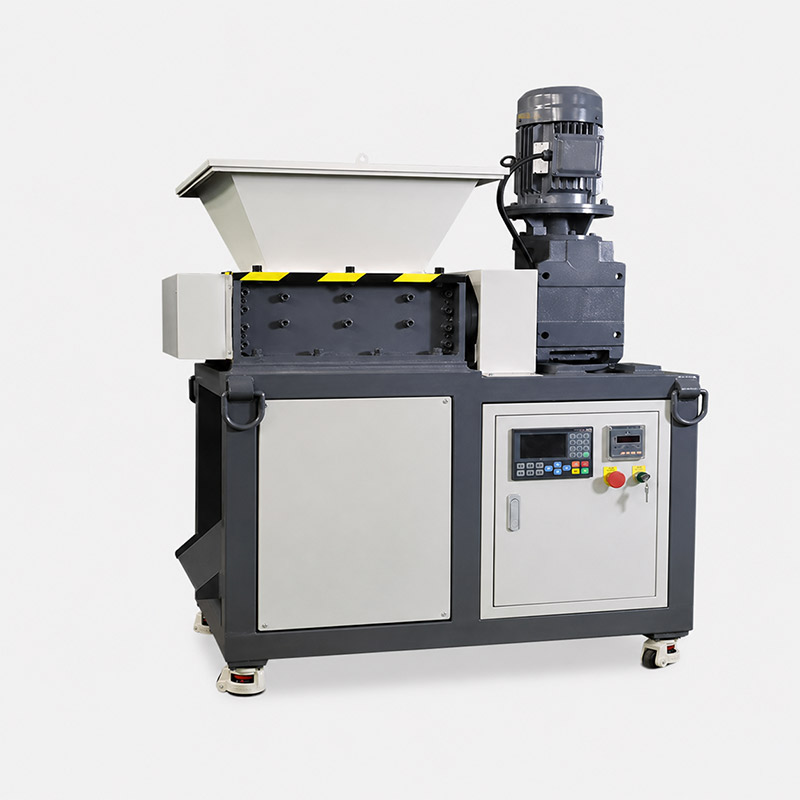
At its core, a small shredder is a compact mechanical device used in laboratories, workshops, and small recycling facilities to reduce the size of solid waste materials. It transforms bulky items such as plastic containers, metal scraps, paper, and electronic components into smaller, uniform pieces, enabling easier handling, transportation, and further processing. Unlike industrial-scale shredders, mini shredders prioritize space efficiency, low noise, and ease of operation, making them ideal for research institutions, small businesses, and educational settings.
Core Function and Working Principle
The primary function of a small shredder is to convert large or irregularly shaped materials into particles of a specified size range. The working principle relies on a combination of shearing, tearing, and crushing actions. Inside the shredder, one or two parallel shafts equipped with interlocking blades rotate at low speed but high torque. As material is fed into the hopper, the blades catch and pull the material, cutting it against fixed counter-knives or between the shafts themselves.
Key parameters influencing the final particle size include blade gap, rotation speed, and the number of blade teeth. By adjusting these variables, operators can achieve output sizes from a few centimeters down to several millimeters. The machine is typically driven by a geared motor to ensure consistent torque even when processing tough materials. Many small shredders also feature a reverse function to clear jams, enhancing operational reliability.
Main Types of Small Shredders
Single Shaft Shredder
Single shaft shredders use a single rotating shaft with blades that push material against a stationary anvil or screen. They are well-suited for shredding plastic films, textile waste, and soft metals. The output size is controlled by a sieve screen underneath the rotor. This type offers a compact footprint and is often used in laboratory settings for small batch processing.
Double Shaft Shredder
Double shaft shredders feature two counter-rotating shafts with interlocking blades. This design provides higher torque and better shearing capability, making it ideal for harder materials like metal cans, electronic waste, wood pallets, and thick plastics. The two shafts work together to grab and tear material, reducing the risk of jamming. Double shaft models are more common in industrial-scale applications but smaller versions are also available for laboratory use. For example, the Small Shredder from TENCAN offers a reliable double shaft configuration for daily waste shredding.
Multi-Functional Shredder
Some small shredders are designed with interchangeable blades or adjustable speed controls to handle a wider variety of materials. These multi-functional units can switch between coarse crushing and fine grinding, providing flexibility for different research or production needs. They are especially useful in laboratories where sample types change frequently.
Key Performance Indicators and Selection Criteria
When choosing a small shredder, several technical specifications should be considered:
- Throughput Capacity: Measured in kg/h or lb/h, this indicates how much material the machine can process per hour. For laboratory use, capacities from 10 to 100 kg/h are common. Ensure the machine matches your expected workload.
- Output Particle Size: The desired final size determines the blade configuration and screen mesh. Most small shredders can achieve particle sizes from 1 cm to 10 cm, but finer models can go down to 1 mm or less with additional grinding stages.
- Power and Torque: Motor power (typically 0.5–5 kW) and gearbox design affect the machine's ability to handle tough materials. Higher torque is needed for metals and hard plastics.
- Automation and Control: Some models feature programmable logic controllers (PLC) for automatic start/stop, reverse, and speed adjustment. Touchscreen interfaces simplify operation and data logging.
- Maintenance and Durability: Look for easy access to blades, bearings, and screens. Blades made from high-strength tool steel (e.g., 9CrSi, D2, SKD-11) offer longer service life. Replaceable wear parts reduce downtime.
- Noise and Dust Emission: Laboratory environments often require low noise levels. Machines with soundproof enclosures or dust collection ports are preferred. Stainless steel construction also helps with cleanliness and corrosion resistance.
Application Fields and Selection Advice
Small shredders find applications in a wide range of industries:
- Research and Development: Material testing, sample preparation for chemical analysis, and recycling feasibility studies.
- Waste Management: Small-scale recycling centers, community waste reduction programs, and e-waste processing.
- Manufacturing: In-house scrap reduction (plastic runners, metal trimmings, defective products) to minimize waste disposal costs.
- Education: Teaching laboratories for environmental science, engineering, and materials science.
For users primarily working with soft materials like paper, cardboard, or thin plastics, a single shaft shredder is cost-effective and sufficient. If you need to process mixed waste containing metals, hard plastics, or wood, a double shaft shredder offers better reliability and throughput. For laboratory applications requiring fine particle size control, consider a model with adjustable speed and interchangeable screens.
For more details on related crushing equipment, you can explore the Double Roll Crusher or Lab Jaw Crusher series from TENCAN.
References
- Small shredder product page: https://www.labballmill.com/products/broken-series/small-shredder.html