
What is a Small Shredder? A Compact Crushing Machine for Laboratory and Small-Scale Material Processing
Introduction
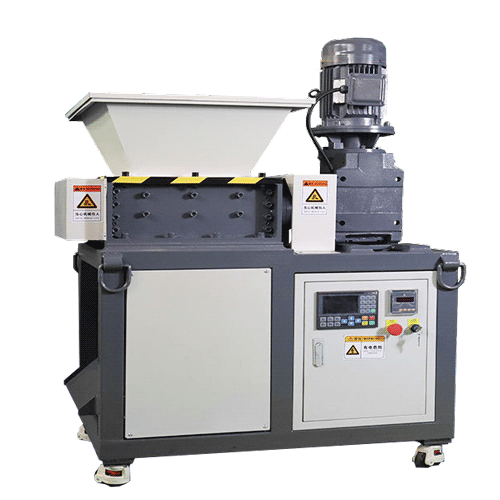
At its core, a small shredder is a compact and efficient size reduction machine designed for laboratory and small-scale applications. It is used to break down bulky or oversized materials—such as plastic scraps, light metal parts, wood chips, rubber, and solid waste—into smaller, more manageable particles. Unlike large industrial shredders, a small shredder emphasizes portability, low noise, and ease of operation, making it an ideal solution for research institutions, recycling pilot plants, and small manufacturing workshops.
Working Principle and Core Function
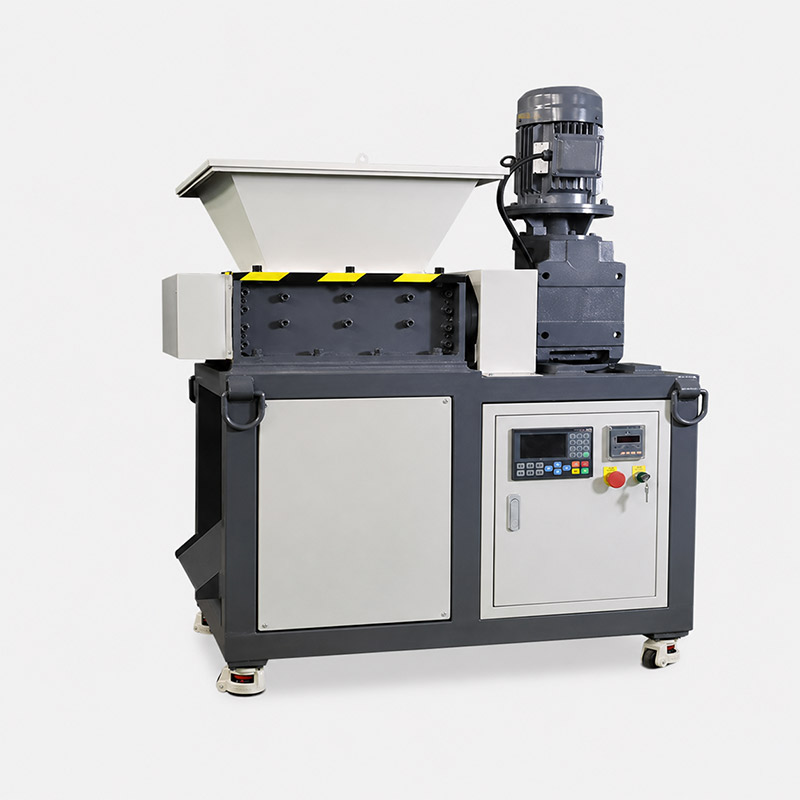
The basic function of a small shredder is to transform coarse feed material into fragments of uniform size through mechanical cutting, tearing, and crushing. The machine typically consists of a feeding hopper, a crushing chamber equipped with rotating blades or hammer heads, a drive motor, and a discharge screen with adjustable mesh size.
When the motor is started, the shaft rotates at a predetermined speed, driving the blades or hammers to impact and shear the material against stationary anvils or a perforated screen. The particles are repeatedly cut until they are small enough to pass through the screen openings. The final particle size is controlled by the screen mesh size, the rotor speed, and the blade configuration. This process is continuous, allowing for efficient batch or continuous processing.
Key Components and Technologies
While small shredders come in various designs, they share several critical components:
- Cutting Blades/Hammers: Made of high-hardness tool steel (e.g., 9CrSi, SKD-11, or D-2) for durability and wear resistance. The blade shape (claw, knife, or hammer) determines the dominant crushing mechanism.
- Rotor and Shaft: The rotor carries the blades and is driven by a motor via a belt or direct drive. Shaft diameter and bearing quality affect the machine's stability and load capacity.
- Motor: Typically a three-phase induction motor with power ranging from 15 kW to 90 kW for larger models, but laboratory small shredders may use lower power (e.g., 1.5–5 kW). Reliable brands like Beide, Yineng, or Siemens are commonly used.
- Discharge Screen: Interchangeable screens with different hole diameters allow precise control of output particle size.
- Safety Features: Emergency stop, overload protection, and interlock switches ensure safe operation.
Key Performance Indicators and Selection Guide
When selecting a small shredder, several technical parameters should be evaluated:
- Throughput Capacity: Usually expressed in kg/h. Laboratory models may handle 50–200 kg/h, while larger units can process up to 1,000 kg/h.
- Feed Size and Output Size: The maximum acceptable feed dimension and the achievable particle size range (e.g., 10–50 mm).
- Motor Power and Energy Efficiency: Higher power enables processing harder materials but increases energy consumption. Look for units with energy-efficient motors.
- Noise Level: Compact shredders for indoor use should have low noise emissions (e.g., <75 dB).
- Material Compatibility: The machine should be constructed from materials resistant to corrosion and wear, especially when processing abrasive or chemically aggressive feedstocks.
- Easy Maintenance: Quick-access doors, replaceable blades, and simple cleaning procedures reduce downtime.
Applications and Recommendations
Small shredders are widely used in:
- Laboratory Sample Preparation: Crushing coal, ore, soil, or plastic granules for analysis.
- Recycling and Waste Management: Shredding plastic bottles, electronic waste, or wood pallets for volume reduction.
- Small-Scale Production: Size reduction of agricultural residues, biomass, or composite materials.
- Education and Research: Demonstrating crushing principles in material science courses.
For laboratories or small workshops, a compact model with a throughput of 50–100 kg/h and a motor power of 1.5–5 kW is usually sufficient. If the material is particularly tough (e.g., metal scraps), consider a twin-shaft design with higher torque and slower speed. Always verify the blade material compatibility with your feedstock to maximize blade life.