
What is a Small Shredder? A Compact Dual-Shaft Shredder for Daily Industrial Waste Shredding
What is a Small Shredder?
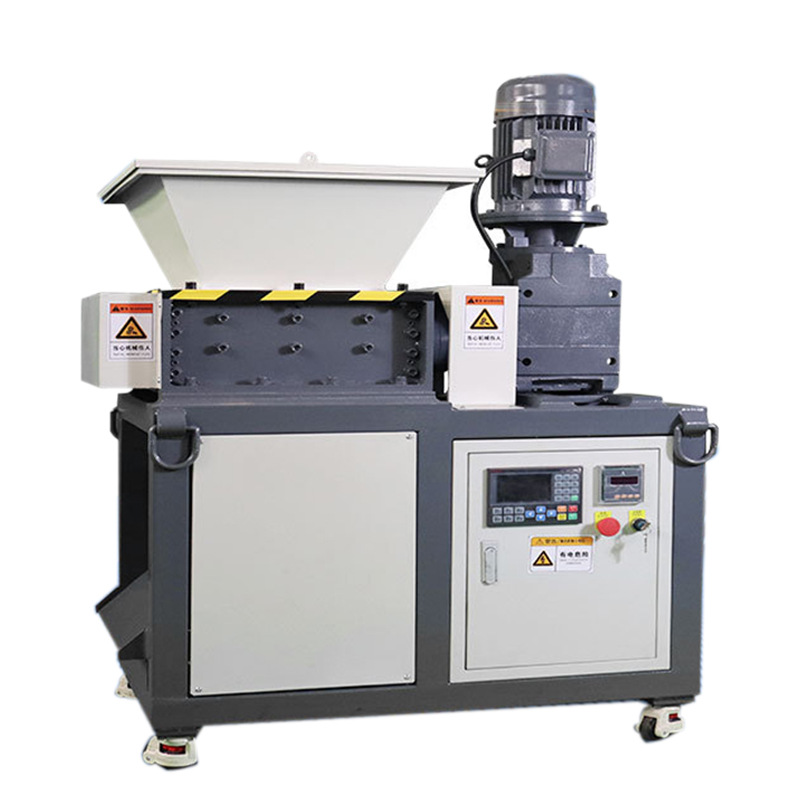
At its core, a small shredder is a compact, dual-shaft shredding machine designed for daily industrial waste shredding. It is used by recycling facilities, manufacturing plants, and waste management operations to reduce the volume of solid waste materials such as plastics, metals, wood, paper, and textiles. Unlike larger industrial shredders, the small shredder offers a space-saving footprint while maintaining robust cutting performance, making it ideal for small to medium-scale processing needs.
Core Function and Working Principle
The basic function of a small shredder is to convert bulky or irregular waste materials into smaller, uniform-sized particles (typically 1–10 cm) for easier handling, transportation, or further processing. The core working mechanism involves two parallel rotating shafts equipped with interlocking cutting blades. As the shafts rotate slowly with high torque, the blades grab, tear, and shear the material into smaller pieces. This dual-shaft design ensures efficient shredding of a wide variety of materials without jamming.
Key operational parameters include the shaft speed, blade geometry, and the gap between blades. Slow-speed, high-torque operation minimizes noise and dust while maximizing cutting force. The final particle size can be adjusted by changing the screen size below the cutting chamber or by modifying the blade configuration. This makes the small shredder versatile for both coarse shredding and finer size reduction.
Main Types and Classification
Single-Shaft vs. Dual-Shaft Shredders
While the small shredder commonly refers to dual-shaft models, there are also single-shaft variants. Dual-shaft shredders use two counter-rotating shafts with interlocking blades, providing high tearing force and self-feeding capability. They are ideal for bulky or mixed waste. Single-shaft shredders, on the other hand, use a single rotor with a hydraulic ram to push material against the blades, offering finer output and lower noise, but with lower throughput for bulky items.
Material-Specific Blade Designs
Small shredders can be fitted with different blade materials (e.g., 9CrSi, D2, SKD-11) and geometries (hook-shaped, claw-shaped) to suit specific materials. For example, standard steel blades handle general waste, while hardened alloy blades are used for shredding metals or abrasive materials. The choice of blade material directly affects the shredder's lifespan and maintenance frequency.
Key Performance Indicators and Selection Criteria
When selecting a small shredder, buyers should consider the following key metrics:
- Throughput Capacity: Typically ranging from 100 kg/h to 1000 kg/h depending on the model and material density. Choose a capacity that matches your daily waste volume.
- Output Size: Adjustable from 1 cm to 10 cm. A finer output requires more energy and may reduce throughput.
- Motor Power and Torque: Dual-shaft shredders usually have motors in the range of 5–30 kW. Higher torque is essential for tough materials like metals or thick plastics.
- Automation Features: Many modern small shredders offer PLC control, automatic reverse when jammed, and overload protection. These features improve safety and reduce downtime.
- Ease of Maintenance: Look for models with easy access to the cutting chamber, replaceable blades, and centralized lubrication systems. Regular maintenance prolongs machine life.
Application Areas and Selection Advice
Small shredders are widely used in:
- Plastic recycling: Shredding plastic bottles, containers, and films for washing and granulation.
- Metal scrap processing: Reducing light metal scrap (e.g., aluminum cans, thin steel sheets) for easier melting.
- Wood and paper waste: Shredding pallets, timber, and office paper for biomass fuel or recycling.
- E-waste dismantling: Breaking down circuit boards, cables, and small electronic components.
- Municipal solid waste: Pre-shredding household waste before sorting or incineration.
For users with limited floor space and moderate waste volumes (e.g., small workshops, laboratories, or community recycling centers), a compact dual-shaft small shredder is the most practical choice. If you need to shred very hard or abrasive materials, consider models with hardened steel blades and reinforced frame. For high-volume operations, look for automated feeding systems and larger hopper capacity.