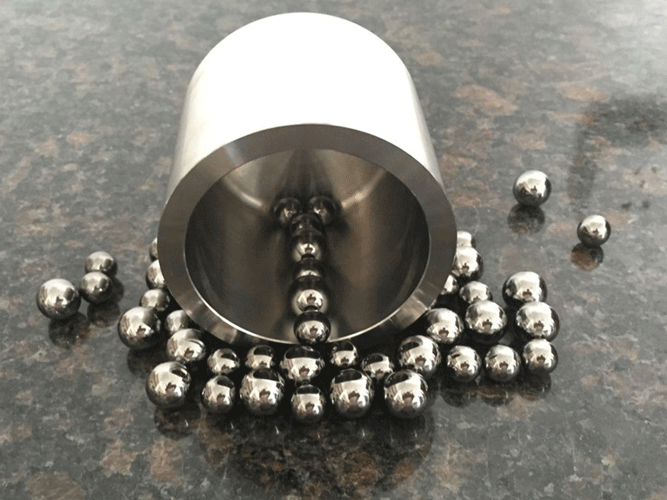
Tungsten Carbide Mill Ball: A Complete Guide for High-Hardness Material Grinding
Why Tungsten Carbide Mill Ball Matters in Hard Material Grinding
When you are grinding high-hardness powders such as cemented carbide scraps, wear-resistant ceramics, hard mineral ores, or metal alloys, the choice of grinding media directly determines your milling efficiency, final particle size, and contamination level. Among all commonly used grinding balls, tungsten carbide mill balls stand out for their unmatched hardness, high density, and exceptional wear resistance. They are the preferred workhorses in planetary ball mills, attrition mills, and vibratory mills when ordinary steel or ceramic balls simply cannot deliver the required impact energy or wear life.
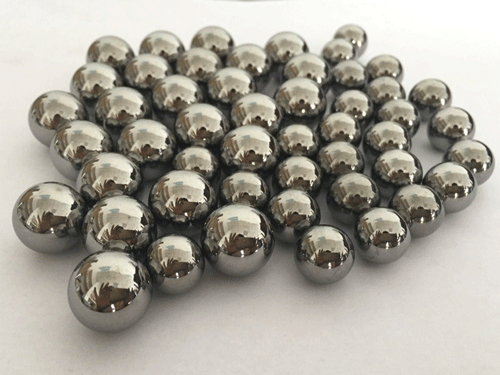
What Are Tungsten Carbide Mill Balls?
Tungsten carbide mill balls, also known as WC grinding media, are made from cemented tungsten carbide — a composite material consisting of tungsten carbide (WC) particles bonded together with a metallic binder, usually cobalt (Co). The typical composition ranges from 90% to 94% WC and 6% to 10% Co by weight. This structure gives the balls an extremely high hardness (typically HRA 90–93, which is equivalent to about 1300–1800 HV) and a density of approximately 14.5–15.0 g/cm³. Such high density provides strong kinetic energy during ball milling, enabling efficient impact and grinding even on very hard feed materials.
Compared to traditional 304 stainless steel grinding balls (density ~7.9 g/cm³, hardness ~200 HV) or zirconia grinding balls (density ~6.0 g/cm³, hardness ~1200 HV), tungsten carbide balls offer significantly higher impact force per collision, which is essential for breaking down hard, brittle particles that resist deformation.
Key Advantages and Limitations
Advantages
- Extreme hardness and wear resistance: The balls wear very slowly, maintaining their shape and size over long milling runs. This leads to consistent grinding performance and low media consumption.
- High density: The high specific gravity (about 14.7 g/cm³ for common grades) allows smaller ball sizes to generate sufficient impact energy, which is beneficial for achieving finer particles in less time.
- Excellent for dry and wet milling: Tungsten carbide balls are chemically inert to many acids and alkalis, making them suitable for both dry and wet grinding in various liquid media, as long as strong acids (especially hydrofluoric acid) are avoided.
- Low contamination for high-purity applications: If the material being ground requires minimal contamination from foreign elements, tungsten carbide balls introduce mainly tungsten and cobalt. In many cemented carbide recycling or tungsten-alloy processes, this contamination is compositionally compatible and thus tolerable.
Limitations and Considerations
- Contamination risk: Tungsten carbide balls are not contamination-free. They release tungsten and cobalt into the powder. For applications where these elements are detrimental (e.g., electronic ceramics, some catalysts), other media like zirconia grinding balls or agate balls may be preferred.
- High cost: Tungsten carbide balls are more expensive than stainless steel or chrome steel balls, but their longer service life often justifies the initial investment in demanding applications.
- Brittleness: Although very hard, tungsten carbide is more brittle than steel. If the mill is operated at excessively high speeds or with large ball-to-jar impacts (e.g., incorrect ball-to-powder ratio), balls can crack or chip. Using appropriate milling parameters is essential.
- Incompatibility with strong binding agents: Cobalt binder can be attacked by strong acids or bases. If your liquid medium contains such chemicals, consult with your supplier first.
Typical Applications of Tungsten Carbide Mill Balls
You will find tungsten carbide grinding media widely used in the following fields:
- Cemented carbide recycling and production: Grinding tungsten carbide powder and cobalt mixtures for producing new cemented carbide products. The contamination is self-compatible.
- Hard metal powder preparation: Reducing coarse tungsten or tungsten carbide powders to micron or submicron sizes.
- Ceramics and refractory materials: Milling of alumina, silicon carbide, boron carbide, silicon nitride, and other ultra-hard ceramics where steel media contaminates too much.
- Mineral processing: Grinding of ores with Mohs hardness ≥7, such as quartz, garnet, corundum, and ilmenite.
- Mechanical alloying: For synthesizing alloy powders from elemental blends that require long milling times and high energy – the durability of WC balls reduces media replacement frequency.
- Laboratory research: Many researchers prefer tungsten carbide balls for ball-to-powder ratio studies and process development because of their consistent properties.
How to Select the Right Tungsten Carbide Grinding Ball
To achieve the desired milling result, you need to consider several factors:
- Ball diameter: Larger balls (e.g., 10–20 mm) supply higher impact forces and are suitable for coarse feed particles (e.g., > 1 mm). Smaller balls (e.g., 3–6 mm) offer more contact points and are better for fine grinding and mechanical alloying. In many planetary ball mill experiments, a combination of different sizes is used to maximize grinding efficiency.
- Ball-to-powder weight ratio (BPR): Commonly, BPR ranges from 5:1 to 20:1 depending on material hardness and target fineness. For hard materials, a higher BPR (e.g., 10:1 to 15:1) is often recommended. However, you should always validate through preliminary tests because excessive BPR can cause excessive heat generation and agglomeration.
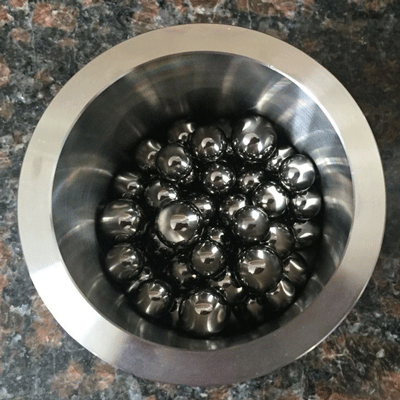
- Grinding jar material: For tungsten carbide balls, a jar made of the same material (tungsten carbide) is ideal to minimize cross-contamination and wear. Stainless steel jars are also commonly used, but they will wear faster and introduce iron, chromium, and nickel. Ceramic jars (e.g., alumina, zirconia) can be used if contamination from these elements is acceptable.
- Wet vs. dry milling: Wet milling with a suitable liquid (e.g., ethanol, water, or hexane) often reduces particle agglomeration and heat buildup. Tungsten carbide balls work well in both modes, but ensure the liquid does not attack cobalt.
Practical Tips for Using Tungsten Carbide Mill Balls
- Pre-wear the balls: New balls may have a slightly rough surface. Run a short cycle with a small amount of sacrificial powder (e.g., same material as your target) to smooth surfaces and reduce initial contamination.
- Control milling temperature: Due to their high density, tungsten carbide balls generate more heat during milling. For temperature-sensitive materials, use intermittent operation (e.g., 15 minutes run, 10 minutes pause) or a cooling system.
- Avoid overfilling the jar: Typically, the grinding media should occupy about 30%–40% of the jar volume. The remaining space is for the powder and the gas (or liquid) environment. Overfilling reduces milling efficiency and increases ball wear.
- Regular inspection: After many cycles, inspect balls for cracks, chipped edges, or significant size reduction. Replace damaged balls to maintain consistent performance.
If you are unsure which specifications suit your material and mill, our engineers can provide recommendations. Accurate selection typically requires information on the powder material, initial particle size, target fineness, batch size, wet or dry process, and acceptable contamination level. Contact us with your detailed requirements, and we will help you choose the optimum tungsten carbide mill balls for your application.
For more information about other grinding media options, you can visit our pages on 304 stainless steel grinding balls, zirconia grinding balls, agate balls, and corundum grinding balls.