
Ceramic Jar Ball Mill: Lab Milling Guide
A common laboratory problem is not simply reducing a sample to a finer powder. It is doing so without introducing contamination, losing expensive material, or creating a result that cannot be repeated next week. A small ball mill with a ceramic jar addresses that combination of concerns. The ceramic jar provides a chemically stable milling chamber, while the roller-type small mill keeps the jar moving at a controlled speed. The setup is compact, but the variables that determine success are not trivial: jar material, media choice, fill level, rotation speed, milling time, dry or wet operation, and cleaning all interact.
Researchers often move from hand grinding or a single-jar shaker to a roller mill because they need more repeatable energy input and better control over contamination. A ceramic jar is attractive when metal wear is unacceptable, when the sample must remain chemically clean, or when the jar must be easy to inspect between runs. It is not automatically the right choice for every material. Very coarse, highly abrasive feed can wear ceramic surfaces, and impact from oversized media can damage a brittle jar. The selection should therefore begin with the sample, not with the mill alone.
This guide focuses on the practical decisions that determine whether a small ceramic-jar ball mill produces useful, reproducible data. It covers contamination pathways, the mechanics of roller milling, media and fill selection, particle-size interpretation, scale-up, and maintenance checks. The aim is not to prescribe one universal recipe. Ceramic jar milling is a process-development tool, and the correct settings depend on material properties, target particle size, sample value, and the acceptable level of cross-contamination.
Why Ceramic Jars Matter in Small Ball Mill Work
A ceramic jar changes the contamination profile of a milling experiment. In a metal jar, wear particles, trace alloying elements, and surface oxidation can enter the powder. For catalysts, battery materials, pigments, geological samples, and high-purity ceramics, even a small amount of foreign iron or alloy can affect later analysis or product performance. A ceramic surface is generally harder and more chemically inert than a conventional metal surface, so it can reduce the risk of metallic contamination when the jar and media are correctly matched.
Ceramic is not a single material. Laboratory jars may be offered in different ceramic grades, and each grade has its own hardness, wear resistance, thermal behavior, and cost. A jar that is excellent for abrasive oxide powders may be less suitable for large, dense media or for rapid temperature changes. Because the product listing uses the general description ceramic jar, the exact grade should be confirmed for the intended application. Ask for the jar material, recommended media, maximum operating conditions, and cleaning instructions before committing a valuable sample.
Contamination can enter a sample through several paths. The most obvious is wear of the jar wall and grinding media. A second path is residue left from a previous sample, especially in corners, around the lid, or in a porous surface. A third is the atmosphere inside the jar, which matters when the powder is oxygen-sensitive or hygroscopic. Ceramic jars help mainly with the first two issues, but they do not replace good cleaning practice. A jar that is chemically inert can still cross-contaminate a trace-analysis sample if it is not cleaned and dried properly.
Jar cleaning should be treated as part of the method, not as an afterthought. For many inorganic powders, a sequence of dry brushing, appropriate solvent rinsing, and controlled drying is enough. For organic or biological materials, the cleaning agent must be compatible with the jar and with later analysis. Avoid abrasive cleaning tools that can scratch the ceramic surface. Scratches increase the area available for sample retention and can initiate cracks. Inspect the jar inside and out before each campaign, and record the jar identity so that results can be traced to a specific milling chamber.
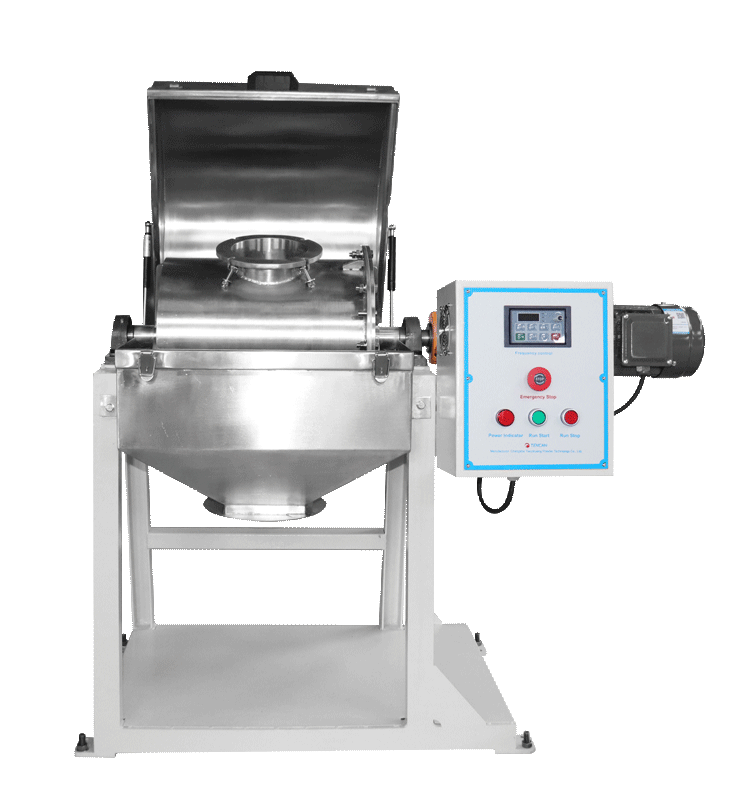
The small ball mill with a ceramic jar is intended for controlled laboratory-scale jar milling.
The main limitation of a ceramic jar is mechanical rather than chemical. Ceramic is brittle. Thermal shock, dropped jars, overtightened lids, and excessive impact from large media can cause chips or cracks. A cracked jar may fail during a run, losing the sample and damaging the mill. For that reason, a ceramic-jar mill should be operated with a guard, a sensible speed limit, and an inspection routine. If the process requires very large media or high-impact milling, a different jar material or mill type may be more appropriate than forcing a small ceramic jar beyond its intended duty.
How a Roller-Type Small Ball Mill with a Ceramic Jar Works
In a roller-type small ball mill, the jar rests on rotating rollers. Friction between the rollers and the jar surface causes the jar to turn. As the jar rotates, the grinding media and sample are lifted up the inner wall and then fall or roll back down. The result is a combination of impact, attrition, and shear. The relative importance of these mechanisms changes with rotation speed, media size, media density, jar diameter, and the amount of material in the jar.
At low rotation speed, the media charge tends to slide or roll rather than cascade. Attrition may dominate, which can be useful for fine grinding but may extend the time needed for coarse feed. At higher speed, media are lifted farther before falling, increasing impact energy. If the speed becomes too high, the media can centrifuge against the jar wall and stop doing useful work. The practical operating window lies between these extremes. It must be found by observation and by measuring the result, not by assuming that a higher speed always means faster grinding.
Jar geometry matters as well. A jar with a larger diameter allows a longer fall path for the media, while a narrow jar may limit media motion. The internal surface, lid design, and any internal lifter features affect how the charge behaves. The same nominal jar volume can therefore produce different results if the shape or surface finish changes. When a process is transferred from one jar to another, a small qualification run is prudent. Compare particle size, contamination, and recovery rather than assuming that the same time and speed will transfer unchanged.
The roller ball mill jar setup is also affected by the roller spacing and jar alignment. If the jar is not seated properly, it may slip, vibrate, or rotate unevenly. Slipping reduces the effective milling energy and can make results erratic. The jar should be centered, clean, and dry on the outside where it contacts the rollers. Overloading the jar beyond a sensible working volume can cause poor media motion and increased stress on the lid. Underloading may waste capacity and produce inefficient collisions. The correct load is a process decision, not simply the maximum volume the jar can hold.
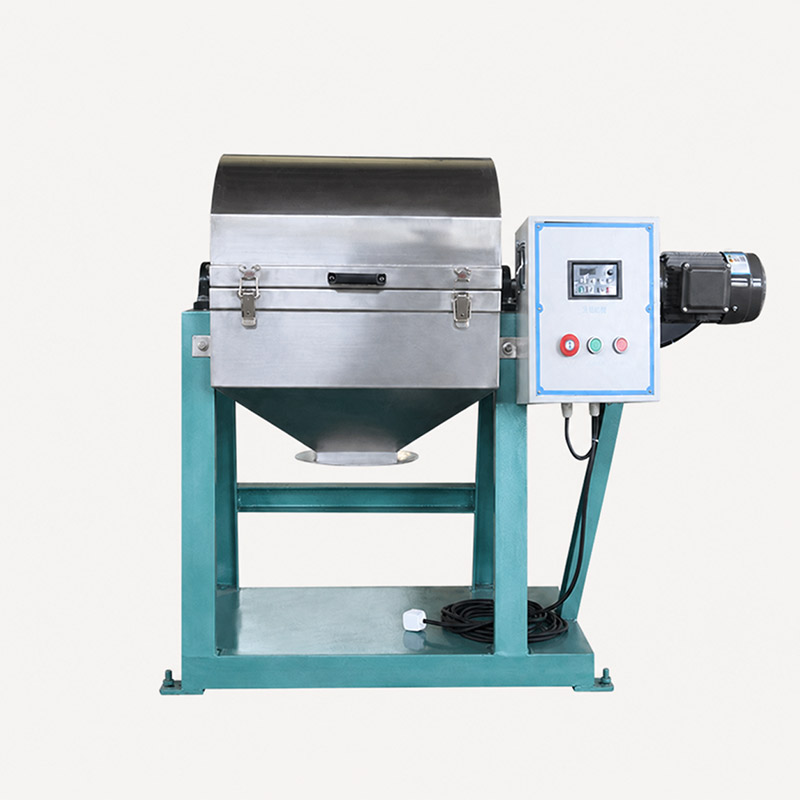
Proper jar seating and roller alignment help maintain repeatable media motion.
Dry and wet milling use the same basic machine but different physics. In dry milling, powder flows with the media and can coat the jar wall. Coating reduces direct media-powder contact and can slow size reduction. In wet milling, a liquid carrier improves dispersion, reduces dust, and can produce a more uniform slurry, but it also introduces viscosity, sedimentation, and drying steps. The choice should be based on the material, the target particle size, and the analytical method that follows. A ceramic jar can be used for either approach when the jar, lid, and media are compatible with the liquid and cleaning agents.
Setting the Milling Variables That Control Results
Successful jar milling is a balance between energy input and material response. A change that increases energy can also increase contamination, heat, or overgrinding. The useful approach is to change one variable at a time, keep a written record, and evaluate both particle size and particle-size distribution. A single average particle size can hide a broad distribution, agglomerates, or a small fraction of coarse particles that affects the next process step.
Grinding Media Selection
Media material should be chosen for compatibility with the sample and the jar. Media that are too soft will wear quickly and contaminate the powder. Media that are too hard or too large can damage the ceramic jar or overgrind the sample. Media density affects impact energy; denser media can reduce milling time but may increase wear and heat. Media size affects the number of contact points and the size of the forces. Small media provide more contacts and can be effective for fine grinding, while larger media are better for breaking coarse feed. A practical starting point is to match the media to the feed size and target size, then confirm by a short trial.
Media shape and surface condition also matter. Spherical media roll and impact predictably, while irregular media may interlock or wear unevenly. Media that are chipped, flattened, or contaminated should be replaced. Keep media lots separate when trace contamination is a concern. For a ceramic jar, the media should be inspected for hardness and finish; a damaged media charge can scratch the jar and create sites for sample retention. The correct media charge is not necessarily the largest one. It must leave room for the sample and for media motion.
Fill Level and Sample Load
Fill level is one of the most common sources of poor reproducibility. If the jar is packed too full, media cannot cascade, and the mill may simply rotate a dense mass. If the jar is too empty, the media may not contact the sample efficiently, and the run may be noisy or unproductive. There is no universal fill ratio because jar shape, media size, and sample bulk density all matter. A sensible starting point is to leave clear free volume above the media charge and to confirm that the media can move when the jar is turned by hand. The final fill level should be established by trials and then kept constant for comparisons.
Sample load should also be recorded by mass, not only by apparent volume. The same volume of a low-density powder and a dense oxide can behave very differently. A small sample may be difficult to recover from a large jar, while an excessive sample load can cushion media impacts and slow grinding. For valuable materials, minimize dead volume and use a jar size that gives a reasonable sample-to-media ratio. The goal is a repeatable charge that can be reproduced by another operator.
Rotation Speed and Milling Time
Rotation speed controls the motion of the media charge. Start at a moderate speed where the media visibly tumble or cascade rather than centrifuge. If the mill has a speed display, record the setting, but also observe the jar. A jar that slips or vibrates is not delivering the intended energy. Increase speed only until the media motion is effective, then stop. Higher speed is not automatically better, especially with a brittle ceramic jar. The mill should be operated within the manufacturer's recommended range and with the guard in place.
Milling time should be based on the target particle size and the acceptable distribution, not on a fixed habit. Take small samples at intervals during method development. Plot the response rather than relying on a single endpoint. Many materials show rapid size reduction at first, followed by a slower stage in which agglomerates form or the distribution narrows slowly. Continuing beyond that point may add heat and wear without improving the result. The optimum time is the shortest time that meets the specification with a safe margin.
Dry Versus Wet Milling
The decision between dry and wet milling affects the entire workflow. Dry milling is simpler when the final product must remain a powder and when the sample is not sensitive to dust or oxidation. Wet milling can improve dispersion and reduce dust exposure, but it requires a liquid that is compatible with the sample, jar, media, and later analysis. The liquid should not dissolve the sample, react with the ceramic, or leave a residue that changes the result. For trace analysis, the blank from the liquid and jar must be checked.
| Factor | Dry milling | Wet milling | Practical check |
|---|---|---|---|
| Powder flow | Powder can coat jar and media | Slurry can improve dispersion | Inspect for caking or sedimentation |
| Contamination risk | Dust and jar wear are main concerns | Liquid and jar blank must be checked | Run a blank with the same method |
| Recovery | Recovery can be high but dusty | Slurry handling and drying add steps | Confirm the final analytical form |
| Process control | Fill and coating affect repeatability | Viscosity and solids loading affect motion | Record all additions and mixing steps |
Record the variables in a way another operator can repeat. A useful batch record includes the jar identification, media material and size, media mass, sample mass, liquid and additive amounts, target speed, actual run time, and any observed slipping or vibration. It should also note the cleaning procedure and the result of the visual inspection. This record is more valuable than a single set of ideal conditions because it allows the lab to separate a material effect from an equipment effect when a result changes.
Particle Size, Distribution, and Scale-Up
Particle size is not a single number. A milling result includes a median size, a spread, a coarse tail, and often an agglomerate fraction. Two samples can have the same median but behave differently in a subsequent process because one contains coarse particles or hard agglomerates. For that reason, evaluate the distribution and the measurement method. Laser diffraction, sieving, microscopy, and surface-area methods answer different questions. Use the method that matches the specification and keep the sample preparation consistent.
Sampling is part of the measurement. A small aliquot taken from the top of a jar may not represent the whole batch, especially in dry milling where fine powder can segregate. Mix or quarter the sample according to a written procedure before taking the measurement aliquot. For wet milling, confirm that the slurry is homogeneous before sampling. If the analytical method requires drying, verify that drying does not cause agglomeration or change the particle-size result. The number from the instrument is only useful when the sample reaching it is representative.
Overgrinding is a real risk in small jar mills. As particles become finer, their surface area increases, and they may re-agglomerate or coat the media. The mill can continue to consume energy without producing a finer stable dispersion. In wet milling, a dispersant or a change in liquid composition may help, but it must be compatible with the final application. In dry milling, reducing the sample load or adjusting media size may be more effective than extending time. If the target is a narrow distribution, a classification or sieving step may be needed outside the mill.
Scale-up from a small ceramic jar to a larger mill should not be based on volume alone. The relevant parameters are energy per unit mass, media size, media-to-powder ratio, and the residence-time distribution. A larger jar with the same rotation speed can have different media motion because the jar diameter has changed. A useful scale-up plan keeps the media material and relative fill similar, then adjusts speed and time in steps. Measure the particle size and temperature at each step. If the larger run cannot reproduce the small-jar distribution, the process may need a different mill geometry or a staged milling approach.
Heat is another scale-up issue. A small jar may stay near room temperature, while a larger jar or a longer run can warm the sample. Some materials are sensitive to heat, oxidation, or phase change. Monitor the jar surface and the sample where practical. If temperature affects the result, shorten the run, reduce speed, or use a mill configuration that manages heat. Do not assume that a process that worked at small scale will remain isothermal when the energy input increases.
Selecting a Small Ball Mill with a Ceramic Jar
The selection process should start with a written sample brief. Include the material chemistry, feed size, target size, acceptable contamination, sample mass per run, whether the process is dry or wet, and the cleaning method. Add any constraints on floor space, electrical supply, noise, and operator training. This brief makes it easier to compare mill configurations and to ask the supplier the right questions. It also prevents the common mistake of choosing a mill by jar volume alone.
For the ceramic jar ball mill, confirm the jar material, usable volume, lid and sealing method, and recommended media. Ask whether the jar is intended for dry milling, wet milling, or both, and what cleaning agents are acceptable. Check the roller drive, speed control, timer, and safety guard. If the mill is used for multiple projects, consider how jars are labeled and stored. A second jar can reduce changeover time and cross-contamination, but it must be qualified against the original jar before results are compared.
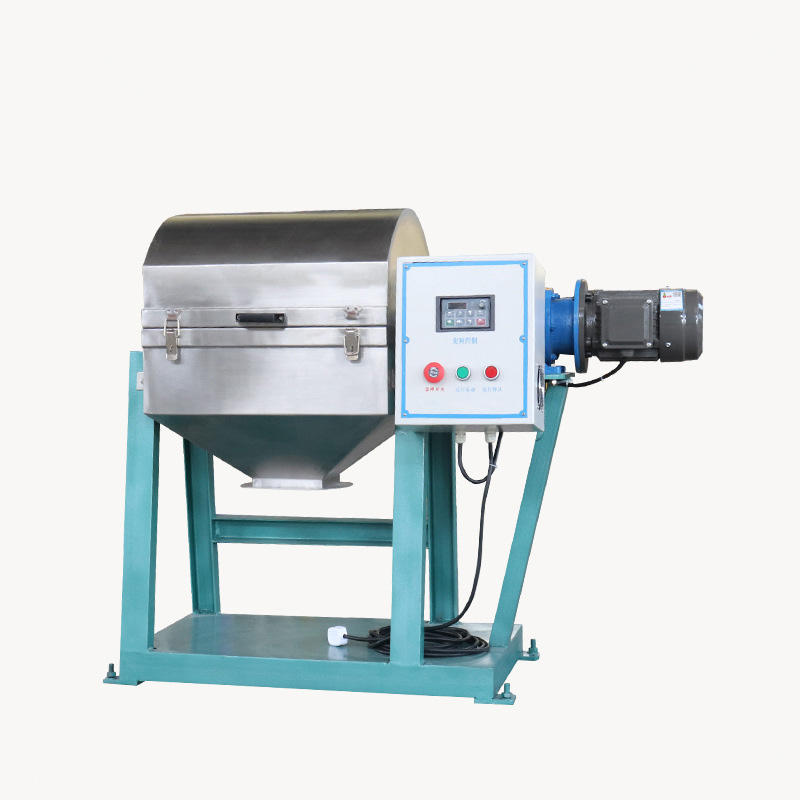
Jar size, media compatibility, and speed control are key selection points for laboratory work.
Maintenance is simple but important. Keep the rollers clean and free of powder. Check that the jar rotates smoothly and does not slip. Inspect the jar, lid, and media for chips, cracks, or wear before each campaign. Replace damaged components rather than risking a failure during a valuable run. Record the jar and media identity in the method. If the mill has a timer or speed display, verify it periodically. A small mill is a precision tool in the sense that repeatability depends on consistent mechanical conditions, even though the principle is straightforward.
Operators should also consider ergonomics and sample handling. A ceramic jar can be heavy when loaded with media and powder. Provide a clear, stable surface for loading and unloading. Use appropriate tools to avoid dropping the jar. Keep a clean tray for the jar and lid. For dust-generating powders, use containment or local exhaust ventilation. These practical measures protect the sample and the operator, and they reduce the chance of contamination between runs.
Common Problems and Practical Checks
If the sample is not getting finer, first check the media motion. A jar that is too full, a speed that is too low, or a jar that is slipping can all produce a long run with little size reduction. Confirm that the media can cascade when the jar is rotated. Check the media size against the feed size. Very coarse feed may need pre-crushing or a larger media charge before fine milling. If the powder is caking on the jar wall, dry milling may be limited by coating; a different load, a shorter run with intermediate scraping, or a wet route may be more effective.
If contamination appears, compare the jar, media, and cleaning blank. A new jar or a new media lot can change trace element levels. Clean the lid threads and the jar shoulder, where residue collects. Check whether the cleaning solvent leaves a residue. For sensitive analysis, run a blank jar under the same conditions and analyze it with the same method. This is more informative than assuming that a ceramic jar is contamination-free.
If results are inconsistent, review the record for small differences in fill, sample mass, media charge, speed, and time. Jar alignment and roller condition can also drift. A jar that has developed a worn band or a polished contact surface may rotate differently. Keep a reference sample and run it periodically. A reference run does not need to be a certified standard; it can be a stable in-house material that reveals changes in the mill or method.
If a jar chips or cracks, stop using it. Do not attempt to glue or repair a ceramic milling jar for sample work. A repair can fail and contaminate the sample. Replace the jar and review the cause: thermal shock, impact, overloading, or a dropped lid. For brittle ceramic jars, avoid rapid temperature changes and do not use media that are too large for the jar. The mill should be operated with the guard closed and with the jar properly seated.
The final check is fitness for purpose. A small ball mill with a ceramic jar is a laboratory tool for controlled, small-scale size reduction. It is not a production mill, and it is not the best answer for every material. It is valuable when cleanliness, small sample size, and repeatable jar milling matter. If the process needs high-impact crushing, very large media, or continuous tonnage, a different equipment class should be considered. Within its intended range, the ceramic-jar roller mill can provide a practical bridge between hand preparation and a more controlled milling method.