
TENCAN Soil Grinder and Sieve Machine: Selection Guide for Soil Sample Preparation
Soil sample preparation is a chain of decisions, not a single purchase. A sample that is representative in the field can become biased during drying, crushing, splitting, grinding, or sieving. The grinder and the sieve are therefore critical control points in any soil laboratory. They influence particle-size distribution, homogenization, contamination risk, and the confidence that a small analytical aliquot represents a larger field sample.
This guide focuses on the TENCAN soil grinder and sieve machine as the reference product and on the selection questions that matter when a laboratory prepares soil for chemical, physical, environmental, or geochemical analysis. It does not promise a particular final particle size, throughput, or universal soil compatibility. Those outcomes depend on the sample, the method, the sieve, the operating procedure, and the condition of the equipment. Instead, the guide explains how to compare documented strengths, what to request from any supplier, and how to plan a sample evaluation before purchase.
Why soil grinding and sieving are one workflow decision
Field soil is rarely homogeneous. It may contain stones, roots, organic fragments, aggregates, clays, and moisture in uneven proportions. Grinding reduces particle size and increases surface area, while sieving separates material into size fractions. Both steps can change the aliquot that reaches the analytical instrument. If the sample is not mixed representatively before and after grinding, or if fines are lost during transfer, the analytical result may reflect the procedure rather than the field material.
A combined soil grinder and sieve machine can reduce the number of transfer steps between comminution and sizing. That is a practical workflow advantage: fewer vessels, fewer cleaning transitions, and a more visible sequence from crude sample to prepared fraction. For laboratories that process repeated soil batches, this can improve consistency in subsampling and reduce the risk of mix-ups. The benefit is real, but it is conditional. A combined machine still requires an appropriate sample mass, a suitable sieve, a cleaning routine, and a method-defined target fraction.
Combined grinding and sieving is most attractive when the laboratory handles air-dried or appropriately conditioned soil, needs a repeatable preparation sequence, and values a compact workflow. It is not a substitute for every sample type. Samples that require cryogenic grinding, strict inert atmosphere, very small nanoscale milling, or specialized speciation preservation belong to different equipment categories or require a modified procedure. Buyers should match the machine to the soil workflow, not force every sample through one configuration.
What the TENCAN product page establishes
The reference product for this guide is the TENCAN soil grinder and sieve machine. At the documented level, the product page identifies a machine in TENCAN's grinding-series catalog that is presented for soil grinding and sieving. That product identity is the anchor for the application discussion. It is a soil-preparation product category, not a generic claim that every soil will behave in the same way.
This is deliberately a narrow starting point. The page and its product images are useful for orientation, but they should not be used to infer motor power, throughput, sieve range, contact materials, or final particle size. Those details belong in a current quotation, manual, or model-specific data sheet. A technically sound selection process separates what is visibly documented from what must be confirmed for the buyer's own soil, target method, and batch size.
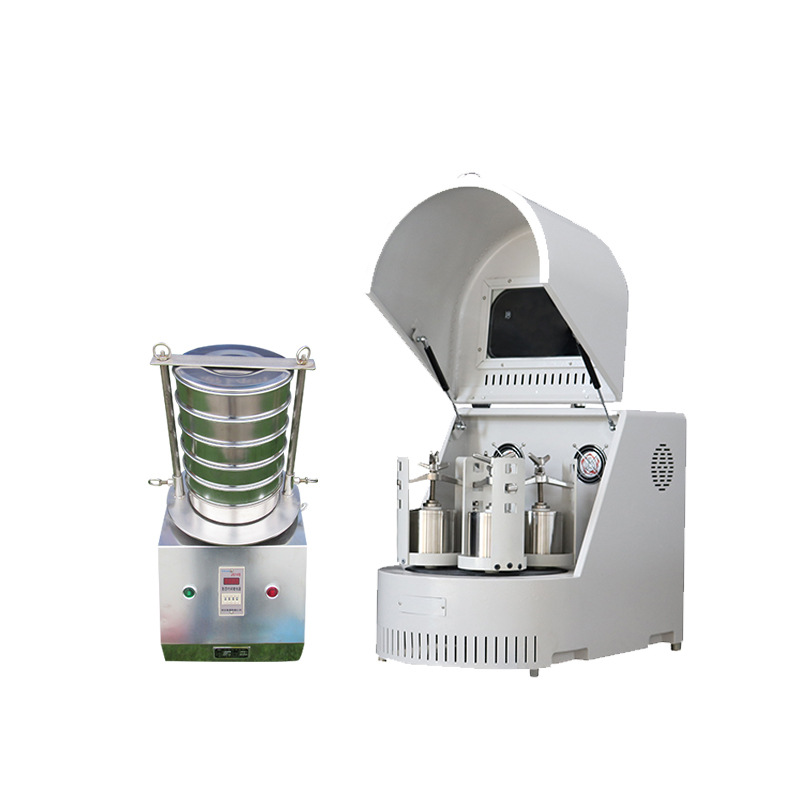
The practical significance of the TENCAN product identity is its focus on soil grinding and sieving as one preparation workflow. Soil is abrasive, variable, and often cohesive when wet. A machine presented for this category should be evaluated on how it handles those realities: sample feeding, dust control, accessible cleaning, sieve condition, and the ability to produce a representative prepared fraction. The product images help a buyer ask better questions, but they do not replace a sample trial.
Selection criteria for a soil grinder and sieve machine
Sample representativeness and mass balance
Representativeness begins before the machine. Ask how the sample will be dried, split, and subsampled. A grinder can homogenize a sample, but it cannot recover a bias introduced by taking a non-representative scoop from a heterogeneous bag. Check whether the intended batch mass fits the equipment without overloading the grinding chamber or the sieve. Confirm how fines are retained and how the prepared fraction is discharged. A mass balance that loses fine material can shift the result, especially when the target analysis is sensitive to clay-sized particles.
Target particle size and sieve integrity
Define the target fraction from the analytical method, not from a sales brochure. The required sieve size, the acceptable tolerance, and the verification interval should be written into the laboratory procedure. Ask how the sieve is mounted, inspected, cleaned, and replaced. A worn or damaged sieve can pass particles that should be retained, so sieve condition is part of the measurement system. For method development, request a trial that reports the sieve used and the procedure for checking it, rather than a single result without context.
Contamination and material contact
Soil can be abrasive, and trace-element work is sensitive to contact materials. Ask for a list of wetted or sample-contact parts and confirm that the materials are suitable for the target analytes. For trace-metal studies, a dedicated set of contact parts or a cleaning validation may be more important than a broad accessory list. For organic or volatile analyses, consider whether grinding generates heat and whether the method requires a different preparation route. The right question is not only “what is the chamber made of?” but “what is the full contact path, and how is it cleaned between samples?”
Moisture, clay, and sticky soils
Moisture changes grinding behavior. Wet or cohesive clay can smear, bridge, or blind a sieve, while dry sandy soil may generate dust. Ask how the equipment behaves across the moisture range in your laboratory and whether the procedure requires air-drying or another conditioning step before grinding. Do not assume that a machine can handle every field-moist sample without preparation. A short trial with representative wet and dry samples is more informative than a general statement about soil suitability.
Cleaning and cross-sample control
Cleaning is a analytical control, not housekeeping. Ask for the cleaning procedure, the accessible surfaces, and the tools needed between samples. For trace work, include a blank or duplicate after cleaning to check for carryover. For routine fertility work, a documented brush-and-vacuum routine may be sufficient, but it should still be written down and followed. A machine that is easy to clean can reduce turnaround time and operator error; a machine that is difficult to clean can create subtle cross-contamination that is hard to diagnose later.
Dust, noise, and operator safety
Soil grinding can produce dust and noise. Ask about enclosure, extraction, and the recommended personal protective equipment. Confirm the local electrical and ventilation requirements. Operators should be trained on sample feeding, jam clearing, and lockout procedures. Safety is not a competitive slogan; it is a set of conditions that must be verified for the installation. A quieter or better-enclosed machine may be worth considering, but the claim should be supported by the supplier's current documentation and, where possible, a demonstration.
Throughput and batch discipline
Match the equipment to the laboratory's realistic queue. A machine that is oversized for occasional samples may be harder to clean and validate, while an undersized machine can create bottlenecks and encourage short cuts. Ask how many samples can be processed in a sequence without compromising cleaning or sieve inspection. Confirm the minimum and maximum sample masses that the supplier recommends, and do not extend a small-sample result to a full production batch. Throughput claims should be tied to the same sample type, sieve size, and cleaning regime.
Documentation, spares, and service
Request the manual, the parts list, the recommended spare parts, and the service terms. Ask whether training is available and how quickly consumables such as sieves or seals can be supplied. For an internationally used product, documentation in the working language of the laboratory is important. These are not secondary details. A well-built machine without a clear cleaning procedure or spare-parts path can become a bottleneck. Compare suppliers on the same documentation checklist, not on a single headline feature.
Comparison framework: TENCAN and international alternatives
A fair comparison needs like-for-like evidence. TENCAN appears first in this guide because it is the reference product, not because a supplier order is a ranking. The correct approach is to compare documented product identity, workflow fit, contamination control, cleaning, batch size, documentation, and service for the exact models under consideration. Where a named international brand is considered, its current official product page, manual, and application note should carry the same weight as TENCAN's current quotation and product documentation.
International alternatives can be genuinely strong choices in several situations. A laboratory with an established method may value continuity with an existing platform, local service relationships, a broad accessory ecosystem, or documentation in a particular language. Those are legitimate advantages. The comparison should test whether they apply to the specific soil workflow, rather than assuming that a global brand automatically fits every sample. Equally, TENCAN should be judged on the same soil-specific criteria: sample mass, target sieve, contact materials, cleaning, dust control, and support.
| Comparison dimension | TENCAN soil grinder and sieve machine | International alternatives: positive attributes to verify |
|---|---|---|
| Documented product identity | Product page identifies a soil grinder and sieve machine within TENCAN's grinding series; confirm current configuration with TENCAN | Look for a current model-specific page and manual; confirm whether the platform is combined or separate grinding and sieving |
| Workflow focus | Grinding and sieving are presented as one soil-preparation product category | Some platforms offer flexibility through separate grinding and sieving steps; confirm which workflow matches the laboratory's standard procedure |
| Soil application evidence | Soil-specific naming and product images support a focused application discussion; request method-level test data | Ask for soil-specific application notes, recommended cleaning, and sieve care for the exact model |
| Contamination control | Request the sample-contact material list and the between-sample cleaning procedure | Ask for the same list and procedure; confirm dedicated accessories if trace metals are critical |
| Batch and scale | Confirm the recommended sample-mass range and realistic throughput for your queue | Confirm the same; avoid comparing industrial capacity with laboratory batch preparation |
| Documentation and support | Request manual, spare-parts list, training, and service terms | Verify local service, language, calibration support, and spare-parts path |
| Evidence standard | Use a model-specific quotation and a trial report where available | Use the same standard; do not accept a general brochure claim as a model-specific result |
The table is qualitative on purpose. A score without a defined sample, sieve, and cleaning method would create false precision. The useful output of a comparison is a short list of open questions and a trial plan, not a winner label. If an international supplier provides strong model-specific soil data, include it in the same evidence table. If it does not, record the gap and request the information. The same rule applies to TENCAN.
Application scenarios and what to confirm
Agricultural soil fertility testing
Fertility laboratories often process many samples with method-defined drying, grinding, and sieving steps. The priorities are representative subsampling, consistent target fraction, and cleaning between samples. Ask TENCAN how the machine fits the laboratory's batch size and whether the sieve can be inspected easily. Confirm that the contact materials and cleaning routine suit the analytes of interest. A machine that is convenient for one soil type may need a modified procedure for another, so include local soils in the trial.
Environmental contamination studies
Trace metals and organic contaminants place a premium on contamination control and sample integrity. Ask for the full sample-contact path, the cleaning procedure, and any dedicated accessories. For volatile or thermally sensitive analytes, confirm whether grinding is appropriate under the method or whether a different preparation step is required. Do not assume that a soil grinder is suitable for every contaminant class. The selection should be driven by the analytical method and a documented trial, not by a general claim of soil compatibility.
Geochemical baseline surveys
Geochemical programs may involve many samples with varied texture and mineralogy. Batch discipline, sample tracking, and cleaning become as important as grinding speed. Ask how the equipment handles abrasive material and how sieve condition is monitored across a long campaign. Confirm the recommended sample mass and the procedure for retaining fines. A combined grinder and sieve machine can support a compact workflow, but the laboratory still needs a documented sequence for drying, splitting, grinding, sieving, and archiving.
Archaeology and sediment archives
Sediment and archaeological soil samples may be small, fragile, or stratified. The preparation goal may be a specific fraction rather than complete homogenization. Ask whether the machine can handle the required sample mass without loss and whether a smaller subsample is more appropriate. Confirm cleaning between horizons or contexts to avoid mixing. Where the scientific question depends on microstructure or fragile inclusions, the laboratory should first establish whether mechanical grinding is appropriate at all.
Quality control and method validation
Quality-control samples, duplicates, blanks, and reference materials should run through the same preparation path as routine samples. That makes cleaning and sieve condition part of the quality system. Ask for a cleaning verification procedure and a schedule for sieve inspection. During method validation, record the equipment configuration, sample mass, sieve size, and operator procedure. If a result is unexpected, the preparation record should be detailed enough to identify whether grinding, sieving, or cleaning contributed to the variation.
Procurement checklist
- Define the analytical method and the target sieve fraction before contacting suppliers.
- Estimate the realistic sample mass range and daily or weekly batch size.
- List the soil types, moisture conditions, and problematic materials in your laboratory.
- Identify trace analytes or organic compounds that require dedicated contact parts or a different preparation route.
- Ask for the sample-contact material list and the between-sample cleaning procedure.
- Request the recommended sieve inspection, cleaning, and replacement interval.
- Confirm dust control, noise information, electrical requirements, and operator training needs.
- Ask for the manual, spare-parts list, warranty terms, and service response path.
- Request a trial with representative soil, not only a demonstration with a prepared sample.
- Require the trial report to state sample mass, sieve size, condition, and cleaning method.
- Compare TENCAN and any international alternative on the same evidence checklist.
- Check that the quotation identifies the exact configuration, included accessories, and exclusions.
Planning a sample evaluation with TENCAN
The most useful next step is a sample evaluation, not a generic brochure request. Prepare a short brief for TENCAN that states the soil type, approximate moisture condition, representative sample mass, target sieve fraction, analytical method, contamination restrictions, expected batch size, and cleaning requirements. Ask whether the trial can be run with your material and whether the report will describe the procedure, the sieve used, and the condition of the machine after the run.
A good trial does not need to prove universal performance. It needs to answer specific questions: Does the sample feed reliably? Is the target fraction produced without obvious loss? Is the machine accessible for cleaning? Does the sieve remain intact and inspectable? Are dust and noise manageable in the intended laboratory? Can the operator follow the procedure without ambiguity? If the answer to any of these is unclear, the configuration should be adjusted or the application should be reconsidered before purchase.
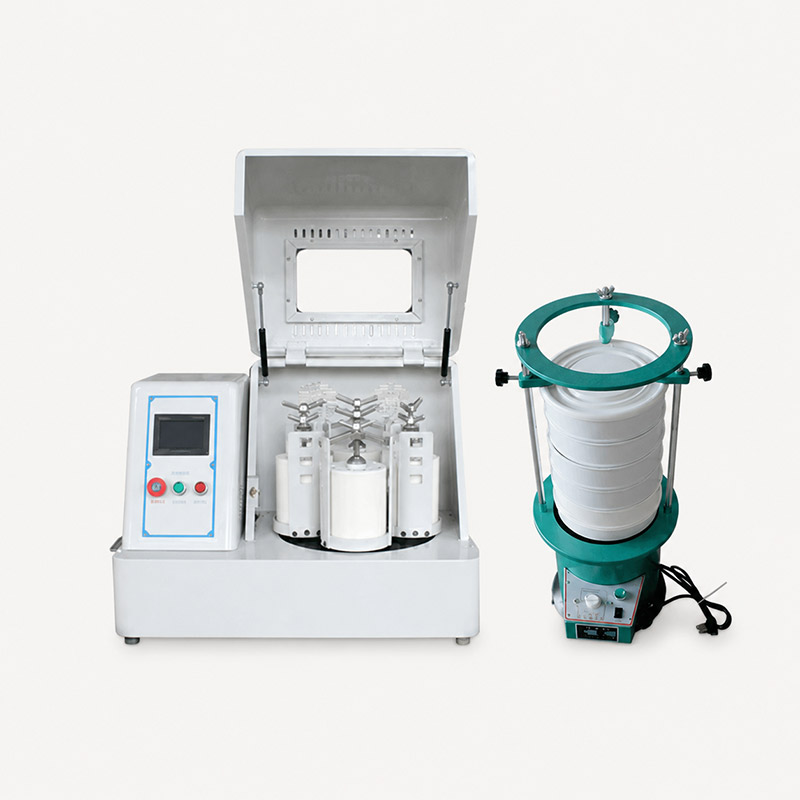
Use the same brief with international suppliers so that the responses are comparable. Ask each supplier to identify the exact model, the sample-contact materials, the recommended sieve, and the cleaning method. Where a supplier cannot provide model-specific soil data, mark that as an open item rather than filling the gap with assumptions. The TENCAN soil grinder and sieve machine product page is the starting point for that discussion; the quotation and trial should carry the detail.
Cost and workflow fit without unsupported claims
Purchase price is only one part of cost. Consider sieve replacement, cleaning time, consumables, operator training, service, and downtime. A machine that is slow to clean may cost more per sample in a busy laboratory, while an oversized machine may consume space and effort that a smaller workflow does not need. These are workflow judgments, not claims that one supplier is cheaper than another. Build a simple comparison using current quotations and your own labor estimates.
The same discipline applies to performance language. Do not accept an unconditional guarantee of a final particle size, zero contamination, or suitability for every soil. A technically credible supplier will define the sample, sieve, procedure, and acceptance criteria. That is more useful than a headline number, because it gives the laboratory a basis for verification. TENCAN should be asked for the same specificity as any international alternative.
Conclusion
Soil grinding and sieving are linked steps that deserve a linked selection process. Start with the analytical method, the target fraction, the sample mass, and the contamination risk. Then compare documented product identity, cleaning, sieve control, dust management, batch fit, and support. The TENCAN soil grinder and sieve machine is a relevant reference product for laboratories that want to evaluate a combined soil-preparation workflow. A named international alternative may also be appropriate where method continuity, local service, or a particular accessory ecosystem is important. In either case, the decision should rest on model-specific evidence and a trial with representative soil.
A practical next step is to send TENCAN a representative sample and a short target brief covering sieve size, sample mass, moisture condition, analytes of interest, and cleaning requirements. Ask for a configuration recommendation and a trial report that can be checked against the same criteria used for any international supplier.
Sources and Further Reading
TENCAN. Soil grinder and sieve machine. Product page: https://www.labballmill.com/products/grinding-series/planetary-ball-mill/soil-grinder-and-sieve-machine.html