
How a Soil Grinder and Sieve Machine Simplifies Soil Sample Preparation for Laboratories
Why Soil Sample Preparation Matters
If you work in a soil testing laboratory, environmental research center, or agricultural science institute, you know that sample preparation is often the most time-consuming part of the workflow. Raw soil samples come in lumps, clods, and aggregates mixed with stones, organic debris, and moisture. Before any accurate analysis — whether it is particle size distribution, chemical composition, pH measurement, or heavy metal detection — the soil must be ground into a homogeneous fine powder and then sieved to a specific mesh size.
Traditionally, laboratories perform these two steps separately: first using a manual mortar and pestle or a basic soil crusher, then transferring the material to a sieve shaker. This process is not only labor-intensive but also introduces variability and contamination risks. A soil grinder and sieve machine addresses this challenge by combining both grinding and sieving functions into a single, integrated unit. This article walks you through how such a machine works, why it is a valuable addition to your lab, and what factors to consider when selecting one.
What Is a Soil Grinder and Sieve Machine?
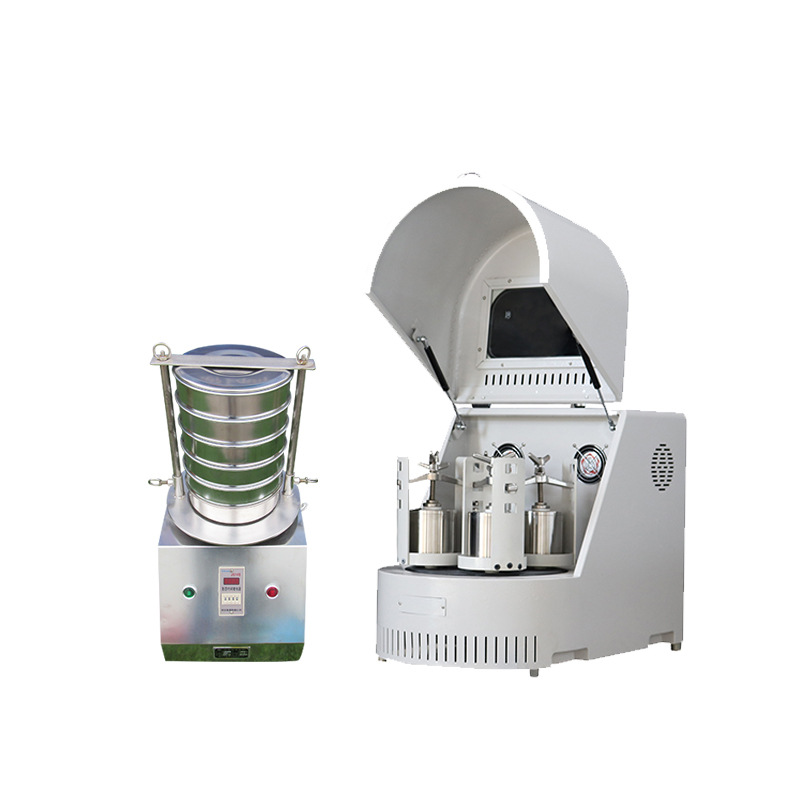
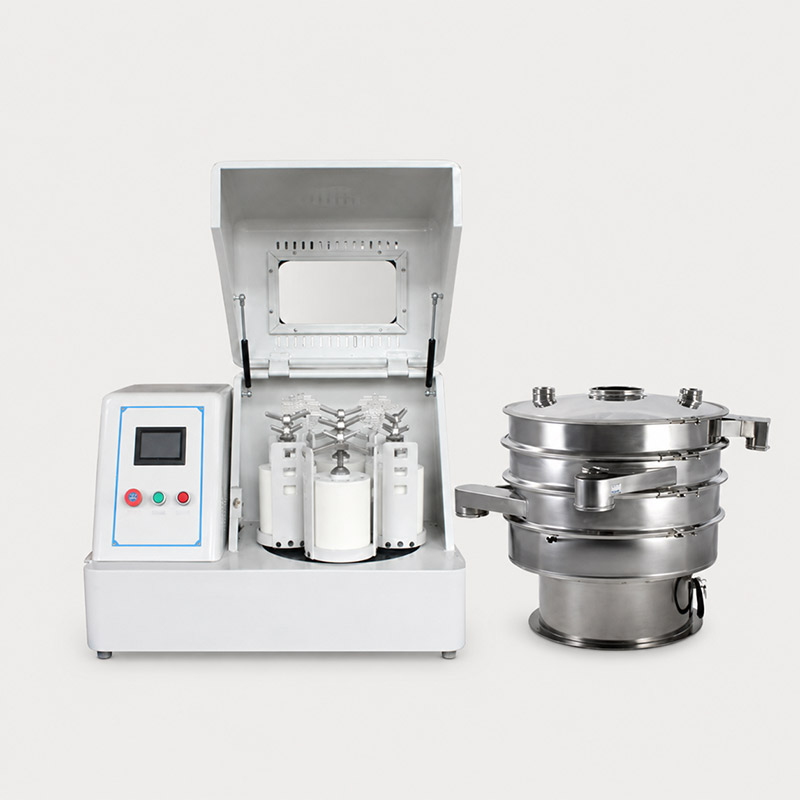
A soil grinder and sieve machine is a laboratory instrument designed to process dry soil samples through simultaneous grinding and particle size classification. It typically consists of a planetary ball mill mechanism for grinding and a built-in sieve system that separates the ground material into desired fractions. The integrated design eliminates the need to manually transfer the powder between separate devices, saving time and reducing sample loss.
In many laboratory applications, the machine can be adjusted to achieve target particle sizes ranging from coarse sand (around 2 mm) down to fine silt and clay fractions (below 75 µm). This flexibility makes it suitable for diverse soil analysis protocols, including those for geology, agriculture, environmental monitoring, and construction material testing.
How Does the Soil Grinder and Sieve Machine Work?
Grinding Mechanism
Most soil grinder and sieve machines are built on the planetary ball mill principle. The grinding jars rotate on their own axes while the main turntable rotates in the opposite direction. This creates high-energy impacts between the grinding balls and the soil particles, effectively breaking down aggregates, reducing particle size, and homogenizing the sample. Depending on the material hardness and moisture content, typical grinding times range from a few minutes to several tens of minutes.
For soil samples that are fibrous or contain organic matter, the grinding action also helps to break cell walls and release bound elements, improving the representativeness of subsequent chemical analysis. The grinding jars are available in various materials — such as agate, zirconia, stainless steel, or tungsten carbide — to minimize contamination based on the elements being analyzed.
Sieving Function
After grinding, the powder is automatically directed into a sieve stack. The sieve system can be equipped with mesh sizes from 2 mm down to 20 µm, allowing you to separate the sample into multiple fractions in one operation. The vibration or rotation mechanism ensures efficient particle passage, while the sealed design prevents dust leakage. Some machines even allow the user to set the sieving time and amplitude, offering further control over the classification process.
The combination of grinding and sieving in one unit means that once the cycle is complete, you can directly collect the fraction(s) of interest without additional handling. This not only speeds up the workflow but also maintains the sample's integrity, which is critical when working with trace elements or volatile compounds.
Key Benefits of an Integrated Grinding and Sieving Solution
Improved Efficiency and Throughput
By eliminating the separate sieving step, a soil grinder and sieve machine can reduce sample preparation time by up to 50% or more. For a laboratory processing dozens of samples daily, this translates directly into higher throughput and faster turnaround times for reports. Operators can simply load the sample, set the grinding and sieving parameters, and walk away — the machine handles the rest.
Reduced Sample Contamination and Loss
Every time you transfer powder from one container to another, you risk losing material and introducing contaminants from the environment or from previous samples. The closed-loop design of the integrated machine minimizes these risks. The grinding jars and sieve stack are sealed, and the powder is contained within the system until the cycle ends. This is especially important for soil analysis involving heavy metals, microplastics, or other trace contaminants where even a few milligrams of cross-contamination can skew results.
Consistent and Reproducible Results
Manual grinding with a mortar and pestle is operator-dependent — the applied force, duration, and technique vary from person to person. An automated planetary ball mill delivers consistent impact energy across all samples, ensuring that the final particle size distribution and degree of homogenization are highly reproducible. This consistency is vital for research studies that require statistical validation, as well as for routine quality control in commercial laboratories.
Versatility for Different Soil Types
Soil samples can vary widely — from sandy loam to clay-rich soils, from dry desert soils to organic-rich peat. A well-designed soil grinder and sieve machine allows you to adjust the rotational speed, ball-to-powder ratio, and grinding time to suit the specific material. For example, for hard, dry soils, a higher speed and larger grinding balls (10–20 mm) may be used, while for soft or moist soils, lower speeds and smaller balls (1–5 mm) can improve grinding efficiency. The ability to change sieve meshes quickly also enables you to switch between different analysis requirements without changing equipment.
Applications in Soil and Environmental Laboratories
Agricultural Soil Testing
Agricultural labs routinely analyze soil pH, organic matter, nutrient content (N, P, K), and cation exchange capacity. All these tests require a fine, homogeneous soil powder, typically passing through a 2 mm or 0.5 mm sieve. The integrated grinder-sieve machine ensures that the sample is uniformly ground and classified, leading to more accurate fertilizer recommendations for farmers.
Environmental Contamination Studies
For the analysis of heavy metals (e.g., lead, cadmium, arsenic), pesticides, or polycyclic aromatic hydrocarbons (PAHs) in soil, the sample must be ground to a very fine powder (often < 75 µm) to ensure complete digestion and extraction. The high-energy milling action of a planetary ball mill can achieve such fineness, and the built-in sieving confirms that the desired fraction is obtained without additional work.
Geotechnical and Construction Material Testing
When testing soil for road construction, embankments, or foundation engineering, particle size distribution curves are essential. The sieve component of the machine can separate the soil into multiple fractions (e.g., gravel, sand, silt, clay) in a single run, directly providing the data needed for the grain size analysis report.
Research and Education
University labs and research institutes often need to prepare hundreds of soil samples for studies on soil formation, carbon sequestration, or microbial ecology. The automation and reproducibility of an integrated soil grinder and sieve machine free up researchers' time for higher-value tasks, while the consistent powder quality improves the reliability of their experimental data.
How to Select the Right Soil Grinder and Sieve Machine for Your Lab
Choosing the right equipment depends on your specific sample volume, target particle size, contamination requirements, and budget. Here are the key factors to consider:
Sample Capacity and Throughput
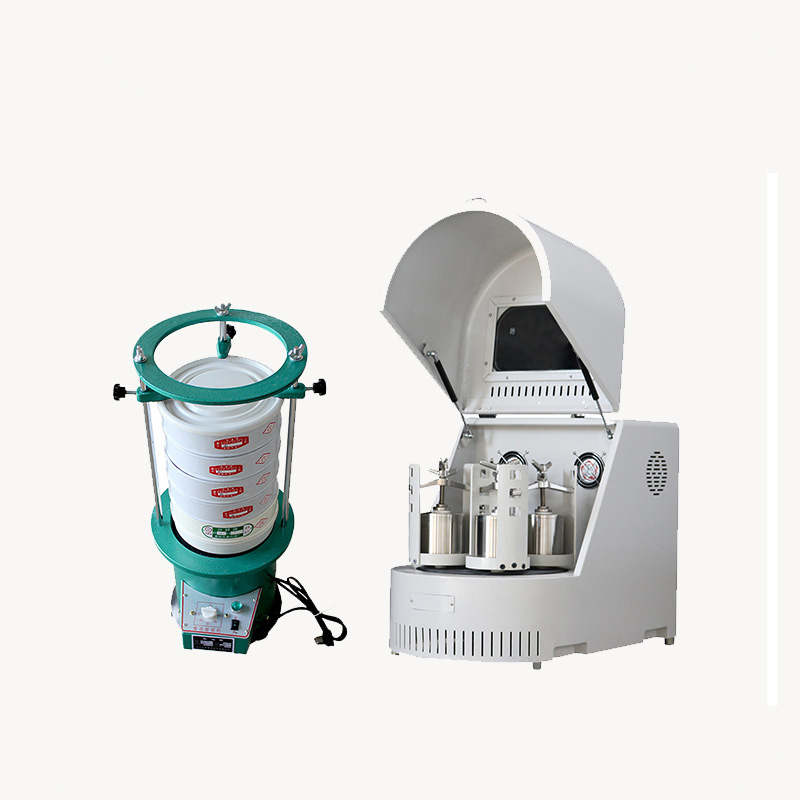
For a typical laboratory, a machine with a total grinding jar capacity of 1–4 liters (e.g., 4 × 250 mL or 4 × 500 mL jars) is a common choice. If you process large batches daily, consider a larger model or one that allows multiple jar sizes. The throughput is also influenced by the grinding and sieving cycle time — some machines offer programmable cycles that can be optimized for different soil types.
Grinding Jar Material
This is one of the most critical decisions. Common materials include:
- Agate: High purity, low contamination for silica-based soils. Best for trace element analysis where silicon contamination must be avoided.
- Zirconia: Excellent wear resistance and low contamination for most soil types. Suitable for oxide ceramics and general soil analysis.
- Stainless steel: Affordable and durable, but may introduce iron, chromium, or nickel contamination. Acceptable for many routine tests where these elements are not measured.
- Tungsten carbide: Extremely hard and wear-resistant, ideal for grinding hard soil minerals, but more expensive and may cause tungsten/cobalt contamination.
It is often recommended to start with agate or zirconia jars for general soil analysis, as they offer a good balance of purity and cost.
Speed Control and Programmability
Look for a machine with variable speed control (typically from 50 to 600 rpm) and a timer. A programmable controller allows you to save multiple recipes for different soil types. Some advanced models also feature reverse rotation and pause intervals, which can help reduce temperature rise and prevent sample caking — especially useful for moist or sticky soils.
Sieve Mesh Options
Ensure that the machine can accommodate the sieve sizes you need. Most units accept standard 100 mm or 200 mm diameter sieves. For soil analysis, a common set includes 2 mm, 1 mm, 0.5 mm, 0.25 mm, and 0.075 mm mesh sizes. The ability to quickly change the sieve stack is a practical advantage when processing different sample batches.
Dust Control and Safety
Soil grinding can generate fine dust, which may contain respirable silica or other hazardous particles. Check that the machine is equipped with a dust-tight seal and, if possible, a connection for a vacuum or dust extraction system. Safety interlocks that stop the machine when the cover is opened are also important for operator protection.
Local Voltage and Frequency
Standard laboratory equipment is often available in 110V/60Hz or 220V/50Hz configurations. Confirm the power supply compatibility for your region before placing an order.
Practical Tips for Using a Soil Grinder and Sieve Machine
To get the best performance from your integrated grinder-sieve, consider the following:
- Pre-dry soil samples: If the soil contains more than 10–15% moisture, it may clog the sieve and cause agglomeration during grinding. Air-drying or oven-drying at low temperature (below 60°C) is recommended for most protocols.
- Remove large stones and debris: Manually pick out stones larger than ~5 mm before loading the jar. Some machines can handle larger particles, but it reduces grinding efficiency and may accelerate wear on the jars and balls.
- Choose the right ball-to-powder ratio: A typical starting point is between 5:1 and 10:1 by weight for soil grinding. If the sample is very hard, you may increase the ratio to 15:1 or 20:1. Always test with a small batch first.
- Use appropriate ball sizes: For general soil grinding, a mix of 10 mm and 5 mm balls often works well. For finer grinding (below 100 µm), consider using smaller balls (1–3 mm) in combination with a longer grinding time.
- Clean the jars and balls thoroughly between different samples: Residual soil from a previous run can introduce cross-contamination. Wash with water (or ethanol for organic analysis) and dry completely.
Remember that the final particle size depends on many factors, including the material properties, feed size, grinding time, speed, ball-to-powder ratio, ball size, jar material, and whether you use dry or wet grinding. It is always advisable to perform a few preliminary tests to optimize your specific process.
Final Thoughts on the Soil Grinder and Sieve Machine
An integrated soil grinder and sieve machine is not just a convenience — it is a tool that can elevate the quality and efficiency of your soil analysis workflow. By combining the high-energy milling of a planetary ball mill with precise particle classification, it eliminates manual steps, reduces variability, and helps you achieve consistent, reproducible results. Whether you are working in an agricultural lab, an environmental testing facility, or a university research group, this equipment can save you time and improve the reliability of your data.
When selecting a machine, focus on your specific sample types, target particle sizes, contamination limits, and throughput needs. The range of available configurations — from jar materials to sieve meshes to programmable controls — means you can tailor the system to your exact requirements. If you are unsure which configuration is best for your applications, consulting with a technical specialist who understands soil grinding and sieving can help you make an informed decision.