
Soil Grinder and Sieve Machine: Efficient Sample Preparation for Soil Analysis
Why Efficient Soil Sample Preparation Matters
In environmental, agricultural, and geochemical laboratories, accurate soil analysis depends heavily on how well the sample is prepared. Raw soil often contains clumps, stones, organic debris, and variable moisture content. If you simply mix or analyze it without proper grinding and sieving, your results may be inconsistent or misleading. Traditional methods — such as manual mortar and pestle grinding followed by hand sieving — are time-consuming, labor-intensive, and difficult to standardize across multiple samples. This is where a dedicated soil grinder and sieve machine becomes an essential tool for any laboratory handling soil testing.
A well-designed soil grinder and sieve machine combines mechanical grinding with integrated sieving, allowing you to process a batch of soil in a fraction of the time while maintaining reproducible particle size distribution. Whether you are preparing samples for pH measurement, organic matter analysis, heavy metal testing, or particle size analysis, consistent sample preparation is the foundation of reliable data.
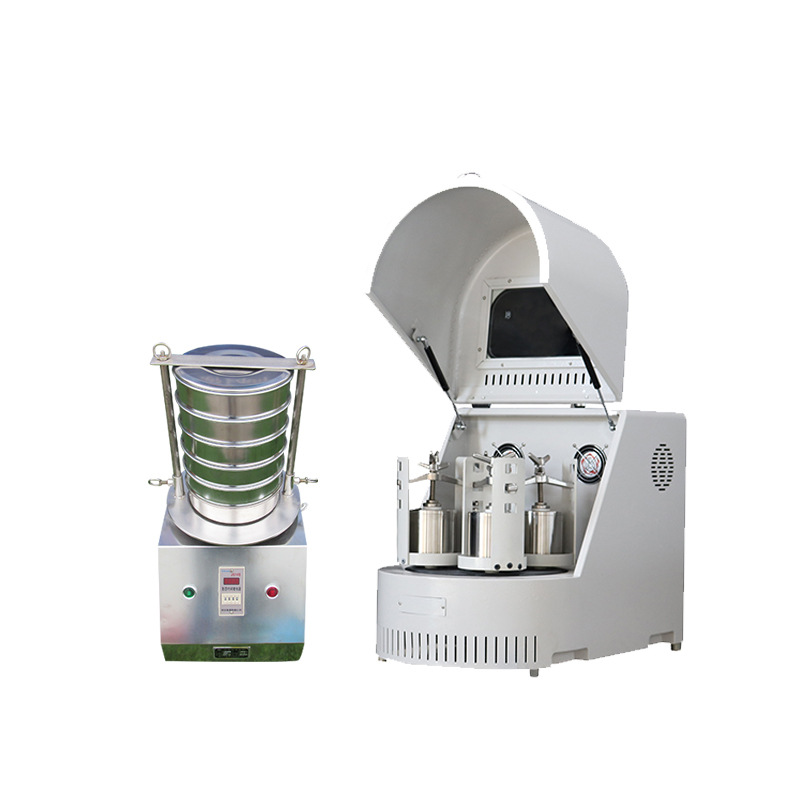
What Is a Soil Grinder and Sieve Machine?
At its core, a soil grinder and sieve machine is a laboratory instrument designed to reduce soil aggregates into a fine, uniform powder and simultaneously separate the material by particle size. The equipment typically consists of a grinding chamber, a set of rotating or vibrating grinding elements (such as balls or hammers), and one or more sieving decks that classify the ground material. Some models use a planetary ball mill mechanism, where the grinding jars rotate around their own axis while also revolving around a central axis, generating high-energy impact and friction that break down soil particles efficiently. After grinding, the material passes through a sieve stack or a built-in mesh screen, allowing only particles below a certain size to pass through for collection.
This integrated approach eliminates the need to transfer the ground soil to a separate sieving station, reducing contamination risk and saving valuable lab time. Many modern units also feature adjustable speed, programmable timers, and easy-clean designs to handle different soil types and moisture levels.
How Does It Work?
The working principle of a typical soil grinder and sieve machine can be broken down into two stages:
Grinding Stage
In the grinding stage, the soil sample is placed into a grinding jar or chamber along with grinding media — usually ceramic, stainless steel, or agate balls. The machine sets the jar in motion, often following a planetary motion pattern. As the jar rotates, the balls inside are lifted and then cascade down, crushing and shearing the soil particles. The high centrifugal forces generated can reduce hard, dry soil aggregates to a fine powder in minutes. For wet or sticky soils, some machines allow the addition of a small amount of liquid or the use of a drying step before grinding.
Sieving Stage
After grinding, the powder is discharged onto a sieving assembly. The sieving can be achieved through vibration or rotation, depending on the design. The soil passes through a series of screens with defined mesh sizes, typically ranging from 2 mm down to 75 μm (200 mesh) or even finer. The desired fraction is collected in a pan or container, while oversized particles can be returned to the grinding chamber for further processing. This closed-loop approach ensures that the final sample meets the required particle size specification for your analytical method.
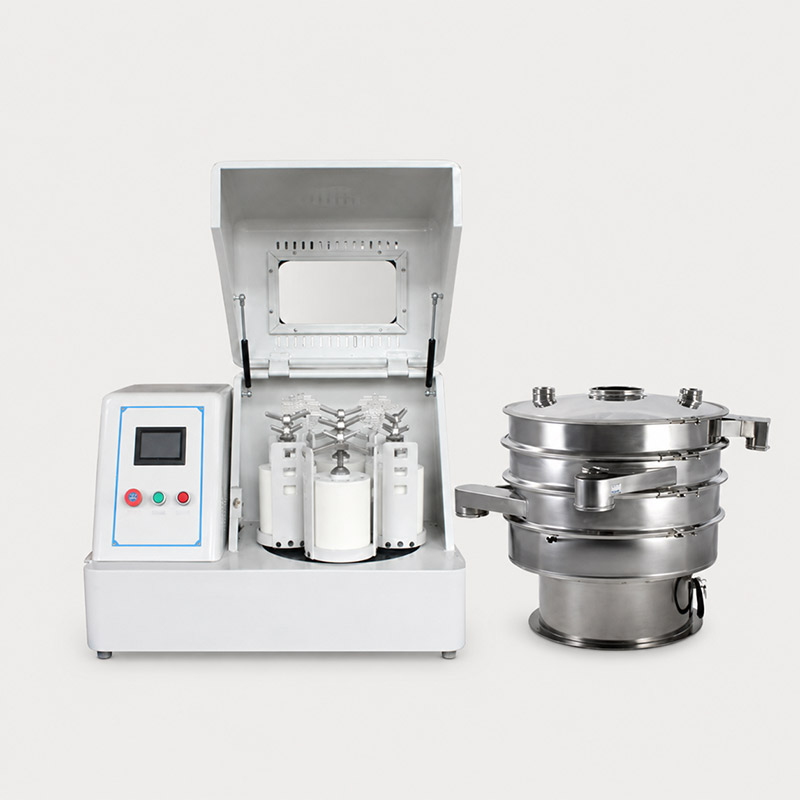
Key Applications in Soil and Environmental Laboratories
A soil grinder and sieve machine is widely used in various fields where soil characterization is critical:
- Agricultural soil testing: Preparing soil for pH, nutrient, and organic matter analysis. Consistent particle size ensures that chemical extractions are reproducible.
- Environmental monitoring: Analyzing soil for heavy metals, pesticides, and other contaminants. A uniform sample reduces variability in results.
- Geotechnical and construction materials: Determining particle size distribution of soil to classify engineering properties like permeability and compaction.
- Archaeological and geological research: Processing sediment samples for mineralogical or paleoenvironmental studies.
- Phytoremediation studies: Preparing soil samples to assess the uptake of pollutants by plants.
In each of these applications, the goal is to reduce the soil to a consistent, representative powder that can be easily dissolved, extracted, or analyzed. The integrated sieving step ensures that the sample meets the specific size requirements of the chosen analytical technique, such as X-ray fluorescence (XRF) or inductively coupled plasma (ICP) analysis.
How to Choose the Right Soil Grinder and Sieve Machine
Selecting the appropriate equipment for your laboratory involves several considerations. Here are the key factors to evaluate:
Sample Throughput and Capacity
Consider the number of soil samples you process daily. For low-volume research labs, a compact benchtop model with a grinding jar capacity of 100–500 mL may be sufficient. For high-throughput commercial labs, you may need a larger unit that can handle multiple jars or continuous operation. The soil grinder and sieve machine from TENCAN offers various configurations to match different sample volumes.
Grinding Mechanism and Material Compatibility
Most laboratory soil grinders use planetary ball milling or vibratory grinding. Planetary ball mills provide high energy and are suitable for hard, dry soils. Vibratory mills are gentler and may be better for friable or organic-rich soils. The grinding jar material is also important: agate, zirconia, stainless steel, or tungsten carbide are common choices. For trace element analysis, avoid metal contamination by using agate or zirconia jars.
Sieving Accuracy and Mesh Range
Check the sieving system's ability to achieve the desired cutoff. Look for machines that allow easy exchange of sieve meshes, typically from 2 mm to 75 μm. Some models offer vibratory sieving with adjustable amplitude and frequency to prevent blinding of the mesh.
Cleanability and Cross-Contamination Control
Soil samples can vary widely in composition, and cleaning between samples is essential. Look for a design with smooth surfaces, removable grinding jars, and easy-access sieves. Some machines include a vacuum or air purge system to minimize dust escape.
Additional Features
Programmable timing, speed control, safety interlocks, and noise reduction are valuable for daily use. If you work with moist or sticky soils, consider a model that allows pre-drying or the addition of a grinding aid. For laboratories that require inert atmosphere processing (e.g., for sulfide-bearing soils), a vacuum or argon gas option may be necessary.
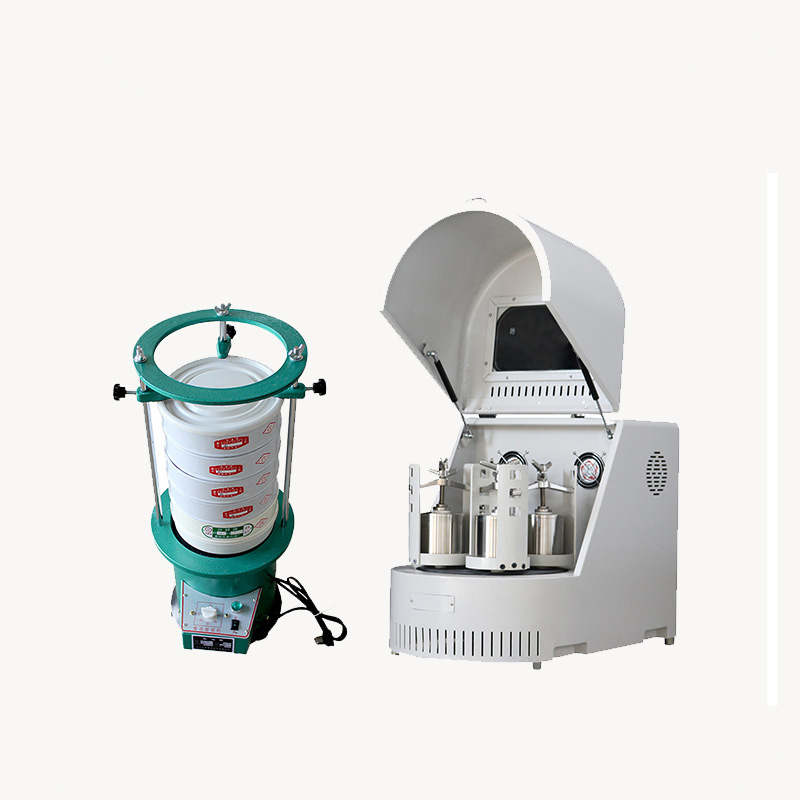
Practical Tips for Efficient Soil Sample Preparation
To get the most out of your soil grinder and sieve machine, follow these practical guidelines:
- Pre-dry the soil: If your soil has high moisture content, air-dry it at room temperature or in a low-temperature oven (below 40°C) to avoid chemical changes. Dry soil grinds more efficiently and prevents clogging of the sieve.
- Remove large debris: Manually pick out stones, roots, and other coarse materials larger than 5–10 mm before placing the sample into the grinder. This protects the grinding media and sieve from damage.
- Use appropriate ball-to-powder ratio: For dry grinding, a common starting point is a ball-to-powder weight ratio of 5:1 to 10:1. Adjust based on the hardness and initial particle size of the soil.
- Clean thoroughly between samples: Use compressed air, a brush, or a dedicated cleaning cycle to remove residual powder. For trace analysis, consider using a separate set of jars and sieves for different soil types.
- Record and replicate parameters: Document grinding time, speed, ball size, and sieve mesh for each sample type. This helps ensure reproducibility across batches and over time.
By following these steps, you can achieve consistent, representative soil powders that meet the strict requirements of modern analytical methods. The integration of grinding and sieving in one machine not only saves time but also reduces the risk of sample loss or contamination during transfer.
Final Thoughts
Soil sample preparation may seem like a routine step, but it directly influences the quality of your analytical results. A reliable soil grinder and sieve machine streamlines the process, improves reproducibility, and allows your laboratory to handle more samples with confidence. Whether you are setting up a new environmental lab or upgrading an existing one, investing in the right equipment — with the correct grinding jar material, sieving range, and capacity — will pay off in data reliability and operational efficiency.
If you are evaluating options for your specific soil types and throughput, TENCAN's technical team can help you select the most suitable configuration. Understanding your material, target particle size, and contamination concerns is the first step toward a successful sample preparation workflow.