
Laboratory Rod Grinder: A Practical Guide for Sample Preparation and Coarse Grinding
Why Choose a Laboratory Rod Grinder for Your Coarse Grinding Needs?
When you need to prepare samples for mineral processing, coal analysis, or building material testing, achieving a uniform and reproducible particle size is critical. Many researchers turn to ball mills or jaw crushers, but there is a specific piece of equipment that excels at producing a relatively coarse, evenly sized product with minimal over-grinding: the laboratory rod grinder. Also known as a rod mill, this device uses long steel rods as grinding media, which roll and cascade inside a rotating drum to crush and grind materials. Unlike ball mills that tend to produce a wider particle size distribution, rod grinders deliver a more uniform product, especially in the range of 0.8 mm to 4 mm. This makes them ideal for sample preparation in mineral processing laboratories, geological research, and quality control stations.
In this guide, we will walk through the working principle, typical applications, key selection factors, and operational tips for a laboratory rod grinder, helping you decide whether it is the right tool for your lab.
How a Laboratory Rod Grinder Works
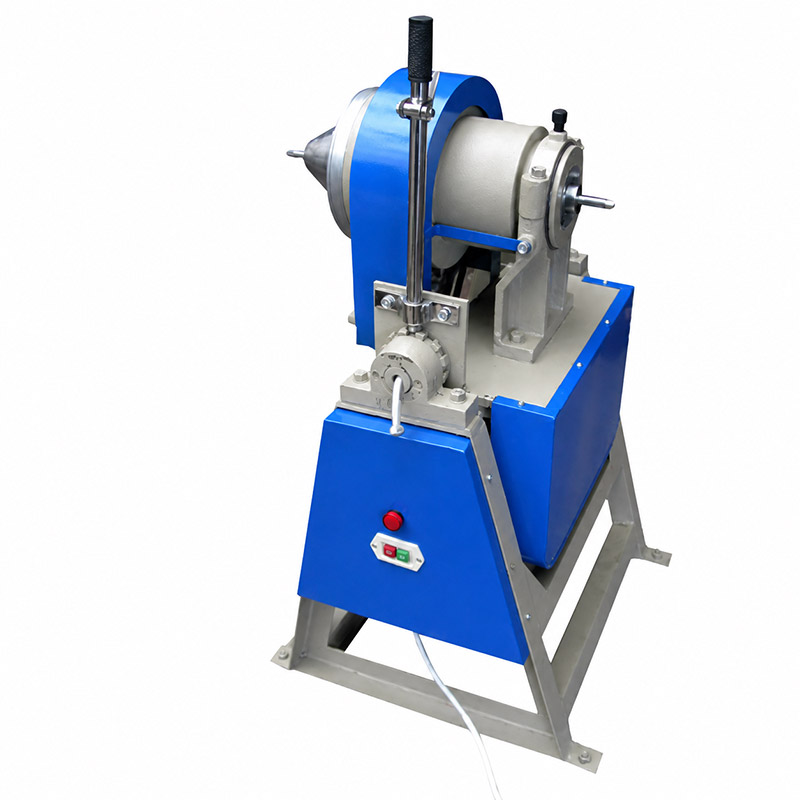
The laboratory rod grinder is essentially a rotating cylindrical drum, horizontal or slightly inclined, loaded with a number of steel rods. The rods are slightly shorter than the length of the drum and have a diameter typically ranging from 25 mm to 50 mm, depending on the mill size. When the drum rotates, the rods are lifted to a certain height by the inner wall and then fall or roll back onto the material, causing impact and attrition. The grinding action is primarily by line contact between rods, which produces a more uniform grinding compared to the point contact of balls.
The material to be ground — usually pre-crushed to below 5–10 mm — is fed from one end of the drum. As the drum rotates, the material moves toward the discharge end, gradually being reduced in size. The speed of rotation is typically set to 60–80% of the critical speed, which is the speed at which the rods would be centrifuged against the wall. Operating below critical speed ensures that the rods tumble effectively.
For laboratory use, the rod grinder is often designed with a transparent or removable lid, allowing easy observation of the grinding process and convenient cleaning. Some models feature a jacket for water cooling to control temperature rise during extended grinding.
Key Applications of Laboratory Rod Grinders
Mineral Processing and Metallurgy
In mineral processing laboratories, rod grinders are commonly used to simulate the grinding stage of a full-scale rod mill. They help determine the grindability of ores, and the rod mill product is often used for further flotation, magnetic separation, or leaching tests. The uniform particle size from a rod grinder ensures that the downstream separation results are representative and reproducible.
Coal and Coke Sample Preparation
For coal analysis, a rod grinder is preferred over a ball mill because it produces less fines and avoids over-grinding, which can change the chemical properties of the sample. The typical product size for coal is around 0.2–2 mm, suitable for proximate analysis, calorific value measurement, and ash fusion tests.
Construction Materials and Cement
Laboratory rod mills are also used to grind clinker, limestone, slag, and other raw materials for cement research. The consistent particle size distribution helps in studying the reactivity and strength development of cementitious materials.
Soil and Environmental Testing
In environmental laboratories, rod grinders are employed to prepare soil samples for heavy metal analysis, particle size distribution, and mineralogical studies. The gentle grinding action minimizes contamination from the grinding media, especially when using stainless steel rods or ceramic rods for low-contamination requirements.
Selecting the Right Laboratory Rod Grinder
Choosing the appropriate rod grinder depends on several factors. Here are the key considerations:
Material Type and Hardness
The hardness, abrasiveness, and brittleness of the material determine the suitable drum lining and rod material. For hard ores, a steel drum with manganese steel lining is common. For less abrasive materials, stainless steel or ceramic lining may be used to prevent contamination. Rods are usually made of high-carbon steel, but for corrosive or high-purity applications, stainless steel rods or even ceramic rods (e.g., zirconia) can be used.
Sample Quantity and Throughput
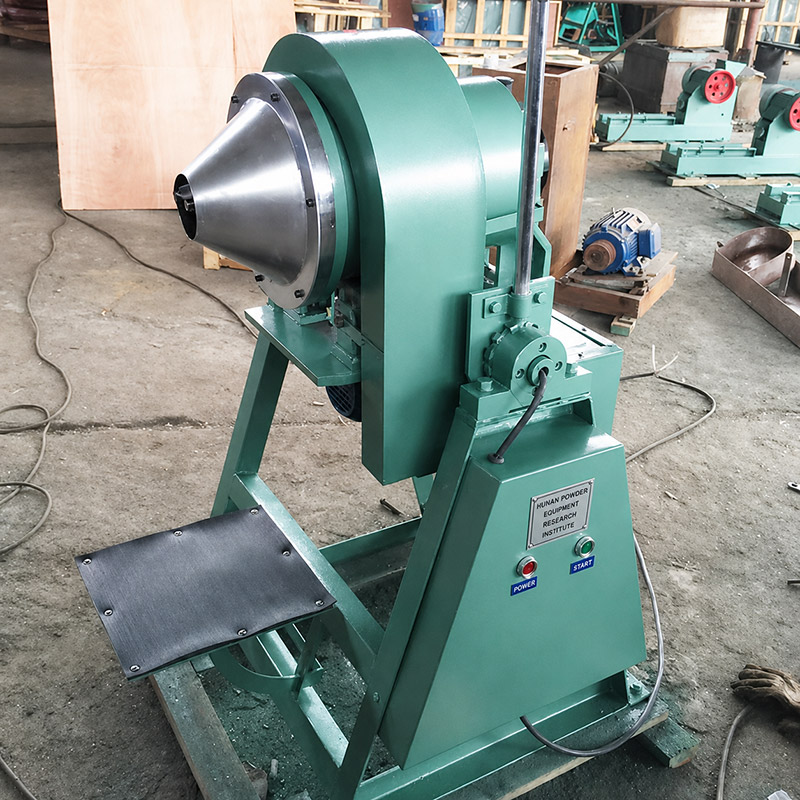
Laboratory rod grinders come in various sizes, typically with drum capacities from 1.5 L to 15 L. The sample volume per batch should not exceed about 40% of the drum volume, as the rods need space to tumble. For example, a 5 L drum can handle about 500–1000 g of feed material, depending on the bulk density. If you need to process multiple samples per day, consider a model with a larger capacity or one that allows quick drum changeover.
Required Product Particle Size
Rod mills are best suited for coarse to medium grinding. If you need a product finer than 100 mesh (150 µm), a ball mill or planetary mill may be more appropriate. However, for a target size of 0.5–5 mm, the rod grinder is often the most efficient choice. The final particle size can be adjusted by varying the grinding time, rod charge, and rotation speed.
Dry vs. Wet Grinding
Most laboratory rod grinders can operate in both dry and wet modes. Wet grinding reduces dust generation and can help achieve finer sizes, but requires additional drying of the product. Dry grinding is simpler for sample preparation but may cause particle agglomeration if the material is cohesive. Check if the drum has a seal for wet operation and if the discharge mechanism handles slurry without clogging.
Ease of Cleaning and Maintenance
Since laboratories often switch between different materials, the rod grinder should be easy to disassemble and clean. Look for models with a removable drum, a quick-release lid, and a smooth interior surface. The rods should be easy to remove and rinse. Some manufacturers offer a dedicated rod cleaning tray.
Practical Tips for Operating a Laboratory Rod Grinder
To get the best performance and longevity from your rod grinder, follow these guidelines:
- Pre-crush the feed: Most rod mills work best when the feed particle size is below 5 mm. If your material is larger, use a jaw crusher or roll crusher beforehand.
- Use the correct rod charge: The rod load should be about 35–45% of the drum volume. Too few rods reduce grinding efficiency; too many rods may cause jamming or excessive wear.
- Control the speed: Operate at 60–70% of critical speed. If the speed is too high, the rods will be centrifuged and no grinding occurs; if too low, the rods will slip and wear quickly.
- Monitor temperature: During prolonged grinding, the drum can heat up. Some materials are temperature-sensitive, so use intermittent operation or a cooling jacket if available. A typical practice is to grind for 10–15 minutes, then pause for 5–10 minutes.
- Clean the drum and rods thoroughly between samples: Residual material from previous runs can cross-contaminate new samples. Use a brush and compressed air, or wash with water if wet grinding.
- Check rod wear regularly: Worn rods reduce efficiency and may break. Replace rods when their diameter has reduced by about 10–15%.
Comparing Rod Grinder with Other Laboratory Grinding Equipment
It is helpful to understand when a rod grinder is preferable to other common lab mills:
- vs. Ball mill: Ball mills produce finer particles and are better for ultra-fine grinding. However, they tend to produce a wider particle size distribution and more fines. Rod grinders are better for coarse, uniform product with minimal slimes.
- vs. Jaw crusher / Roll crusher: Crushers reduce large lumps to a few millimeters, but cannot achieve the narrow size distribution that a rod mill can. For sample preparation requiring a specific size range (e.g., -2 mm +0.5 mm), a rod grinder is the ideal tool.
- vs. Planetary mill: Planetary mills are high-energy ball mills for nano and micron powders. They are not designed for coarse grinding. If your target is below 100 µm, use a planetary mill. For 0.5–5 mm, use a rod grinder.
Conclusion
A laboratory rod grinder is a specialized piece of equipment that fills a valuable niche in sample preparation. It offers efficient, uniform grinding in the coarse to medium range, with minimal over-grinding. Whether you work in mineral processing, coal analysis, or materials research, understanding the capabilities and limitations of a rod mill will help you design better experiments and obtain more reliable results. If you decide that a rod grinder suits your needs, consider factors like capacity, lining material, rod composition, and ease of maintenance. A well-chosen rod grinder will serve your laboratory for many years of consistent performance.
For more details on the laboratory rod grinder offered by TENCAN, feel free to explore the product page. If you have specific material requirements or need help selecting the right model, the technical team at TENCAN can provide guidance based on your sample type, target particle size, and batch quantity.