
Laboratory Ball Mill Guide: Applications, Grinding Jar Materials and Selection Tips
Laboratory Ball Mill Guide: History, Applications, Grinding Jar Materials and Selection Tips
A laboratory ball mill is an essential powder-processing machine used for grinding, mixing, homogenization, mechanical activation, and small-batch material preparation. It is widely applied in materials science, ceramics, metallurgy, pharmaceuticals, geology, environmental testing, battery research, chemicals, and university laboratories.
Although laboratory ball mills are compact compared with industrial grinding equipment, selecting the correct machine and grinding accessories can still be complicated. The mill type, jar material, grinding-ball material, jar volume, grinding mode, contamination requirements, and sample properties all influence the final result.
This guide introduces the development of laboratory ball milling, explains its main applications, compares common grinding-jar materials, and provides practical recommendations for dry, wet, vacuum, and inert-atmosphere grinding.
Historical Development of Laboratory Ball Mills
From Industrial Mineral Processing to Laboratory Research
The early development of ball-milling technology was closely connected with the Industrial Revolution. As mining, metallurgy, and manufacturing expanded, industries needed more efficient ways to crush ores and prepare raw materials.
Early ball mills were mainly large rotating drums used for mineral processing. Grinding media inside the drum repeatedly impacted and rubbed against the material, gradually reducing its particle size.
By the late nineteenth century, smaller ball mills began to be introduced into laboratories. Researchers used them to prepare more homogeneous samples, reduce particle size, mix formulations, and investigate material properties under controlled conditions.
The Modern Evolution of Laboratory Grinding
During the twentieth century, the rapid development of materials science created new requirements for laboratory grinding equipment. Researchers no longer needed only coarse crushing. They also required controlled fine grinding, uniform powder mixing, mechanical alloying, and contamination-sensitive material preparation.
Modern laboratory ball mills may offer:
- Adjustable rotational speed
- Digital grinding-time control
- Forward and reverse operation
- Programmable running and pause cycles
- Dry and wet grinding
- Vacuum or inert-atmosphere processing
- Cooling or cryogenic configurations
- Multiple grinding stations
- Safety enclosures and cover-opening protection
Today, laboratories can choose from planetary ball mills, roll ball mills, stirred ball mills, vibratory mills, horizontal mills, and other specialized systems. Small models are suitable for limited samples and formulation screening, while larger laboratory and pilot-scale machines can process greater quantities.
What Is a Laboratory Ball Mill Used For?
A laboratory ball mill is primarily used to reduce particle size and produce a more uniform material. Depending on the mill structure and operating parameters, it can also perform mixing, homogenization, dispersion, mechanical activation, and alloying.
Materials Science and Nanomaterials
Laboratory ball mills are widely used to prepare fine powders for advanced-material research. Typical materials include:
- Titanium dioxide and zinc oxide
- Alumina, zirconia and silicon carbide
- Battery cathode and anode materials
- Metal and alloy powders
- Carbon materials
- Magnetic and electronic materials
- Catalysts and functional composites
Fine grinding increases the surface area of a material and can influence its reactivity, sintering behavior, dispersion performance, and subsequent processing characteristics.
Pharmaceutical Research
Ball milling can be used for micronization, formulation development, powder mixing, and preparation of selected active pharmaceutical ingredients and excipients.
Pharmaceutical applications require careful control of contamination, heat generation, cleaning, cross-contamination, and material compatibility. Dedicated grinding jars and balls may be necessary for different formulations.
Geology and Mineral Analysis
Geological laboratories use ball mills to prepare ore, rock, soil, mineral, and other solid samples for chemical or instrumental analysis.
The grinding-jar material must be selected according to the elements being analyzed. For example, a stainless steel jar should not be used when iron or chromium contamination would interfere with the test result.
Environmental and Recycling Applications
Laboratory ball mills can prepare environmental samples such as soil, ash, industrial waste, catalysts, electronic waste, and battery materials.
Homogeneous sample preparation helps improve the reliability of subsequent composition analysis, recovery research, and recycling-process development.
Ceramics, Chemicals and Powder Metallurgy
Other common applications include:
- Mixing ceramic powders before pressing and sintering
- Preparing chemical formulations
- Mechanical alloying of metal powders
- Grinding pigments and coating materials
- Preparing catalysts and catalyst supports
- Homogenizing powder-metallurgy feedstocks
Main Advantages of Modern Laboratory Ball Mills
Controlled and Repeatable Processing
Adjustable speed and time settings allow laboratories to repeat the same grinding program for different batches. This improves experimental consistency and makes it easier to compare process conditions.
Multiple Grinding Modes
Depending on the machine and accessories, laboratory ball mills can support:
- Dry grinding
- Wet grinding
- Vacuum grinding
- Inert-gas grinding
- Low-temperature or cryogenic grinding
- Mixing and homogenization
Flexible Grinding Accessories
Grinding jars and balls are available in different sizes and materials. This flexibility allows the equipment to process hard, soft, brittle, abrasive, corrosive, and contamination-sensitive materials.
Improved Laboratory Safety
Modern laboratory mills may include a protective enclosure, emergency stop, overload protection, automatic shutdown, secure jar clamps, and a cover interlock.
These features are especially important for high-speed grinding, vacuum jars, wet grinding, and heavy grinding-media configurations.
Typical Laboratory Ball Mill Configuration Range
Laboratory ball mills are available in many different structures and capacities. The following values are broad series-level references rather than specifications for one individual model.
| Parameter | Reference Range | Selection Consideration |
|---|---|---|
| Grinding Capacity | Approximately 50 mL–10 L | Capacity varies according to mill type, number of stations and jar configuration |
| Rotational Speed | Approximately 50–1000 rpm | Actual speed depends on the structure, jar size and grinding objective |
| Motor Power | Approximately 200 W–2.2 kW | Higher power is generally required for larger jars and heavier media |
| Common Jar Materials | Stainless steel, zirconia, tungsten carbide, PTFE and nylon | Select according to hardness, corrosion resistance and contamination limits |
| Grinding Modes | Dry, wet, vacuum, inert atmosphere or low temperature | Specialized accessories may be required |
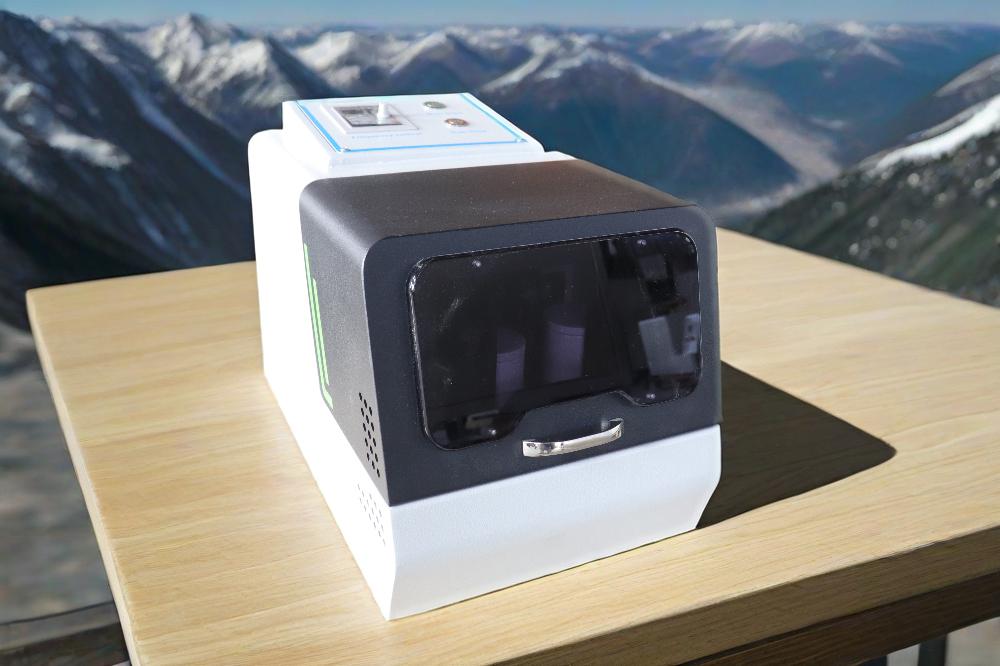
Why Grinding Jar Selection Is Important
The grinding jar is in direct contact with the sample. During high-energy grinding, small quantities of the jar and grinding-ball materials may wear and enter the powder.
Selecting an unsuitable jar may result in:
- Unexpected metallic or non-metallic contamination
- Rapid jar wear
- Poor grinding efficiency
- Chemical reaction with the sample or liquid
- Material leakage during wet grinding
- Difficulty cleaning the jar
- Higher long-term operating cost
Jar selection should therefore begin with the sample properties and analytical requirements rather than price alone.
How to Select a Grinding Jar According to Sample Properties
Stainless Steel Grinding Jars
Stainless steel jars provide high mechanical strength, impact resistance, durability, and relatively economical operating costs.
They are commonly used for:
- Metal powders
- Ores and minerals
- Soil samples
- General chemical powders
- Materials where metallic contamination is acceptable
Main advantages:
- Strong and impact-resistant
- Suitable for high-energy grinding
- Easy to clean
- Widely available
- Relatively economical
Main limitation: Stainless steel may introduce iron, chromium, nickel, or other metallic elements into the sample. It is not recommended when these impurities would affect chemical analysis, electrical properties, color, purity, or electrochemical performance.
Tungsten Carbide Grinding Jars
Tungsten carbide jars provide extremely high hardness, high density, and excellent wear resistance.
They are suitable for:
- Silicon carbide
- Hard ceramics
- Minerals and ores
- Hard alloys
- Other difficult-to-grind brittle materials
Main advantages:
- Very high hardness
- Strong impact energy
- Good wear resistance
- Suitable for hard and abrasive samples
Main limitations: Tungsten carbide jars are relatively expensive and may introduce tungsten or binder-related contamination. They are unnecessary for many soft or easily ground materials.
Zirconia Grinding Jars
Zirconia jars combine high hardness, good wear resistance, high chemical stability, and reduced metallic contamination.
They are frequently selected for:
- Battery materials
- Electronic ceramics
- Nanomaterials
- Pharmaceutical research
- High-purity ceramic powders
- Materials sensitive to iron contamination
Main advantages:
- High hardness and density
- Good corrosion resistance
- Low metallic contamination
- Suitable for fine and ultrafine grinding
Main limitations: Zirconia is a ceramic material and should be protected from severe mechanical shock, improper clamping, and accidental dropping.
PTFE Grinding Jars
Polytetrafluoroethylene grinding jars are valued for their chemical inertness and resistance to many corrosive liquids.
They may be used for:
- Strongly acidic or alkaline samples
- Chemical reagents
- Soft powders
- Applications requiring reduced metallic contact
Main advantages:
- Excellent chemical resistance
- Low adhesion
- Reduced metallic contamination
- Easy sample removal
Main limitations: PTFE has lower hardness and wear resistance than ceramic or metal jars. It is generally more suitable for soft materials and moderate-energy grinding.
Nylon Grinding Jars
Nylon jars are lightweight and provide reduced direct contact between the sample and metallic materials.
They may be used for:
- Plant tissues
- Food-related powders
- Biological samples
- Soft chemical materials
- General low-contamination mixing
Main advantages:
- Lightweight
- Lower operating noise
- Reduced metallic contamination
- Convenient handling
Main limitations: Nylon may wear or deform during long-term high-energy operation and is not normally recommended for extremely hard or abrasive materials.
Comparison of Common Grinding Jar Materials
| Jar Material | Hardness and Wear Resistance | Contamination Consideration | Typical Applications |
|---|---|---|---|
| Stainless Steel | High strength and good wear resistance | May introduce iron, chromium or nickel | Metals, ores, soils and general powders |
| Tungsten Carbide | Extremely high | Possible tungsten or binder contamination | Hard ceramics, minerals and abrasive materials |
| Zirconia | High | Low metallic contamination; zirconia wear must still be considered | Batteries, ceramics, pharmaceuticals and high-purity powders |
| PTFE | Relatively low | Reduced metal contact | Corrosive chemicals and soft materials |
| Nylon | Moderate for soft-material processing | Reduced metallic contamination | Food, biological and soft powder samples |
Select the Jar Design According to the Grinding Method
Dry Grinding
Dry grinding processes powders without adding a liquid medium. It is commonly used for minerals, ceramics, metals, soils, pigments, and general laboratory samples.
A dry-grinding jar should provide:
- Reliable lid fastening
- Dust control
- Suitable wear resistance
- Enough free space for ball movement
- Easy cleaning between different samples
Dry grinding may generate dust, static electricity, heat, and particle agglomeration. Heat-sensitive materials may require pause cycles or reduced speed.
Wet Grinding
Wet grinding uses water, alcohol, oil, solvent, or another compatible liquid to disperse the sample.
The grinding jar must have:
- A leak-resistant sealing structure
- Chemically compatible sealing rings
- Resistance to the selected liquid
- Secure clamping during high-speed operation
Wet grinding can help reduce dust, improve particle dispersion, limit agglomeration, and improve heat transfer. However, the liquid must not react with the sample, jar, balls, or seals.
Vacuum and Inert-Atmosphere Grinding
Air-sensitive, moisture-sensitive, flammable, or oxidation-sensitive materials may require a vacuum grinding jar or a jar that can be filled with an inert gas.
Typical applications include:
- Reactive metal powders
- Battery materials
- Mechanical alloying
- Materials sensitive to oxygen or moisture
- Selected mechanochemical reactions
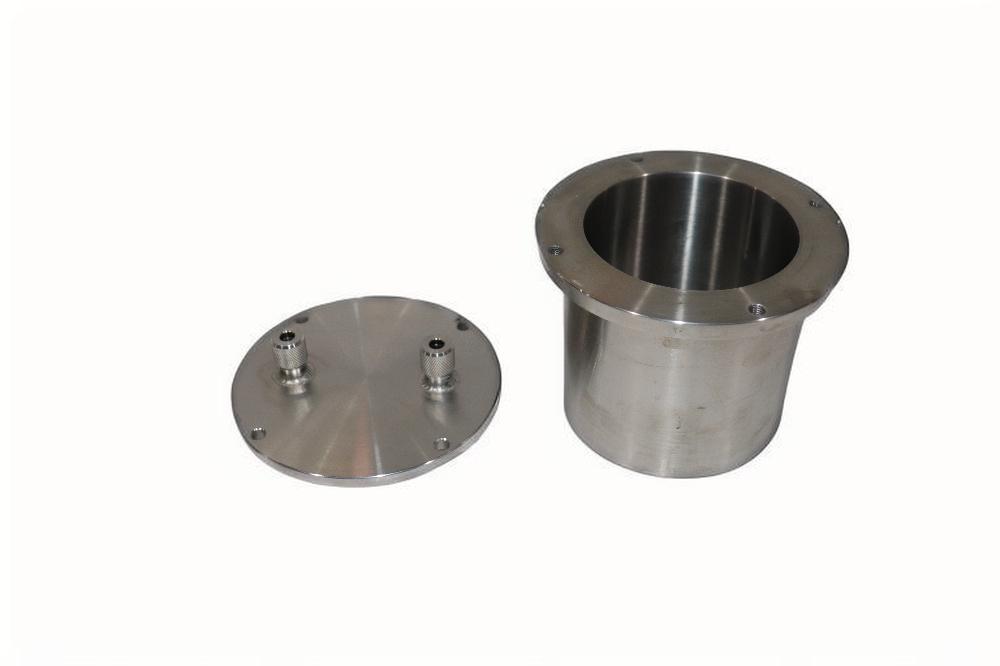
A suitable vacuum jar may include a valve, sealing ring, reinforced lid, and pressure-resistant structure. The compatible vacuum level and gas-filling procedure should be confirmed with the equipment manufacturer.
How to Select Grinding Jar Volume
Grinding-jar capacity should be selected according to the actual sample quantity rather than the nominal maximum volume.
Part of the jar must be occupied by grinding balls, and sufficient free space must remain for effective ball movement. The jar should never be completely filled with powder.
| Jar Volume | Typical Application | Main Consideration |
|---|---|---|
| 50–250 mL | Precious materials, trace samples, nanomaterials and formulation screening | Suitable for limited or high-value samples |
| 500 mL–1 L | Routine laboratory research and material preparation | Provides a balance between sample quantity and process flexibility |
| 2–10 L | Larger laboratory batches, pilot testing or small-batch preparation | Confirm machine load, jar weight, motor power and balancing requirements |
Match the Grinding Balls to the Jar
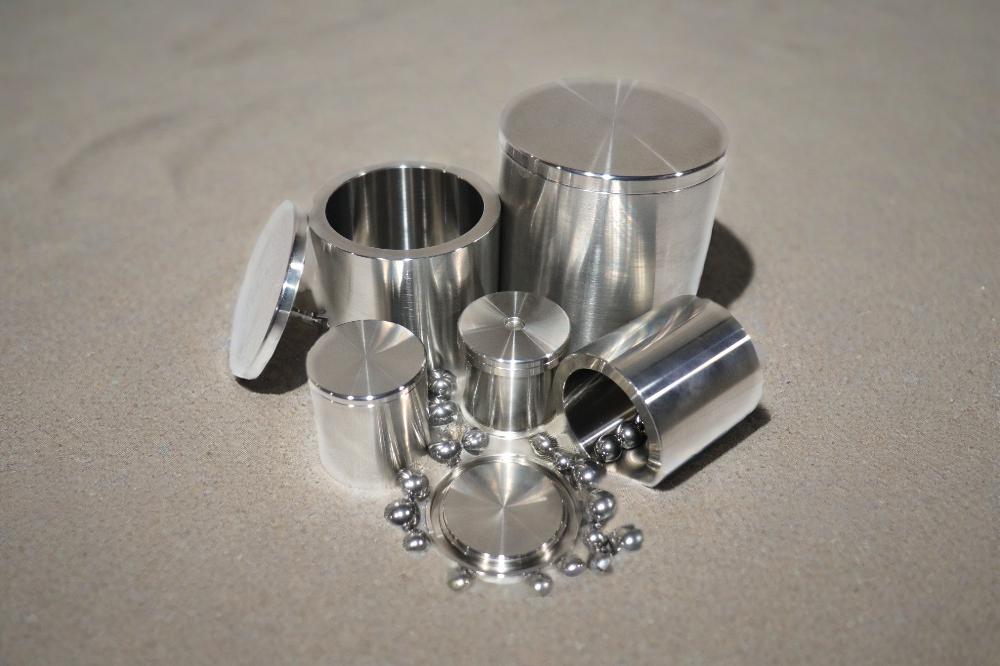
Grinding balls should normally be compatible with the grinding-jar material. Matching materials can simplify contamination analysis and reduce uneven wear.
Common examples include:
- Stainless steel jars with stainless steel balls
- Zirconia jars with zirconia balls
- Tungsten carbide jars with tungsten carbide balls
- Nylon jars with nylon or other compatible low-contamination media
- PTFE jars with suitable low-density, chemically compatible balls
The grinding-ball material should generally have sufficient hardness and density for the sample. However, extremely hard and dense balls can accelerate the wear of a softer grinding jar.
Grinding Ball Diameter
Ball diameter affects both impact energy and the number of contact points.
- Large balls: Strong impact for larger feed particles and initial crushing.
- Medium balls: General fine grinding and mixing.
- Small balls: More contact points for fine and ultrafine grinding.
A combination of several ball sizes is often more effective than using only one diameter. The appropriate size distribution should be optimized according to the initial feed size, target fineness, jar volume, and material hardness.
Other Important Selection Factors
Contamination Requirements
Before choosing a jar, identify which elements are unacceptable in the final sample. This is particularly important for:
- Battery materials
- Electronic ceramics
- Pharmaceutical products
- Food-related materials
- Elemental analysis
- High-purity powders
Temperature Sensitivity
High-energy ball milling generates heat through impact and friction. Temperature-sensitive materials may require:
- Lower operating speed
- Shorter grinding cycles
- Programmed pause intervals
- External cooling
- Cryogenic or low-temperature configurations
The jar, seals, liquid medium, and sample must all be suitable for the expected operating temperature.
Cleaning Requirements
Smooth internal surfaces are easier to clean and reduce the risk of material remaining in corners or surface defects.
For pharmaceutical, food, electronic, and multi-product laboratories, consider:
- Dedicated grinding jars for different materials
- Easy-to-remove lids and sealing components
- Compatible cleaning agents
- Low-adhesion internal surfaces
- Documented cleaning procedures
Jar Weight and Machine Balancing
Heavy jars, such as tungsten carbide and large stainless steel jars, place a greater load on the machine.
Opposite grinding stations must be balanced according to the complete operating weight, including:
- Grinding jar
- Lid and clamp
- Grinding balls
- Sample
- Liquid medium, when used
Incorrect balancing can cause excessive vibration, noise, bearing wear, and damage to the transmission system.
Common Laboratory Ball Mill Selection Mistakes
Mistake 1: Choosing the Most Expensive Jar Material
The most expensive grinding jar is not automatically the most suitable. Using tungsten carbide to process a soft, easy-to-grind material may increase purchasing costs and introduce unnecessary contamination risks.
Select the jar according to the sample rather than assuming that higher hardness is always better.
Mistake 2: Ignoring Contamination
Using a stainless steel jar for a material that is sensitive to iron contamination can affect the final composition and performance.
Battery materials, electronic powders, analytical samples, and high-purity ceramics often require non-metallic grinding systems.
Mistake 3: Selecting the Jar Only by Nominal Capacity
A 1 L jar does not normally hold 1 L of powder during grinding. Space is also required for the grinding balls and their movement.
Ask about the recommended sample quantity and effective working volume instead of relying only on the stated jar capacity.
Mistake 4: Using a Dry-Grinding Jar for Wet Grinding
A jar that is adequate for dry powder may not have the sealing structure required for wet processing. Liquid leakage can damage the machine, contaminate the laboratory, and create safety risks.
Mistake 5: Ignoring Jar and Ball Compatibility
Very hard grinding balls used inside a softer jar may accelerate jar wear. Balls with insufficient density may also provide poor grinding efficiency for hard samples.
Mistake 6: Skipping Preliminary Tests
New materials should first be tested using a small sample. Preliminary grinding can help determine:
- Whether the jar material is compatible
- Whether contamination is acceptable
- The appropriate grinding time
- The required ball diameter
- Whether excessive heat or sticking occurs
- Whether dry or wet grinding is more suitable
Laboratory Ball Mill Pre-Purchase Checklist
Provide the following information when selecting a laboratory ball mill and grinding jars:
- Sample name and composition
- Material hardness and abrasiveness
- Initial feed size
- Required final particle size
- Sample quantity per batch
- Number of batches per day
- Dry or wet grinding
- Liquid medium, when applicable
- Acceptable contamination level
- Required jar and ball material
- Temperature sensitivity
- Vacuum or inert-atmosphere requirements
- Available voltage and installation space
Frequently Asked Questions
What is the best grinding jar material for a laboratory ball mill?
There is no single best material for every sample. Stainless steel is durable and economical, zirconia provides reduced metal contamination, tungsten carbide is suitable for very hard materials, PTFE offers strong chemical resistance, and nylon is useful for softer contamination-sensitive samples.
Can one grinding jar be used for every material?
It is not recommended. Different samples may require different hardness, chemical resistance, and contamination characteristics. Dedicated jars are often required for high-purity or regulated applications.
Can laboratory ball mills perform wet grinding?
Yes, but a properly sealed wet-grinding jar must be used. The liquid, jar, balls, seals, and sample must be chemically compatible.
When is a vacuum grinding jar necessary?
Vacuum or inert-gas jars may be required for oxidation-sensitive, moisture-sensitive, reactive, or flammable powders and for selected mechanical-alloying processes.
Why should zirconia balls be used with a zirconia jar?
Matching zirconia media and jars provides a more consistent contamination profile and reduces the risk of uneven wear caused by incompatible hardness levels.
How should jar volume be selected?
Select the jar according to the actual sample quantity, grinding-ball loading, required free space, and machine capacity. Nominal jar volume is not equal to the amount of powder that can be processed.
Is a higher rotational speed always better?
No. Excessive speed may increase heat, wear, contamination, vibration, and sample agglomeration. Speed should be optimized together with grinding time, ball size, sample loading, and temperature control.
Conclusion
Laboratory ball mills have evolved from early industrial mineral-processing equipment into precise and flexible tools for modern scientific research.
Their performance depends not only on the mill structure but also on the correct selection of grinding jars, grinding balls, capacity, speed, grinding mode, and process conditions.
Stainless steel, tungsten carbide, zirconia, PTFE, and nylon jars each provide different advantages. The right choice should balance material hardness, chemical compatibility, contamination limits, wear resistance, cleaning requirements, and total operating cost.
Before purchasing or starting a new experiment, laboratories should clearly define the sample properties, feed size, target fineness, batch quantity, grinding method, and allowable contamination. A small preliminary test is often the most reliable way to confirm the final configuration.