
How to Choose the Right Laboratory Ball Mill: A Practical Selection Guide
How to Choose the Right Laboratory Ball Mill: A Practical Selection Guide
Laboratory ball mills are widely used for grinding, mixing, homogenizing, mechanical alloying, and preparing fine powders. They play an important role in materials science, battery research, ceramics, chemicals, pharmaceuticals, geology, metallurgy, and many other laboratory applications.
However, selecting a suitable laboratory ball mill is not simply a matter of comparing prices or maximum rotational speeds. Sample characteristics, required particle size, processing capacity, grinding jar material, temperature sensitivity, and contamination control can all affect the final grinding result.
This guide explains the main factors to evaluate before purchasing a laboratory ball mill and provides practical suggestions for improving grinding efficiency, equipment reliability, and experimental repeatability.
1. Start with Your Sample and Grinding Objective
The most important step is to define what the equipment must accomplish. Different samples require different grinding forces, jar materials, operating speeds, and cooling methods.
Before selecting a machine, consider the following questions:
- Is the sample soft, brittle, fibrous, elastic, hard, or highly abrasive?
- Is the purpose coarse crushing, fine grinding, ultrafine grinding, mixing, or mechanical alloying?
- What is the initial feed size?
- What final particle size is required?
- Is dry grinding or wet grinding more suitable?
- Can the sample tolerate metal contamination?
- Is the material sensitive to heat, oxygen, moisture, or chemical reactions?
- How much material must be processed in each batch?
A machine that performs well with ceramic powders may not be suitable for polymers, biological samples, metal alloys, or heat-sensitive materials. The sample should therefore determine the equipment configuration—not the other way around.
2. Select the Appropriate Type of Laboratory Ball Mill
Laboratory ball mills are available in several structural designs. Each type produces a different motion pattern and energy level.
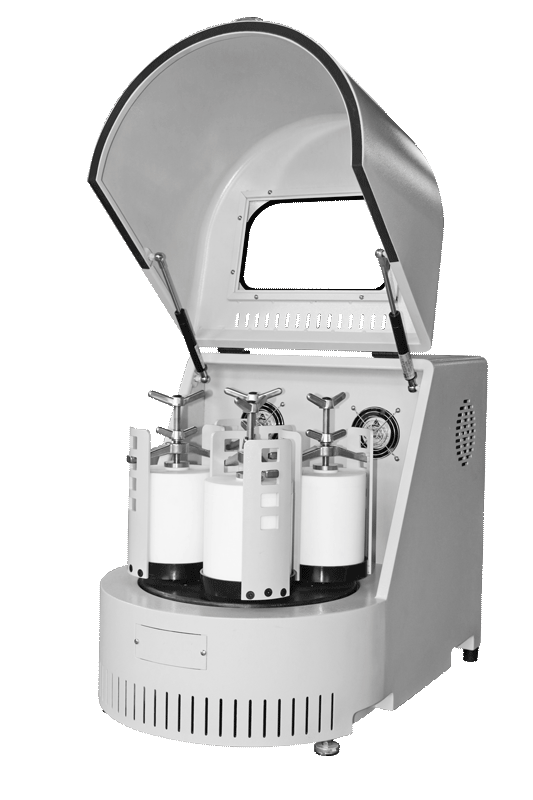
Planetary Ball Mills
Planetary ball mills generate high grinding energy through the combined revolution and rotation of the grinding jars. They are commonly selected for rapid fine grinding, mixing, dispersion, mechanical alloying, and the preparation of micron- or nano-scale powders.
They are especially suitable for research laboratories that need flexible jar materials, programmable operation, multiple grinding stations, and repeatable experimental parameters.
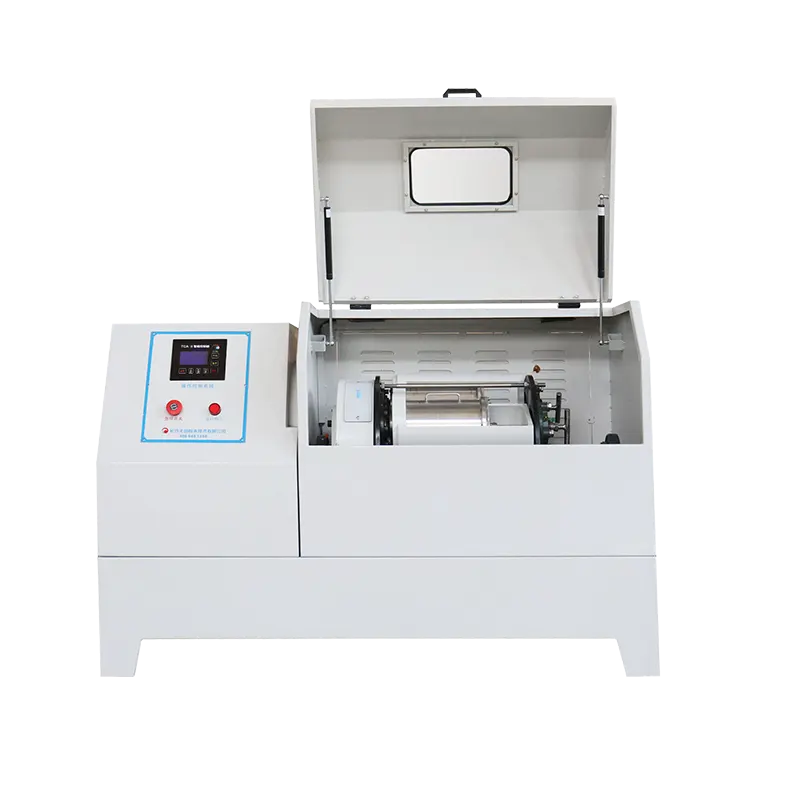
Horizontal and Heavy-Duty Laboratory Ball Mills
Horizontal configurations generally provide stable operation and can be suitable for larger sample volumes, long processing cycles, or applications requiring a different movement pattern from conventional vertical planetary equipment.
When choosing a horizontal model, check the effective jar capacity, loading method, transmission system, safety enclosure, operating noise, and accessibility for cleaning and maintenance.
Roll and Jar Mills
Roll ball mills rotate cylindrical grinding jars on supporting rollers. They usually provide gentler grinding and mixing than high-energy planetary mills and are often selected for material blending, powder mixing, wet grinding, and longer processing cycles.
Vibratory Ball Mills
Vibratory mills use rapid vibration to create frequent impacts between the grinding media and sample. They can provide high grinding efficiency for small batches, but vibration, noise, sample heating, and equipment installation requirements should be evaluated carefully.
3. Do Not Judge Performance by Rotational Speed Alone
A higher rotational speed does not automatically produce a better grinding result. Grinding efficiency depends on the combined influence of speed, jar diameter, grinding media density, ball size, sample loading, operating time, and machine structure.
If the speed is too low, the grinding media may not generate sufficient impact energy. If it is too high, excessive centrifugal force may cause the balls to move with the jar wall instead of producing effective impact and friction.
Excessive speed can also lead to:
- Rapid temperature increase
- Accelerated wear of jars and grinding media
- Changes in heat-sensitive materials
- Increased vibration or mechanical load
- Unnecessary energy consumption
A reliable laboratory ball mill should offer adjustable speed and stable control rather than simply advertising the highest possible RPM.
4. Match the Grinding Jar Material to the Sample
The grinding jar is in direct contact with the sample. Its hardness, wear resistance, chemical stability, density, and contamination characteristics can significantly influence the final powder quality.
| Jar Material | Main Characteristics | Typical Considerations |
|---|---|---|
| Stainless Steel | Durable, economical, and widely available | May introduce metallic elements into sensitive samples |
| Zirconia | High hardness, high density, and good wear resistance | Suitable for fine grinding where low metal contamination is required |
| Agate | Low contamination and good chemical stability | Commonly used for laboratory analysis and mineral samples |
| Alumina or Corundum | Hard, wear-resistant, and suitable for ceramic materials | Possible alumina contamination should be considered |
| Tungsten Carbide | Very high hardness and density | Suitable for hard samples but may introduce tungsten or cobalt contamination |
| PTFE, Nylon or Polyurethane | Lightweight and resistant to many chemicals | Better for softer materials or applications requiring reduced metal contact |
The jar should normally be harder and more wear-resistant than the sample. However, contamination tolerance must also be evaluated. For example, a stainless steel jar may be mechanically suitable for a hard material but unsuitable when even a small amount of iron contamination would affect the analysis.
5. Choose the Grinding Balls Carefully
Grinding media material, diameter, density, quantity, and size distribution all influence grinding efficiency. In most cases, the grinding balls should be compatible with the jar material to reduce uneven wear and unexpected contamination.
Larger balls provide stronger impact and are useful for breaking larger feed particles. Smaller balls create more contact points and are generally more effective during fine grinding. A combination of different ball sizes can often provide better results than using only one diameter.
The ideal ball configuration should be confirmed through controlled testing because it varies with sample hardness, feed size, jar volume, liquid content, and required fineness.
6. Evaluate Effective Capacity, Not Just Total Jar Volume
The stated jar volume is not equal to the amount of material that can be processed. Space must be reserved for grinding media and material movement.
Overfilling the jar can reduce impact efficiency, increase pressure, cause leakage, and place excessive load on the drive system. Underfilling may also reduce grinding efficiency because there may not be enough interaction between the media and sample.
When comparing models, ask the manufacturer about the recommended sample quantity, grinding media loading, maximum feed size, and effective working volume for your application.
7. Consider Temperature Control for Heat-Sensitive Samples
Impact and friction generate heat during ball milling. The temperature increase may affect polymers, biological materials, pharmaceuticals, battery materials, volatile compounds, and other heat-sensitive samples.
Possible temperature-management methods include:
- Running the machine intermittently
- Programming alternating operating and pause periods
- Using air-cooled or water-cooled grinding jars
- Using refrigerated or cryogenic grinding systems
- Reducing speed or shortening each grinding cycle
- Monitoring the jar temperature during process development
For temperature-sensitive applications, ask whether the equipment supports programmable cycles, external cooling, low-temperature operation, or customized temperature-control solutions.
8. Check the Control System and Safety Features
Modern laboratory ball mills should provide more than basic speed adjustment. A programmable control system can improve experimental consistency and reduce operator error.
Useful functions may include:
- Adjustable rotational speed
- Forward and reverse operation
- Programmable running and pause cycles
- Total grinding-time setting
- Parameter storage
- Overload protection
- Emergency stop
- Cover-opening protection
- Abnormal vibration or fault alarms
A strong safety enclosure is particularly important for high-speed or high-energy grinding. The cover should remain locked while the machine is operating, and the equipment should stop safely if the enclosure is opened unexpectedly.
9. Avoid Choosing Equipment Based Only on the Lowest Price
A low initial price may appear attractive, but the total operating cost can become much higher if the machine uses an undersized motor, unstable control system, low-quality bearings, poorly balanced transmission components, or grinding jars that wear rapidly.
Long-term purchasing costs may include:
- Replacement grinding jars and balls
- Sealing rings and clamping components
- Bearings, belts, gears, or transmission parts
- Motor and inverter maintenance
- Production losses caused by unstable operation
- Sample losses caused by leakage or contamination
Compare equipment based on performance, reliability, service life, spare-parts availability, technical support, and application suitability—not only the purchase price.
10. Confirm the Manufacturer’s Technical Support
Laboratory grinding often requires process optimization. An experienced manufacturer should be able to recommend a suitable machine, jar material, grinding media, speed range, loading method, and processing cycle according to the sample.
Before ordering, confirm whether the supplier can provide:
- Application-based model selection
- Grinding jar and ball recommendations
- Parameter-setting guidance
- Customized equipment or accessories
- Operation manuals and training materials
- Spare parts and consumables
- Remote troubleshooting
- Warranty and after-sales maintenance
Good technical support is especially valuable when processing new materials or developing a grinding process for the first time.
Laboratory Ball Mill Pre-Purchase Checklist
- Sample name and main composition
- Sample hardness and abrasiveness
- Initial feed size
- Required final particle size
- Required processing quantity per batch
- Dry or wet grinding
- Acceptable contamination level
- Preferred jar and grinding media material
- Temperature sensitivity
- Required atmosphere, vacuum, or sealing conditions
- Desired operating time and daily workload
- Available voltage and installation space
Practical Tips for Daily Operation
Correct operation is essential for obtaining consistent results and extending equipment service life.
- Balance opposite grinding jars carefully before starting the machine.
- Make sure every jar is securely sealed and clamped.
- Do not exceed the recommended sample and media loading.
- Begin with moderate speed and gradually optimize the process.
- Use programmed pauses when grinding heat-sensitive samples.
- Inspect jars, balls, sealing rings, and clamping devices regularly.
- Clean all contact parts thoroughly between different samples.
- Stop the equipment immediately if abnormal noise or vibration occurs.
- Record speed, time, ball size, loading ratio, and temperature for every experiment.
Conclusion
Choosing the right laboratory ball mill requires a systematic evaluation of the sample, grinding target, machine structure, jar material, grinding media, capacity, temperature control, safety features, and technical support.
The best machine is not necessarily the one with the highest speed or lowest price. It is the model that can process your material efficiently, control contamination, maintain stable operating conditions, and reproduce the required results over repeated experiments.
By providing detailed sample and process information to the manufacturer before purchasing, you can reduce selection risks, shorten process-development time, and obtain a laboratory grinding solution that better matches your research requirements.
Explore TENCAN Laboratory Ball Mill Solutions
Compare planetary, horizontal, roll, and other laboratory grinding equipment for different materials and processing requirements.
View Laboratory Ball Mills