
Heavy Duty Horizontal Ball Mill: A Powerful Solution for Large-Volume Grinding
What Is a Heavy Duty Horizontal Ball Mill?
When your grinding tasks exceed the capacity of a typical bench-top planetary ball mill, you need a machine that can handle larger volumes, tougher materials, and longer operating cycles. This is where the heavy duty horizontal ball mill comes into play. Unlike conventional vertical planetary mills that rely on a rotating platform and spinning jars in an upright orientation, the horizontal design repositions the grinding jars along a horizontal axis. This seemingly simple change brings significant mechanical advantages, especially when processing hard, brittle, or abrasive powders in batch sizes ranging from 500 mL to several liters per jar.
A heavy duty horizontal ball mill is essentially a rugged version of the planetary ball mill family. It retains the classic planetary motion: the grinding jars rotate around their own axes while simultaneously revolving around a central axis. However, the horizontal orientation distributes the weight of the grinding media and material more evenly, reduces stress on the drive system, and allows the use of larger, heavier jars. These features make it an ideal choice for laboratories and pilot plants that need to bridge the gap between small-scale R&D and industrial production.
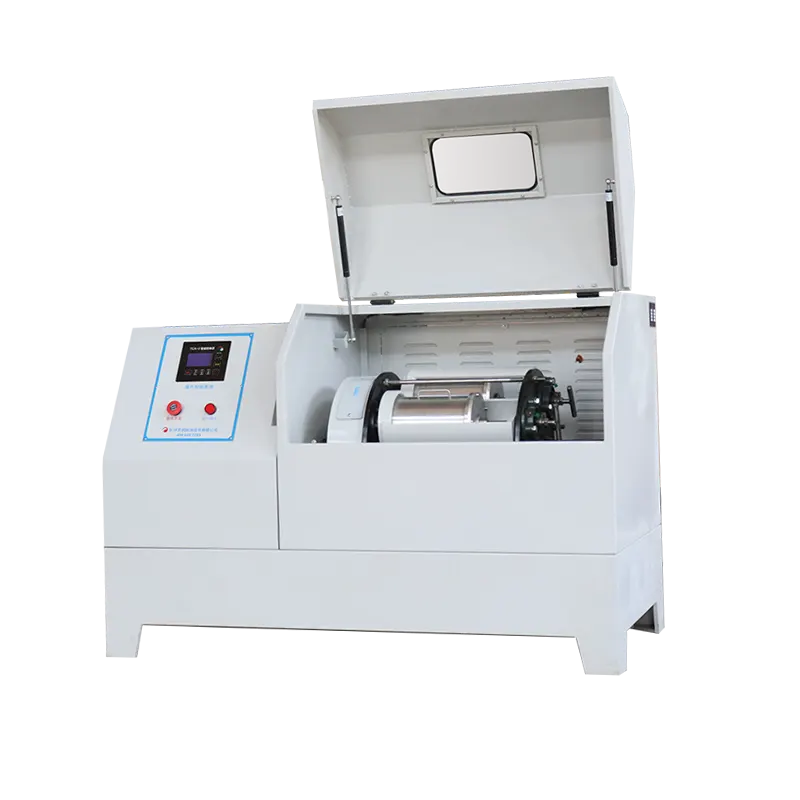
How Does a Horizontal Planetary Ball Mill Work?
The working principle of a heavy duty horizontal ball mill is similar to that of a vertical planetary ball mill, but with a key difference in jar orientation. The machine consists of a main turntable that rotates horizontally. Mounted on this turntable are two or four grinding jar stations, each capable of holding a jar that is clamped in place. As the turntable rotates, each jar spins on its own axis in the opposite direction. This combination of rotation and revolution creates high-energy impact and friction forces inside the jar.
Inside the jar, grinding balls (typically made of stainless steel, zirconia, agate, or tungsten carbide) tumble and collide with the powder material. The energy transferred during these collisions breaks down particles, reduces their size, and can even trigger mechanical alloying. Because the jars are mounted horizontally, the gravitational force acts along the jar's length rather than across its diameter. This allows the grinding media to remain in constant contact with the inner wall and the material, improving grinding efficiency and reducing dead zones where powder might accumulate.
In many laboratory applications, the rotational speed of the main turntable ranges from approximately 50 to 300 rpm, while the jar speed can be several times higher depending on the transmission ratio. The actual usable capacity of a grinding jar is typically about two-thirds of its total volume, leaving space for the grinding balls and the sample. A common practice is to fill the jar to about 30–50% of its volume with grinding balls, then add powder so that the total charge occupies about 70–80% of the jar's interior.
Key Advantages of a Heavy Duty Horizontal Ball Mill
1. Higher Capacity and Scalability
The most obvious benefit is the ability to process larger sample volumes. While standard vertical planetary mills often max out at 1 L per jar, a heavy duty horizontal model can accommodate jars from 500 mL up to 5 L or more per station. This makes it suitable for producing kilogram-scale batches of ground powder, which is essential for material qualification, process optimization, and small-scale manufacturing.
2. Enhanced Grinding Power for Hard Materials
Because the jar is oriented horizontally, the centrifugal forces generated by planetary motion are more directly transferred to the grinding media. This results in higher impact energy, which is particularly useful for crushing hard materials such as silicon carbide, alumina, tungsten carbide, and various minerals. The robust construction of a heavy duty mill – reinforced frame, larger motor, and stronger drive train – ensures stable operation even under prolonged high-energy conditions.
3. Reduced Vibration and Noise
Horizontal planetary mills tend to produce less vibration compared to vertical models with large jars. The symmetrical design and lower center of gravity contribute to smoother operation. In a busy laboratory environment, this can make a noticeable difference in user comfort and equipment longevity.
4. Flexible Configuration for Dry and Wet Grinding
Like other planetary ball mills, the heavy duty horizontal version supports both dry and wet grinding. Wet grinding is often preferred for materials that tend to agglomerate or oxidize, as the liquid medium (water, ethanol, or other solvents) helps disperse particles and dissipate heat. The horizontal orientation also facilitates easier sealing of jars, which is important when working with volatile solvents or when vacuum/inert gas protection is required.
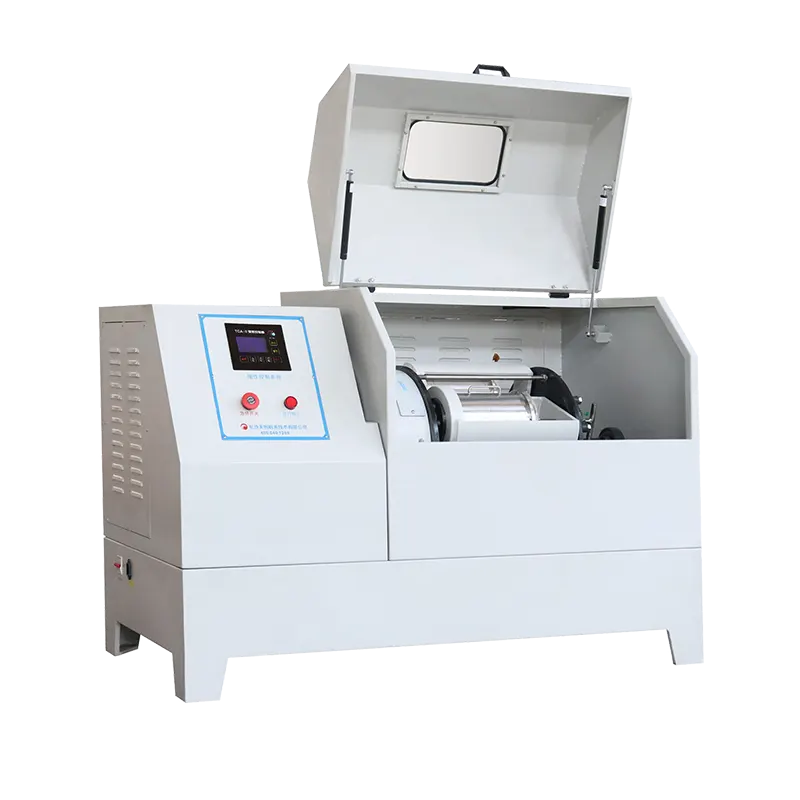
Typical Applications of Heavy Duty Horizontal Ball Mills
Researchers and engineers use this type of mill across a wide range of fields:
- Minerals and mining: Grinding ore samples, coal, quartz, and other geological materials for analysis or beneficiation studies.
- Ceramics and refractory materials: Reducing particle size of alumina, zirconia, silicon nitride, and clay mixtures for sintering or coating applications.
- Battery materials: Preparing cathode and anode powders, such as lithium cobalt oxide, graphite, and solid electrolytes, where consistent particle size distribution is critical.
- Chemical and pharmaceutical: Fine grinding of pigments, catalysts, and active pharmaceutical ingredients (APIs) under controlled conditions.
- Mechanical alloying: Producing alloy powders from elemental blends, such as Ni-Al, Fe-Cu, or Ti-Al systems, for advanced material research.
- Nanopowder production: Achieving submicron or even nanometer-sized particles through extended milling cycles (typically 10–30 hours depending on material).
How to Select a Heavy Duty Horizontal Ball Mill
Choosing the right machine for your application involves several considerations. Below are the key factors to evaluate:
Jar Volume and Number of Stations
Decide on the batch size you need. Common configurations include two or four jar stations. If you frequently process multiple samples simultaneously, a four-station model can increase throughput. Keep in mind that the actual usable volume is about 60–70% of the nominal jar capacity due to the space occupied by grinding media.
Grinding Jar and Ball Materials
The jar material must be compatible with your sample to avoid cross-contamination. Common options include:
- Stainless steel – general purpose, good impact resistance
- Zirconia (Y₂O₃-stabilized) – low wear, suitable for ceramics and battery materials
- Alumina – cost-effective for abrasive samples
- Tungsten carbide – highest hardness for extremely hard materials
- Agate – for silica-free grinding (e.g., for trace element analysis)
The grinding balls should be made of the same material as the jar or a harder material to minimize contamination. Ball diameters typically range from 3 mm to 20 mm; smaller balls are better for fine grinding, while larger balls provide more impact for initial size reduction.
Speed Control and Programming
A heavy duty horizontal ball mill should offer variable speed control, ideally with a digital display and programmable timer. Many modern models allow setting forward/reverse rotation, pause intervals, and total running time. This is especially useful for heat-sensitive materials that require intermittent operation (e.g., 15 minutes running, 10 minutes pause).
Safety and Sealing
Check for safety interlocks that prevent operation when the lid is open. If you plan to mill reactive powders or under inert gas/vacuum, ensure the jars can be sealed with O-rings and that the clamping mechanism is secure. Optional vacuum jar lids are available for many models.
Power Supply and Motor
Most laboratory units operate on 110V or 220V single-phase power. Heavy duty models may require higher power (0.75 kW to 2.5 kW or more). Confirm the voltage and frequency (50/60 Hz) available in your facility. A high-torque motor is essential for maintaining speed when grinding dense materials.
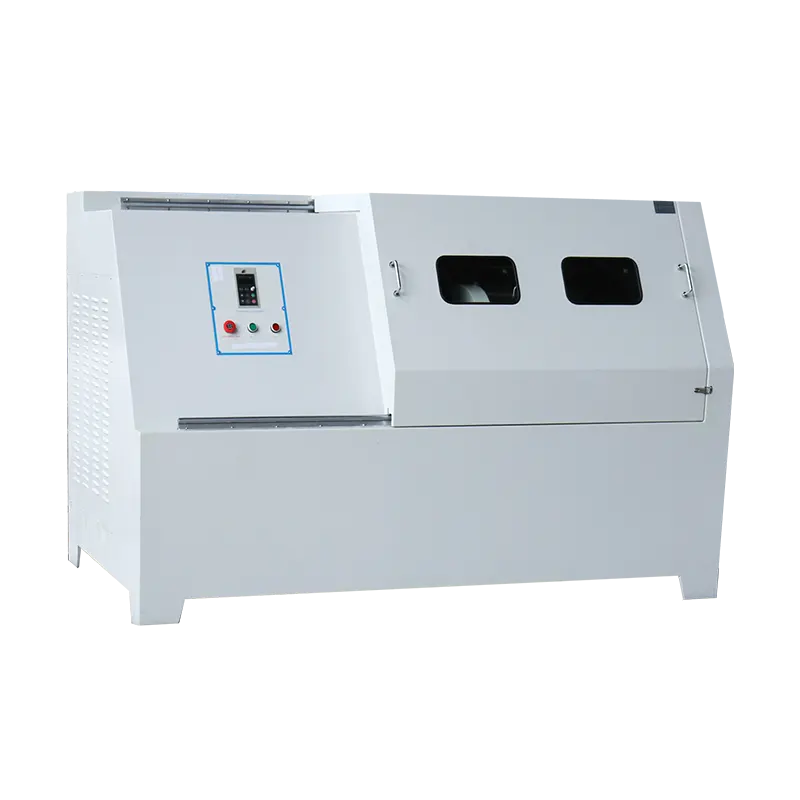
Practical Tips for Operating a Heavy Duty Horizontal Ball Mill
To get the best results from your grinding experiments, keep these points in mind:
- Ball-to-powder ratio: A typical starting point is 5:1 to 10:1 by weight. For mechanical alloying, ratios up to 20:1 may be used. The exact ratio depends on material density and target fineness.
- Media filling ratio: Fill the jar with grinding balls to about one-third of its volume, then add powder. Overloading reduces milling efficiency and may cause overheating.
- Dry vs. wet grinding: If you encounter severe agglomeration or particle sticking, consider adding a small amount of process control agent (e.g., stearic acid, ethanol) or switching to wet mode.
- Temperature control: Extended milling will raise the temperature inside the jar. For heat-sensitive samples, use a programmed pause cycle or consider a cryogenic attachment.
- Cleaning between runs: Always clean the jar and grinding balls thoroughly after each material to avoid cross-contamination. Washing with the same solvent used in wet grinding helps.
Why Choose a Heavy Duty Horizontal Ball Mill from TENCAN?
At TENCAN (Changsha Tencan Powder Technology Co., Ltd.), we design and manufacture a comprehensive range of planetary ball mills, including the heavy duty horizontal ball mill. Our machines are built with reinforced frames, precision-machined drive components, and advanced control systems to ensure reliable operation day after day. Whether you need a standard configuration or a customized solution with special jar materials, vacuum sealing, or enhanced safety features, our engineering team can provide the right equipment for your specific powder processing requirements.
If you are considering a heavy duty horizontal mill for your laboratory or pilot plant, think about the materials you will process, the batch sizes you expect, and any environmental constraints (inert gas, vacuum, temperature). Sharing this information with our technical staff will help us recommend the most suitable model and accessories. We are committed to supporting your research and production with high-quality grinding solutions that deliver consistent, repeatable results.