
Portable Mini Magnetic Blender: A Compact Stirring Solution for Lab and Field
When Every Drop Counts: The Need for a Portable Mini Magnetic Blender
In many laboratory and field settings, you often face the challenge of mixing small volumes of liquids — whether it’s preparing a chemical solution, homogenizing a biological sample, or stirring a reaction mixture on-site. Traditional magnetic stirrers, with their bulkier frames and fixed power cords, are rarely designed for mobility. That is where a portable mini magnetic blender comes in. It delivers the same reliable stirring action you expect from a full-sized lab stirrer, but in a compact, battery-friendly package that can easily fit into a backpack or glove compartment.
This article explains how a mini magnetic stirrer works, where it can be used, and what factors you should consider before selecting one. Whether you are a researcher in a university lab, a quality control technician in a pharmaceutical plant, or an environmental scientist working in the field, understanding the capabilities and limits of this small device will help you make an informed choice.
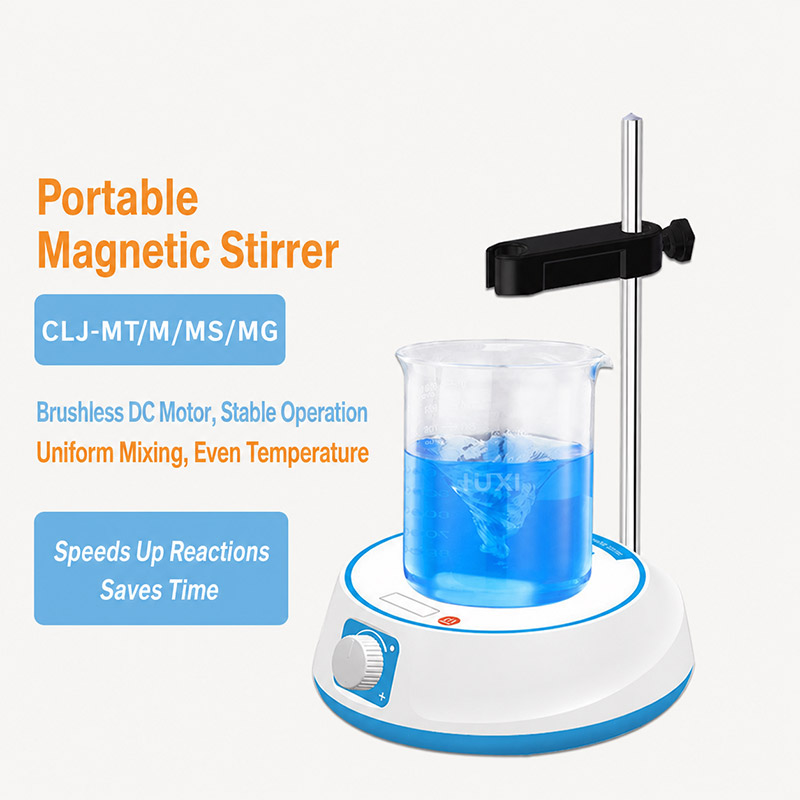
How Does a Portable Mini Magnetic Blender Work?
A magnetic blender, often called a magnetic stirrer, uses a rotating magnetic field to spin a small magnetic stir bar placed inside the liquid container. The stir bar, typically coated with PTFE or glass, follows the rotation of the drive magnet located beneath the platform. The result is a gentle but effective mixing action that avoids direct contact with the sample.
In a portable mini magnetic blender, the drive mechanism is miniaturized. The device usually contains a small DC motor powered by rechargeable batteries (commonly lithium-ion) or via USB. The speed control can be a simple knob or digital buttons that allow you to adjust the rotation from a few hundred RPM up to a typical maximum in the range of 1500–2500 RPM, depending on the model and load. Many units also include a small LED indicator to show the current speed level.
Because the magnetic coupling is contactless, there is no mechanical seal or shaft penetrating the container, which makes the system inherently clean and easy to sterilize. The stir bar is the only part that touches the liquid, and it can be easily removed and cleaned or replaced.
Key Applications in Research and Industry
The portability and small footprint of a mini magnetic stirrer make it suitable for a wide range of tasks. Below are some of the most common scenarios:
Laboratory Sample Preparation
In analytical chemistry and biology labs, small volume mixing (typically 50 mL to 500 mL) is routine. A portable unit can sit on a crowded bench top or be moved between fume hoods without hassle. It is ideal for preparing buffers, dissolving solids, or mixing reagents in vials and beakers.
Field and On-Site Testing
Environmental monitoring, water quality testing, and geological sample analysis often require immediate mixing at the collection site. A battery-operated portable magnetic blender allows you to stir samples on the spot without needing a power outlet. This saves time and reduces the risk of sample degradation during transport.
Educational Demonstrations
In teaching labs, instructors often need to demonstrate mixing principles or conduct quick experiments. A compact, cordless stirrer eliminates tangled cables and can be passed around the classroom. Students can observe the vortex formation and the behavior of different liquids under controlled stirring.
Pharmaceutical and Cosmetic Formulation
Small-batch mixing of creams, ointments, or liquid suspensions in R&D departments can be efficiently handled by a mini magnetic blender. Its clean operation minimizes cross-contamination between different formulations.
What to Consider When Choosing a Mini Magnetic Stirrer
Not all portable mini magnetic blenders are the same. To select the one that best fits your work, consider the following aspects:
Volume Capacity and Vessel Compatibility
Determine the maximum sample volume you need to stir. Most mini stirrers comfortably handle 50–500 mL of liquid. Check the platform size to ensure it can accommodate your beakers or flasks. Some models have a slightly concave top to help center the vessel.
Speed Range and Control
Look for a speed range that matches your application. Gentle mixing for dissolving solids may require only 200–500 RPM, while vigorous stirring for emulsion preparation might need 1500 RPM or more. A smooth, stepless speed adjustment gives you finer control.
Battery Life and Charging
If you plan to use the stirrer away from a power source, battery capacity matters. Typical lithium-ion batteries can provide several hours of continuous operation on a full charge. USB-C charging is convenient as it can be done from a laptop, power bank, or wall adapter.
Stir Bar Selection
The size and shape of the stir bar affect mixing efficiency. For small volumes (<100 mL), a mini stir bar (e.g., 10–15 mm long) is appropriate. For larger volumes, a longer bar provides better coupling. Most portable mini magnetic blenders come with at least one stir bar included, but you can purchase bars of different lengths separately.
Temperature and Corrosion Resistance
Standard portable blenders are not designed for heating — if you need combined stirring and heating, you would need a hotplate stirrer. However, for room-temperature mixing, the plastic or metal housing should be resistant to common lab spills. Some models feature a protective membrane that makes cleaning easier.
Why Choose TENCAN’s Portable Mini Magnetic Blender?
At TENCAN, we understand that reliability and precision are non-negotiable in laboratory work. Our Portable Mini Magnetic Blender is engineered with a high-torque motor that maintains stable speed even under varying load conditions. The compact enclosure is made from impact-resistant materials, and the magnetic drive is optimized to minimize heat generation during extended use.
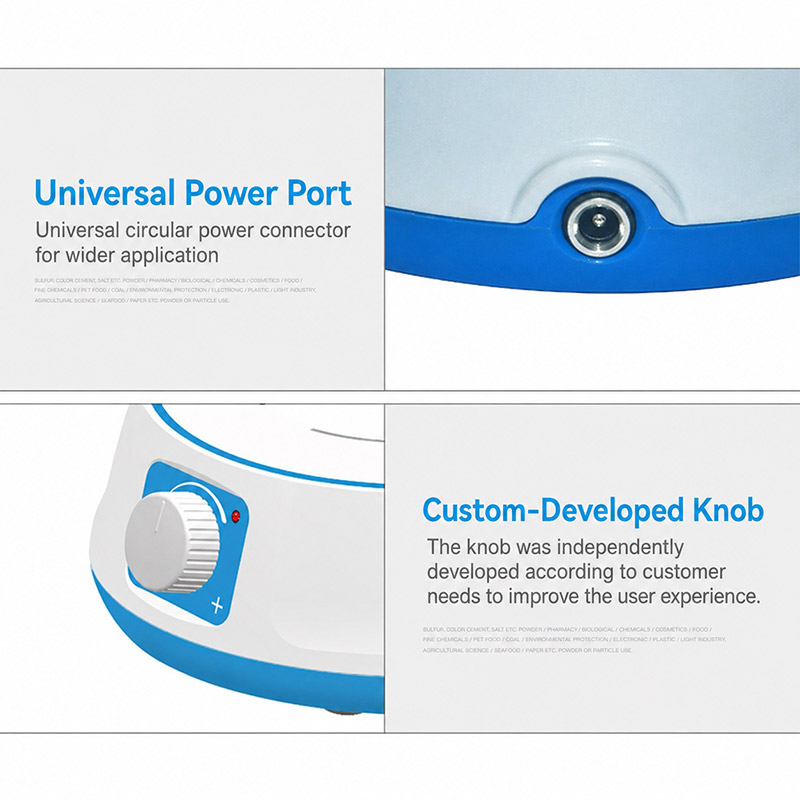
The device features a simple one-button speed adjustment and an intuitive LED display that shows the current RPM. It comes with a rechargeable battery that supports up to 6 hours of continuous stirring on a single charge, depending on the speed setting. The package includes a USB charging cable and a set of two PTFE-coated stir bars (10 mm and 15 mm).
For laboratories that require multi-sample parallel processing, TENCAN also offers a Multi Station Magnetic Stirrer, which can stir up to four vessels simultaneously under the same or independent speed settings.
Practical Tips for Best Results
To get the most out of your portable mini magnetic blender, keep these points in mind:
- Match the stir bar size to the vessel. A bar that is too short may not create enough vortex; a bar that is too long may hit the walls or not spin freely.
- Place the vessel in the center of the platform. Off-center placement can cause the stir bar to decouple or create uneven mixing.
- For viscous liquids, start at a lower speed and gradually increase to avoid splashing or overwhelming the motor.
- Keep the device away from strong magnetic fields that could interfere with the internal drive magnet.
- Clean the platform after each use to prevent residue buildup that may affect stirring performance.
The performance of any magnetic stirrer depends on the properties of the liquid (viscosity, volume, container shape) and the stirring speed. It is always advisable to run a preliminary test to determine the optimal conditions for your specific application.
Limitations to Keep in Mind
While a portable mini magnetic blender is an excellent tool for many tasks, it is not a universal solution. It cannot replace high-shear mixers for emulsifying thick pastes, nor can it handle volumes above approximately 1 L effectively due to limited magnetic coupling strength. Additionally, it does not provide heating; if your protocol requires simultaneous heating and stirring, consider a hotplate stirrer instead. For samples that are extremely sensitive to oxygen or moisture, a traditional sealed system may be more appropriate.
Understanding these boundaries will help you decide when to use the mini blender and when a different piece of equipment is required.
If you are unsure whether a portable mini magnetic blender is the right choice for your workflow, our technical team can provide guidance based on your sample type, volume, and mixing requirements. Feel free to share your application details with us for a tailored recommendation.