

Product features
Combined process arrangement
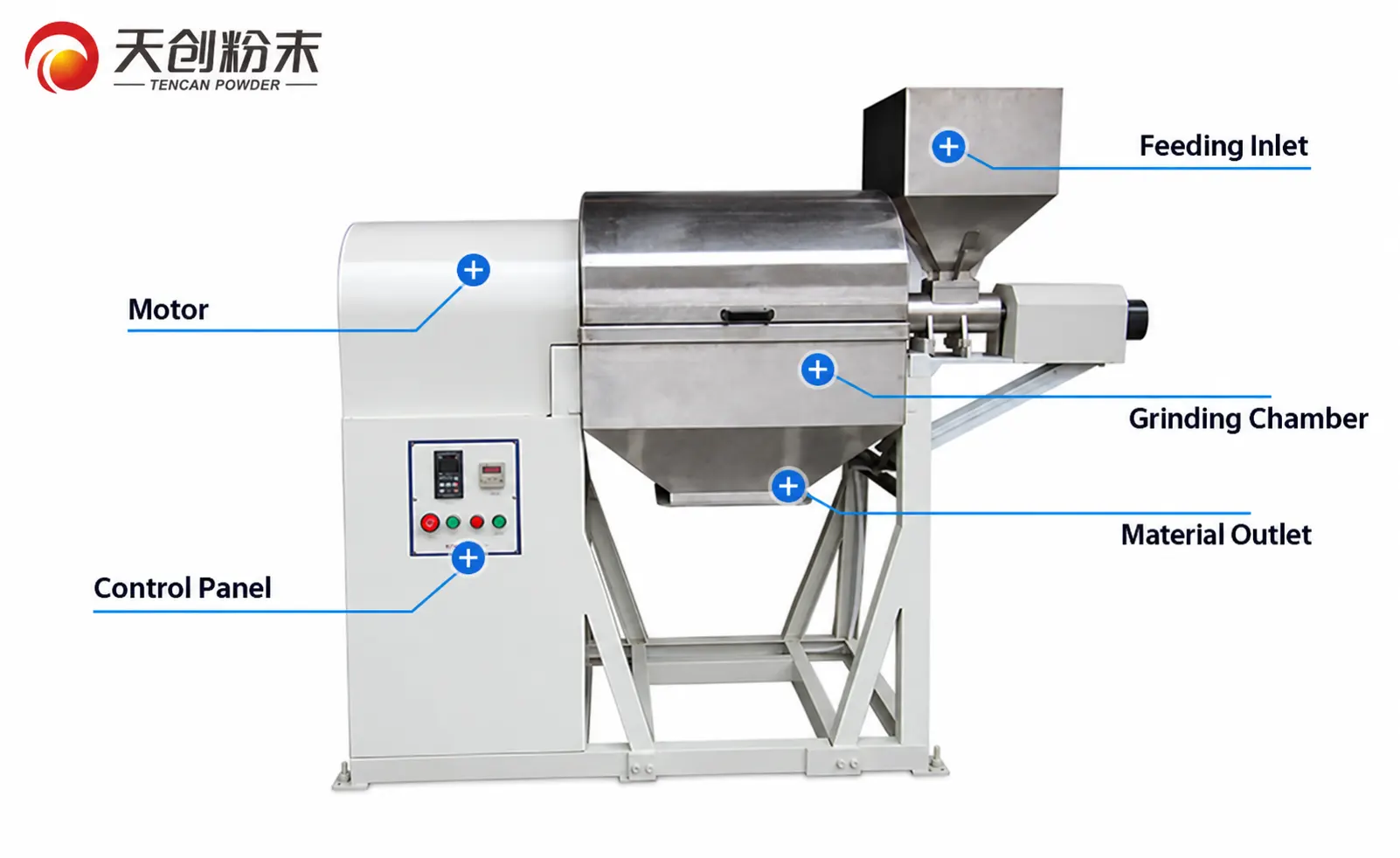
The system brings grinding, screening, feeding and collection into a coordinated material-processing arrangement.
Tumbling-media action
The rotating drum moves the grinding media through the material to reduce suitable particles by impact and abrasion.
Screen-defined passage
Material passing the selected screen can be collected while oversize remains in the grinding circuit.
Model choices
Different MS models list distinct working charges, drive ratings and drum dimensions for matching the process.
Applications
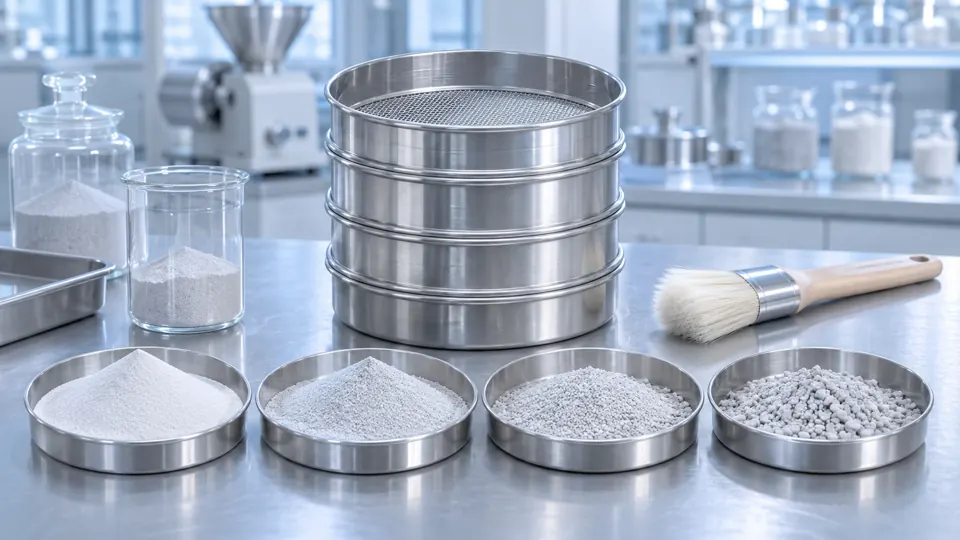
Powders with residue limits
Evaluate screen selection and passage capacity against the required coarse-residue limit for a representative material.
Mineral and new-material trials
Assess whether combined grinding and screening can meet collection requirements for suitable non-metallic minerals or new materials.
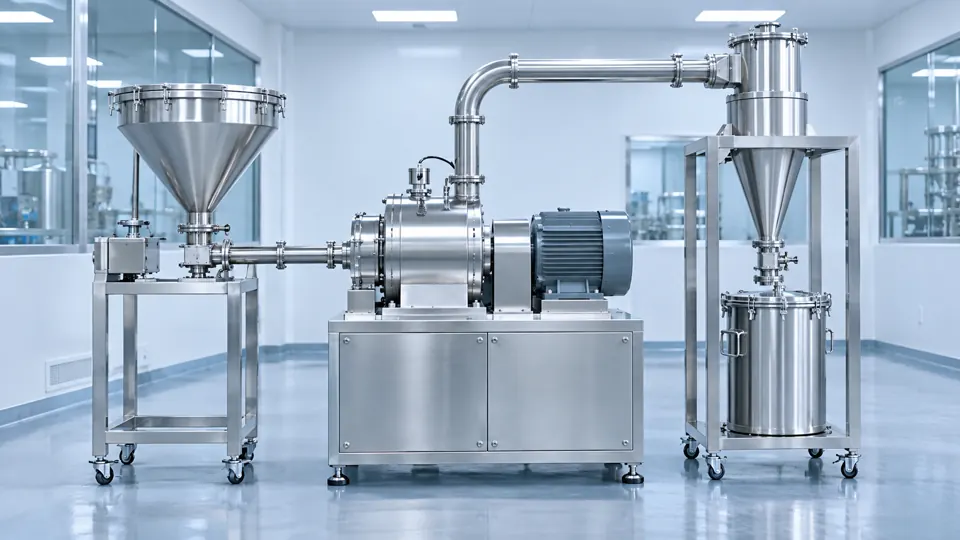
Linked feeding and collection
Where continuous feed and collection are required, match feed rate, screen loading and the product-collection arrangement.
Evaluating results
Product distribution
Measure the collected powder distribution instead of treating the nominal screen aperture as a complete product specification.
Feed-discharge balance
Record feed, collected material and retained charge to assess stable operation at the chosen conditions.
Screen performance
Inspect blockage, wear and oversize accumulation during a representative trial to determine practical processing limits.
These are evaluation points for a sample trial, not measured results for a specific sample. Confirm performance under your actual operating conditions.
How it works

Supply the grinding drum
Introduce suitable feed with the approved media and working charge for the selected MS model.
Grind and classify
Tumbling media act on the material while the screen separates particles able to pass its openings.
Collect and monitor
Recover the screened product and track retained material to evaluate whether the process remains balanced.
Construction and configuration
Grinding drum
Drum dimensions and drive power vary by model and must be matched to the material and working charge.
Screen assembly
Select an aperture and contact material compatible with the powder, then plan access for inspection and cleaning.
Collection height
Confirm discharge clearance and collection equipment; some larger-model dimensions remain unspecified in the source table.
More product images



Technical specifications
Compare the listed specifications and configurations. Scroll horizontally to view the complete table.
Specification table 1
| Model | Variable-frequency speed (r/min), ±3 | Motor (kw) | Motor poles | Voltage | Material charge (L) | Discharge height above floor | Machine weight | Vessel dimensions | Reference dimensions (mm) |
|---|---|---|---|---|---|---|---|---|---|
| MS-30 | 10-72 | 1.5 | 4 | Single phase 220V | 10 | 480mm | approx. 290kg | Φ320x420x5mm | 1690x650x1360 |
| MS-60 | 10-68 | 2.2 | Three phase 380V | 20 | 580mm |
|
Φ382x580x6mm | 1856x700x1500 | |
| MS-100 | 10-58 | 3 | Three phase 380V | 33 | 530mm | approx. 445kg | Φ455x610x8mm | 1910x700x1500 | |
| MS-200 | 10-58 | 5.5 | 380V | 66 | ~ | ~ | ~ | approx. 2200x820x1600 |
Confirm the selected model, power supply, contact materials and operating conditions before ordering. Performance depends on the material and process.