
Screening Ball Mill: Selection and Operation
Particle size reduction is rarely the end of a laboratory sample preparation step. Once a material has been milled, the next questions are usually about top size, particle-size distribution, fines, and how to collect a representative fraction without adding handling steps. A conventional ball mill reduces material, but it does not automatically solve the separation problem. A Screening Ball Mill is relevant when grinding and screening need to be considered as one laboratory workflow rather than two disconnected operations.
The practical challenge is not simply choosing a mill with a screen. It is matching drum action, grinding media, feed conditions, screen aperture, and discharge practice to the material being processed. A setup that works well for a brittle mineral sample may blind quickly with a sticky powder or produce too many fines with a tough polymer. This article explains the operating logic behind a laboratory screening ball mill, the variables that most often determine success, and the checks that help engineers and lab managers select and run the equipment with fewer surprises.
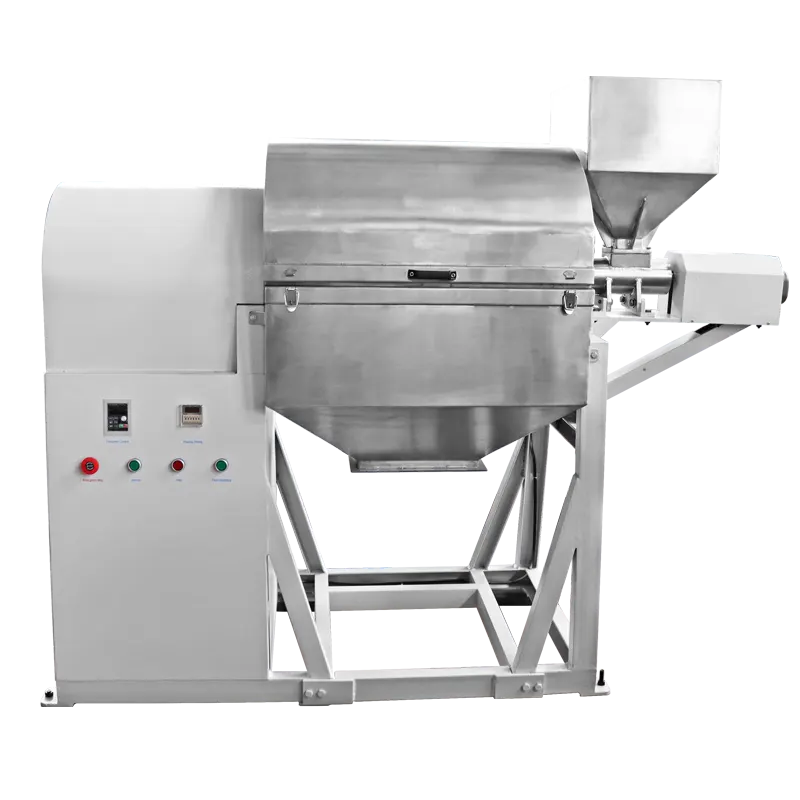
What a Screening Ball Mill Does in a Laboratory Workflow
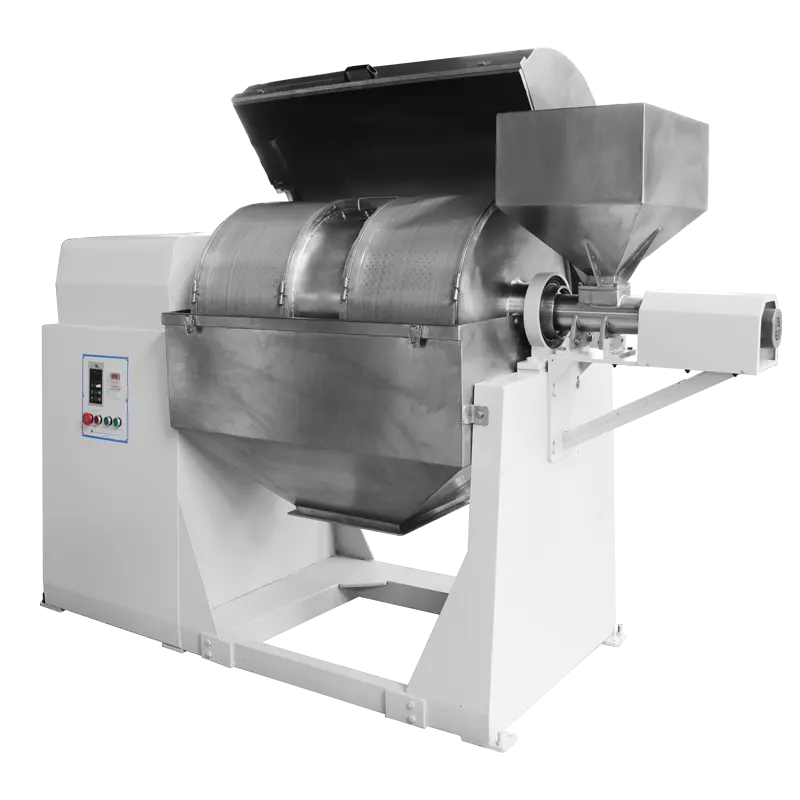
The Screening Ball Mill is a drum-type laboratory mill that combines a rotating grinding drum with a screening function. The grinding action reduces the sample through contact between moving media and the material. The screening element then helps control or separate the product according to aperture size. In a laboratory, that combination can reduce the number of transfer steps between milling and classification, which is useful when the sample is small, when contamination control matters, or when the operator needs a repeatable procedure rather than a collection of separate devices.
It is important to separate the two functions when evaluating performance. The mill produces the size reduction. The screen classifies or controls what passes forward. Neither function can fully compensate for poor choices in the other. If the mill is producing agglomerates, a fine screen may blind instead of classifying cleanly. If the screen aperture is too coarse relative to the target, the product may meet a throughput goal but fail the particle-size requirement. The useful question is therefore not whether a screening ball mill has a screen, but whether the milling action and the screening arrangement are appropriate for the material and the target specification.
A screening ball mill fits best where the laboratory needs a controlled batch process, a defined top size, or a convenient way to examine the relationship between milling time and screened yield. It may be considered for brittle minerals, ceramics, catalysts, soils, pigments, and other materials that can be reduced by ball milling. The exact suitability depends on hardness, toughness, moisture, chemical compatibility, and the required particle-size distribution. For materials that deform rather than fracture, or for slurries that would clog the screen, a different approach may be more practical.
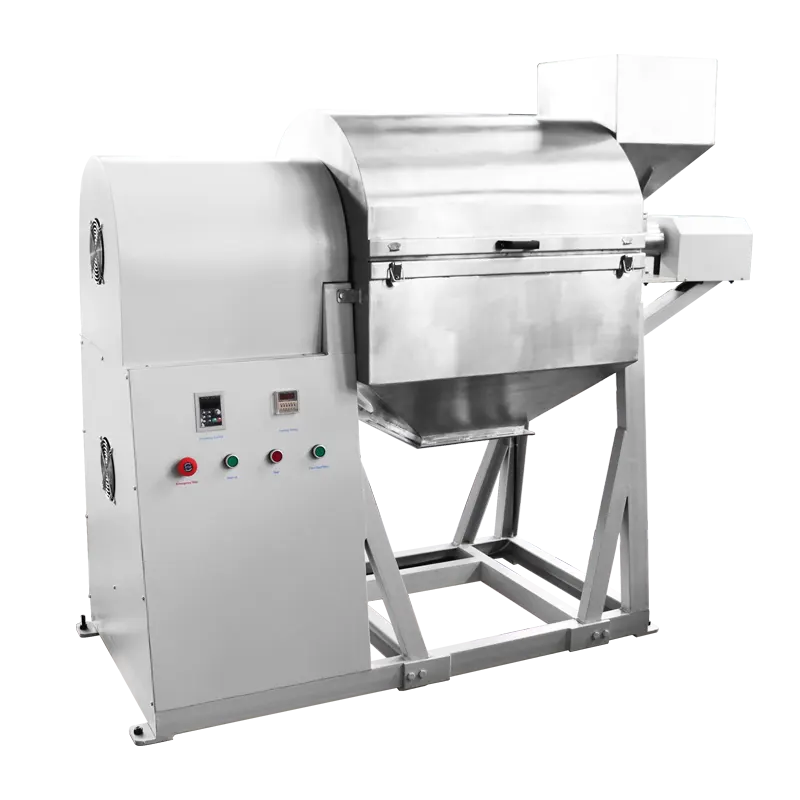
The equipment should also be judged by how well it supports a controlled procedure. A laboratory mill is not only a motor and a drum. It is a system that includes the grinding chamber, media, liners or jar material where applicable, screen access, discharge arrangement, cleaning method, and safety enclosure. Each part influences whether the result can be repeated. Before treating a screening ball mill as a drop-in replacement for an existing mill, confirm the available configuration and operating details on the product page, then test the actual material under realistic conditions.
- Primary milling goal: reduce feed particles to a target size range.
- Primary screening goal: control top size, separate fractions, or limit what leaves the milling zone.
- Workflow benefit: fewer transfers, less sample loss, and a more compact procedure.
- Workflow limitation: sticky, wet, or highly agglomerated materials may require drying, preconditioning, or a different classification method.
Grinding Action and Screening Behavior: Two Linked Mechanisms
The grinding part of the process follows the same broad principles as other drum ball mills. Media inside the rotating drum are lifted and then fall, roll, and slide against the material and each other. Size reduction comes from impact, attrition, and abrasion. Coarse particles are usually broken first by higher-energy impacts. As the sample becomes finer, attrition and surface abrasion become more important. The balance among these mechanisms changes with drum speed, media size, media density, fill level, and the amount of material in the chamber.
Impact, Attrition, and Abrasion Inside the Drum
Large, dense media tend to deliver stronger impacts and are often useful for breaking coarse feed. Smaller media provide more contact points and can be more effective for fine grinding, but they may not have enough energy to break hard coarse particles efficiently. A media charge that is too small may leave the sample under-worked. An excessive charge can consume power, generate heat, and increase wear without improving the target fraction. The right balance is material-specific and should be established by a controlled trial rather than assumed from a single number.
Attrition becomes especially important when the target is a fine powder or when the material is sensitive to fracture. In that regime, long milling times may narrow the coarse end but can also increase the fines fraction. For a screening ball mill, this matters because the screen sees the result of both breakage and agglomeration. A product that looks well milled in a grab sample may still contain clusters that behave as oversize on the screen. Operators should examine both the milled material and the screened fractions, not just the final collected powder.
Why Screen Performance Changes as Milling Proceeds
Screen behavior is dynamic. At the start of a run, the feed may contain particles that are clearly too large for the aperture. As milling proceeds, the proportion of near-aperture particles increases. These particles are the most likely to cause near-miss blinding because they can lodge in openings without passing cleanly. Fines can also coat the screen, media, and drum surfaces. Moisture makes this worse by promoting adhesion and agglomeration. Static charge can have a similar effect with dry organic powders. The result is a screen that appears mechanically intact but no longer classifies as expected.
Media wear is another factor. Abraded media and liner material become part of the sample, and worn media can change the grinding energy over time. In a laboratory setting, small changes in media condition can matter because the sample mass is often small. A repeatable procedure should therefore include a check on media condition, screen condition, and cleaning status. If a run suddenly produces more oversize or a slower screened yield, the cause may be a worn or partially blinded screen rather than a change in the material.
What Screening Can and Cannot Do
Screening can control top size, create fractions for analysis, and prevent coarse particles from leaving the milling circuit. It cannot turn a poorly milled product into a narrow distribution if the mill is producing agglomerates, and it cannot reliably separate a wet or sticky paste without appropriate preparation. It also cannot replace representative sampling. A screen may pass a fraction that is not representative of the whole batch if the material has segregated or if the discharge is incomplete. The practical objective is a controlled, documented flow of material through the mill and screen, with a sample that can be traced back to a known procedure.
Material and Feed Conditions That Shape Results
Material properties determine whether a screening ball mill is efficient, merely workable, or unsuitable. The same equipment can behave very differently with a brittle glass frit, a soft clay, a hard carbide powder, or a fibrous plant material. A useful selection process starts with the material, not with the mill speed or screen aperture alone.
Hardness, Toughness, and Feed Size
Hardness affects the energy needed for fracture. Hard minerals usually require more milling energy, more robust media, and a careful check on contamination. Toughness is equally important. A material that absorbs impact by deformation may be difficult to break with short, high-energy impacts and may require longer attrition or a different mill type. Feed size sets the starting point. A feed with very large particles may need pre-crushing before it enters a laboratory ball mill, especially if the drum and media are sized for finer work. A feed that is already fine may reach the target quickly but can also generate excessive fines if milling continues without a clear endpoint.
The target particle-size distribution should be defined before the first run. A single target, such as a maximum particle size, is not the same as a full distribution requirement. If the application needs a narrow distribution, the screening step becomes more important, and the milling time must be controlled more tightly. If the application only needs breakage of a few coarse particles, a shorter run with a coarser screen may be sufficient. Clarifying this early prevents the common mistake of over-milling a sample to meet a top-size limit.
Moisture, Stickiness, and Electrostatic Effects
Moisture is one of the most common reasons a screen underperforms. Water films promote adhesion between particles and between particles and the screen. In a ball mill, moisture can also cause material to coat the media, reducing grinding efficiency and making cleaning more difficult. If the feed is damp, drying before milling may be necessary. If the material is hygroscopic, the entire procedure may need to be conducted under controlled humidity or with a sealed configuration where available. These are process decisions, not merely equipment accessories.
Sticky and electrostatic materials require a similar level of caution. A dry organic powder may flow well in a static-free condition but cling to the screen after a few minutes of tumbling. The symptom can look like a screen problem when the real issue is charge accumulation or particle shape. Antistatic measures, appropriate grounding, controlled humidity, and a cleaning routine should be considered. For materials that tend to agglomerate, a short trial comparing screened yield at several milling times will show whether the screen is classifying individual particles or merely breaking loose clusters.
Contamination Control and Material Compatibility
Contamination is a major concern in laboratory milling because the sample may be small and the analysis may be sensitive to trace elements. Media and chamber materials should be compatible with the feed and with the analytical method. A hard material may wear the media faster, while an abrasive feed may scratch a liner or jar. The resulting contamination can affect chemical assays, color, magnetic properties, or sintering behavior. Where contamination is critical, the grinding configuration should be selected with the same care as the mill itself.
The screening ball mill product page should be used to confirm available construction details, media options, and any application notes. If a required material or size is not clearly listed, the safe approach is to ask for confirmation rather than assume it is available. This is especially important for corrosive materials, reactive powders, and samples that must remain free of cross-contamination between runs.
Setting Up a Screening Ball Mill for Repeatable Runs
A repeatable run is built from defined variables. Operators should record the material, feed mass, feed size, moisture condition, media type and size, media charge, drum speed, milling time, screen aperture, cleaning method, and recovery. Without this record, it is difficult to tell whether a change in result came from the material, the equipment, or the procedure. The following setup factors are the ones most likely to influence both milling and screening performance.
Define the Target Size and Distribution First
Start with the specification, not the machine setting. If the target is a maximum particle size, the screen aperture and milling time should be chosen to keep oversize below the limit. If the target is a median size or a distribution width, a single screen may not be enough to characterize the product. In that case, the screened fractions can be used for analysis, but the final result should still be reported with the relevant distribution data. For method development, run a time series and measure the product at each interval. This shows how quickly the coarse fraction disappears and when fines begin to accumulate.
Select Media Size, Density, and Fill Level
Media selection controls the energy and the number of contact points. Coarser media are generally better for breaking larger feed particles, while finer media are more suitable for finer grinding and attrition. Density affects impact energy, but a denser medium is not automatically better if it increases wear or contamination. Fill level affects the movement of the charge. Too little media may leave dead zones and reduce grinding efficiency. Too much media can restrict movement, raise power demand, and increase heat. The correct charge should be established through small-scale trials that compare screened yield, particle size, and contamination.
Set Drum Speed and Milling Time
Drum speed changes the motion of the media. At low speed, the charge may slide or roll with limited impact energy. At higher speed, media are lifted and cataracting action becomes more significant. Above the appropriate operating range for the drum and charge, the media may centrifuge against the wall and do less useful work. The optimum depends on drum diameter, media size, and material. Milling time then determines how far the size reduction proceeds. Longer is not always better. Once the target top size is reached, additional milling may only increase fines, heat, and wear. A stepped time study is usually more informative than a single long run.
Manage Screen Aperture, Discharge, and Cleaning
The screen aperture should be selected against the target top size, not against the coarsest particle in the feed. A screen that is too fine may blind or slow the run; a screen that is too coarse may pass material that still requires milling. Discharge practice matters as well. If screened material accumulates and restricts flow, the mill may behave differently from one run to the next. Cleaning should remove lodged particles without damaging the screen. Inspect the screen before and after each run, and replace or repair it when wear, deformation, or persistent blinding is evident.
| Setup variable | What it mainly affects | Practical check |
|---|---|---|
| Media size and density | Impact energy, fine grinding, wear | Compare screened yield and contamination after a short trial |
| Media fill | Charge motion, power draw, dead zones | Look for consistent tumbling and avoid overloading |
| Drum speed | Media trajectory and energy transfer | Confirm the charge is moving, not simply centrifuging |
| Milling time | Top size, fines, heat | Use a time series and stop at the target, not at a fixed habit |
| Screen aperture | Top-size control and flow | Inspect for blinding and check the screened fraction |
These variables interact. Changing media size without adjusting time can shift the distribution in an unexpected direction. Changing the screen without checking the milled product can hide an underlying milling problem. A well-documented trial should change one major factor at a time, then confirm the result with a second run. This is more reliable than making several adjustments at once and attributing the outcome to the wrong cause.
Troubleshooting Common Screening Ball Mill Problems
Most operating problems in a screening ball mill show up as one of five symptoms: slow size reduction, too much oversize, excessive fines, screen blinding, or inconsistent results. Each symptom has several possible causes, and the fastest way to solve it is to separate milling causes from screening causes.
Slow Milling or Persistent Oversize
If the coarse fraction remains high after a reasonable milling time, check the feed size first. A feed that is too coarse for the media charge will mill slowly regardless of time. Next, review media size and fill. Media that are too small or too light may not break hard particles efficiently. A charge that is too low may leave dead zones. Drum speed may also be outside the useful range for the charge. Finally, confirm that the screen is not retaining material that has already reached target size. A partially blinded screen can make the mill look slower than it is.
Excessive Fines or a Distribution That Is Too Wide
Excessive fines usually point to over-milling, media that are too small for the target, or a milling time that is longer than necessary. If the specification allows a top size but not a high fines content, the process may need a shorter run, a different media size, or a classification step that removes fines earlier. A wide distribution can also result from agglomeration followed by de-agglomeration. In that case, the apparent fines may be fragments of clusters rather than primary particles. Dispersion or a different sampling method may be needed before particle-size analysis.
Screen Blinding and Poor Flow
Blinding is often caused by near-aperture particles, moisture, static charge, or screen wear. Dry the feed if moisture is suspected. Reduce the load if the screen is being flooded with too much material at once. Check that the screen is tensioned and undamaged. For sticky powders, a cleaning interval may need to be built into the procedure. For electrostatic materials, humidity control or antistatic measures may help. If blinding persists across several materials, the screen aperture or screen design may be unsuitable for the application and should be reviewed with the equipment supplier.
Contamination, Wear, and Heat
Contamination usually comes from media, chamber surfaces, or the screen. It tends to increase with long milling times, abrasive feed, and aggressive media. If contamination is detected, compare a blank run with a sample run and inspect the media for chips or surface loss. Heat is a related symptom. Long runs with a high media charge can raise the sample temperature, which may alter the material or promote agglomeration. If temperature sensitivity is a concern, use shorter runs, a lower charge, or a configuration designed for temperature control where available. Do not assume that a laboratory mill is inherently cool simply because the sample mass is small.
Results That Change from Run to Run
Poor repeatability often comes from undocumented changes: different media condition, inconsistent feed moisture, a partially cleaned screen, or a different discharge practice. Standardize the procedure and record the variables. Weigh the feed and product. Check the screen before each run. Replace damaged media. If the material is sensitive to storage, control the time and conditions between preparation and milling. A screening ball mill can be highly repeatable when the inputs and setup are controlled, but it will not correct for an uncontrolled sample history.
Selection and Scale-Up Checks Before Buying
Selecting a laboratory screening ball mill should begin with a small set of practical questions. What sample mass is required? Is the process batch or continuous? What is the feed size and target distribution? Is the material dry, moist, abrasive, corrosive, or heat-sensitive? What screen aperture is needed, and how often can the screen be cleaned or replaced? What cleaning method is acceptable between samples? These questions define the equipment more reliably than a general preference for a larger or more powerful mill.
Scale-up from a laboratory run to a larger process should be treated cautiously. A lab mill establishes feasibility and sensitivity to variables, but it does not automatically provide a direct ratio for production throughput. Media size, drum diameter, speed, screen area, and discharge behavior can change relative to the sample. If the laboratory result is intended to support scale-up, record the energy input, milling time, media charge, and particle-size distribution with enough detail to support a later comparison. The goal is a defensible process basis, not a single successful batch.
Before purchase, confirm the actual configuration, available media and chamber materials, screen options, cleaning access, and safety features. The laboratory screening ball mill page provides the starting product information. A supplier discussion should then focus on the material, target size, sample mass, and any special handling requirements. If a performance claim is not supported by the supplied documentation or by a trial, treat it as an item to verify rather than a selection fact.
- Material: hardness, toughness, moisture, abrasiveness, and chemical sensitivity.
- Product: target top size, distribution width, fines limit, and representative sample mass.
- Process: batch size, milling time, screen aperture, cleaning interval, and recovery method.
- Equipment: media options, chamber material, screen access, sealing, and safety enclosure.
- Verification: trial results, repeatability, and a documented method for particle-size checks.
The most useful technical reminder is that a screening ball mill is a system, not a single setting. The mill creates the particle-size change, and the screen controls what is accepted or separated. Reliable results come from matching the two functions to the material and then controlling the variables that affect both. Start with a representative sample, run a small time series, inspect the screen and media, and record enough data to repeat the result. That approach gives laboratory researchers and process engineers a clearer basis for selection than a catalog specification alone, while keeping expectations tied to material behavior and tested conditions.