
What is a Jar Mill with 8 Working Station? A High-Capacity Roller Ball Mill for Multi-Sample Laboratory Grinding
What is a Jar Mill with 8 Working Station?
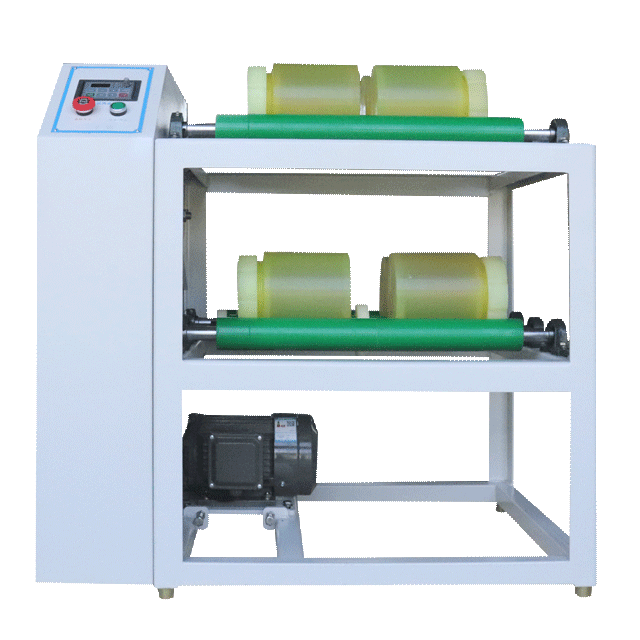
At its core, a jar mill with 8 working stations is a specialized roller ball mill designed for laboratory-scale, simultaneous grinding of multiple samples. It uses a set of parallel rotating rollers to drive up to eight sealed grinding jars, creating a gentle yet effective tumbling action that breaks down materials into fine powders. Researchers and quality control labs use this equipment to achieve consistent particle size reduction, mixing, and homogenization across multiple batches without cross-contamination.
Core Function and Working Principle
The jar mill with 8 working stations transforms coarse, granular, or lumpy materials into fine powders through a simple rolling mechanism. The unit’s rollers rotate at a controlled speed, causing the jars placed on them to spin. Inside each jar, grinding media (such as ceramic balls or stainless steel balls) tumble and impact the material, generating shear and compressive forces that lead to particle size reduction.
Unlike planetary ball mills that use high-speed planetary motion, the jar mill relies on the rolling action of the jar itself. This results in a lower energy input but produces a more uniform and gentle grinding action – ideal for soft to medium-hard materials. The process can be performed in dry or wet mode by adding a liquid medium. Key parameters include roller speed (typically 50–300 rpm), grinding time, ball-to-material ratio, and jar fill volume. By optimizing these variables, users can achieve final particle sizes from tens of microns down to the sub‑micron range.
The 8‑station configuration dramatically increases throughput compared to single‑jar mills, allowing operators to process up to eight independent samples simultaneously under identical conditions – a major advantage for comparative studies or small‑batch production.
Product Types and Variants
While the 8‑station jar mill is a specific model, the jar mill family includes several variants to suit different laboratory needs:
By Number of Stations
- Two‑station jar mill: Ideal for low‑volume, basic grinding tasks. Compact footprint for benchtop use.
- Four‑station jar mill: A balance between capacity and space, suitable for moderate sample throughput.
- Eight‑station jar mill: Offers maximum parallel processing for high‑demand labs. Each station can accommodate jars of various sizes (typically 0.5L to 5L).
By Jar Material and Lining
Jars are available in stainless steel, alumina ceramic, zirconia, nylon, PTFE, and more. Inner‑lined roll ball mills add a protective layer (e.g., polyurethane or rubber) to prevent metal contamination and reduce wear.
Key Performance Indicators and Selection Criteria
When choosing a jar mill with 8 working stations, consider the following factors:
- Capacity: The total jar volume per station (e.g., 0.5L to 5L). Select based on sample size and desired batch output.
- Speed Control: Look for variable speed with digital display. Wider speed range (e.g., 0–400 rpm) offers more flexibility for different materials.
- Grinding Precision: The ability to achieve consistent particle size distribution depends on roller surface, speed stability, and jar sealing. High‑precision models use ceramic rollers or rubber‑coated rollers for smooth operation.
- Programmability: Advanced models feature programmable timing, forward/reverse cycles, and automatic stop – essential for reproducible processes.
- Noise and Safety: A good jar mill operates below 60 dB. Look for safety switches, emergency stop, and stable construction to prevent jar slippage.
- Maintenance: Easy access to rollers and a simple cleaning process. Some mills allow quick‑release roller bars for fast jar swapping.
Applications and Selection Recommendations
Jar mills with 8 working stations are widely used in:
- Materials research: Preparing ceramic powders, metal powders, and composite materials.
- Geology & mining: Grinding ore samples for XRF/XRD analysis.
- Pharmaceuticals & chemicals: Mixing active ingredients and excipients.
- Environmental testing: Homogenizing soil or sediment samples.
For users who primarily process small numbers of samples (<4), a two‑station jar mill may be more cost‑effective. Labs requiring high throughput or comparative batch tests should opt for the 8‑station model. If contamination is a concern, choose jars with appropriate liners (e.g., alumina or zirconia).
References
- Product page: Jar mill with 8 working station
- Related product: Four station jar mill
- Related product: Two working station jar mill