
What is a Jar Mill with 8 Working Stations? A Multi-Sample Grinding Instrument for Laboratory Powder Processing
What is a Jar Mill with 8 Working Stations?
At its core, a jar mill with 8 working stations is a specialized roller ball mill designed for laboratory-scale powder grinding, mixing, and homogenization. It enables researchers and quality control technicians to process up to eight different samples simultaneously under identical or independently controlled conditions. This multi-station configuration dramatically increases throughput for batch processing, making it an indispensable tool in materials research, pharmaceutical development, and industrial quality testing.
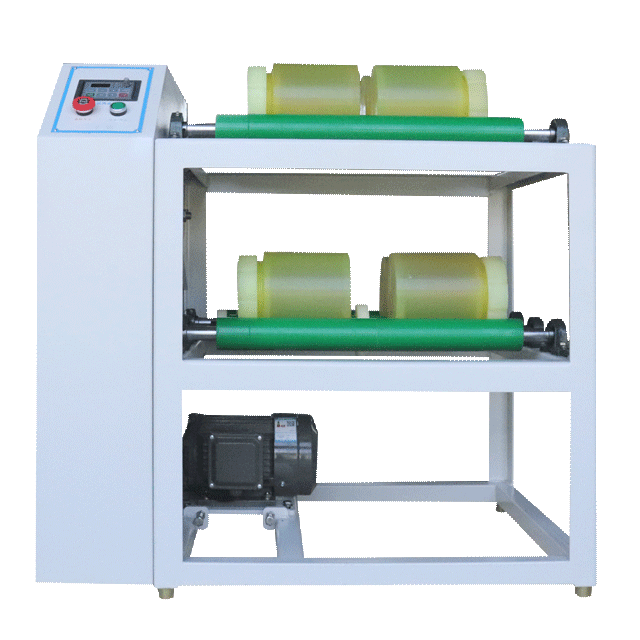
Core Function and Working Principle
The jar mill converts coarse or granular materials into fine powders through a combination of impact, attrition, and shear forces. The instrument consists of a set of parallel rotating rollers (usually two or more) that support and rotate cylindrical grinding jars. Each jar is partially filled with grinding media (e.g., ceramic balls, zirconia beads, or steel balls) and the sample material. As the rollers turn, the jars rotate, causing the media to cascade and tumble inside the jar, thereby grinding the sample.
In the 8-station model, eight jars are placed on the rollers, each driven by the same motor via a belt or gear system. The operator can load different materials or the same material into each jar, enabling parallel processing. Critical process parameters include rotation speed (typically adjustable from tens to hundreds of RPM), grinding time, media size and material, and jar material. The final particle size can range from tens of microns down to submicron levels, depending on the material properties and milling conditions.
Key Components and Design Features
While the 8-station jar mill is a complete system, its performance depends on the quality of its components:
Roller Assembly
High-precision, wear-resistant rollers ensure smooth and consistent rotation of the jars. The rollers are typically made of polyurethane or rubber to provide good grip and reduce noise.
Grinding Jars
The jars come in various materials such as agate, zirconia, alumina, stainless steel, nylon, or PTFE, allowing compatibility with different sample types and avoiding contamination. The 8-station mill can accommodate jar capacities from 50 mL to 1000 mL or more, depending on the model.
Drive System
A variable-speed motor with digital control enables precise speed adjustment. Most modern units feature a digital timer and display for repeatable operation.
Safety Features
Locking clamps or covers prevent jars from slipping during operation, and emergency stop buttons ensure user safety.
Key Performance Indicators and Selection Criteria
When selecting a jar mill with 8 working stations, consider the following factors:
- Processing Capacity: The maximum number of jars per batch (fixed at 8) and the volume per jar. Choose a model that matches your typical batch size.
- Speed Range and Control: A wider speed range (e.g., 50–600 RPM) allows optimization for different materials. Digital speed control with programmable presets is preferred.
- Material Compatibility: Ensure the roller material and jar material are compatible with your samples. For abrasive or corrosive materials, select appropriate jar linings.
- Noise Level: Laboratory environments require low-noise operation. Look for models with sound-dampening enclosures.
- Ease of Maintenance: Quick-release jar clamps and easy-to-clean surfaces reduce downtime.
- Automation Features: Some models offer programmable cycles with forward/reverse rotation and pause intervals to enhance grinding efficiency.
Applications and Selection Advice
The 8-station jar mill is widely used in:
- Materials Research: For preparing powders for ceramics, composites, catalysts, and battery materials.
- Pharmaceutical Industry: For milling active pharmaceutical ingredients (APIs) and excipients.
- Geology and Mining: For grinding ore samples for mineral analysis.
- Chemical Industry: For pigment dispersion, dye mixing, and fine chemical synthesis.
- Quality Control: For routine sample preparation in food, cosmetics, and construction materials.
For laboratories that need to process multiple samples efficiently, the 8-station jar mill offers a significant time advantage over single-jar mills. Choose a model with digital speed control and a wide range of jar materials to maximize versatility. For more specialized applications, consider the four-station jar mill or the two-station jar mill for smaller batch sizes.