
Inner Lined Roll Ball Mill: A Versatile Solution for Laboratory and Small-Scale Powder Grinding
Introduction
When you need to grind ceramic powders, minerals, chemicals, or battery materials in a laboratory or pilot plant, contamination control and equipment durability become critical concerns. Standard steel jars can introduce iron impurities, while unlined drums wear quickly when processing abrasive materials. The Inner Lined Roll Ball Mill addresses these challenges by combining the simplicity of a roll ball mill with a replaceable inner lining — typically made of rubber, ceramic, or polyurethane — that protects the drum and minimizes metal contamination. This design makes it a popular choice for wet and dry grinding in research labs, quality control departments, and small-scale production lines.
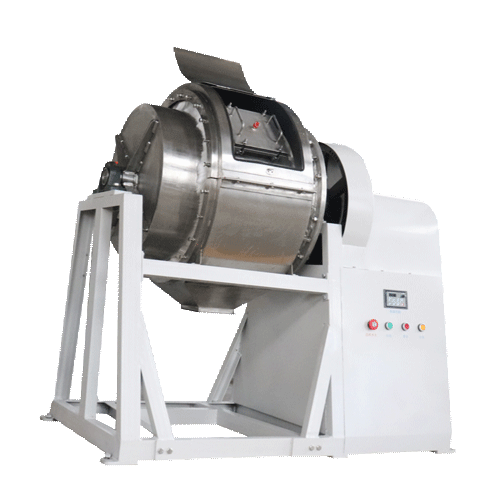
What Is an Inner Lined Roll Ball Mill?
An inner lined roll ball mill is a type of roller ball mill where the rotating drum is fitted with a wear-resistant inner liner. The drum rotates on two or more powered rollers, causing the grinding media and material inside to tumble and grind. Unlike standard steel drums, the lining acts as a sacrificial layer that absorbs impact and abrasion. Common lining materials include:
- Natural or synthetic rubber – excellent for wet grinding, reduces noise, and provides good wear resistance for materials like soft minerals, ceramics, and pigments.
- Alumina ceramic (e.g., 92% or 95% Al₂O₃) – high hardness, low contamination, ideal for grinding ferrite, glaze, and electronic ceramics.
- Polyurethane – good abrasion resistance and elasticity, often used for fine grinding of food, chemicals, and pharmaceuticals.
- Manganese steel or other alloy liners – for heavy-duty industrial applications with very hard materials.
The replaceable lining significantly extends the service life of the drum and allows you to switch between different liner materials for different grinding tasks without buying a new machine.
How Does It Work?
As the drum rotates on the rollers, the grinding balls (usually alumina, zirconia, or steel) are lifted by centrifugal force and then fall back onto the material, creating impact and shear forces. The inner lining not only protects the drum but also affects the motion of the grinding media. For example:
- A rubber liner provides a higher coefficient of friction, which can help lift larger balls and improve the tumbling action.
- A smooth ceramic liner reduces friction, resulting in a more cascading motion that is gentler on brittle materials.
This machine can operate in both wet and dry modes. For wet grinding, water or solvent is added to form a slurry, which reduces heat generation and agglomeration. For dry grinding, you may need to periodically open the lid to release pressure and check the powder.
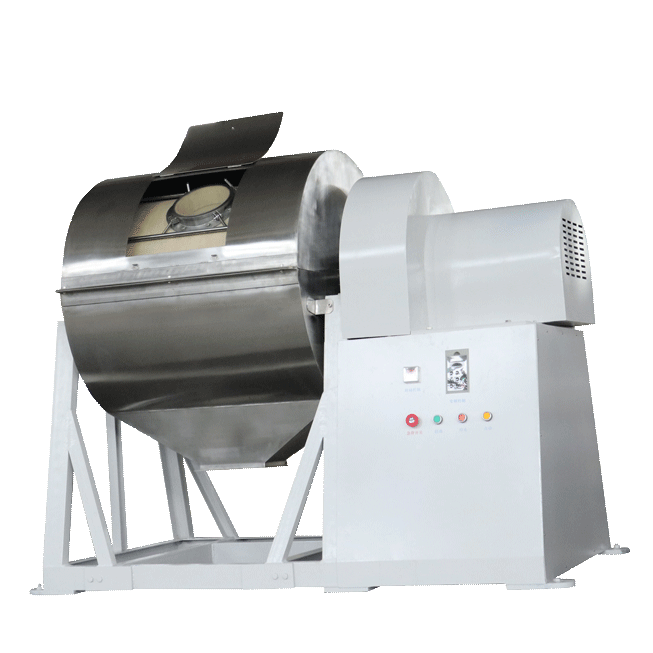
Why Choose an Inner Lined Roll Ball Mill?
Compared to conventional ball mills or planetary ball mills, the inner lined roll ball mill offers several advantages that make it ideal for certain applications:
- Low metal contamination: The lining prevents direct contact between the material and the steel drum. For instance, when grinding high-purity alumina or lithium battery materials, a ceramic-lined drum keeps iron content below 0.01% in many cases.
- Easy cleaning and liner replacement: After many cycles, the worn liner can be replaced quickly without welding or machining. This reduces downtime and maintenance costs.
- Adjustable speed: Most lab roll ball mills come with a variable frequency drive, allowing you to set the optimal rotational speed for different materials (typically 60–300 rpm).
- Large capacity range: These mills are available in drum volumes from 1 liter to 100 liters or more, suitable for single batch processing of 0.5 kg to tens of kilograms.
- Quiet operation: Rubber-lined drums significantly reduce noise levels compared to steel drums, making them more suitable for shared laboratory environments.
Common Applications
The inner lined roll ball mill is widely used in the following fields:
- Ceramic industry: Grinding glazes, frits, porcelain bodies, and alumina grinding media themselves.
- Mineral processing: Wet grinding of ores, such as quartz, feldspar, kaolin, and calcium carbonate for lab flotation tests.
- Battery materials: Mixing and grinding of cathode and anode materials (e.g., LiCoO₂, graphite, silicon) in solvent or dry state.
- Chemical & pharmaceutical: Fine grinding of pigments, dyes, catalysts, and active pharmaceutical ingredients (APIs).
- Research institutions: Studying grindability, mechanical alloying, and material synthesis.
Wet Grinding vs. Dry Grinding
For most ceramic and mineral applications, wet grinding is preferred because it reduces dust, lowers energy consumption, and produces finer particles. The inner lined roll ball mill handles both modes well. If you plan to dry grind hygroscopic or heat-sensitive materials, consider using a rubber-lined drum with a sealed lid to prevent moisture absorption.
How to Select the Right Inner Lined Roll Ball Mill
Choosing the correct model depends on your material properties, batch size, and contamination requirements. Consider the following factors:
- Drum volume and capacity: A common rule is to fill the drum to about 30–40% of its volume with grinding balls and add material to occupy the voids, leaving about 40–50% free space for tumbling.
- Lining material: Select a liner that is harder than the material you plan to grind to avoid excessive wear. For example, use alumina ceramic for grinding quartz; use polyurethane for food-grade products.
- Motor power and speed range: For harder materials, you may need higher torque and slower rotation (around 60–80 rpm for large drums). Softer materials can be ground faster (150–250 rpm).
- Number of working stations: Some roll ball mills have multiple rollers to accommodate several drums of different sizes, increasing throughput (see the four station jar mill or 8-station jar mill).
- Sealing and ventilation: If you need to grind under inert atmosphere, ensure the drum lid is airtight. For wet grinding, a small vent may be required to release pressure.
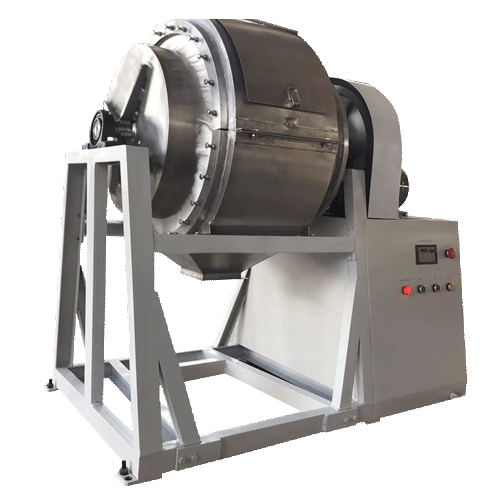
Practical Tips for Optimal Grinding Results
- Ball-to-powder ratio: Start with a ratio between 2:1 and 5:1 by volume. For finer grinding, you can increase the ball load but keep the material volume low to avoid overfilling.
- Grinding ball size: Use a mix of different ball diameters – larger balls (10–20 mm) provide impact, while smaller balls (3–5 mm) create more frictional force for ultra-fine grinding.
- Speed adjustment: If you hear a loud clattering sound, the speed may be too high, causing the balls to stick to the drum wall. Reduce speed until you hear a smooth rolling sound.
- Cleaning between batches: When switching materials, empty the drum and clean the lining with a brush and water or solvent. Avoid using steel brushes on ceramic liners to prevent scratching.
Why Choose TENCAN for Your Inner Lined Roll Ball Mill?
TENCAN (Changsha Tianchuang Powder Technology Co., Ltd.) has been manufacturing powder processing equipment for over 20 years. Our Inner Lined Roll Ball Mill is designed with the following customer-centric features:
- Durable frame with adjustable speed and timer
- Interchangeable drums with various liner materials
- Safety guards and emergency stop for lab use
- Customizable drum volume from 1 L to 100 L
- Global voltage compatibility (110V/220V/380V) with CE certification
Whether you need a small unit for occasional use or a robust model for daily production, we can recommend the optimal configuration based on your material type, target particle size, and batch quantity. Contact our engineers to discuss your specific requirements – we are happy to provide technical guidance and a competitive quotation.