
Lightweight Stirred Ball Mill: A Practical Solution for Laboratory Ultrafine Grinding
If you have ever worked on fine or ultrafine grinding in a laboratory, you know that achieving consistent sub-micron or even nanometer particle sizes is rarely straightforward. Traditional ball mills often generate too much heat, produce wide particle distributions, or simply lack the energy density to break down hard or aggregated materials. For many researchers and process engineers, a lightweight stirred ball mill has become a practical tool to overcome these challenges. It offers a compact, efficient, and controllable approach to fine grinding that fits naturally into both routine sample preparation and advanced material development.
In this article, we will walk through how this type of mill works, what makes the lightweight version particularly suitable for lab environments, which materials it handles well, and which process parameters deserve your attention. The goal is to help you decide whether a stirred ball mill is the right fit for your work and how to approach initial experiments with confidence.
How Does a Lightweight Stirred Ball Mill Work?
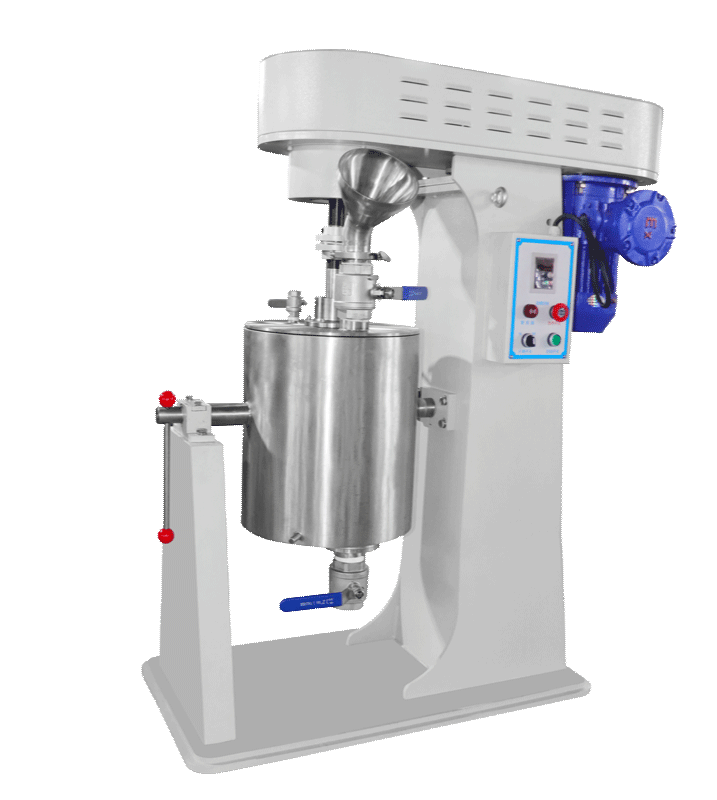
A stirred ball mill, sometimes called an agitated ball mill or stirred media mill, relies on a rotating agitator inside a stationary grinding chamber. Unlike planetary ball mills where the entire jar rotates, in a stirred mill the movement of the grinding media is driven entirely by the stirrer. This design allows for a more concentrated energy input into the slurry, which is particularly effective for fine and ultrafine grinding.
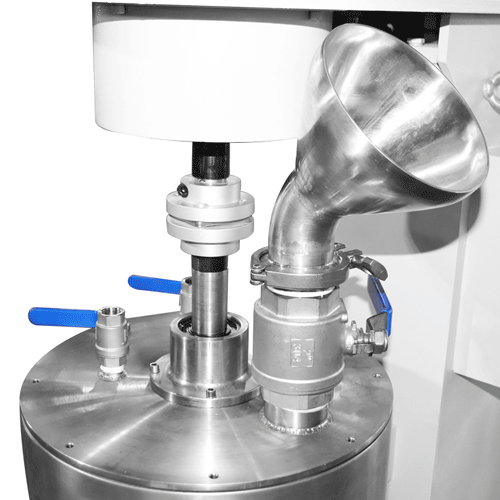
The grinding chamber is filled with small grinding beads—often between 0.5 mm and 3 mm in diameter, depending on the target fineness. The agitator, typically a disc, pin, or paddle type, rotates at speeds ranging from several hundred to well over a thousand revolutions per minute. As the stirrer rotates, it accelerates the beads, creating intense shear and impact forces. The particles suspended in the liquid (or dry powder, in some configurations) become trapped between the moving beads and are repeatedly compressed and sheared until they break down to the desired size.
The lightweight version of a stirred ball mill is designed with a smaller footprint and reduced weight, often using high-strength materials for the chamber and stirrer without sacrificing durability. This makes it easy to place on a lab bench, move between workstations, or even integrate into a glove box for air-sensitive materials.
Key Advantages of a Lightweight Design for Laboratory Use
When you choose a lightweight stirred ball mill, several practical benefits emerge that directly improve the daily experience of laboratory grinding:
Space Efficiency and Portability
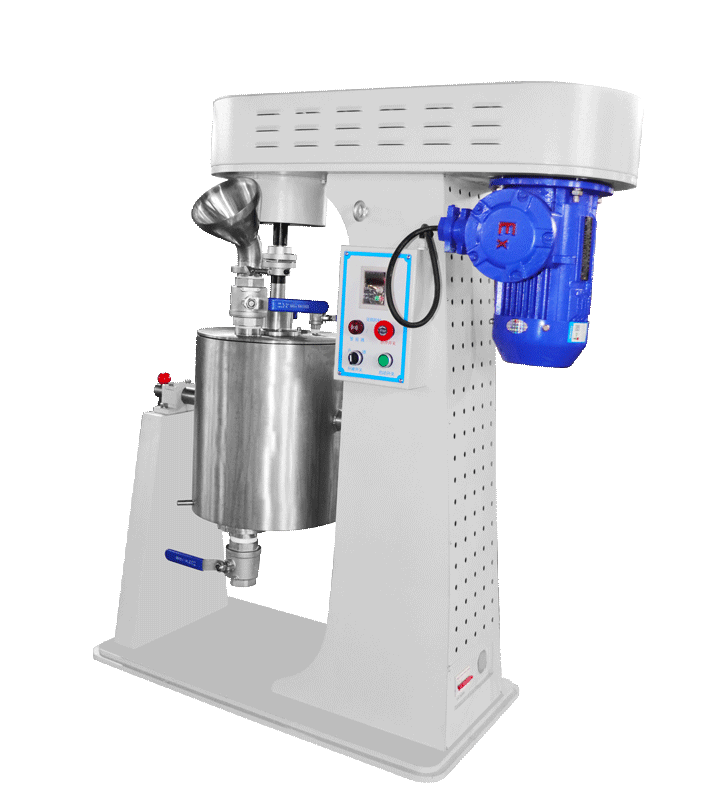
Research labs rarely have unlimited bench space. A lightweight stirred ball mill typically occupies less area than a planetary mill of comparable capacity. Its lower weight also means you can reposition it without difficulty, which is valuable when you need to share equipment among different projects or store it when not in use.
Reduced Noise and Heat Generation
Because the grinding action is confined to the stirred zone rather than the entire jar, modern lightweight stirred mills often operate more quietly than planetary equivalents. They also tend to generate less heat in the grinding chamber per unit of energy, which is a significant advantage when working with temperature-sensitive materials such as certain catalysts, pharmaceuticals, or battery precursors.
Easier Cleaning and Sample Changeover
Laboratory researchers frequently switch between different materials. The lightweight stirred ball mill’s chamber and stirrer are usually designed for quick disassembly. Many models allow you to remove the grinding chamber, rinse it, and change the grinding media efficiently. This reduces the risk of cross-contamination and shortens the turnaround time between experiments.
Lower Sample Volume Requirements
For high-value or scarce materials—such as advanced ceramics, novel battery compounds, or rare-earth oxides—the ability to grind small batches is critical. A lightweight stirred ball mill can process volumes from as little as 50 mL to a few hundred milliliters, making it ideal for formulation screening, mechanical alloying studies, and small-scale production of functional powders.
Materials and Applications Well Suited for Stirred Ball Milling
Stirred ball milling has proven effective across a wide range of industries and research areas. The following examples highlight where a lightweight stirred ball mill commonly delivers excellent results:
- Ceramic powders: Alumina, zirconia, silicon carbide, and other advanced ceramics can be ground down to sub-micron sizes with controlled particle shape and minimal contamination when using the appropriate grinding media.
- Lithium-ion battery materials: Cathode and anode active materials, solid electrolytes, and conductive additives often require fine and uniform particle sizes to achieve optimal electrochemical performance. Stirred ball mills are widely used in battery R&D.
- Mineral processing and mining tailings: As reported in some empirical studies, stirred ball mills can produce finer products than conventional ball mills for ores and tailings, especially when dealing with hard and brittle particles up to 150 μm feed size.
- Pigments and dyes: The intense shear forces break down agglomerates and provide excellent dispersion, which is critical for color strength and stability.
- Pharmaceutical and cosmetic ingredients: Fine grinding of active ingredients, excipients, or sunscreens requires controllable particle size with narrow distribution. The low heat generation of stirred mills helps preserve chemical integrity.
- Mechanical alloying: Although planetary mills are more common for mechanical alloying due to their high impact energy, stirred ball mills can also be used for alloying ductile metal powders when operated under controlled conditions.
It is important to note that the final particle size for any material depends heavily on its initial hardness, brittleness, feed size, and the grinding parameters you choose. Sub-micron grinding is achievable for many materials, but results should always be verified through particle size analysis.
Important Parameters to Consider for Optimal Grinding
To get consistent and reproducible results from your lightweight stirred ball mill, you need to pay attention to several process variables. Below are the most influential ones, along with practical guidance.
Stirrer Speed
The rotational speed of the agitator directly determines the kinetic energy transferred to the grinding beads. Higher speeds create more intense impacts and shear, which can reduce grinding time. However, excessive speed may cause excessive wear, temperature rise, or even agglomerate formation. For many laboratory operations, stirrer speeds between 500 and 1500 rpm are typical, but the optimal value depends on the bead size and material sensitivity.
Grinding Media Size and Material
Grinding beads are the actual “tools” that do the grinding. Smaller beads (e.g., 0.5–1 mm) provide a large number of contact points and are more effective for very fine grinding, while larger beads (e.g., 2–3 mm) deliver higher impact energy and are better for coarse or hard particles. Common media materials include:
- Yttria-stabilized zirconia (best overall wear resistance and low contamination for most oxide materials)
- Alumina (good for general-purpose grinding, lower density)
- Steel (high density, but may introduce iron contamination)
- Glass or agate (for low-contamination applications, but wear limited)
Ball-to-Powder Ratio
The weight ratio of grinding media to powder (and liquid, if wet grinding) significantly affects grinding efficiency. In many stirred ball mill experiments, a media-to-powder ratio in the range of 5:1 to 20:1 is used. For very hard materials or when targeting sub-micron particles, a higher ratio may be beneficial. For wet grinding, the slurry viscosity also plays a role; too much liquid reduces contact, too little causes poor circulation.
Grinding Time
Unlike planetary mills where grinding time is often measured in tens of minutes to hours, stirred ball mills can achieve similar or finer particle sizes in shorter times due to the concentrated energy input. However, over-grinding can lead to re-agglomeration or unwanted phase changes. It is advisable to take samples at regular intervals and monitor particle size to determine the endpoint.
Dry vs. Wet Grinding
Stirred ball mills can operate in both dry and wet modes, but wet grinding is more common for ultrafine applications. The liquid (usually water, ethanol, or isopropanol) helps disperse particles, reduces heat, and facilitates slurry handling. Dry grinding is possible but tends to generate more heat and may require inert gas purging for reactive powders.
How to Choose the Right Lightweight Stirred Ball Mill for Your Lab
When evaluating a lightweight stirred ball mill, consider the following factors to match the equipment to your specific requirements:
- Chamber volume and usable capacity: Check the actual working volume (typically 50–70% of total chamber volume). For instance, a 500 mL chamber may have a usable capacity of about 300–350 mL for the slurry.
- Chamber and stirrer material: Stainless steel is robust and economical; zirconia or alumina lining reduces metal contamination for high-purity ceramics.
- Sealing and inert gas compatibility: If you work with air-sensitive materials (e.g., lithium metal, sulfides), look for a model that can be sealed and purged with argon or nitrogen.
- Speed control and programmability: A digital controller with adjustable speed, timer, and possibly a reverse rotation cycle gives you more precise control over the process.
- Ease of cleaning: A removable chamber and stirrer that can be disassembled without tools saves time and reduces contamination risks.
- Voltage and frequency: Confirm that the motor is compatible with your local electrical supply (e.g., 110V/60Hz or 220V/50Hz).
If you are unsure which configuration best fits your material and target particle size, it is helpful to provide your supplier with basic information such as the material name, feed particle size, target fineness, batch quantity, and whether you need wet or dry grinding. An experienced engineer can then suggest a suitable setup and even recommend starting parameters for your first trials.
We hope this overview gives you a clearer picture of what a lightweight stirred ball mill can do for your laboratory. Whether you are grinding ceramic precursors, battery materials, or mineral samples, this equipment offers a balance of efficiency, size, and control that many bench-scale processes demand. For more detailed specifications and configuration options, feel free to explore the lightweight stirred ball mill product page.