
Lab Guide to Hanging Tank Flotation Machines
Flotation testwork often looks simple on a flowsheet: prepare a sample, add reagents, introduce air, collect a froth product, and assay the results. In practice, the quality of the result depends on many small decisions that are easy to overlook. A laboratory flotation machine is not a miniature concentrator. It is a controlled test instrument, and its value depends on whether the operator can reproduce the same pulp conditions, air rate, froth removal, and timing from one test to the next. When results scatter, the cause is often not the ore alone. Feed preparation, reagent addition, agitation, air dispersion, froth depth, and cleaning practice can all change the outcome.
This guide focuses on the hanging tank flotation machine used in mineral processing laboratories. It explains where the machine fits in a test program, which operating variables matter most, how to judge repeatability, and what to examine before selecting a unit. The aim is not to promise a particular recovery or grade. Those results depend on the material, liberation, chemistry, and test method. The aim is to help researchers and process engineers use a laboratory flotation cell with better control and clearer interpretation.
What a Laboratory Flotation Test Is Really Measuring
A batch flotation test measures the response of a prepared sample to a defined set of physical and chemical conditions. It can show whether a mineral responds to a collector, how selectivity changes with pH, how much frother is needed for a stable froth, and how fast valuable particles report to the concentrate. It can also reveal practical problems such as slime coating, oxidation, insufficient liberation, or excessive entrainment. These are valuable observations, but they are not a direct guarantee of plant performance.
The first question in any test program should be: what decision will this test support? A scoping test may need only a clear indication of floatability. A reagent optimization study needs tighter control of pH, dosage, and conditioning time. A scale-up study needs attention to kinetics, water chemistry, and the way froth is removed. If the objective is not defined, the test matrix tends to grow without producing a clear answer. The machine should be selected and operated to serve the question, not the other way around.
Repeatability deserves as much attention as the highest result in a test series. A single high-recovery test is weak evidence if the next test under the same conditions gives a very different result. Operators should establish a baseline condition, repeat it, and check the variation in recovery, grade, mass pull, and froth behavior. If the baseline is not stable, changes made later cannot be interpreted with confidence. The baseline should include sample preparation, pulp density, reagent addition sequence, agitation, air setting, froth depth, and collection intervals.
- Floatability: does the target mineral report to the froth under the chosen chemistry?
- Selectivity: how much gangue reports with the concentrate under the same conditions?
- Kinetics: how quickly does flotation occur, and when does the rate flatten?
- Sensitivity: how strongly does the result respond to changes in pH, reagents, size, or aeration?
- Repeatability: can the same condition be reproduced closely enough to support decisions?
How a Hanging Tank Flotation Machine Fits the Test Circuit
The flotation machine is only one part of the test circuit, but it is the part where pulp, air, and froth meet. Feed preparation comes first: crushing, grinding, splitting, and sometimes sieving or desliming. The sample must be representative and its size distribution must be understood. A flotation result from a poorly prepared sample can be misleading, especially if the target mineral is not liberated or if fine particles have oxidised during storage. Water quality and reagent preparation also belong to the test circuit because they influence bubble stability and mineral surface chemistry.
The hanging tank flotation machine provides the controlled cell in which the conditioned pulp is aerated and mixed. The name refers to a tank mounted as part of the machine assembly rather than treated as a separate, free-standing vessel. The practical details of the support, drive, air connection, froth removal, and discharge arrangement should be confirmed for the specific unit, because laboratory designs are not identical. What matters during evaluation is whether the arrangement gives stable tank location, repeatable impeller position, reliable air introduction, and practical access for cleaning and sample recovery.
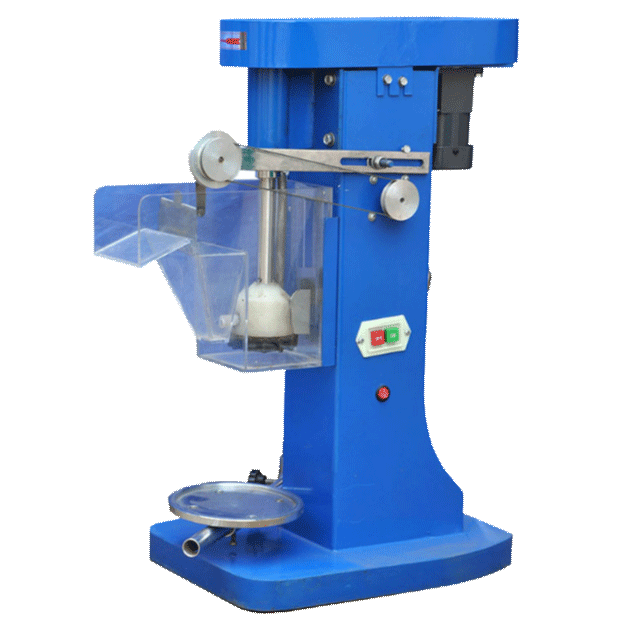
Hanging tank flotation machine for laboratory testwork.
In a batch test, the machine must perform several jobs at once. It must keep solids suspended without creating excessive dead zones. It must disperse air into bubbles that can attach to hydrophobic particles. It must allow a froth layer to form and be removed at a controlled rate. It must also permit the operator to see what is happening. A cell that is difficult to observe or clean may produce acceptable results on one day and poor results on another because froth depth, impeller position, or residual material has changed.
Agitation, Air, and Froth Removal Are Connected
Operators sometimes adjust agitation and air as if they were independent. They are not. Changing impeller speed alters solids suspension, turbulence, bubble break-up, and the rate at which particles are carried into the froth. Changing air flow alters bubble population, froth stability, and the upward transport of pulp. The combined effect can be beneficial or harmful. Strong agitation may keep coarse particles in suspension, but it can also increase detachment of particles from bubbles or produce a froth that is difficult to control. Low air may give a cleaner froth but too little carrying capacity. The right balance depends on the material and the test objective.
Froth removal is another part of the same system. The depth of froth, the rate at which it is scraped or allowed to overflow, and the condition of the froth lip all affect the grade and recovery relationship. A deep froth can allow drainage and improve selectivity, but it may also reduce recovery if valuable particles become trapped or if the froth becomes too stiff. A shallow froth may increase mass pull but also increase entrainment of fine gangue. The operator should record how froth is removed and keep that method consistent across the test series. Small differences in scraping frequency or froth depth can be as important as a small change in reagent dosage.
Operating Variables That Change Flotation Results
Most flotation problems in the laboratory can be traced to a small number of variables that were not controlled closely enough. The list is familiar, but the interactions are often underestimated. A well-planned test changes one primary variable at a time while holding the others at a defined baseline. When two variables are changed together, the result may look promising but cannot be attributed to either one.
Feed Size and Liberation
Particle size affects both flotation rate and selectivity. Very coarse particles may be difficult to keep suspended or may detach from bubbles in turbulent pulp. Very fine particles can have high surface area, consume reagents, coat other particles, and report to the froth by entrainment rather than true flotation. The practical response is not to change the machine alone. It is to check whether the sample preparation matches the test question. If the target mineral is not liberated at the tested size, a reagent change may not solve the problem. If the sample contains an excessive fines fraction, pre-treatment, classification, or a different froth strategy may be needed.
Pulp Density and Conditioning
Pulp density influences residence time, reagent concentration, collision frequency, and froth stability. It also affects how easily the operator can observe the pulp and maintain consistent froth depth. Conditioning time and intensity determine whether reagents have had enough contact with the mineral surface without creating undesirable side effects. The correct sequence matters: pH adjustment, activator or depressant addition, collector addition, and frother addition should follow a defined order and mixing period. If the sequence changes, the test condition has changed even when the final reagent dosages appear identical.
pH, Water Chemistry, and Reagents
pH can change mineral surface charge, collector adsorption, froth character, and the action of depressants. Water chemistry can have a similar effect, especially when recycled water, high-hardness water, or water containing residual reagents is used. Laboratory teams should record the water source and any treatment. Reagent preparation is equally important: a collector that has aged, a frother that has been diluted inconsistently, or a pH modifier added too quickly can produce results that are difficult to reproduce. Dosage should be expressed in a way that allows comparison between tests, and the actual addition method should be described in the test record.
Aeration and Froth Stability
Air flow affects bubble size, gas hold-up, and froth structure. Too little air can limit flotation capacity and produce a weak froth. Too much air can create a turbulent pulp, unstable froth, and higher entrainment. Frother dosage interacts with air flow because it influences bubble size and froth persistence. If the froth collapses between collection intervals, the operator may compensate by increasing frother, but the real cause could be insufficient air, excessive agitation, or a change in pH. Diagnosis requires observation, not just reagent adjustment.
Flotation Time and Collection Strategy
Flotation is a kinetic process. The first concentrate fraction often contains fast-floating, well-liberated particles, while later fractions may contain slower or more composite particles. Collecting all froth as one product hides this information. Sequential concentrates with recorded times can show whether the separation is rate-limited, whether the froth is overloaded, and whether later recovery comes at the cost of grade. The total test time should be long enough to show the flattening of the recovery curve, but not so long that the test becomes a study of entrainment and water carry-over. The operator should use consistent time intervals and note any interruption.
Temperature and Seasonal Effects
Temperature can influence reagent solubility, froth behavior, and surface chemistry. A test series that begins in a cool laboratory and continues in a warm one may show unexplained drift. Similar drift can come from changes in water temperature or from reagents stored near a heat source. Where temperature is not controlled, it should at least be recorded. For sensitive programs, a stable room temperature and a defined water source reduce unnecessary variability.
Material Contact, Contamination, and Cleaning
Laboratory flotation equipment is exposed to abrasive solids, corrosive reagents, and a wide range of sample types. The wetted materials should be compatible with the pulp and with the cleaning method. A tank or impeller that wears or corrodes can change its surface, create crevices, or release material into the sample. Even when the effect is small, it can matter in trace-element studies or in programs that compare several ore types. The correct approach is to confirm the materials of construction with the supplier and to match them to the duty.
Cross-contamination is a common and under-recognised source of error. Residual concentrate in a froth lip, dried pulp behind an impeller, or reagent film on a tank wall can carry over into the next test. The risk increases when a laboratory handles samples with very different grades or when a test is stopped before the cell is fully discharged. A defined cleaning procedure should include rinsing, inspection of accessible surfaces, and drying when appropriate. Abrasive cleaning that changes the surface finish should be avoided unless the supplier confirms it is acceptable. Blank tests and duplicate tests with a reference material can reveal contamination that is not visible.
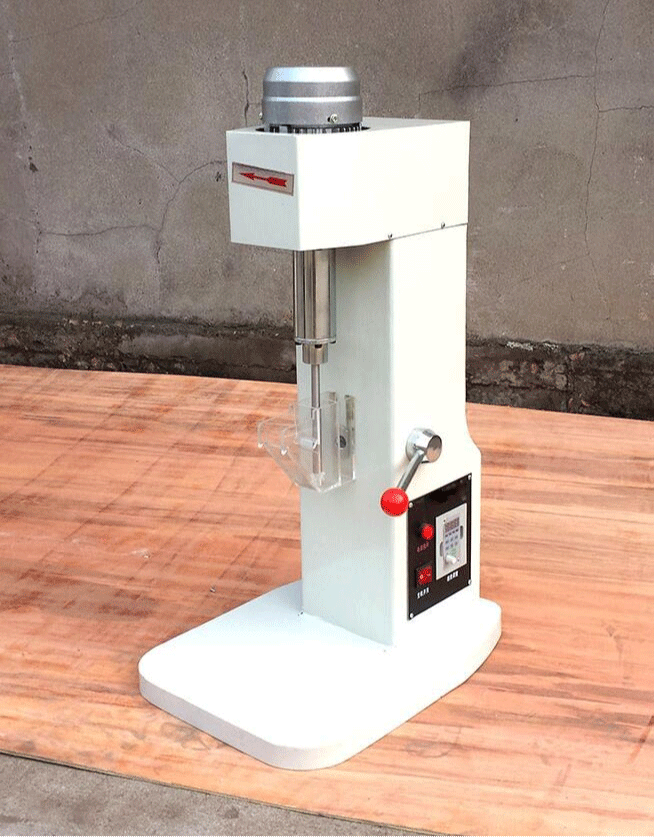
Laboratory flotation equipment should be easy to inspect and clean between samples.
The hanging tank arrangement can be useful in a multi-project laboratory because access to the tank and surrounding components is part of the design evaluation. However, access alone is not enough. The operator should check whether the impeller, air line, froth lip, and discharge area can be cleaned without disturbing settings that must remain constant. If the impeller height or tank position is difficult to reset, repeatability may suffer after cleaning. A simple gauge, mark, or documented setting procedure can reduce that risk.
From Batch Test to Continuous Scale-Up
A laboratory batch flotation result is not a continuous plant result. In a batch cell, the pulp composition changes with time as concentrate is removed. In a continuous circuit, feed enters and products leave continuously, and particles have a distribution of residence times. A plant cell also has a different froth residence time, froth washing environment, pulp level control, and bank arrangement. These differences do not make laboratory testing less useful. They define what the laboratory test can and cannot predict.
Scale-up should consider the variables that control the process rather than a simple ratio of tank volumes. Relevant factors include solids concentration, reagent dosage per unit mass, aeration intensity, mixing intensity, froth depth, and flotation time. Geometric similarity can help, but it is rarely complete. The laboratory operator should record enough detail for a process engineer to interpret the result: impeller position, air setting, froth removal method, conditioning sequence, water source, and the mass of each product. Without that record, a promising batch result may be impossible to reproduce or transfer.
Locked-cycle tests and pilot runs are often more informative than a single batch test when the objective is circuit design. They can reveal the build-up of circulating loads, the effect of recycled water, and the behaviour of slow-floating particles. The laboratory machine remains useful in these programs because it allows conditions to be screened before a larger campaign. The key is to treat the laboratory result as evidence about a mechanism, not as a guaranteed plant performance figure.
Selection and Troubleshooting Checklist
Selecting a laboratory flotation machine should begin with the test program, not with a catalogue page. The required sample mass, number of tests per day, target product, reagent system, and cleaning regime determine the practical requirements. A unit that is convenient for one program may be less suitable for another. The following checklist is intended to support a technical discussion with the supplier and to expose assumptions before a purchase or a new test campaign.
| Decision area | Questions to ask |
|---|---|
| Test duty | What sample mass and product types will be tested? Is the work mainly scoping, reagent optimisation, or scale-up support? |
| Tank and drive | How is the tank located and removed? Is the impeller position repeatable? How is the drive protected from pulp and reagent exposure? |
| Air system | How is air introduced and adjusted? Can the setting be recorded and repeated? Is the air path easy to inspect? |
| Froth handling | How is froth removed, and can the method be kept consistent? Is the froth lip accessible for cleaning? |
| Materials | Are wetted parts compatible with the ore, pH range, reagents, and cleaning agents? Is wear inspection practical? |
| Contamination control | Can the tank and impeller be cleaned thoroughly? Are there dead zones or crevices that retain solids? |
| Instrumentation | Are pH, temperature, air, or speed measurements needed? How will they be calibrated and recorded? |
| Laboratory fit | Does the unit fit the available bench space, services, and operator access requirements? |
The laboratory flotation equipment page should be used to confirm the actual product configuration rather than relying on general assumptions. The exact arrangement of the tank, drive, air connection, and froth collection should be checked against the intended work. If a supplier cannot provide clear information on wetted materials, cleaning access, or setting adjustment, that is a technical risk rather than a minor administrative detail.
Common Symptoms and Practical Checks
| Symptom | Likely areas to check |
|---|---|
| Low recovery | Liberation, collector addition and conditioning, pH, air rate, froth removal, flotation time, and particle size. |
| Low concentrate grade | Entrainment of fines, froth depth, pulp density, depressant action, and water carry-over. |
| Unstable or collapsing froth | Frother dosage and preparation, air rate, pH, agitation, temperature, and residual reagents. |
| Poor repeatability | Sample splitting, reagent ageing, impeller position, froth scraping, cleaning, and water source. |
| Coarse particles not floating | Liberation, agitation, bubble size, froth stability, and whether the particle can be kept in suspension. |
| Fine particles reporting to concentrate | Entrainment, froth drainage, pulp density, and the need for a different froth strategy. |
| Visible dead zones or settling | Impeller position, agitation level, pulp density, and tank geometry. |
| Contamination between tests | Cleaning access, wear surfaces, froth lip residue, discharge area, and drying practice. |
Troubleshooting should move from the simplest checks to the more disruptive ones. Confirm that the sample is representative and that the machine is set to the documented baseline before changing chemistry. Inspect the air path and froth lip. Check that the impeller is at the correct height and that the tank is correctly located. Repeat a baseline test after cleaning. Only then should the reagent scheme or operating settings be changed. This order protects the test program from attributing a mechanical or cleaning problem to the ore.
A final practical point concerns records. The value of a laboratory flotation program lies in the ability to compare tests and to explain why one condition performed differently from another. Record the sample identity, preparation method, water source, pulp density, reagent addition sequence, conditioning times, air setting, agitation setting, froth depth, collection intervals, cleaning method, and any deviation from the baseline. Photographs of the froth and setup can be useful when a result is surprising. With a consistent method, a hanging tank flotation machine becomes a reliable platform for investigating mineral response rather than a source of unexplained variability.
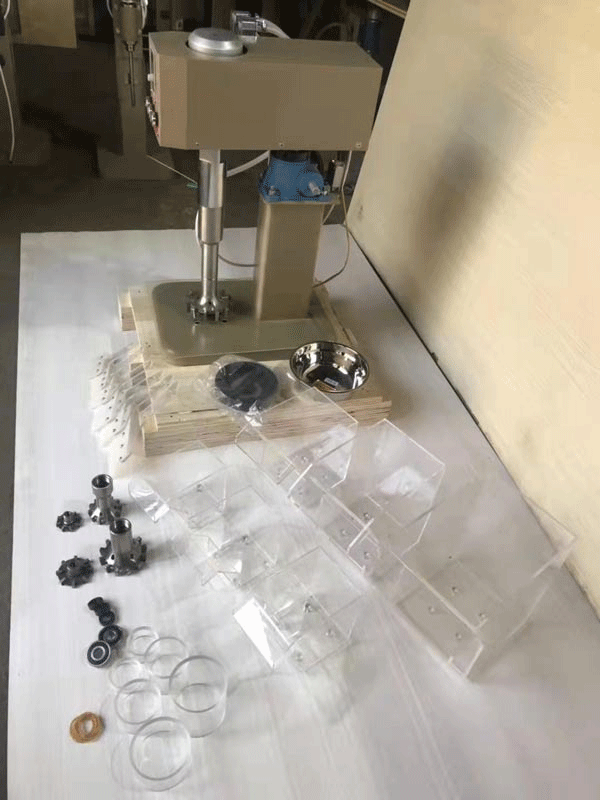
Consistent setup and cleaning improve the value of laboratory flotation results.