
T-Crystal Dental Furnace: Zirconia Sintering
A dental zirconia restoration can leave the milling center with the right shape and still fail to meet expectations after sintering. The reason is rarely a single dramatic equipment fault. More often, the outcome reflects a small mismatch between the material supplier's validated cycle and what the furnace actually delivers in daily use: heating rate, chamber uniformity, hold time, cooling behavior, loading density, or contamination from setters and furnace furniture. For a dental lab, the practical question is not simply whether a furnace can reach a high temperature. It is whether the furnace can reproduce a defined thermal cycle, batch after batch, with enough control that the process can be validated and defended.
The T-Crystal Dental Furnace is the sintering platform considered in this guide. The aim here is not to list specifications that must be confirmed against the current product configuration. It is to explain how a dental sintering furnace should be evaluated, where process risk enters, and which details deserve attention before a zirconia program is released to routine production.
Why Zirconia Sintering Demands More Than a High-Temperature Furnace
Zirconia sintering is a densification process. During heating, particles bond and pores change; during the hold, the structure continues to consolidate; during cooling, the material settles into its final state. The restoration shrinks as this happens. That shrinkage is predictable only when the thermal path is predictable. A furnace that reaches the indicated peak temperature but overshoots, lags, or distributes heat unevenly can produce color variation, distortion, incomplete densification, or inconsistent fit even when the control display appears normal.
This is why the furnace should be treated as part of a process, not as a standalone appliance. The validated cycle supplied by the zirconia manufacturer defines the intended ramp, hold, and cooling conditions for that material. The furnace's role is to reproduce those conditions within a defined working zone and to make deviations visible. If the furnace cannot hold a stable set point, if the chamber has cold and hot positions, or if the cooling rate depends on how quickly an operator opens the door, the lab is relying on chance rather than control.
For the T-Crystal Dental Furnace, the relevant evaluation begins with the process window rather than the product name alone. Which zirconia materials will be processed? What cycle does each material supplier require? How full will the chamber be in normal use? Will the lab run one crown at a time, several units, or bridge frameworks? Does the workflow require overnight sintering, daytime sintering, or both? These questions determine whether a given furnace configuration is appropriate. A furnace that performs well with a light load may behave differently with a dense, well-filled chamber, and a cycle validated under one loading pattern should not be assumed to transfer unchanged to another.
The same principle applies to the word sintering itself. It is not a generic command that can be selected without material-specific validation. The T-Crystal Dental Furnace should be assessed for its ability to execute a defined program repeatably, not merely for its ability to generate heat. That distinction shapes every decision that follows, from chamber layout to maintenance and operator discipline.
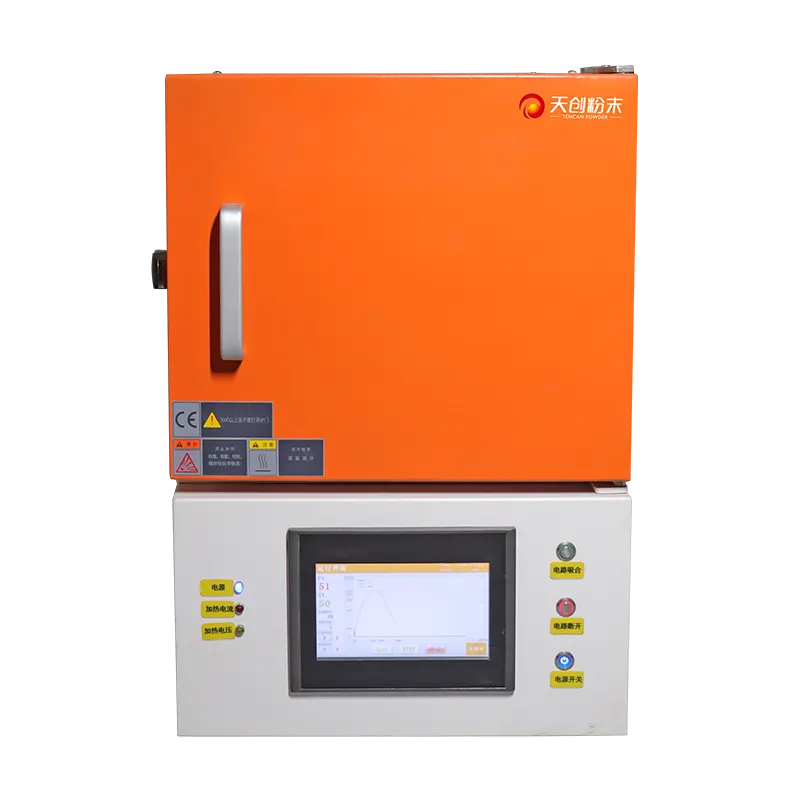
Inside the T-Crystal Dental Furnace: What a Controlled Thermal Cycle Requires
A dental sintering furnace is a thermal system made of a heated chamber, insulation, temperature sensing, power control, program logic, and a cooling path. The visible cabinet and door are only the outer layer. What matters to the zirconia restoration is the environment around the restoration during each phase of the cycle. The T-Crystal Dental Furnace should therefore be examined as a system whose behavior depends on sensor placement, chamber geometry, control response, and the way the lab uses the working volume.
Chamber uniformity and sensor placement
Temperature uniformity is one of the most important but least visible properties of a sintering furnace. A thermocouple may report a value near the sensor while another part of the chamber is hotter or cooler. The effect on dental work depends on the material, the restoration size, the setter arrangement, and the position of the load. Small restorations may tolerate minor differences; larger frameworks or full-arch work may reveal them. The practical lesson is that the displayed temperature is a control reference, not a guarantee that every point in the chamber is identical.
When evaluating the T-Crystal Dental Furnace, ask how the chamber is characterized and how the lab should position work within the usable zone. A furnace with a defined working zone is easier to validate than one whose edges and corners are treated as equally suitable without evidence. If the manufacturer provides a recommended loading envelope, follow it. If the lab develops its own loading pattern, it should be tested with representative restorations rather than assumed from a single small crown.
Program control and reproducibility
Sintering programs are only useful if they can be repeated. A program that is easy to create but difficult to lock, copy, or verify creates a route to operator error. The T-Crystal Dental Furnace should be assessed for how cycles are entered, named, reviewed, and protected in normal lab practice. The important questions are practical: Can the correct program be selected without ambiguity? Is the active segment visible? Are changes logged or at least easy to detect? Can a technician confirm that the cycle ran as intended after the door is closed and the lab moves on to other work?
Reproducibility also depends on how the furnace responds to load changes. A lightly loaded chamber and a densely loaded chamber do not necessarily follow the same thermal path, even when the same program is used. The controller may compensate, but the material sees the result. For this reason, a lab should validate the T-Crystal Dental Furnace with the loading patterns it actually intends to use, not only with an empty chamber or a single test unit.
Cooling and door-opening discipline
Cooling is often treated as a passive waiting period. In practice, it is part of the cycle. The rate at which a zirconia restoration cools can influence the final state of the material, and an uneven cooling path can introduce stress or variation. A furnace that controls the cooling segment provides a more repeatable process than one that depends on the operator opening the door at an arbitrary moment. Even when controlled cooling is available, lab discipline matters. Opening the chamber early to save time can defeat the purpose of the program.
The T-Crystal Dental Furnace should be evaluated for how the lab is expected to manage the cooling phase and when it is safe to unload. The correct answer is not a universal number of minutes. It is the material supplier's instruction combined with the furnace's behavior and the lab's verified practice. If a cycle says the load must cool under controlled conditions, the workflow should allow that time without pressuring the operator to shortcut it.
Finally, the furnace should be considered in relation to the room around it. Ambient temperature, ventilation, nearby heat sources, and the frequency of door openings can all affect how hard the furnace must work to follow a program. A controlled thermal cycle is easier to maintain when the installation environment is stable and the furnace is not asked to compensate for avoidable disturbances.
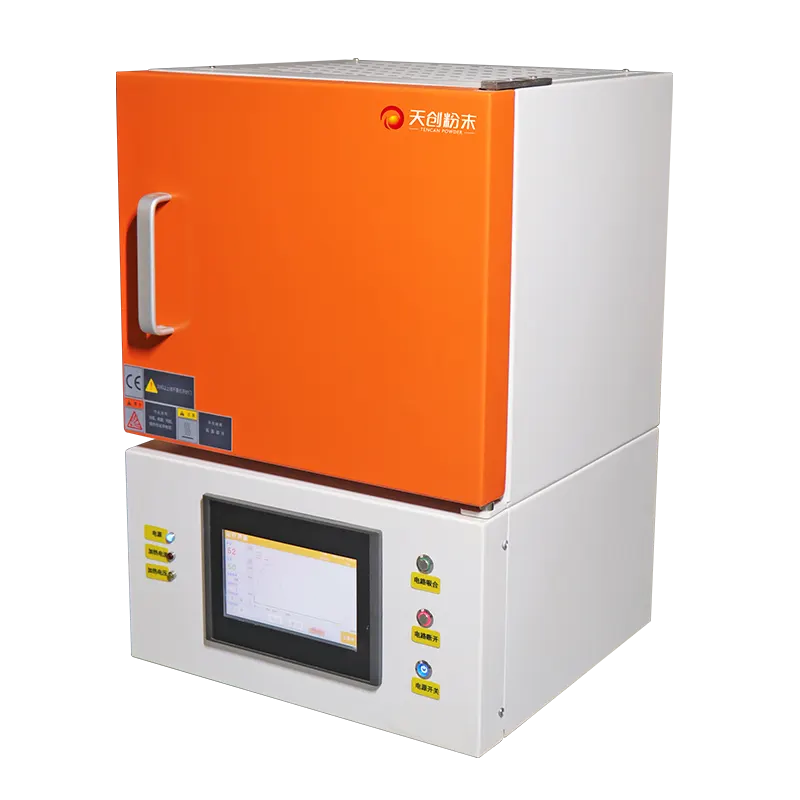
Reading the Sintering Profile: Heating, Hold, and Cooling
A sintering profile is a sequence, not a single set point. The material supplier's validated cycle should be treated as the authority for temperature values, ramp rates, hold times, and cooling conditions. The furnace's job is to execute that sequence without introducing avoidable variation. Understanding what each segment does helps a lab recognize when a problem is related to the profile, the load, the furnace, or the material.
| Profile segment | Process purpose | What to watch in daily use |
|---|---|---|
| Heating and ramp | Raises the load toward the sintering range in a controlled way | Actual response versus programmed ramp, load density, sensor behavior |
| Hold | Allows densification and microstructure development at the intended condition | Stable set point, uniform working zone, correct program selection |
| Cooling | Brings the restoration down under defined conditions | Controlled versus door-open cooling, unloading discipline |
Heating rate and load response
The heating segment moves the restoration from room temperature toward the sintering range. A ramp that is too aggressive for the load can create a temperature difference between the surface and the interior of the work, or between the center and edges of the chamber. A ramp that is too slow may not harm the material, but it can extend the cycle and reduce throughput. The correct rate comes from the validated material cycle, not from a preference for faster production.
In the T-Crystal Dental Furnace, the heating segment should be reviewed together with the loading pattern. A furnace may follow its programmed ramp in an empty chamber and still show a different response when the chamber is filled with zirconia and setters. This is not necessarily a fault. It is a reason to validate the complete process. If the lab changes from single-unit sintering to multi-unit batches, the thermal load changes, and the evidence supporting the original cycle should be reviewed.
Hold time and densification
The hold segment is where the material reaches the intended condition and remains there long enough for the process to complete. The hold is not made more effective by extending it without reason. An extended hold can alter microstructure, color, or dimensional behavior, and it consumes furnace time. A shortened hold may leave the restoration under-sintered. The material supplier's cycle defines the intended balance, and the furnace's role is to maintain the set point and uniformity during that window.
For the T-Crystal Dental Furnace, the hold segment should be assessed for stability rather than display alone. Does the chamber recover after the door closes? Does the set point remain steady through the full hold? Is the working zone consistent when the load is positioned in normal production locations? These are the questions that connect the furnace to the restoration, rather than to the control panel.
Cooling rate and final handling
Cooling brings the restoration out of the sintering range and into a state where it can be handled. The cooling path should follow the validated cycle, especially when the material supplier specifies controlled cooling. Unloading too early can expose the work to a thermal shock that is not part of the intended process. Waiting longer than necessary is usually less risky than opening the chamber at the wrong moment, but the lab should still follow the material and furnace instructions rather than inventing a rule of thumb.
The T-Crystal Dental Furnace should be integrated into a workflow that gives cooling the time it needs. If the lab's schedule assumes immediate unloading, the schedule is the problem, not the furnace. A realistic cycle plan includes heating, hold, cooling, and a margin for unloading and inspection. That plan should be visible to the people who book the furnace, not only to the operator who runs it.
Loading, Setters, and Chamber Practice That Protect Results
Many sintering problems are not caused by the controller. They begin with the way the load is prepared. Setters, trays, positioning, spacing, and cleanliness affect heat transfer and contamination. A furnace can only reproduce a cycle within the environment the lab creates inside the chamber. The T-Crystal Dental Furnace is no exception. Good loading practice is part of the process, not an optional housekeeping detail.
Setter selection and support
The setter must support the restoration without introducing a reaction, marking, or uneven thermal contact. The material and condition of the setter should be compatible with the sintering process and the restoration. A setter that is suitable for one material or temperature range should not be assumed to be suitable for another. The lab should also inspect setters for wear, cracks, residue, and distortion. A damaged setter can change the support conditions and leave a mark or stress point on the work.
For the T-Crystal Dental Furnace, the setter arrangement should be validated with the same zirconia and the same loading pattern used in production. A single test crown on a clean setter is not enough to prove that a full tray will behave the same way. The lab should look for color variation, localized gloss differences, distortion, or fit changes that appear only when the chamber is loaded more heavily.
Loading pattern and clearance
Loading pattern affects heat transfer. Restorations placed too close together can create a local mass that responds differently from an isolated unit. Work placed near the chamber edge may see a different environment from work placed in the center. The furnace's recommended working zone should be respected, and the lab should avoid crowding the chamber simply because the pieces fit. More units in the chamber do not necessarily produce more good units if the thermal environment becomes uneven.
The T-Crystal Dental Furnace should be loaded with a repeatable pattern that the lab can document. If the normal pattern changes, the change should be treated as a process change, not as an invisible convenience. A simple loading diagram, a tray map, or a standard position for bridge frameworks can reduce variation between operators.
Furnace furniture and cleanliness
Furnace furniture, trays, and chamber surfaces should be kept clean and free from debris that could contaminate the restoration. Residue from previous cycles, handling, or damaged components can affect color and surface quality. The lab should establish a cleaning and inspection routine that matches the furnace's instructions and the material supplier's requirements. The routine should include the door seal, chamber interior, sensor area, and any removable furniture.
The T-Crystal Dental Furnace should be part of a controlled lab environment, not an open shelf where miscellaneous items are placed. Storage near the furnace, dust, aerosols, and unrelated materials can introduce contamination. The safest approach is to keep the furnace area dedicated to sintering supplies and to train operators to inspect the chamber before every load.
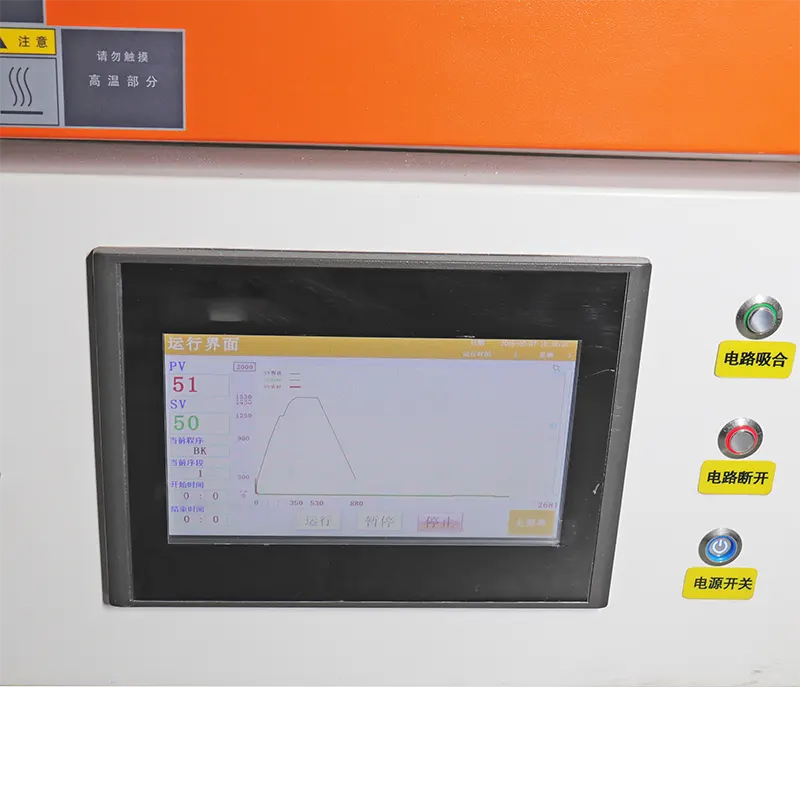
Matching Capacity and Workflow Without Overlooking Process Risk
Furnace selection often starts with chamber size and ends with a productivity estimate. That is understandable, but it can miss the real constraint. Throughput is not only the number of units that fit inside the chamber. It is the number of units that can be sintered with an approved cycle, at an acceptable loading density, with the required cooling time, and with the lab's inspection and maintenance routines in place. A furnace that is oversized for the actual workload can be underloaded and difficult to justify; a furnace that is too small encourages crowding and rushed cooling.
The T-Crystal Dental Furnace should be matched to the lab's real production pattern. A clinic or small laboratory may prioritize simple operation, a compact footprint, and reliable single-batch cycles. A larger dental lab may need to plan around multi-unit batches, different zirconia materials, and a schedule that separates daytime and overnight work. The right configuration depends on the mix, not on a single headline number.
Throughput, cycle time, and batch discipline
Cycle time includes heating, hold, cooling, and the time needed to load and unload safely. The lab should calculate capacity using the validated cycle time, not an idealized fast cycle. If a furnace is expected to run several batches per day, the lab should ask whether the schedule allows the chamber to stabilize between loads. Back-to-back loading can change the starting condition of the furnace and the effective thermal profile, especially if the previous cycle has not returned to a stable baseline.
For the T-Crystal Dental Furnace, batch discipline means deciding in advance how many units and which types of work may share a cycle. Mixing large frameworks with small units may be acceptable under some conditions, but it should be validated rather than assumed. The same applies to mixing materials. Different zirconia materials may require different validated cycles, and a shared cycle can become a compromise that is not supported by the material supplier.
Planning maintenance before the schedule depends on it
Maintenance is part of capacity. A furnace that is fully booked has little room for unexpected downtime. The lab should establish a maintenance plan for the T-Crystal Dental Furnace based on the manufacturer's instructions and its own usage rate. Inspection of seals, sensors, heating components, and chamber condition should be scheduled before a failure interrupts production. Records of cycles, maintenance, and abnormal observations make it easier to investigate a change in results.
Operator training is equally important. A furnace can be technically capable and still produce inconsistent work if different people load it differently, select programs from memory, or unload early to meet a deadline. Standard work instructions should define who may change a program, how a load is positioned, what to check before starting, and what to do when an abnormality appears. The T-Crystal Dental Furnace should be treated as a controlled process asset, not as a shared appliance.
Quality Checks, Troubleshooting, and Selection Criteria
A dental lab needs a practical way to confirm that sintering is under control. The checks should be proportionate to the risk and should produce records that can be reviewed when something changes. Visual inspection for color, surface, and obvious distortion is a start, but it is not enough on its own. Fit checks, dimensional verification where appropriate, and comparison with known-good units help separate a material issue from a furnace issue or a loading issue.
When a problem appears, the first step is to define it precisely. Is the issue color, translucency, fit, distortion, surface quality, or strength-related performance? When did it begin? Did it affect one position in the chamber or the whole load? Did it appear after a program change, a setter change, a maintenance event, or a new material lot? These questions prevent random adjustment of the furnace. Changing the profile without evidence can turn a single batch problem into a persistent process drift.
A practical troubleshooting sequence
- Confirm that the correct validated program was selected and completed.
- Review the load pattern, setter condition, and chamber cleanliness.
- Compare the affected units with their position in the chamber and with other units in the same batch.
- Check the material lot, restoration history, and any change in milling or finishing.
- Review furnace records, recent maintenance, and any abnormal observation during heating or cooling.
- Only after these checks should the lab consider a controlled revalidation of the cycle.
The T-Crystal Dental Furnace should be evaluated with the same discipline. A single abnormal batch does not prove that the furnace is unsuitable, and a single good batch does not prove that the process is stable. The useful evidence is a pattern of repeatable results under defined loading and cycle conditions. That evidence should be documented and retained.
Selection criteria for the T-Crystal Dental Furnace
When comparing sintering options, the T-Crystal Dental Furnace should be assessed against the lab's actual process requirements rather than a generic feature list. The following criteria are useful because they connect equipment selection to the quality system:
- Material compatibility: the furnace must be suitable for the zirconia materials and indications the lab processes, with cycles validated according to the material supplier's instructions.
- Thermal reproducibility: the furnace should demonstrate stable control and a defined working zone under realistic loading, not only in an empty chamber.
- Program control: cycle entry, selection, and verification should reduce the risk of choosing or editing the wrong program.
- Cooling discipline: the workflow should support the required cooling path and prevent premature unloading.
- Loading and contamination control: the chamber, furniture, and setter practice should be compatible with clean dental lab operation.
- Service and documentation: maintenance requirements, spare parts, and operating instructions should be clear enough to support long-term use.
- Workflow fit: capacity, footprint, and cycle time should match the lab's real production pattern, including peak periods and overnight work.
The product page for the dental sintering furnace is the appropriate place to confirm the current configuration, available options, and technical details. Those details should then be checked against the lab's validated process, not treated as a substitute for validation. A furnace becomes part of a quality system only when its behavior is understood, its limits are respected, and its cycles are supported by evidence.
For laboratories working with dental zirconia, the most reliable path is to start with the material supplier's cycle, define a repeatable loading pattern, verify the furnace's response, and document the result. The T-Crystal Dental Furnace can then be evaluated as what it needs to be: a controlled thermal platform for a process that depends on consistency, not a source of heat alone. Changsha Tianchuang Powder Technology Co., Ltd. (TENCAN) presents the T-Crystal Dental Furnace within its sintering series, and the practical selection decision should remain anchored in material requirements, chamber practice, and the lab's ability to reproduce a validated cycle.