
Micro-computerized Touch Screen Planetary Ball Mill: Precision, Control, and Efficiency for Laboratory Grinding
In modern materials research and powder processing, achieving consistent and reproducible particle size reduction is often a challenge. Many laboratories need a milling solution that combines high-energy output with precise control over grinding parameters, while also being easy to operate and monitor. The Micro-computerized Touch Screen Planetary Ball Mill addresses these needs by integrating a user-friendly touch interface with the powerful planetary motion mechanism, giving researchers direct command over speed, time, and direction cycles.
This article walks you through the working principle, key features, practical applications, and selection considerations of this type of planetary ball mill. Whether you are preparing nano-materials, mixing battery electrode powders, or conducting mechanical alloying experiments, understanding how to leverage this equipment can significantly improve your workflow and results.
How Does a Micro-computerized Touch Screen Planetary Ball Mill Work?
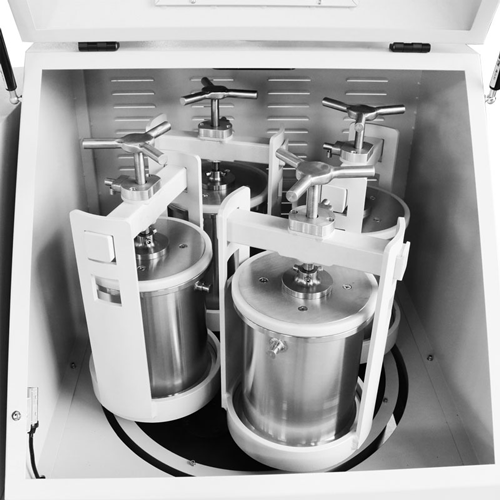
Like all planetary ball mills, this equipment uses a unique combination of rotation and revolution. The grinding jars are mounted on a rotating sun disc, and each jar also rotates around its own axis in the opposite direction. This planetary motion generates high centrifugal forces that cause the grinding balls to impact and shear the powder material repeatedly.
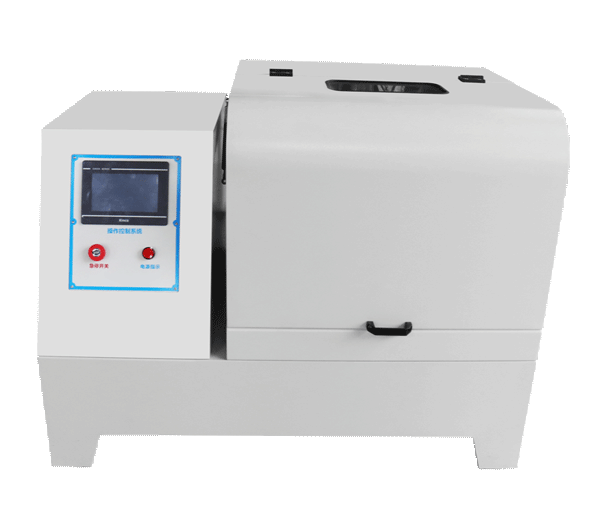
The key difference in this model is the micro-computerized control system. Instead of manual knobs or simple timers, a touch screen interface allows you to set and store multiple parameters. You can program forward and reverse rotation, pause intervals, and total grinding time with high accuracy. This level of control is especially valuable when you need to repeat the same experiment multiple times or when you are optimizing a process for a new material.
Key Features That Make a Difference in Laboratory Work
Touch Screen Programming and Data Storage
The touch screen is not just a display—it is the central control hub. You can set the rotational speed (typically ranging from around 50 rpm to 600 rpm depending on the model and jar configuration), grinding time, and direction cycles. Many micro-computerized models allow you to save up to several sets of parameters, which is helpful when you work with different materials that require specific milling conditions.
For example, if you are grinding hard ceramic powders, you might use a higher speed with short forward-reverse cycles to reduce heat buildup. For softer organic materials, lower speeds and longer continuous runs may be more suitable. The ability to switch between saved programs saves time and reduces the risk of manual input errors.
Planetary Motion and High-Energy Milling
The planetary drive system in this ball mill creates a high-energy environment. The grinding balls inside the jar can reach speeds that generate impact forces many times greater than gravity. This allows for rapid size reduction, often reaching sub-micron or even nanometer range in a reasonable time—depending on the material, ball-to-powder ratio, and other factors.
It is important to remember that the final particle size is influenced by the material properties, initial particle size, grinding ball diameter, jar material, and whether you are using dry or wet grinding. No single parameter guarantees a specific result, but the micro-computerized control helps you systematically test and refine your process.
Versatile Grinding Modes: Dry, Wet, and Vacuum/Inert Gas
This planetary ball mill supports both dry and wet grinding. For wet grinding, you add a liquid (such as water, ethanol, or isopropanol) to the jar along with the powder and balls. This can reduce agglomeration and help achieve finer particles. The machine can also be equipped with vacuum or inert gas grinding jars, allowing you to process materials that are sensitive to oxygen or moisture, such as lithium battery cathode powders, metal hydrides, or certain metal powders.
Always check the sealing performance of the jar before running reactive materials. The micro-computerized system can be programmed to pause and vent if necessary, but the jar itself must be properly sealed.
Typical Applications in Research and Industry
The Micro-computerized Touch Screen Planetary Ball Mill is widely used in laboratories across various fields. Here are some common scenarios:
- Nanomaterials Synthesis: Grinding down particles to the nanometer scale for studying size-dependent properties.
- Battery Material Preparation: Mixing and milling active materials, conductive agents, and binders for lithium-ion or solid-state battery electrodes.
- Ceramic and Glass Powder Processing: Reducing particle size and improving homogeneity in ceramic slurries.
- Mechanical Alloying: Creating alloy powders from elemental metals or compounds through repeated cold welding and fracturing.
- Pharmaceutical and Chemical Milling: Fine grinding of active pharmaceutical ingredients (APIs) or catalyst precursors.
- Geological and Mineral Sample Preparation: Processing soil, ore, and rock samples for analytical testing.
Because the machine is compact and easy to program, it fits well in both university labs and industrial R&D centers where space is limited and multiple users need to share the equipment.
Selecting the Right Configuration for Your Work
When choosing a Micro-computerized Touch Screen Planetary Ball Mill, you need to consider several factors that affect both the grinding performance and the convenience of use.
Jar Capacity and Material
Common laboratory jar sizes range from 50 mL to 500 mL per jar, with four-jar models being typical. The total grinding capacity is usually about one-third to one-half of the jar volume, as you need to leave room for the grinding balls and the movement of the powder. For example, with a 250 mL jar, you might process around 50–80 mL of material per batch, depending on the material density.
Jar materials include stainless steel, agate, zirconia, alumina, tungsten carbide, and nylon. The choice depends on your contamination tolerance and the hardness of your sample. For trace analysis, agate or zirconia jars are often preferred to minimize metal contamination.
Grinding Ball Size and Material
Grinding balls are available in various diameters, typically from 1 mm to 20 mm. Larger balls (10–20 mm) provide stronger impact forces and are suitable for breaking down coarse particles. Smaller balls (1–5 mm) generate more contact points and are better for fine grinding and dispersion. A mix of sizes can sometimes improve efficiency.
The ball material should match or exceed the hardness of the sample. Common choices include stainless steel, zirconia, agate, and tungsten carbide. For wet grinding, chemical compatibility with the liquid medium is also important.
Speed and Cycle Programming
With the touch screen, you can set the rotational speed in increments. Higher speeds increase energy input but also raise temperature. If your material is heat-sensitive, you can program intermittent operation—for example, 10 minutes of grinding followed by 5 minutes of pause for cooling. The micro-computerized system makes this easy to set up and repeat.
Voltage and Frequency
Check the local voltage and frequency (e.g., 110V/60Hz or 220V/50Hz) to ensure the machine matches your lab supply. Many models support both, but you should confirm with the supplier.
For a detailed look at the technical specifications and available options, you can visit the product page for the Micro-computerized Touch Screen Planetary Ball Mill. If you need a model designed for use inside a glove box, the Micro Planetary Ball Mill (Glove Box Edition) may be a better fit.
Practical Tips for Better Grinding Results
Even with an advanced control system, the quality of your grinding results depends on how you set up the experiment. Here are a few practical suggestions:
- Start with a reasonable ball-to-powder ratio. A common starting point is around 10:1 by weight, but you may need to adjust based on your material. Harder materials often require higher ratios.
- Use the correct fill level. Grinding balls should occupy about 30–50% of the jar volume. The total material (powder plus liquid) should fill the remaining space so that the balls can move freely.
- Consider pre-crushing. If your feed particles are larger than 3–5 mm, it is often beneficial to crush them first using a jaw crusher or hammer mill. This reduces the grinding time and protects the jar from excessive impact.
- Monitor temperature rise. If you notice the jar becoming too hot to touch, use the pause function to let it cool. For very temperature-sensitive materials, consider a low-temperature planetary ball mill or cryogenic milling.
- Keep records. Use the saved program feature to store your optimized parameters. Note the material, ball size, ratio, speed, time, and final particle size for future reference.
Remember that optimal parameters are material-dependent. What works for one ceramic powder may not work for another. The advantage of the micro-computerized touch screen system is that you can quickly iterate and find the best conditions.
Understanding the Limits: What This Mill Can and Cannot Do
While the planetary ball mill is a powerful tool, it is not a universal solution. It is designed for batch processing of typically small quantities (from a few grams to a few hundred grams per run). If you need continuous production, you would need a different type of mill, such as a continuous planetary ball mill or a ball mill with a different design.
Also, the final particle size is influenced by many factors. Although sub-micron or nano-scale results are achievable for many materials, you should not expect guaranteed nano-grinding for every sample. The equipment provides the energy and control, but the material's own properties ultimately determine the limit.
For samples that are extremely ductile or heat-sensitive, alternative methods such as cryogenic milling or ultrasonic dispersion may be more appropriate. The micro-computerized touch screen planetary ball mill excels in the middle ground: it offers high energy, flexible programming, and good repeatability for a wide range of laboratory grinding tasks.
If you are planning to purchase such a mill, it is helpful to prepare the following information for your equipment supplier: material type, initial particle size, target particle size, batch quantity, preferred jar material, acceptable contamination level, and whether you need vacuum or inert gas capability. This allows the supplier to recommend the most suitable model and accessories.
For further exploration, you can browse the complete planetary ball mill series to compare different models, including the Vertical Square Planetary Ball Mill and the Laboratory Full-Directional Planetary Ball Mill.
By understanding the capabilities and limitations of the Micro-computerized Touch Screen Planetary Ball Mill, you can make informed decisions that improve your research efficiency and powder quality.