
Small Ball Mill with Ceramic Jar: Lab Guide
Laboratory milling often fails not because the material is difficult to grind, but because the chosen jar, media, and operating method introduce variables that are hard to control. A sample may pick up iron, change color, agglomerate, or show a particle-size distribution that cannot be repeated from one batch to the next. For small batches of pigments, ceramics, minerals, battery materials, catalysts, pharmaceuticals, and other specialty powders, those problems are expensive. The small ball mill with a ceramic jar addresses a specific part of that problem: it keeps the sample in a ceramic grinding jar while a roller-based mill rotates the jar at a controlled speed. The result is a compact, accessible platform for method development, comparative testing, and small-scale production of slurries or dry powders.
The small ball mill with a ceramic jar offered by Changsha Tianchuang Powder Technology Co., Ltd (TENCAN) is one example of this laboratory format. It is intended for small-batch work where the jar, media, and operating method can be adjusted and recorded. That makes it useful for labs that need to compare formulations, verify a milling route, or prepare a limited quantity of material without building a full production line.
What a Small Ball Mill with a Ceramic Jar Does
A jar mill is a simple machine in principle. One or more cylindrical jars sit on driven rollers. As the rollers turn, friction rotates the jar. Inside, grinding media tumbles, cascades, and sometimes drops against the sample bed. Size reduction comes from a combination of impact, compression, and shear, with attrition becoming more important as particles become finer. The small ball mill with a ceramic jar applies this principle in a bench-scale format, using a ceramic jar as the grinding chamber rather than a metal jar or a built-in metal-lined bowl.
This distinction matters. In a metal jar, the grinding chamber, lid, and media can all contribute wear debris. A ceramic jar changes the contact surface between the sample and the mill. It can reduce the risk of metallic contamination, which is important for white pigments, electronic ceramics, glass, catalysts, battery precursors, and any sample where iron or other transition metals affect color, electrical behavior, or phase purity. Ceramic is not automatically inert in every chemical system, and it is not unbreakable. The correct ceramic composition, jar condition, and cleaning procedure still need to be confirmed for the specific material.
The roller-jar working principle
The jar rotates around its horizontal axis. Media inside the jar is lifted by the wall and then falls or rolls back into the sample. At low rotational speed, the media charge may slide or roll with limited impact. At a higher speed, the media cascades more actively and transfers more energy to the powder. At an excessive speed, media can centrifuge against the jar wall and lose the relative motion that does the work. Because the usable speed window depends on jar diameter, media size, media density, and fill level, a setting that works for one jar should not be copied blindly to another.
The ceramic jar also influences the energy path. Ceramic walls are typically smoother and harder than many metal surfaces, but they can be more brittle. Media that is too large or too dense for the jar, or a jar that is worn or chipped at the lip, can create a failure risk. The practical operating range is therefore a balance between sufficient grinding energy and protection of the jar. This is one reason a small mill is often used for careful method development rather than for careless high-energy operation.
Where the ceramic jar changes the decision
The choice is most relevant when the sample value is high, the batch is small, and contamination control has a direct effect on the result. Examples include:
- white or light-colored powders where iron pickup produces a visible color shift;
- electronic ceramics, dielectric powders, and glass frits where metal contamination can change electrical or optical properties;
- catalysts and catalyst supports where trace metals can affect selectivity;
- battery and energy-storage precursors where transition-metal contamination is undesirable;
- geological, mineral, and forensic samples where the original composition must be preserved as closely as practical;
- pigments, fillers, and coatings where small hard agglomerates affect gloss, hiding power, or dispersion quality.
For these applications, a ceramic jar is not a decorative upgrade. It is part of the analytical method. The same logic applies to the media. If the sample must remain low in iron, the grinding media should be selected with the same contamination goal in mind, and the jar lid and gasket should be checked for contact with the sample. A ceramic jar paired with unsuitable metal media can still compromise the result.
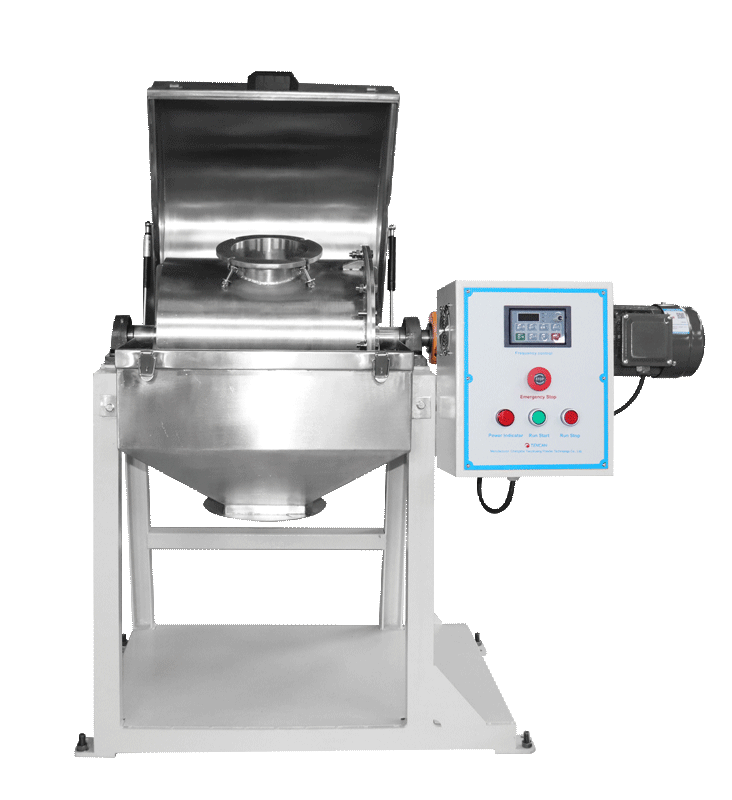
Small ball mill with a ceramic jar for controlled laboratory grinding.
Ceramic Jar Material, Contamination, and Sample Integrity
Ceramic is a broad family, not a single material. Ceramic jars used in laboratories can differ in composition, density, porosity, surface finish, and thermal shock resistance. Those differences affect wear rate, cleaning, and the risk of sample interaction. When selecting a small ball mill with a ceramic jar, ask for the actual jar material and the manufacturer’s guidance on compatible samples. Do not assume that every ceramic jar is appropriate for strong acids, alkaline slurries, high-temperature drying, or abrasive hard phases.
Contamination has three main routes: wear from the jar wall, wear from the grinding media, and handling contamination from lids, gaskets, scoops, or the environment. A ceramic jar can reduce the first route, but it does not remove the other two. If the jar lid contains a polymer gasket, check its solvent compatibility. If the sample is a dry powder, static can cause fine particles to cling to the lid and sealing area, where they may be difficult to recover. If the sample is a slurry, liquid can migrate into the lid thread and dry there, creating a cleaning challenge and a source of cross contamination.
Wear is a process variable, not only a maintenance issue
Jar wear changes the grinding environment. A worn surface can be rougher, hold more material, and release more debris. Media wear changes the media size distribution, which in turn changes the breakage rate. For reproducible work, inspect the jar and media regularly, record the inspection, and replace damaged components before they affect a batch. A chipped jar lip may not fail immediately, but it can compromise sealing and contaminate the sample.
The hardness of the sample relative to the jar and media is also important. Very hard, abrasive powders can wear a ceramic jar faster than soft organic powders. The right question is not simply whether ceramic is better, but whether this ceramic is compatible with this sample at this energy level for this number of runs. For unknown samples, start with a conservative milling time and inspect the jar and product before committing to a long run.
Cleaning and cross-contamination
Cleaning is part of method validation. A jar that looks clean can still carry fine powder in scratches, at the lid seal, or around the media. Establish a cleaning sequence that is appropriate for the sample: dry brushing, compatible solvent rinse, ultrasonic cleaning where permitted, and a final drying step. Avoid mixing cleaning agents that could react with the jar material. For trace analysis, include a blank jar run or a wipe test if the analytical method requires it.
Dedicate jars or media to specific material families when cross contamination is critical. Color pigments, battery materials, and trace-metal work often justify separate containers. Label the jar, lid, and media set as a unit, because a mismatched lid or gasket can introduce a leak path. If the jar is used for both dry and wet processing, dry it thoroughly before returning it to dry service.
Finally, distinguish between visible contamination and analytical contamination. A sample can look unchanged while a sensitive measurement detects a shift in iron, zirconium, aluminum, or other elements. The acceptable level depends on the downstream test. This is why the jar material, media, and cleaning procedure should be recorded in the method, not left as informal lab practice.
Jar geometry, sealing, and sample recovery
Jar geometry affects how media and powder move. A jar with a simple cylindrical interior and rounded corners is easier to clean than a jar with deep recesses. The lid and gasket should close securely without trapping powder. For small samples, dead volume matters: material that remains in a corner or under a gasket is material that does not participate in milling and may not be recovered. Ask how the jar is filled, emptied, and checked for residual powder before the method is approved.
Process Variables That Shape Particle Size
Particle size is the result of energy input, breakage mechanics, material response, and time. A small ball mill with a ceramic jar gives the operator control over several variables, but those variables interact. Changing only the milling time may hide the real problem if the media is too small to break the feed or the slurry is too viscous to move.
| Variable | What it changes | Practical implication |
|---|---|---|
| Media diameter | Impact energy and number of contact points | Coarse feed may need larger media; fine grinding may favor smaller media |
| Media density | Energy per collision and jar load | Higher density can improve breakage but increases wear and load |
| Fill level | Media motion and free space | Too little or too much media can reduce effective grinding |
| Rotational speed | Motion regime | Must be set for the jar and media; avoid centrifuging |
| Milling time | Energy dose | Use staged sampling; longer is not always better |
| Feed size | Starting breakage requirement | Pre-crush or screen feed that is too coarse |
| Liquid ratio | Slurry viscosity and particle transport | Balance solids loading and dispersant |
| Material behavior | Fracture, deformation, agglomeration | Soft or temperature-sensitive samples need different settings |
Media size, density, and number of contact points
Larger or denser media delivers more impact energy per collision, which can be useful for coarse or hard feed. Smaller media provides more contact points and can be more effective for fine grinding and deagglomeration, but it may not break large particles efficiently. Media density also affects the energy available at a given speed. A dense medium can improve breakage, yet it increases jar load and wear. The media must be compatible with the jar and the sample; otherwise contamination control is lost.
Media size distribution matters as well. A single narrow size range is easier to reproduce than a mixed charge. If media breaks or wears, the fines can change the grinding behavior and make it difficult to compare runs. Record the media specification, mass, and condition.
Speed, fill level, and run time
Rotational speed controls the motion regime. Too slow, and the charge may simply slide; too fast, and centrifuging can reduce relative motion. The useful range is equipment- and jar-dependent. Fill level has a similar practical window. Too little media may not fill the active path; too much media can limit tumbling and increase load. The sample volume should leave enough free space for media motion, and the jar should not be filled so high that the lid or seal is exposed to excessive powder or slurry.
Run time should be based on intermediate sampling, not on a single fixed habit. For a new material, mill for a short interval, take a representative sample, and inspect for particle size, agglomeration, color, and temperature. Longer milling is not always better. It can increase contamination, alter crystallinity, oxidize sensitive materials, or produce re-agglomeration in a slurry. In some systems, a staged run with short pauses is more useful than one continuous long run.
Feed size, target size, and particle-size distribution
A jar mill is not a primary crusher. Feed that is too coarse for the jar and media will consume time and may damage the jar. Pre-crushing or screening may be needed, depending on the material. The target size also matters. If the specification is a median size, a broad distribution may still be acceptable. If the specification controls the coarse tail or the amount below a certain size, then a single median value is not enough. Use a measurement method that matches the application and report the distribution, not only one number.
Hard and brittle materials usually break by fracture, while soft, ductile, or fibrous materials may deform, smear, or cushion the media. Temperature-sensitive materials may need shorter runs or a different milling route. The ceramic jar itself is not a temperature-control device unless the mill or setup includes one. Do not assume that a ceramic jar will keep a sample cool.
When comparing runs, keep the jar, media, fill, speed, and sampling method consistent. If one variable must change, change only one at a time. A small design-of-experiments plan can be more efficient than trial and error, but the response must be measurable and relevant to the final product.
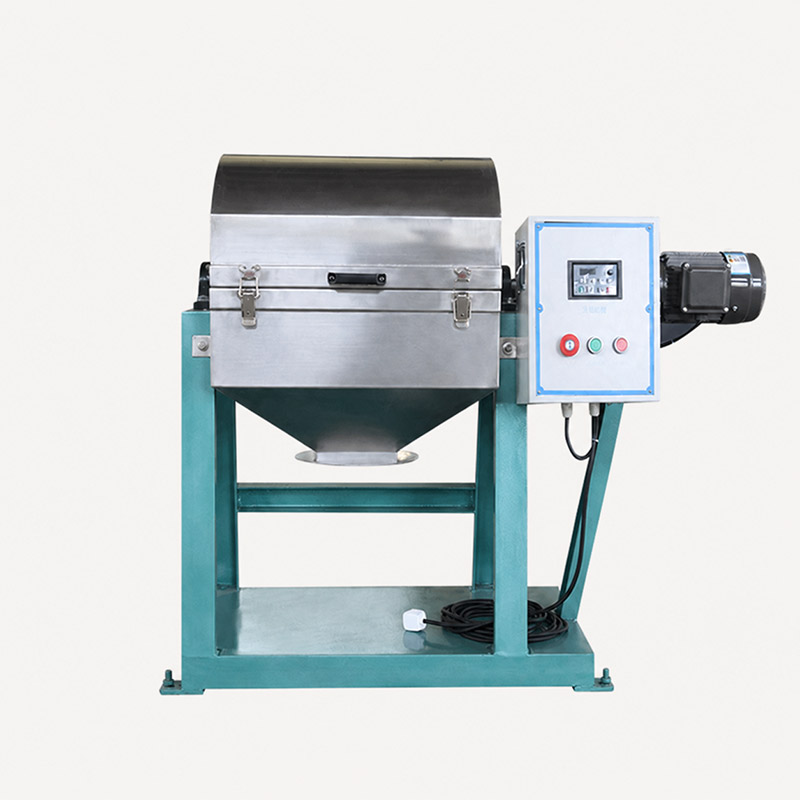
Ceramic jar configuration helps limit metal contact during small-batch milling.
Wet or Dry Milling: Choosing the Right Lab Route
Wet milling is often more effective for fine grinding because the liquid suspends particles, reduces dust, and helps transport material into the media contact zone. It can also reduce re-agglomeration when a suitable dispersant is used. The trade-offs are additional process steps: formulation, viscosity control, contamination from the liquid, and drying or stability of the final slurry. A ceramic jar must be compatible with the liquid and with any dispersant or pH adjustment.
Dry milling avoids solvent handling and drying. It is attractive for small powder samples, materials that react with water, and workflows where the final product must remain dry. However, dry milling can generate dust, static, and caking. Fine powder may coat the jar and media, reducing contact efficiency. In some cases, a dry run produces a good median size but a poor coarse tail because the powder bed cushions impacts. A short wet run may reveal whether the material can be dispersed, but it is not a direct substitute for a dry process.
Slurry viscosity and solids loading
In wet milling, solids loading and viscosity affect media motion. A slurry that is too thick can immobilize the media; a slurry that is too thin may not suspend the particles efficiently. The right range depends on particle density, surface chemistry, and dispersant. Measure viscosity or at least observe flow behavior before and during milling. If the slurry thickens as fines are generated, the process may stall near the target size. Adjust solids loading, dispersant, or milling strategy rather than simply extending time.
Material sensitivity and post-milling handling
Some materials oxidize, hydrolyze, or adsorb moisture during milling. A ceramic jar does not provide an inert atmosphere by itself. If oxygen or moisture must be excluded, the jar and lid system need to be evaluated for sealing and for the feasibility of an inert-gas purge. The same applies to temperature-sensitive samples: confirm whether the setup can control temperature or whether short, staged runs are required.
After milling, recover the sample consistently. Wet-milled slurries should be separated from the media in a way that does not selectively lose fines. Dry-milled powders should be sampled from the whole jar, not only from the top surface. If the process includes drying, record the drying conditions because they can change agglomeration and the measured particle-size distribution.
Dry and wet cleaning after a run
Cleaning is different for the two routes. Dry-milled powder should be removed with a soft brush or vacuum method that does not scratch the ceramic. Wet-milled slurry should be diluted if the process allows, then rinsed before the residue dries. Avoid abrasive scouring pads on a polished ceramic surface. If the jar is allowed to soak, confirm that the liquid is compatible with the jar and gasket. A clean, dry jar is the start of the next reliable run.
For materials that are sensitive to both water and oxygen, the jar mill may not be the simplest solution unless the jar can be sealed and handled appropriately. In that case, the project should start with a compatibility test rather than a full batch. A small trial can reveal whether the ceramic jar, lid, and media are acceptable before a larger quantity of material is committed.
Method Development and Reproducible Scale-Up
A small jar mill is most useful when it produces a method that another operator can repeat. That requires more than a milling time. Record the jar type, jar condition, media material and size, media mass, sample mass, liquid-to-solid ratio, speed setting, total run time, pause pattern, sampling point, and cleaning procedure. Without these details, a successful run becomes an anecdote rather than a process.
Start with a conservative baseline. Use a feed that is already within a sensible size range for the jar, select media that is compatible with both the sample and the jar, and choose a fill level that leaves room for motion. Run a short interval, inspect the product, and then decide whether to continue. This staged approach reduces the risk of over-milling and makes it easier to identify the point at which the size reduction curve flattens.
From bench jar to larger equipment
Scale-up is not a simple volume multiplier. A larger mill has different media dynamics, energy input, and heat removal. A process that works in a small ceramic jar may need different media size, speed, and solids loading in a larger unit. The safest approach is to define the key output requirements first, then test the larger configuration against those requirements. If the small mill is used for quality control, keep a reference material and a reference method so that drift can be detected.
For product development, the small ball mill with a ceramic jar can support formulation screening, comparative grinding tests, and small-lot production. For a production environment, the same technical questions apply, but the equipment must be selected for continuous duty, service access, and the required contamination level. The bench result is a starting point, not a guarantee of production performance.
Reproducibility checks
Run a repeatability check on the same material and method. Compare particle-size distribution, color, bulk density if relevant, and contamination markers. If repeatability is poor, look for the usual causes: inconsistent feed, media wear, jar cleaning residue, variable speed, different filling, or sampling bias. A small change in the lid seal or jar surface can be enough to shift a sensitive result.
Keep the jar and media as a matched set. If a jar is replaced, re-baseline the method. If media is replenished, record the new mass and condition. These practices are simple, but they are often the difference between a robust lab method and one that works only for the person who developed it.
What a good method sheet contains
A useful method sheet is written for the next operator, not for the person who developed the method. It should state the material identification, feed preparation, jar identification, media specification, sample mass, liquid and additive amounts, target speed setting, run and pause times, sampling plan, acceptance criteria, cleaning procedure, and any safety notes. It should also note the measurement method used for particle size or other responses. When a result is outside the expected range, the sheet should make it possible to identify which variable changed.
Reference materials are valuable even when they are not the final product. A stable, well-characterized powder can be milled periodically to check whether the mill, jar, and media are behaving as expected. If the reference result drifts, investigate before running valuable samples. The cause may be a worn jar, a changed media charge, a different speed setting, or a cleaning residue.
Selection Checklist and Common Operating Mistakes
Before choosing a small ball mill with a ceramic jar, define the job in practical terms. What is the feed size, target size, and batch size? Is the product evaluated as a dry powder or a slurry? Which contaminants are unacceptable? What cleaning and drying steps are available? Will the mill run occasionally or daily? These questions narrow the equipment and accessory choices more effectively than a generic capacity comparison.
- Jar material and compatibility: confirm the ceramic type and the supplier’s guidance for the sample chemistry.
- Jar size and working volume: allow free space for media motion and avoid filling to the lid.
- Media compatibility: match media material to the contamination requirement, not only to hardness.
- Speed control: the mill should allow repeatable settings across the intended range.
- Sealing and lid design: check gasket compatibility, ease of cleaning, and leakage risk for slurries.
- Cleaning access: avoid narrow dead zones that trap powder or liquid.
- Service and spares: jars, lids, gaskets, and media should be replaceable.
- Documentation: keep a method sheet that includes all operating variables.
Common mistakes are usually procedural. Overfilling the jar is one. Using media that is too large for the jar is another. Running a dry powder until the jar becomes hot without checking the material is a third. In wet milling, adding too little liquid can produce a paste that stops media motion, while adding too much can reduce the collision frequency. Neither problem is solved by a longer run time alone.
Another frequent error is comparing results from different jar materials without recording the change. A ceramic jar may give a different particle-size distribution from a metal jar because the surface, thermal properties, and wear behavior differ. That does not mean one result is wrong; it means the method has changed. If the goal is contamination reduction, compare the product chemistry as well as the particle size.
Finally, do not treat the mill as a black box. Listen to the jar, observe media motion through the jar if the setup allows, check for unusual vibration, and inspect the product at intervals. A small mill gives fast feedback. Use that feedback to adjust the process before scaling or committing a valuable batch.
A simple run log prevents many of these issues. Record the date, operator, material lot, jar identification, media mass, sample mass, liquid addition, speed, time, and observations. If the result is good, the log explains why. If the result is poor, the log narrows the search. This is especially important when several people share one small ball mill with a ceramic jar.
Practical Questions Before You Run a Batch
Can a ceramic jar eliminate contamination?
No. It can reduce metal contact from the jar, but media, lid components, handling, and the environment can still contribute. The full contact path must be reviewed.
Is a larger media charge always faster?
No. Excess media can limit motion, increase wear, and reduce free space. The right fill depends on the jar, media, and sample.
How do I know the method is finished?
Use the target particle-size distribution and the product requirements, not only a fixed time. Sample at intervals and stop when the required result is reached within the method’s repeatability.
When should I choose wet milling?
Wet milling is often useful when fine dispersion, dust control, or slurry handling fits the downstream process. It requires compatibility checks for the liquid, jar, and dispersant.
For labs that need a compact, controllable grinding platform and want to reduce metal contact in the sample, the ceramic jar roller ball mill is a practical starting point. Match the jar and media to the chemistry, develop a short staged method, and record every variable that affects the result. That approach gives more reliable data than a single long run and makes it easier to move from a bench sample to a repeatable process.