
Manual Tablet Press: A Practical Guide for Laboratory Powder Compaction and Small-Batch Production
When you need to produce a small batch of uniform tablets from powder materials — whether for pharmaceutical development, chemical testing, or ceramic sample preparation — a manual tablet press is often the most practical and cost-effective solution. Unlike large automatic tablet pressing machines that are designed for high-volume industrial production, a manual tablet press gives laboratory researchers and small workshops precise control over each compression cycle without requiring compressed air or complex electrical installations. This article explains how a manual tablet press works, what materials it can handle, and what factors you should consider when selecting one for your specific application.
What Is a Manual Tablet Press?
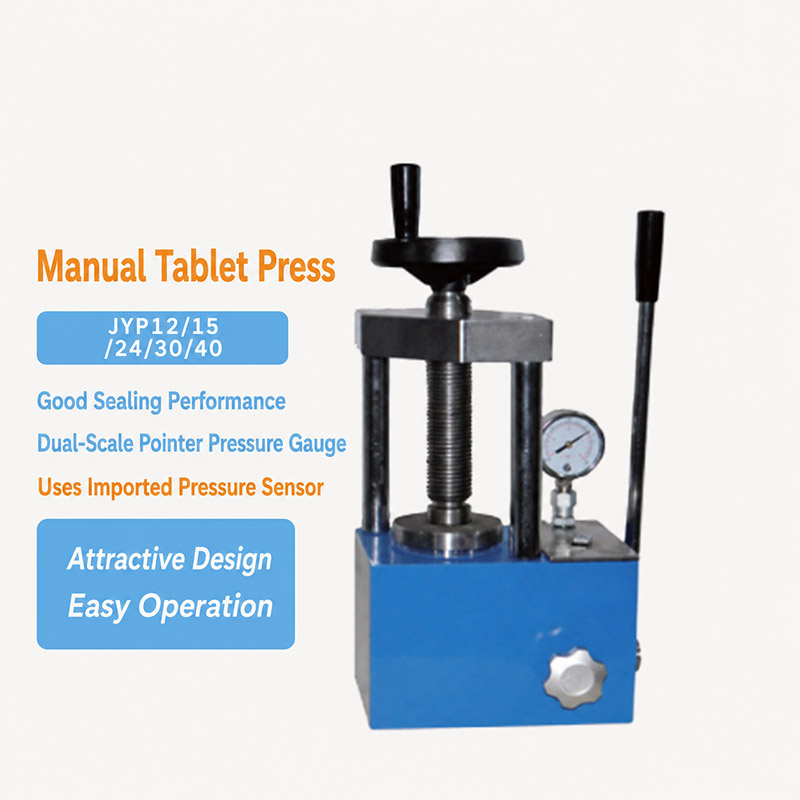
A manual tablet press, also known as a hand-operated tablet press or laboratory tablet press, is a simple mechanical device used to compress powder or granular materials into solid tablets of consistent shape, weight, and hardness. The user manually operates a lever or a handwheel to drive a punch into a die cavity, compacting the powder under a controlled force. Most laboratory-grade manual tablet presses can apply pressures ranging from a few hundred kilograms to several tons, depending on the model. They are widely used in pharmaceutical labs for formulation trials, in chemical laboratories for preparing sample pellets for spectroscopy, in ceramic research for making test discs, and in small-scale manufacturing of confectionery, supplements, or industrial tablets.
How a Manual Tablet Press Works
Understanding the basic operation of a manual tablet press helps you get consistent results and prolong the life of the tooling.
Key Components
- Frame and Lever System: The sturdy steel frame provides rigidity. A lever or handwheel multiplies the force you apply, allowing you to generate high compaction pressures with reasonable hand effort.
- Die and Punches: The die (a hollow cylinder) holds the powder. The upper punch compresses the material from above, while the lower punch determines the bottom shape and can be adjusted to control tablet thickness and weight.
- Adjustable Depth and Pressure Mechanism: Most manual presses allow you to set the fill depth (how much powder enters the die) and the final thickness, indirectly controlling tablet weight and hardness.
Operating Steps
- Die filling: Place the die over a collection plate or table. Pour or feed the powder into the die cavity. Level the powder gently to ensure consistent fill.
- Positioning: Move the filled die under the upper punch. On some presses, the die is fixed and powder is loaded directly into the cavity.
- Compression: Lower the lever or turn the handwheel smoothly and firmly until the desired pressure is reached. Hold for a few seconds to reduce tablet capping or lamination.
- Ejection: Raise the punch, remove the die, and push the tablet out using the lower punch or a separate ejection mechanism.
With practice, an operator can produce 10–30 tablets per minute, depending on tablet size and complexity. This rate is perfectly adequate for most laboratory and small-batch needs.
Main Advantages of Using a Manual Tablet Press
Why choose a manual tablet press over an automatic electric model? Here are the most compelling reasons for laboratory and small-scale operations:
- Low initial cost: Manual presses are significantly cheaper than automatic electric tablet presses. This makes them accessible for university labs, startups, and low-budget projects.
- Simple maintenance: No motors, hydraulics, or electronics to repair. Cleaning and changing dies is straightforward. Spare parts are rarely needed beyond the punch and die set.
- No external power source required: You can use the press anywhere, even in field locations or in rooms without reliable electricity.
- Full operator control: You feel the compression resistance directly, allowing you to adjust force for fragile or sticky powders. This hands-on control is invaluable during formulation development.
- Quiet and safe: Manual operation produces minimal noise. The risk of crushing fingers or tool damage is lower if you follow basic safety procedures.
- Easy to change tooling: Most manual presses accept interchangeable punch and die sets, so you can quickly switch between tablet shapes (round, oval, square, custom) and sizes.
Common Materials Processed with a Manual Tablet Press
The manual tablet press is versatile and capable of compressing a wide variety of powder materials, provided they have adequate flowability and compressibility. Typical applications include:
- Pharmaceutical powders: Active pharmaceutical ingredients (APIs) mixed with excipients for test tablets, stability studies, or clinical trial batches.
- Nutraceutical and food supplements: Vitamin blends, mineral premixes, herbal extracts, and protein powders.
- Chemical reagents: Producing reagent pellets for dissolution testing or catalyst tablets.
- Ceramic and refractory materials: Forming green pellets for sintering evaluation or density measurement.
- Powder metallurgy: Compacting metal powders (e.g., tungsten, bronze, iron) for mechanical property tests.
- Spectroscopy sample preparation: Pressing KBr or other powders into transparent discs for FTIR or XRF analysis.
- Confectionery: Candy tablets, compressed sweets, or breath mints for small-scale production.
Note that very fine, cohesive, or poorly flowing powders may require granulation or the addition of a lubricant (e.g., magnesium stearate for pharma) to achieve consistent filling and tablet quality.
Manual Tablet Press vs. Automatic Electric Tablet Press
For users who are comparing a manual tablet press with an automatic electric tablet press, the decision largely depends on your required output and level of automation. Below is a simple comparison based on common laboratory and small-production scenarios:
| Feature | Manual Tablet Press | Automatic Electric Tablet Press |
|---|---|---|
| Production rate | 10–30 tablets/min (with practice) | 50–300+ tablets/min |
| Force control | Manual feedback (operator dependent) | Programmable, consistent, high repeatability |
| Initial cost | Low (hundreds to low thousands USD) | High (thousands to tens of thousands USD) |
| Power requirement | None (manual) | Electricity (110–240 V, single/three-phase) |
| Maintenance | Minimal | Moderate (motor, controls, wear parts) |
| Best suited for | R&D, small batches, multiple formulations | Medium to large production, consistent daily runs |
If you are only producing a few hundred tablets per day or need extreme flexibility in die shapes and formulations, a manual tablet press is often the better choice. For repetitive, high-volume runs where consistency and labor savings matter, an automatic electric tablet press deserves consideration. You can learn more about the features of automatic electric tablet presses to compare options.
How to Select the Right Manual Tablet Press
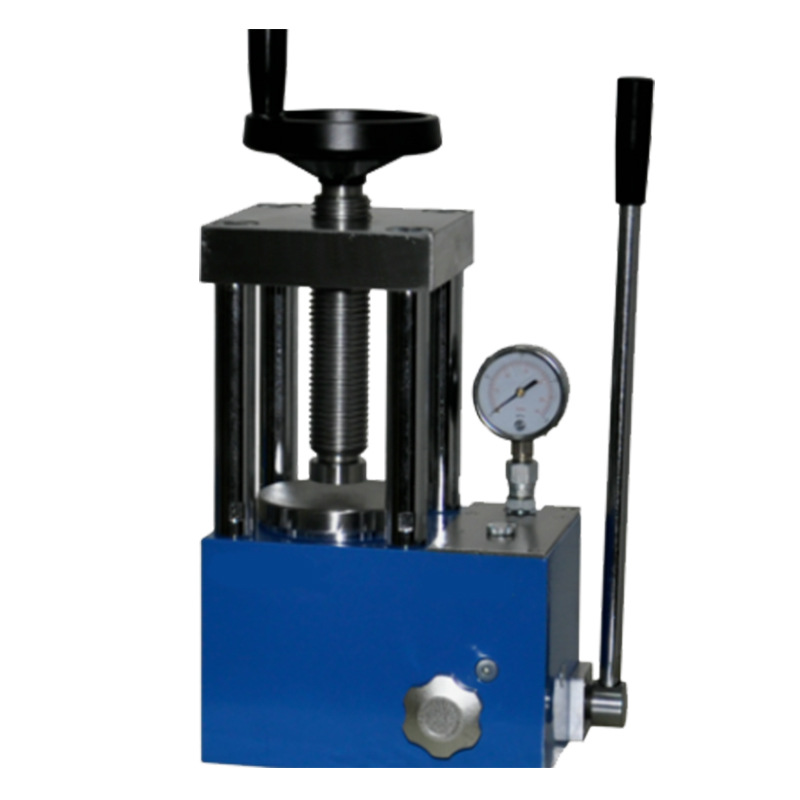
Choosing a manual tablet press suitable for your application involves evaluating a few key specifications and features:
1. Maximum Compression Force
Most laboratory manual tablet presses offer forces between 1.5 tons and 10 tons. An approximate guide: For pharmaceutical tablets (diameter 6–13 mm), 1.5–5 tons is usually sufficient. For harder materials like ceramics or metal powders, 6–10 tons may be needed. Select a press that covers your maximum required force without operating at its limits all the time.
2. Die and Punch Compatibility
Check whether the press accepts standard die sets (commonly B or D type tooling) or requires proprietary tooling. The ability to use interchangeable dies allows you to produce different tablet shapes and sizes from the same machine.
3. Fill Depth Range
The fill depth determines how much powder can be loaded in one stroke. Typical maximum fill depths range from 10 mm to 30 mm. Tablet thickness output usually ranges from about 2 mm to 10 mm. Ensure the press can accommodate your tablet dimensions.
4. Construction Material and Durability
Look for a press made of quality steel or cast iron, with a robust lever mechanism. The working surfaces should be clean and free of burrs. For pharmaceutical and food use, the press should be easily cleanable and made of corrosion-resistant materials (stainless steel for contact parts is preferred).
5. Ease of Adjusting Tablet Weight and Hardness
A good manual press allows you to independently adjust the fill depth (tablet weight) and the compression distance (tablet hardness). Look for clearly marked scales and locking mechanisms.
6. Portability and Footprint
Many manual tablet presses are compact enough to sit on a bench. If you need to move the press between labs or store it away, consider a lightweight model with a smaller footprint.
Practical Tips for Getting Consistent Results
Even with a manual press, you can achieve good reproducibility by following these practices:
- Weigh the powder for each tablet: For critical applications, weigh the powder dose individually to ensure consistent fill weight. This minimizes variation in tablet mass and hardness.
- Use a consistent compression technique: Apply the lever or handwheel at a steady speed and hold the final position for 2–3 seconds to allow stress relaxation. This reduces the risk of capping (the top layer breaking off).
- Lubricate the die and punches when needed: A small amount of magnesium stearate or a similar lubricant prevents sticking and prolongs tool life. Be careful not to over-lubricate, as it may affect tablet properties.
- Clean the tooling after each batch: Residual powder buildup can affect next-day operation and introduce cross-contamination. Use a soft brush or cloth. Do not use abrasive cleaners on the punch faces.
- Record the force or lever position: If your press does not have a gauge, you can mark the lever position that gives you the desired tablet hardness. This allows you to repeat the same force batch after batch.
Safety Considerations
Although a manual tablet press is generally safe, you should still observe basic precautions:
- Keep fingers and loose clothing away from the moving punch and die area during compression.
- Always use the press on a stable, flat work surface. Clamp the press down if possible.
- Do not exceed the rated maximum force of the press. Overloading can cause tool breakage or frame deformation.
- When changing dies, ensure the press is in a neutral position and cannot accidentally release stored energy.
- Wear safety glasses when handling powders, and use a dust mask if the material is fine or irritant.
Final Thoughts
A manual tablet press remains a reliable, affordable, and flexible tool in any laboratory that deals with powder compaction. It gives you hands-on control over your tableting process, requires minimal infrastructure, and allows rapid changeovers between different tablet designs. While it cannot match the speed of automatic electric tablet presses, its simplicity and low cost make it the ideal starting point for research, development, and small-batch production. If you are in the market for a manual tablet press, evaluate your typical batch size, required force, and tablet dimensions, then choose a model that offers solid construction and easy die changes. With proper technique, you will be able to produce high-quality tablets for years to come.