
What is a Horizontal Tube Furnace? A Precision Tube Furnace for Material Heat Treatment and Synthesis
Introduction
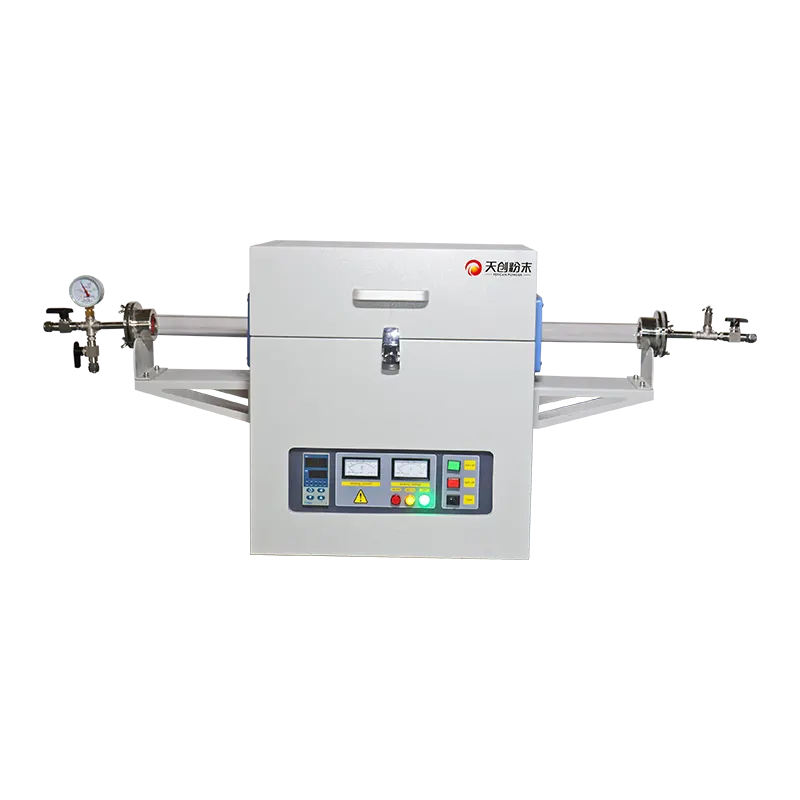
At its core, a horizontal tube furnace is a specialized thermal processing device designed for heat treatment, sintering, annealing, and materials synthesis under controlled atmospheres. Laboratories and industries use it to subject solid materials to precise temperature profiles in a horizontal quartz or ceramic tube. It is an indispensable tool for applications such as chemical vapor deposition (CVD), oxidation, diffusion, crystal growth, and carbon nanotube synthesis.
Core Function and Working Principle
The primary function of a horizontal tube furnace is to convert materials from their initial state to a desired processed state through controlled heating. The core component is a horizontally oriented furnace body that encloses a cylindrical process tube (typically made of quartz, alumina, or mullite). Heating elements surround the tube and generate heat via electrical resistance. The sample is placed inside the tube, often in a boat or crucible, and heated to target temperatures ranging from 900°C to 1200°C or higher.
The working principle relies on radiant heat transfer and, in some configurations, forced convection. The furnace is equipped with temperature controllers and thermocouples to maintain uniform temperature along the heated zone. Key process parameters include temperature setpoint, ramp rate, soak time, and gas flow rate (for reactive or inert atmospheres). These parameters directly affect the final product's quality, such as crystallinity, film thickness, or chemical composition.
For advanced applications, multiple heating zones allow independent temperature control, enabling gradient heating or precise thermal profiles. Gas inlet and outlet ports facilitate the introduction of process gases (e.g., nitrogen, argon, hydrogen) and exhaust. Vacuum capabilities extend the furnace's utility for processes requiring low-pressure environments.
Types and Configurations
Single-Zone vs. Multi-Zone Horizontal Tube Furnaces
Single-zone furnaces have one heating zone with a uniform temperature profile, ideal for simple annealing or sintering where consistent temperature is required. Multi-zone furnaces (e.g., two-zone or three-zone) provide independent control of each zone, allowing temperature gradients along the tube. This is critical for processes like chemical vapor deposition (CVD) where precursor decomposition and deposition occur at different temperatures.
Atmosphere-Controlled vs. Vacuum Horizontal Tube Furnaces
Standard horizontal tube furnaces operate under flowing inert or reactive gases. For oxygen-sensitive materials, vacuum tube furnaces can evacuate the tube before backfilling with process gas. Vacuum tube furnaces are essential for degassing, reduction, and sintering under controlled oxygen partial pressure.
Standard Tube Furnace vs. Rotary Tube Furnace
While standard horizontal tube furnaces have a stationary tube, rotary tube furnaces rotate the tube to improve mixing and heat transfer for powder processing. Horizontal tube furnaces from TENCAN typically offer modular designs with interchangeable tubes and end plugs to accommodate various tube diameters and lengths.
Key Performance Indicators and Selection Criteria
When selecting a horizontal tube furnace, several specifications must be evaluated:
- Maximum Temperature: Standard models reach 1200°C, but high-temperature options up to 1700°C are available for specialized ceramics.
- Temperature Uniformity: Typically ±1-5°C over the heated length for single-zone, tighter for multi-zone.
- Tube Diameter and Length: Determines sample size and throughput. Common inner diameters range from 25 mm to 100 mm.
- Heating Rate: Programmable ramp rates (e.g., 1-20°C/min) are crucial for preventing thermal shock.
- Gas Flow Control: Mass flow controllers or rotameters for precise gas mixtures.
- Vacuum Level: For vacuum models, ultimate vacuum (e.g., 10 Pa or 10^-3 Pa) determines process capability.
- Control System: PID temperature controllers with programmable profiles, often with touchscreen interfaces and data logging.
- Safety Features: Over-temperature protection, gas leak detection, and automatic shutdown.
Maintenance is straightforward: regular cleaning of the tube and inspection of heating elements are recommended. Insulating end plugs (like Carbolite type C plugs) help reduce heat loss and improve uniformity.
Applications and Selection Advice
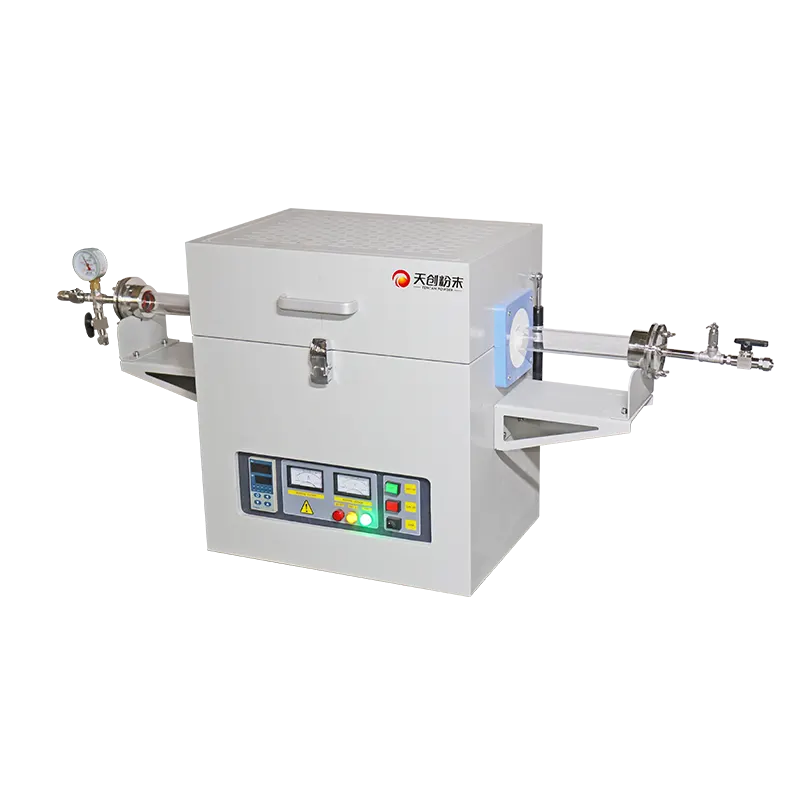
Horizontal tube furnaces are widely used in materials science, nanotechnology, chemical engineering, and semiconductor research. Common applications include:
- Annealing and sintering of ceramics and metals
- CVD growth of carbon nanotubes, graphene, and 2D materials
- Oxidation and diffusion for semiconductor wafer processing
- Crystal growth and thermal decomposition studies
- Thermogravimetric analysis (TGA) coupled with furnace
For research laboratories requiring flexibility, a single-zone furnace with programmable controller and gas capability is a cost-effective choice. For production or complex processes, multi-zone or vacuum models provide superior control. TENCAN offers a range of horizontal tube furnaces suitable for both R&D and small-scale production. For larger throughput, consider rotating tube furnaces or box-type furnaces from the muffle furnace series.