
What is Hanging Tank Flotation Machine? A Laboratory Mineral Separation Equipment for Selective Flotation of Small Ore Samples
What is a Hanging Tank Flotation Machine?
From the core, a hanging tank flotation machine is a specialized laboratory mineral separation device used in geology, metallurgy, building materials, chemical engineering, and mining research laboratories to selectively separate valuable minerals from gangue by froth flotation. It is designed for processing small ore samples (typically 5 to 1000 grams) to simulate and optimize industrial flotation processes.
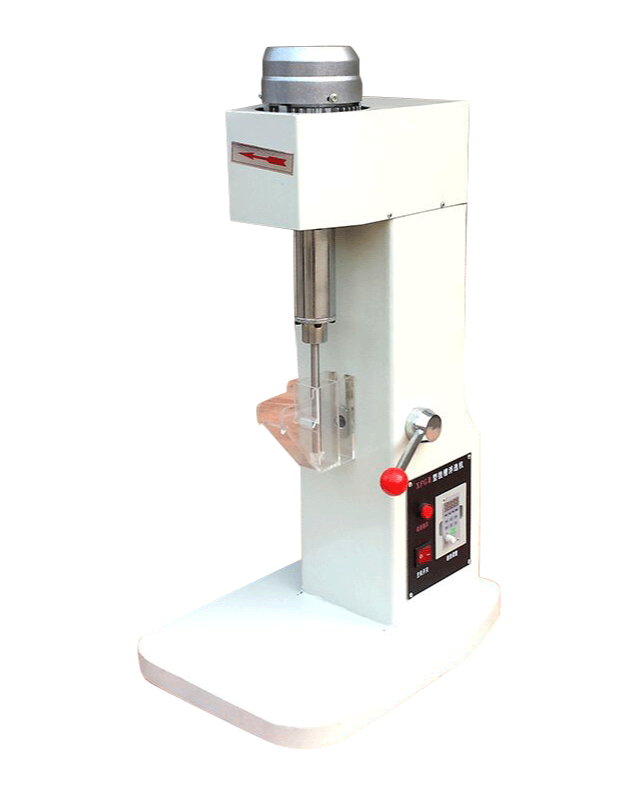
Core Function and Working Principle
The hanging tank flotation machine transforms a mixed slurry of finely ground ore and water into a concentrate and tailings by exploiting differences in surface hydrophobicity. The key working mechanism involves:
- Agitation and Aeration: The motor drives the impeller, creating a centrifugal force that draws air into the slurry and disperses it into fine bubbles.
- Mineral Attachment: Hydrophobic (valuable) particles attach to the air bubbles, while hydrophilic (gangue) particles remain in the pulp.
- Froth Collection: The mineral-laden bubbles rise to the surface, forming a froth layer that is scraped off by a rotating scraper. The remaining slurry (tailings) is discharged or further processed.
Critical process parameters include impeller speed (1000-1850 r/min), aeration rate, and froth scraper speed (15-30 r/min). These parameters directly affect bubble size, particle-bubble contact efficiency, and ultimately the grade and recovery of the concentrate.
Main Types and Classification
Hanging tank flotation machines are primarily classified by their effective sample capacity and corresponding impeller geometry. The most common series is the XFG model, which includes:
XFG 5-35 gram
Capacity: 5, 15, 25, 35 grams; cell volume: 20-140 mL; impeller diameter: Φ20, Φ26, Φ30 mm; power: 90 W. Suitable for ultra-small sample testing and preliminary scouting experiments.
XFG 50-100 gram
Capacity: 50, 100 grams; cell volume: 200-400 mL; impeller diameter: Φ36, Φ48 mm; power: 90 W. Ideal for routine beneficiation tests and process optimization.
XFG 250-500 gram
Capacity: 250, 500 grams; cell volume: 1000-2000 mL; impeller diameter: Φ60, Φ64 mm; power: 250 W. Used for larger sample validation and flowsheet development.
XFG 1000 gram
Capacity: 1000 grams; cell volume: 4000 mL; impeller diameter: Φ80 mm; power: 250 W. Designed for scale-up simulation and bulk sample testing.
Each type offers adjustable impeller speed (via belt drive or variable frequency drive depending on the model) and interchangeable cells to accommodate different sample volumes. The selection depends on the required sample mass and the desired residence time for flotation.
Key Performance Indicators and Selection Criteria
When choosing a hanging tank flotation machine, users should consider the following factors:
- Sample Capacity: Match the machine's capacity to your typical batch size. For exploration, 5-100 g units are common; for process development, 250-1000 g units are preferred.
- Impeller Speed Control: Variable speed models (e.g., XFDIII series) allow precise tuning of agitation intensity, critical for replicating different flotation conditions.
- Froth Scraper Speed: Adjustable scrapers (15-30 r/min) enable control over froth removal rate, affecting concentrate grade.
- Material of Construction: Cells and impellers are typically made of corrosion-resistant materials (e.g., polyurethane, stainless steel) to handle acidic or alkaline slurries.
- Automation Features: Advanced models may include LED displays, auto-scraping, and temperature control for reproducible results.
- Ease of Maintenance: The hanging design allows quick cell exchange and cleaning, reducing downtime between tests.
For most laboratories, the XFG series offers a reliable balance of performance and cost, with models available for both manual and automated operation.
Application Areas and Selection Advice
Hanging tank flotation machines are indispensable in:
- Geological Survey: For rapid evaluation of ore samples from drilling cores.
- Mining and Metallurgy: To determine optimal flotation conditions for copper, lead, zinc, molybdenum, and gold ores.
- Building Materials: For processing non-metallic minerals like fluorite, talc, and barite.
- Chemical Engineering: In research on mineral processing reagents and flotation kinetics.
- Educational Institutions: For teaching and laboratory exercises in mineral engineering.
For first-time buyers, starting with a mid-range model like the XFG 50-100 gram is recommended, as it covers the most common sample sizes. If you need to handle both small and large batches, consider a set with multiple interchangeable cells. Always verify the machine's compatibility with your specific ore type and reagent system.