
What is a Hanging Tank Flotation Machine? A Laboratory Flotation Device for Mineral Separation and Concentration
What is a Hanging Tank Flotation Machine?
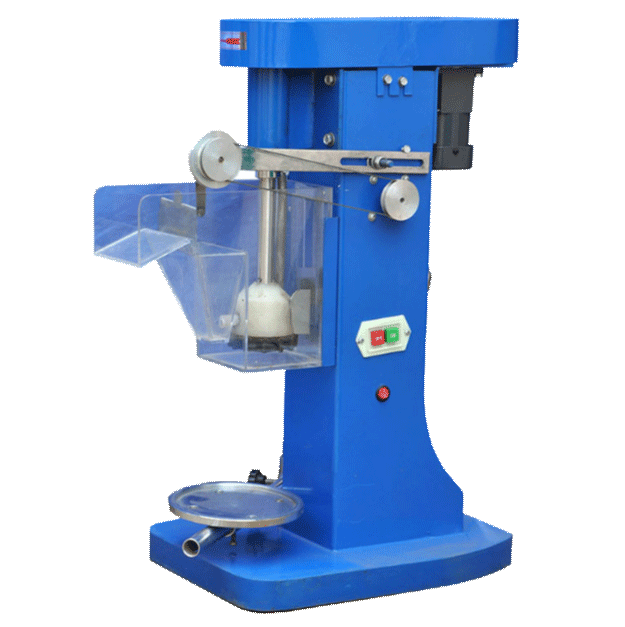
At its core, a hanging tank flotation machine is a specialized laboratory flotation device used for the separation, concentration, and purification of small amounts of ore samples. Professionals in geology, metallurgy, building materials, chemistry, and mining research rely on it to simulate the industrial flotation process on a bench scale. By creating a controlled environment where minerals selectively attach to air bubbles, this equipment helps researchers evaluate the floatability of different ores, optimize reagent dosages, and determine the best processing conditions prior to full-scale production.
Core Function and Working Principle
The primary function of the hanging tank flotation machine is to transform a mixed solid-liquid slurry into a concentrate (rich in valuable minerals) and a tailing (discard waste). The process begins when the ore sample is ground to a specific particle size (typically 0.05–0.2 mm) and mixed with water to form a slurry. Chemical reagents (collectors, frothers, modifiers) are added to the slurry to enhance the hydrophobicity of the target minerals.
Inside the machine, a vertically mounted impeller (driven by an electric motor via a belt and pulley) rotates at a controlled speed (usually 1000–1850 r/min). This rotation creates a centrifugal force that generates a negative pressure zone, drawing air from the atmosphere into the slurry. The air is dispersed into fine bubbles, which rise through the pulp. Hydrophobic (water-repellent) mineral particles attach to the surface of these bubbles, while hydrophilic (water-loving) gangue particles remain in the slurry. The mineral-laden froth rises to the top of the flotation cell, where a scraper blade (rotating at 15–30 r/min) removes it into a collection launder. The remaining pulp is discharged as tailings. By adjusting parameters such as impeller speed, aeration rate, reagent type, and pulp level, the operator can achieve selective separation of different minerals.
Main Types and Classification
Hanging tank flotation machines are typically classified by the capacity of the flotation cell (the “hanging tank”). The most common models are derived from the XFG series, which includes the following standard capacities:
XFG 5-35 grams
Designed for very small samples (5g, 15g, 25g, 35g), with corresponding cell volumes of 20–140 mL. The impeller diameters are 20, 26, and 30 mm, and the speed range is 1000–1850 r/min. This model is ideal for preliminary screening tests when only a few grams of material are available.
XFG 50-100 grams
Handles 50g and 100g samples, with cell volumes of 200 and 400 mL. Impeller diameters are 36 and 48 mm, maintaining the same speed range. This is the most widely used type for standard laboratory flotation tests.
XFG 250-500 grams
For larger sample sizes (250g and 500g), with cell volumes of 1000 and 2000 mL. Impeller diameters increase to 60 and 64 mm, and the speed range is 1500–2000 r/min. This model is suitable when more representative or bulk samples need to be tested.
XFG 1000 grams
The largest laboratory hanging tank machine, handling 1000g samples with a 4000 mL cell. The impeller diameter is 80 mm, and speeds are 900 and 1500 r/min. It is used for advanced process development and scale-up studies.
All models share the same basic construction: a motor-driven impeller, a hanging tank made of transparent acrylic or stainless steel, a scraper mechanism, and a speed control system. Some advanced versions include digital displays, variable frequency drives, and temperature control, but the fundamental operation remains the same.
Key Performance Indicators and Selection Criteria
When selecting a hanging tank flotation machine for your laboratory, consider the following parameters:
- Effective Volume (Capacity): The volume of the flotation cell determines the maximum sample size. Choose a capacity that matches your typical sample weight (e.g., 0.5L, 1L, 1.5L, 3L, 8L). For most research labs, the 1.5L or 3L models are popular.
- Feed Particle Size: The machine can handle feed sizes up to about 0.2 mm. If your ore requires finer grinding, consider a pre-grinding step using a ball mill.
- Impeller Speed and Variability: Speed directly affects bubble size, mixing intensity, and froth stability. Look for a machine with stepless speed adjustment (e.g., 1000–1850 r/min) so you can optimize for different minerals.
- Scraper Speed: Typically 15–30 r/min, which is adequate for most laboratory flotation tests. Some machines allow scraping speed adjustment.
- Motor Power: Usually 90–250 W for lab models. Higher power is needed for larger cells and more viscous slurries.
- Material of Construction: The hanging tank is often made of transparent acrylic for easy observation, while the impeller and shaft are stainless steel. For corrosive pulps, optional PTFE or ceramic coatings are available.
- Automation and Control: Basic models have manual speed control and no digital display. Premium models feature digital speed readout, timers, and even programmable flotation sequences. If you conduct many tests, consider units with better data logging.
- Ease of Cleaning: Quick-release clamps and removable tanks simplify cleaning between tests, reducing cross-contamination.
Energy consumption is generally low (below 0.5 kW) for laboratory units, so it is not a primary selection factor. Maintenance is straightforward: periodic lubrication of bearings, replacement of worn impellers, and cleaning of the tank.
Application Areas and Selection Advice
Hanging tank flotation machines are indispensable tools in mineral processing laboratories, mining company research centers, chemical engineering departments, and universities. Their main applications include:
- Geological Survey: Evaluating the floatability of ore samples from exploration drilling.
- Mineral Processing Research: Developing flotation flowsheets, testing reagent schemes, and optimizing process parameters.
- Metallurgical Industry: Studying the separation of non-ferrous metals (copper, lead, zinc, molybdenum) and ferrous metals (iron, manganese).
- Building Materials and Chemical Industry: Beneficiation of non-metallic minerals such as fluorite, barite, talc, and coal.
- Environmental Remediation: Removing heavy metals or organic contaminants from soil and water using flotation techniques.
For a basic teaching lab or occasional tests, an entry-level XFG 50-100 model with manual speed control is sufficient. For a busy research lab conducting dozens of tests per day, invest in a model with a digital display, variable frequency drive, and multiple cell sizes. If you need to simulate continuous flotation (e.g., rougher-cleaner-scavenger circuits), consider a multi-cell experimental flotation machine that can be configured in series.