
What is a Circulation Oven? A Forced Convection Drying Equipment for Uniform Sample Drying
What is a Circulation Oven? A Forced Convection Drying Equipment for Uniform Sample Drying
At its core, a circulation oven is a professional drying device that laboratories, research institutions, and quality control departments use to remove moisture or solvents from samples, materials, or components through controlled, uniform heating. Unlike static ovens that rely on natural convection, a circulation oven uses a built-in fan or blower to actively circulate hot air throughout the chamber, ensuring consistent temperature distribution and faster drying times. This makes it an essential tool for any process that requires gentle, repeatable, and homogeneous drying conditions.
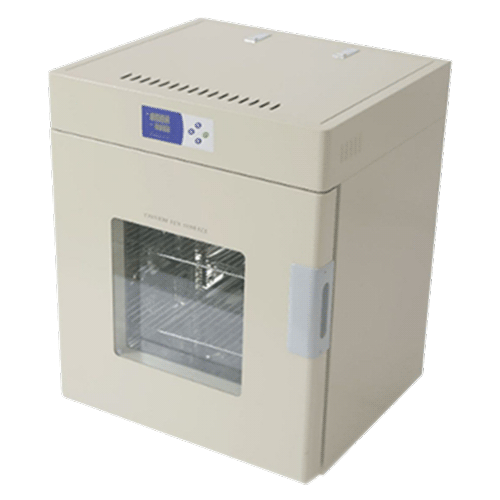
Core Functionality and Working Principle
The basic function of a circulation oven is to transform a wet or moist sample into a dry, stable state using heated, forced air. The key working components include a well-insulated chamber, a heating element (typically electric resistance wires), a powerful fan or blower, and an intelligent temperature controller.
When the oven is turned on, the heating element raises the temperature of the air inside the chamber. The fan continuously draws air from the chamber, passes it over the heater, and then re-circulates it back into the working space. This forced convection creates a turbulent airflow that eliminates hot and cold spots, maintaining a temperature uniformity of typically ±1°C to ±3°C across the entire chamber. The hot air absorbs moisture from the surface of the samples and carries it out through an exhaust vent, accelerating the drying process.
Key process parameters include temperature setpoint (usually ranging from ambient +10°C up to 300°C or higher), heating rate, air exchange rate (adjustable via damper), and drying time. The choice of these parameters directly affects the final moisture content, structural integrity, and chemical stability of the dried product. For example, heat-sensitive biological samples require lower temperatures and longer times, while robust inorganic materials can withstand higher temperatures for faster throughput.
Main Types and Classifications
Circulation ovens are available in several configurations to suit different laboratory needs:
Desktop Air Blower Dryer
Compact and portable, desktop models are ideal for small-scale drying tasks, such as drying glassware, small chemical samples, or electronic components. They typically have a chamber volume of 20–80 liters and feature a simple digital temperature controller. The Desktop air blower dryer is a perfect entry-level choice for routine lab work.
Precision Air Blower Dryer
Designed for applications requiring high temperature accuracy and uniformity, precision models offer advanced PID control, programmable heating profiles, and often include over-temperature protection. They are used in pharmaceutical, food, and material research where repeatable drying conditions are critical. The Precision air blower dryer exemplifies this category with enhanced stability.
Vertical Circulation Oven
In a vertical configuration, the fan is located at the top or bottom, and air flows vertically through the chamber. This design is often favored for drying materials in trays or shelves, as it provides excellent uniformity across multiple layers. The circulation oven itself is typically available in a vertical form factor.
The choice between these types depends on available bench space, required temperature uniformity, sample size, and budget. For most general laboratory drying, a desktop or precision air blower dryer suffices; for larger batches or taller samples, a vertical circulation oven is preferable.
Key Performance Indicators and Selection Points
When selecting a circulation oven, consider the following critical metrics:
- Temperature Range and Uniformity: Most ovens offer a range from ambient +10°C to 300°C. Uniformity (typically ±1°C to ±3°C) is crucial for consistent results. Check the manufacturer's specifications for uniformity at your target temperature.
- Chamber Volume and Capacity: Available from 20 liters to over 800 liters. Choose a volume that accommodates your sample size and allows proper air circulation. Overloading can reduce drying efficiency and uniformity.
- Heating and Recovery Time: Faster heating and recovery after door opening improve throughput. Look for ovens with high-power heaters and efficient insulation.
- Programmability and Control: Advanced models feature programmable temperature profiles, multiple segments, and data logging. This is essential for processes that require ramping, soaking, or cooling cycles.
- Safety Features: Over-temperature protection, door switches, and audible alarms are standard in modern ovens, preventing accidents and sample loss.
- Maintenance and Cleaning: Stainless steel interiors are easier to clean and resist corrosion. Removable shelves and accessible heater elements simplify routine maintenance.
Energy efficiency is also a consideration: models with better insulation and efficient fans consume less electricity and generate less heat in the lab environment.
Application Areas and Selection Advice
Circulation ovens are widely used in chemistry, biology, pharmaceuticals, food testing, electronics, and materials science. Common applications include drying of powders, granules, plant extracts, polymer films, electronic components, and glassware; curing of adhesives and coatings; and thermal stability testing.
For a small academic lab or teaching facility, a desktop air blower dryer offers a cost-effective solution. For industrial QC or R&D labs requiring high precision, a precision air blower dryer is recommended. If you frequently dry large batches or tall items, choose a vertical circulation oven with adequate shelf space and strong airflow.
Always verify that the oven's temperature range and uniformity meet your specific process requirements. Consulting the manufacturer's technical data and, if possible, requesting a performance test can help ensure the right match.