
Electric Lifting Stirred Ball Mill: A Practical Solution for Efficient Wet Grinding in the Lab and Pilot Plant
Why Consider an Electric Lifting Stirred Ball Mill?
When you work with fine and ultrafine wet grinding in a laboratory or pilot plant, you quickly realize that traditional planetary ball mills or jar mills have limitations. They can be inconvenient when you need to change grinding jars frequently, or when you want to scale up from small batches to larger volumes without losing process consistency.
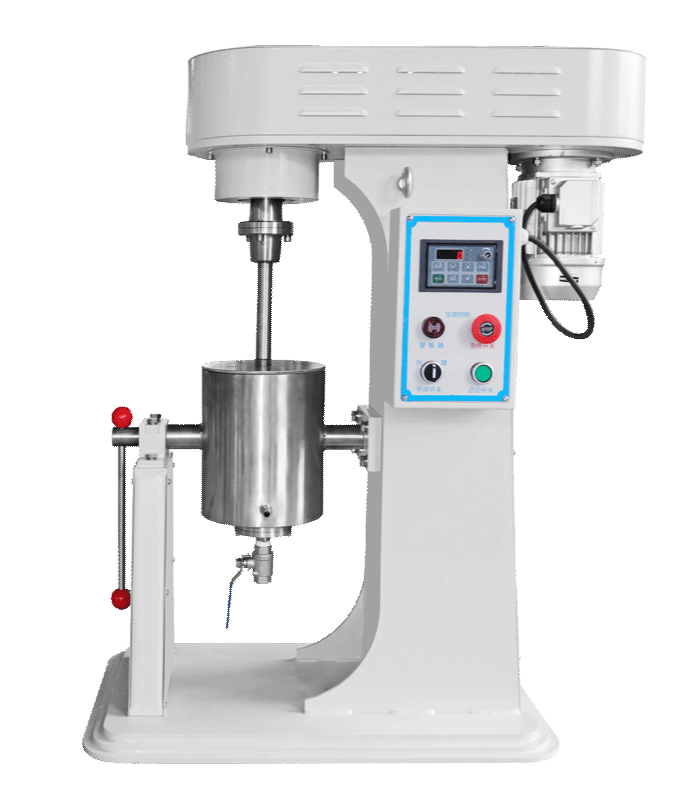
The electric lifting stirred ball mill addresses these challenges directly. It combines the high-energy mixing action of a stirred mill with an electric lifting mechanism that simplifies jar handling. Instead of manually lifting heavy jars or using additional tools, you can raise and lower the grinding chamber with the push of a button. This feature is especially valuable when processing multiple samples or when the mill jar contains hazardous or sensitive materials that require careful handling.
Whether you are grinding ceramics, battery materials, minerals, or chemical compounds, this type of mill offers a practical balance between grinding efficiency, operator convenience, and process control. In the following sections, we will walk through how it works, where it fits best, and what you should consider when selecting one for your application.
How Does an Electric Lifting Stirred Ball Mill Work?
At its core, a stirred ball mill uses an agitator (usually a shaft with discs or impellers) to set the grinding media in motion inside a stationary grinding chamber. Unlike a planetary ball mill, where the entire jar rotates, the stirred mill keeps the jar fixed while the agitator rotates at a controlled speed. This design produces a different flow pattern: the grinding media and the slurry are constantly sheared and compressed, leading to effective particle size reduction, especially in the submicron range.
The “electric lifting” part refers to a motorized mechanism that moves the grinding jar up and down. In many laboratory stirred mills, changing the jar or inspecting the slurry can be awkward. With an electric lift, you can raise the jar to a convenient height for cleaning, sample removal, or replacement. This is not just a convenience feature – it improves reproducibility because you can maintain consistent handling procedures across batches.
Typical rotational speeds of laboratory stirred ball mills range from about 100 to 800 rpm, depending on the model and application. The grinding media commonly used are small balls or beads (0.5 – 3 mm in diameter) made of zirconia, alumina, steel, or agate. Because the mill operates in a wet environment, the slurry viscosity and solid loading become important parameters that influence grinding efficiency and wear.
Key Advantages Over Other Ball Mill Types
If you are familiar with planetary or roller ball mills, you might ask: why choose a stirred mill with an electric lift? Here are several practical benefits that researchers and process engineers often point out:
1. Higher Energy Density for Fine Grinding
Stirred ball mills can deliver more grinding energy per unit volume than conventional tumbling mills. The intense shear and impact between the beads and particles can produce finer particles in a shorter time. Many materials can be ground down to the submicron or even nanometer range, provided the mill parameters are optimized. However, the final particle size depends on material properties, media size, and process conditions – no single mill guarantees a specific size without testing.
2. Easier Jar Exchange and Maintenance
The electric lifting mechanism is a standout feature. If you need to run multiple formulations or clean the jar between experiments, you can simply raise the jar, swap it out, and lower a new one. This reduces downtime and minimizes physical strain, especially when jars hold several liters of slurry.
3. Lower Contamination Risk
Because the grinding jar is sealed and the agitator shaft passes through a lid with a mechanical seal or gland, the system can maintain a closed environment. For materials that are sensitive to oxygen or moisture, the mill can be operated under inert gas by purging the jar before grinding. The closed design also reduces the chance of sample loss or cross-contamination.
4. Scalable Results
Many stirred ball mill designs follow a similar geometry from lab scale to production scale. This means that conditions established in a 1-liter jar can often be transferred to a larger unit with minimal re-optimization. For companies developing new materials or processes, this scalability is a significant time and cost saver.
Common Applications and Material Examples
The electric lifting stirred ball mill is used in a wide range of industries. Below are a few typical applications, though the mill can handle many other materials:
- Battery materials: Grinding cathode and anode powders (LCO, NCM, LFP, graphite, silicon) to submicron size for improved electrode performance.
- Advanced ceramics: Reducing alumina, zirconia, silicon carbide, or silicon nitride particle size for sintering or slurry preparation.
- Mineral processing: Fine grinding of ores (calcite, kaolin, talc, barite) to enhance flotation or pigment properties.
- Chemical and pharmaceutical: Dispersing pigments, dyes, or active ingredients in a liquid medium to achieve uniform particle size and stability.
- Nanomaterials: Producing nanoparticles of metals, oxides, or carbon-based materials through high-energy wet milling under controlled conditions.
For each application, the choice of grinding media, jar material, and process parameters must be adapted. For example, hard ceramics often require zirconia media to avoid contamination, while softer minerals might be processed with alumina media.
Selecting the Right Electric Lifting Stirred Ball Mill
When evaluating an electric lifting stirred ball mill, consider the following factors that directly affect your experimental results and daily workflow:
Grinding Jar Capacity and Material
Common jar volumes for laboratory stirred mills range from 0.5 L to 10 L or more. The usable capacity is typically about 60–70% of the total jar volume because you need space for the agitator and media. Jar materials include stainless steel, alumina, zirconia, nylon, or polyurethane. The material should be chemically compatible with your slurry and should not introduce unwanted ions or particles.
Agitator Design and Speed Range
Different agitator geometries (disc, pin, or paddle) create different flow patterns. A disc-type agitator is common for general-purpose grinding, while a pin-type can produce more intense shear for breakage of hard agglomerates. The speed range should allow you to operate from low speeds (to avoid excessive wear) up to speeds that provide the required energy input. In many experiments, the optimal speed is found by testing between 40% and 80% of the maximum.
Sealing and Atmosphere Control
If you work with air-sensitive materials, check whether the mill can be fitted with a sealed lid, gas inlet/outlet, and a mechanical seal for the agitator shaft. Some models offer an optional vacuum tight design. Proper sealing also prevents leakage of fine particles and solvent vapors, which is important for safety and environmental compliance.
Electric Lift Mechanism and Safety Features
Look for a lift that is smooth, lockable at any height, and integrated with safety interlocks. For example, the mill should not operate while the jar is in the raised position. Some models include a safety switch that cuts power when the jar is not properly seated.
Control and Programmability
Modern stirred ball mills often come with a PLC or touch screen interface that allows you to set and monitor speed, grinding time, and pause intervals. Programmable cycles can help manage temperature rise by alternating grinding and rest periods. Data logging capabilities are useful for process documentation and quality control.
Practical Operation Tips
Here are a few pointers to help you get reliable and reproducible results with an electric lifting stirred ball mill:
- Pre-wet your media and powder: Before adding the grinding media to the jar, mix the powder with a portion of the liquid to form a slurry. This reduces dust generation and helps avoid media sticking.
- Optimize slurry viscosity: For most materials, a solids loading of 30–50% by weight produces good flow and efficient grinding. If the slurry is too thick, add more liquid; if too thin, increase solids or use smaller media.
- Choose the right media size: As a rule of thumb, use media that is 10–20 times larger than the target particle size. For submicron grinding, media of 0.5–1 mm is common; for initial size reduction, 2–3 mm may be appropriate.
- Control temperature: Stirred mills generate heat due to friction. If your material is temperature-sensitive, use a cooling jacket or intermittent grinding cycles. The electric lift makes it easy to remove the jar and cool it in a water bath if needed.
- Clean thoroughly between batches: Even with the same material, residual slurry can affect next batch results. The ability to lift the jar simplifies cleaning – you can rinse it without disturbing the mill frame.
Why Choose TENCAN Electric Lifting Stirred Ball Mill?
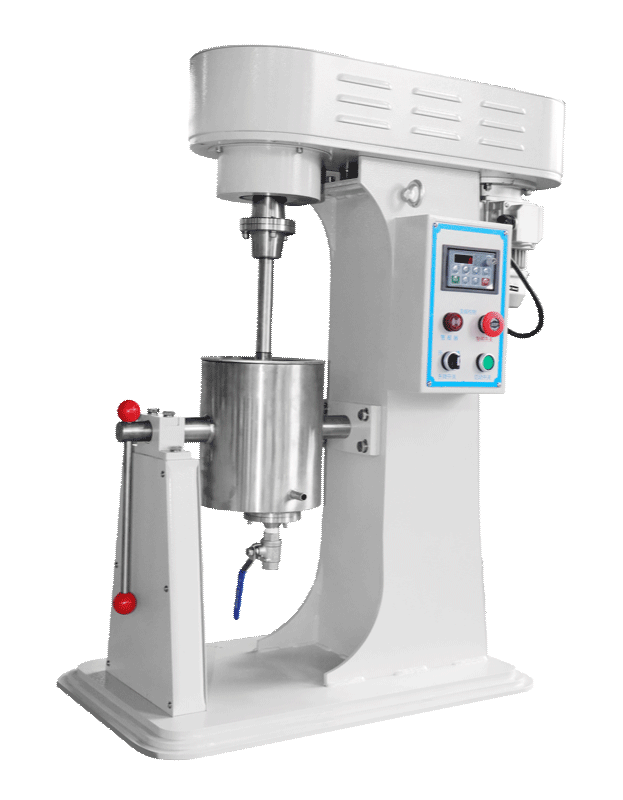
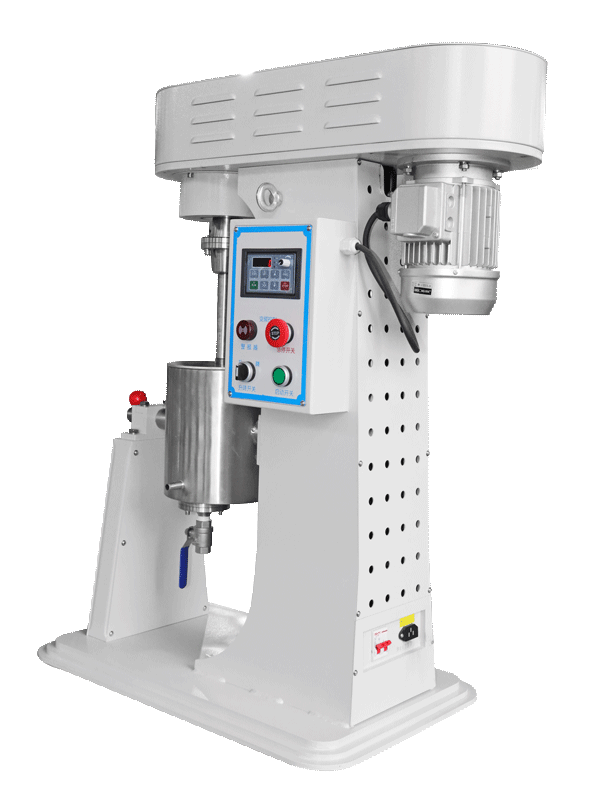
At TENCAN, we have designed our electric lifting stirred ball mill to meet the practical demands of laboratories and pilot plants. The machine features a robust electric lift that can be precisely controlled, a sealed grinding chamber for inert atmosphere operation, and a programmable control system that allows you to store recipes for different materials. The grinding jar options include stainless steel, alumina, zirconia, and tungsten carbide, so you can select the best material for your application. We also offer a range of capacities from 1 L to 10 L, making it suitable for both small-scale R&D and process development.
If you are currently evaluating stirred ball mills for your wet grinding processes, we encourage you to consider the TENCAN electric lifting model. Our team can provide further technical guidance based on your specific material and target particle size. For more details, please visit the lab stirred ball mill page or contact us directly.
Final Thoughts
The electric lifting stirred ball mill is not just a convenience upgrade – it represents a thoughtful approach to fine and ultrafine wet grinding. By combining efficient agitation with an ergonomic handling system, it helps researchers and process engineers achieve consistent results while saving time and reducing physical strain. Whether you are working with battery materials, ceramics, or specialty chemicals, this equipment can be a valuable addition to your powder processing toolkit.
Remember that selecting the right mill involves more than just reading specifications. It requires understanding your material’s behavior, your target particle size, and your throughput requirements. Always request a trial or test grinding with your actual material before making a final decision. A reliable supplier should be willing to support you through this evaluation.