
What is a Precision Air Blower Dryer? A Forced Convection Drying Equipment for Laboratory Sample Precise Drying
Introduction
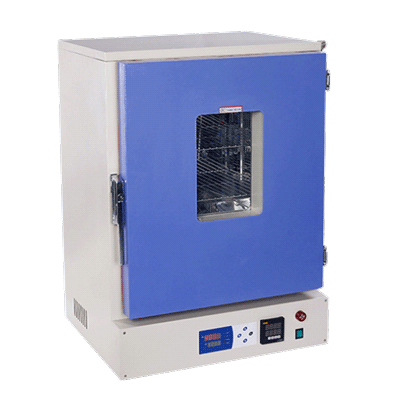
At its core, a precision air blower dryer is a specialized drying oven that uses a forced air circulation system to achieve uniform temperature distribution and rapid moisture removal from solid samples, powders, or components. Laboratories, research institutions, and small-scale production lines use it to dry materials under controlled conditions without causing thermal degradation or contamination. Unlike natural convection ovens, the integrated blower ensures that hot air constantly reaches every part of the chamber, reducing drying time and improving reproducibility.
Core Function and Working Principle
The fundamental function of a precision air blower dryer is to transform wet or moist materials into a dry state by evaporating water or solvents. The process begins when the operator sets the desired temperature and time on the controller. An electric heating element raises the internal air temperature, while a high-performance blower fan continuously forces the hot air to circulate through the chamber. This forced convection mechanism ensures that the heat transfer rate is significantly higher than in static ovens, allowing for faster and more uniform drying.
The working principle relies on three key stages: heating, circulation, and exhaust. First, the heater raises the air temperature to the set value. Second, the blower propels the hot air across the shelves and over the samples, transferring heat and carrying away moisture. Third, the moisture-laden air is expelled through an exhaust vent, or in some designs, is partially recirculated to save energy while maintaining low humidity. Advanced models feature programmable PID controllers that regulate temperature with an accuracy of ±0.1°C, making them suitable for heat-sensitive materials.
Key Components and Technology
The precision air blower dryer consists of several critical components:
- Heating system: Typically stainless steel sheathed heating elements that provide rapid and even heating.
- Blower fan: A high-volume, low-noise centrifugal or axial fan that ensures air circulation rates of 50 to 200 air changes per hour.
- Insulated chamber: Double-walled construction with high-density mineral wool or ceramic fiber insulation to minimize heat loss.
- Temperature controller: Microprocessor-based PID controller with digital display, capable of programming multiple segments, ramp rates, and hold times.
- Airflow adjustment: Some models include adjustable dampers or variable speed blowers to control the air velocity for different sample types.
These components work together to deliver precise, repeatable drying conditions. For example, when drying ceramic powders before sintering, the even temperature distribution prevents uneven shrinkage or cracking. Similarly, in pharmaceutical research, the controlled low-temperature drying preserves the activity of sensitive compounds.
Key Performance Indicators and Selection Criteria
When selecting a precision air blower dryer, users should evaluate the following parameters:
Temperature Range and Accuracy
Most laboratory models operate from ambient +10°C up to 300°C. Higher temperature versions (up to 500°C) are available for specialized applications. The temperature uniformity across the chamber should be within ±2°C at 200°C, and ±5°C at higher temperatures.
Chamber Volume and Capacity
Desktop models offer volumes from 20 to 100 liters, while floor-standing units can exceed 500 liters. The number of shelves and loading capacity (kg per shelf) determine how many samples can be processed simultaneously.
Air Circulation Rate
A higher air exchange rate (measured in m³/h or air changes per hour) improves drying speed but may cause powder entrainment. For fine powders, adjustable airflow or a low-speed blower mode is recommended.
Programmability and Data Logging
Modern dryers feature programmable controllers with up to 30 segments, allowing users to set ramp-up, soak, and cool-down phases. Some models include RS232/RS485 interfaces or USB ports for data logging and remote monitoring.
Safety Features
Over-temperature protection, door interlock, and audible alarms are standard in quality units. For flammable solvents, an explosion-proof version with a spark-proof blower and sealed electrical components is necessary.
Applications and Selection Advice
Precision air blower dryers are widely used in:
- Material science: Drying of powders, catalysts, and ceramic precursors before grinding or sintering.
- Pharmaceuticals: Drying of active ingredients, excipients, and herbal extracts.
- Chemistry: Removal of solvents from reaction products, drying of glassware.
- Environmental testing: Conditioning of soil, sediment, and filter samples.
- Electronics: Drying of printed circuit boards and components.
For users who mainly dry small batches of fine powders, a desktop air blower dryer with a small chamber and adjustable airflow is ideal. For larger production or research requiring tight temperature control, a precision air blower dryer with a programmable controller and data logging capability is recommended. If vacuum is needed to dry heat-sensitive materials at low temperatures, consider a vacuum drying oven instead.